
 A Personal AI Assistant


For four years, Sri Lanka's Personal Data Protection Act was law on paper. On 1 January 2027, its core compliance framework becomes operational.
The Data Protection Authority of Sri Lanka has confirmed that Extraordinary Gazette No. 2498/16, published on 22 July 2026, appoints 1 January 2027 as the effective date for key provisions of the Personal Data Protection Act, No. 9 of 2022, as amended.
Every organisation that processes personal data is affected. But few functions hold as much of it as HR. National identity card numbers, bank details, salaries, EPF numbers, medical certificates, background checks and, increasingly, fingerprints and face scans for attendance all sit in HR systems and files.
This blog explains what comes into force, why HR is exposed, and nine steps employers should take before the deadline.
What comes into force on 1 January 2027
According to the Data Protection Authority, the gazette brings the following provisions into operation:
- Section 2, which sets the scope of application of the Act.
- Section 3, which governs the Act's effect in relation to other written law.
- Part I, covering the core requirements for lawful and transparent processing of personal data.
- Part III, governing data controllers and processors. Where applicable, it requires the designation of data protection officers, personal data breach notifications and data protection impact assessments. It also covers contractual obligations between controllers and processors, and cross-border processing and transfers of personal data.
The Authority describes these provisions together as the core compliance framework for controllers and processors within the Act's scope. It has urged organisations to use the transition period to review governance arrangements, policies, operational processes, contracts, and technical and organisational measures.
The Act was amended by the Personal Data Protection (Amendment) Act, No. 22 of 2025. The gazette names only the provisions listed above, so employers should watch for further gazettes bringing other parts of the Act into operation.
The statutory duties apply from 1 January. How some of them operate in practice is subject to the Act and final DPA regulations and rules: the DPA's downloads page lists draft instruments on impact assessments, breach notifications, DPO appointment and cross-border transfers. Until those are final, avoid assuming notification periods, thresholds or mandatory formats.
Why HR is exposed
Employers are data controllers for their employees' personal data. HR processes that data constantly, across the whole employee lifecycle, and shares it with banks, the EPF and ETF, insurers, payroll providers and auditors.
HR data | Typical purpose | Watch point |
|---|---|---|
Identity and contact details | Employment records and statutory registrations | Collect only what each purpose needs |
Bank details and salary | Payroll and payment | Limit access to payroll staff, and protect files sent to banks |
EPF, ETF and tax records | Statutory contributions and APIT | Retain for the required period, then dispose securely |
Medical certificates | Sick leave and benefits | Health information needs particular care and tight access |
Biometric attendance data | Time and attendance | Assess necessity and risk before collecting |
Candidate data and references | Recruitment | Tell candidates how their data is used and how long it is kept |
Performance and disciplinary records | Appraisals and formal procedures | Restrict access and keep records accurate |
Nine steps to take before 1 January 2027
1. Map your HR data
List every type of employee and candidate data you hold, where it comes from, where it is stored, who can access it and who it is shared with. Include spreadsheets, email attachments and paper files, not just the HR system.
2. Confirm the purpose and lawful basis for each use
For each type of data, record why you process it and the lawful basis that applies. Payroll, statutory contributions and employment contracts will cover much of it. Some uses, such as biometric attendance or optional benefits, need closer review.
3. Update notices to employees and candidates
Part I requires transparent processing. Review employee handbooks, offer letters and recruitment pages so people know what data you collect, why, who receives it and for how long.
4. Review contracts with processors
Payroll bureaux, HR software providers, insurers, background-check agencies and cloud providers all process employee data on your behalf. Part III brings contractual requirements between controllers and processors into force, so review each contract now.
5. Decide on a data protection officer
Part III requires the designation of data protection officers where applicable, subject to the Act and final DPA regulations and rules. Confirm whether the requirement applies to your organisation, and if so, appoint one with a clear mandate and access to senior management.
6. Prepare for personal data breaches
Write a breach response procedure: how incidents are reported internally, who assesses them, and how the Authority and affected individuals will be notified, subject to the Act and final DPA regulations and rules on timing and format. Test it before you need it.
7. Assess high-risk processing
Data protection impact assessments come into force on 1 January, subject to the Act and final DPA regulations and rules. Start with HR processing that carries the most risk, such as biometric attendance, employee monitoring and large-scale processing of health information.
8. Check cross-border transfers
If employee data is hosted overseas, accessed by a regional head office or shared with a foreign parent, those transfers fall under the cross-border provisions, subject to the Act and final DPA instruments. Document where data goes and the safeguards in place.
9. Set retention periods
Keep employee data only as long as you need it. Agree retention periods for each record type, taking account of statutory record-keeping duties, and dispose of data securely when the period ends.
An illustrative scenario: a Colombo group gets ready
Consider a Sri Lankan group with 1,500 employees across manufacturing, distribution and a head office in Colombo. The scenario is illustrative.
In November, HR and IT map employee data across the group and find copies of salary files in three shared drives. They consolidate payroll data in the HR system and remove the copies.
In December, legal reviews contracts with the payroll bank, the group insurer and the HR software provider. HR updates the employee privacy notice and the recruitment page. The group designates a data protection officer and runs a breach drill.
By 1 January, the group can show where its HR data is, why it holds it, who processes it and what happens if something goes wrong.
How MiHCM supports HR data protection
A compliant HR system does not make an employer compliant. But it makes the job much easier, because data that sits in one controlled platform is easier to map, secure and evidence than data spread across files and inboxes.
Independently certified security and privacy management
MiHCM is SOC 2 Type II certified and holds ISO/IEC 27001 for information security management and ISO/IEC 27701:2025 for privacy information management. Details and supporting documents are available on the MiHCM Trust Portal, which helps employers carry out due diligence on MiHCM as a processor.
One record instead of many copies
MiHCM Enterprise keeps a digital employee profile with documents and history in one place, so HR data does not need to live in spreadsheets and email. Integration with DocuSign supports secure e-signatures for employment documents.
Accurate data, maintained by employees
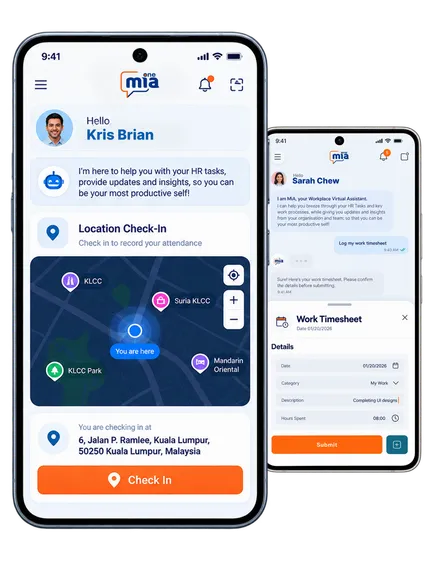
Employee self-service lets employees view and update their own information, which supports accuracy. MiA ONE, MiHCM's AI-powered personal assistant, brings policies and updates to employees in the flow of work, so changes to privacy notices and policies are acknowledged and auditable.
Payroll data in one controlled system
MiHCM Payroll runs payroll, EPF, ETF and APIT calculations in one system, with exports and pay-related reports generated from the same records rather than from local copies.
Intelligence on private data
Syntra, MiHCM's AI-powered HR intelligence solution, is designed to work on each client's private MiHCM tenant data. Leaders get answers to workforce questions drawn from their own organisation's data.
Your PDPA checklist for HR
- Map every type of employee and candidate data, and where it goes.
- Record the purpose and lawful basis for each use.
- Update employee and candidate privacy notices.
- Review contracts with every processor of employee data.
- Confirm whether you need a data protection officer, and designate one if so.
- Write and test a breach response procedure.
- Complete impact assessments for high-risk HR processing.
- Document cross-border transfers and safeguards.
- Set and apply retention periods.
The bottom line
On 1 January 2027, data protection in Sri Lanka stops being a future obligation. For HR, the work is practical: know your data, limit it, protect it, and be ready to show what you have done. Employers that start now will treat the deadline as a milestone, not a scramble.
Book a demo to see how MiHCM keeps HR data in one secure, certified platform.
Sources
- Extraordinary Gazette No. 2498/16, 22 July 2026
- Data Protection Authority of Sri Lanka: Downloads and guidance
- Daily FT: Data protection compliance regime takes effect on 1 January 2027, 10 August 2026
- The Morning: Personal Data Protection Circular No. 01/2026
- Daily Mirror: Legal experts flag unique compliance landscape in staggered PDPA rollout
- Neelakandan & Neelakandan: Data protection in transition
- MiHCM Trust Portal