

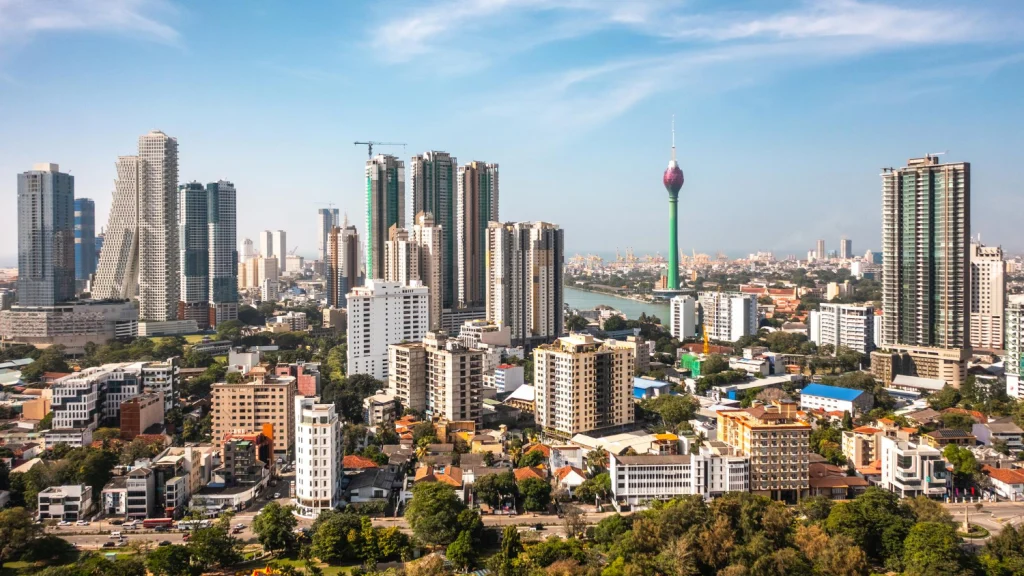
Sri Lanka’s workforce has undergone one of the most defining transformations in its modern history.
The country’s economic crisis, which intensified between 2021 and 2022, culminated in the country’s first-ever sovereign debt default in April 2022. Severe foreign exchange shortages, spiralling inflation, fuel and energy disruptions, and sharp currency depreciation brought both public institutions and private enterprises under immense strain.
In March 2023, Sri Lanka entered an Extended Fund Facility (EFF) programme with the International Monetary Fund (IMF), marking a structured pathway toward fiscal consolidation, debt restructuring, and macroeconomic stabilisation.
For businesses, this period was more than a financial downturn; it was a defining reset that forced organisations to prioritise discipline, efficiency, and long-term sustainability over short-term expansion.
Organisations across industries from apparel and manufacturing to banking, retail, healthcare, and logistics had to reassess not only cost structures, but the very foundations of how work is organised, managed, and measured. Survival required discipline. Stability required resilience.
But 2026 demands something more. Today, the national conversation is shifting from cost control to productivity, from workforce containment to workforce optimisation, and from manual processes to intelligent systems. The future of work in Sri Lanka will not be defined by austerity — it will be defined by capability.
As leaders, we must ask a critical question: How do we rebuild competitiveness in a way that is sustainable, digital, and globally aligned?
From crisis response to capability building
In the immediate aftermath of the economic crisis, many organisations focused on tightening payroll budgets, freezing recruitment, reducing overheads, and extending manual controls. These were necessary actions.
However, cost-cutting alone does not create competitiveness.
Competitiveness is driven by:
- Workforce productivity
- Process efficiency
- Real-time decision visibility
- Talent retention and engagement
- Digital integration across operations
Across Sri Lanka, we are now seeing a shift. Forward-looking organisations are investing again – not recklessly, but strategically. They are prioritising systems that give leadership teams clarity into workforce performance, overtime costs, absenteeism trends, payroll governance, and skill distribution.
The workforce conversation has moved from “How do we spend less?” to “How do we get more value from every employee hour?”
That shift is fundamental.
The productivity imperative
Sri Lanka’s long-term economic recovery will depend on productivity gains across sectors. Whether in manufacturing zones, financial institutions in Colombo, or regional distribution networks, output per employee must increase if we are to compete globally.
This is not about working longer hours. It is about working smarter and more efficiently.
Digital workforce platforms now enable organisations to:
- Optimise shift planning and rostering
- Track attendance and overtime in real time
- Automate payroll governance
- Reduce manual administrative effort
- Analyse workforce data for performance insights
When HR activities, attendance, payroll and productivity systems operate in silos – or worse, spreadsheets – leaders lack visibility of the bigger picture. Decisions are dependent on reports and delayed. Data manipulation is enabled and errors multiply. Costs become reactive instead of controlled. Unified, integrated and role-based access enabled digital HR ecosystems change this dynamic. They convert workforce data into leadership intelligence.
And that intelligence is what drives productivity in real time.
The rise of AI and automation in Sri Lanka
Artificial Intelligence is no longer just a buzz word or a concept reserved for global technology giants. It is rapidly becoming a practical tool for Sri Lankan enterprises and is evolving daily.
In 2026 and beyond, AI will reshape how organisations manage people in three major ways:
1. Intelligent Workforce Insights: AI-powered analytics can identify attendance anomalies, overtime patterns, skill gaps, and engagement risks before they escalate. Leaders move from reactive management to predictive workforce planning.
2. Automation of Administrative Work; Routine HR tasks – leave approvals, payroll validations, employee queries – can now be streamlined through automation and intelligent digital agents. This reduces HR workload and allows teams to focus on face-to-face employee connections and strategic talent initiatives.
3. Data-Driven Talent Decisions: Recruitment, succession planning, and performance evaluation are increasingly supported by structured data rather than subjective judgment alone. AI augments leadership — it does not replace it.
AI adoption should not be looked at as replacing jobs. If adopted in a systematic way with proper controls in place, it can lead to enhancing human capability, improving efficiency, and making better decisions at scale. The organisations that embrace AI responsibly will gain a decisive advantage in speed, accuracy, and workforce agility.
Digital optimisation: The new competitive edge
Post-crisis Sri Lanka cannot compete purely on low labour cost. Low labour cost is just one cog in the wheel, which in a global context, may not be a competitive advantage that Sri Lanka can always expect to satisfy. Better metrics to offer value for global market demands are reliability, compliance, speed, and digital maturity, which builds long-term trust and loyalty.
Investors, multinational partners, and global supply chains increasingly evaluate:
- Governance standards
- Data transparency
- Compliance controls
- Workforce stability
- Digital infrastructure readiness
Workforce systems sit at the centre of this evaluation. Manual payroll risks, attendance inaccuracies, and fragmented HR records are no longer internal inconveniences; they are competitive disadvantages.
Digital optimisation ensures:
- Compliance with local labour regulations
- Accurate payroll calculations aligned with statutory requirements
- Audit trails and governance controls
- Secure workforce data management
- Real-time organisational reporting
This is the operational discipline that strengthens investor confidence and national credibility.
The changing workforce mindset
The future of work in Sri Lanka is not only about systems. It is about people.
The younger workforce entering organisations today expects:
- Digital self-service
- Transparent processes
- Faster approvals
- Data-driven performance systems
- Flexible and modern work structures
Organisations that fail to modernise, risk talent attrition.
At the same time, leaders must balance technology with empathy. Automation should reduce friction, not remove the human element. Productivity should not come at the expense of engagement.
The future workforce will thrive where digital efficiency and human-centred leadership coexist.
A national responsibility
Workforce transformation is directly linked to national productivity and economic resilience.
As Sri Lanka works to strengthen its economy, it must also confront a critical demographic shift: a steadily ageing workforce, compounded by youth migration and declining birth rates.
This evolving labour profile means a smaller active workforce will be required to support a growing dependent population, placing increasing pressure on productivity, healthcare systems, and long-term economic sustainability. In this context, technology adoption is no longer a strategic advantage; it is a structural necessity.
Public and private sector alignment on digital transformation will determine how effectively we rebuild competitiveness. From workforce governance in State institutions to AI-driven analytics in private enterprises, systemic adoption matters.
The next phase of recovery is not about stabilising; it is about strengthening.
2026 and beyond: A strategic outlook
Looking ahead, I believe three priorities will define Sri Lanka’s workforce evolution:
Integrated Digital HR Platforms as Standard Infrastructure: Fragmented systems will be phased out in favour of connected, secure, cloud-based ecosystems.
AI-Augmented Decision-Making at Leadership Level: Workforce analytics will move from HR reports and dashboards to boardroom strategy discussions.
Productivity Metrics Embedded into Organisational Culture: Organisations will track output, efficiency, and engagement with the same discipline as financial reporting.
Sri Lanka’s future of work will not be shaped by external forces alone. It will be shaped by the decisions we make today to digitise, to optimise, and to lead with data.
Automation, AI-driven workforce planning, digital self-service, and skills optimisation platforms can help organisations extract greater value from institutional knowledge while enabling reskilling and multi-skilling across generations. By combining experience with intelligent systems, Sri Lanka can offset demographic constraints and build a more agile, high-productivity workforce for the decade ahead.
The crisis tested our resilience. The recovery will test our strategic discipline. If we embrace intelligent systems, responsible AI, and workforce optimisation, Sri Lanka can emerge not merely stable, but stronger, smarter, and globally competitive.
The future of work is already here. Are we ready to lead it?

Pubudini Abeyesekera
CEO – Sri Lanka & the Maldives
(MiHCM CEO – Sri Lanka and Maldives Pubudini Abeyesekera has over 20 years of experience in Business Development, Business Operations and Client Relationship Management within various industries of Tech, Start-ups, Education, Real Estate, Airlines, Banking, and Hospitality. She leads with a hands-on approach backed with empathy and thrives on identifying talent, nurturing individuals, and building high-performing teams.)