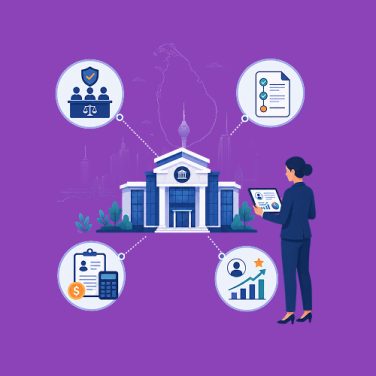

Agentic AI for employee experience refers to systems that can take initiative and execute actions on behalf of employees or HR teams, carrying state and context across interactions rather than only responding to single queries.
This guide contrasts reactive assistants (inform-only) with systems that can suggest options or act autonomously and sets out a practical governance playbook for safe rollout.
Why ‘agentic’ matters for HR

Agentic behaviours change the scope and impact of automation in HR: an advisory reply about policy is low risk, but an automated change to pay, access rights or role assignments can materially affect careers.
For clarity, this guide separates behaviours into three grades – Inform, Suggest, Act – and shows how to map each to controls, audit requirements and humanintheloop patterns.
Who should read this guide
- Chief People Officers and HR leaders considering AIdriven automation
- HR Ops, Workforce Analytics and IT teams designing integrations
- Legal, Compliance and Risk teams tasked with policy and oversight
- Product and programme managers running pilots of conversational or agentic features
The guide’s goals: provide a taxonomy and risk matrix for agentic behaviours; recommend governance, humanintheloop (HITL) controls; specify audit and explainability requirements; and present an MiHCM product mapping and stepbystep rollout checklist for pilots.
Readers will find templates and practical examples designed for HR to lead implementation in partnership with Legal, IT and Compliance.
Key takeaways
Agentic AI can speed up workflows and improve employee selfservice but raises risk where actions affect pay, role or access. Use a threetier action model – Inform, Suggest, Act – to decide allowed autonomy and required controls.
- Map actions to risk tiers and record decisions in an automation register.
- Apply humanintheloop gates for medium and highrisk actions and require explicit signoff for anything that materially alters employment terms.
- Maintain immutable audit trails, cited sources for decisions and regular bias testing before scaling.
- Pilot in lowrisk domains using MiHCM features – MiA ONE for cited answers, SmartAssist for approval-gated automations and MiHCM Data & AI for monitoring and bias detection.
Quick actions: 1) Map actions to risk tiers 2) Add approval gates 3) Log everything 4) Communicate to staff.
What is agentic AI? Definitions and a practical taxonomy

Taxonomy: Inform, Suggest, Act
Agentic AI denotes systems that initiate actions, maintain context across turns and can pursue goals autonomously. This contrasts with reactive assistants that provide readonly answers. The threetier taxonomy recommended here aligns autonomy to risk:
- Inform — readonly responses and cited policy retrieval; no state changes. Use for FAQs, policy lookups and payslip retrieval.
- Suggest — ranked recommendations or candidate shortlists with rationale; execution requires human approval.
- Act — automated execution of changes across systems (e.g., autoapprove leave within policy or create access requests); requires strict controls and logging.
Why persistence and context change risk profiles
Persistence (memory of prior interactions) and multistep agents increase systemic influence: scheduled followups, crosssystem workflows and stateful negotiation expand impact beyond single queries. Where an agent holds intent and repeatedly executes steps, minor errors can compound. Defining persistence boundaries and timetolive for stored context reduces unintended sideeffects.
Examples mapped to HR:
- Inform — an employee asks a chatbot for parental leave policy and receives a cited answer with relevant clause links (EU, 2024).
- Suggest — the system ranks internal candidates for a vacancy, showing features that drove the ranking and asking a hiring manager to confirm shortlisted names.
- Act — SmartAssist automates routine expense approvals under preset thresholds and notifies payroll; this requires rollback and audit gates in case of error.
For the definition of agentic systems as autonomous and persistent, see the OECD conceptualisation of agentic AI (OECD, 2026).
When should agentic AI for employee experience take autonomous actions?
Risk matrix template
Decide autonomy using a riskbased rule: any automated action that materially affects pay, role or access should not be fully autonomous. Use the following risk factors to classify actions: impact magnitude, reversibility, frequency, regulatory exposure, data sensitivity and integration complexity.
| Risk tier | Typical examples | Controls |
|---|---|---|
| ต่ำ | Informational replies, payslip retrieval, leave balance queries | Logging, cited sources, periodic review |
| ระดับกลาง | Routine approvals under policy thresholds, automated scheduling | Pre-action approval or automated action with immediate post-action human review |
| สูง | Pay changes, role changes, account access, termination-related actions | Human sign-off, full audit trail, legal review and rollback procedures |
Guidelines for promoting actions to higher autonomy include robust testing, demonstrable error rates below agreed thresholds, readily available human oversight and rollback mechanisms, and clear SLAs for manual review. NIST guidance advocates human judgement and oversight in highrisk contexts, which supports this tiering approach (NIST, n.d.).
Safe first pilots: payroll FAQs, meeting scheduling and routine expenses processing are suitable; anything affecting contractual terms should remain in a supervised sandbox until governance and testing criteria are met.
Governance, policy and automation governance for HR AI
Template: AI in HR policy — essential clauses
An AI in HR policy should classify permitted agentic behaviours, set approval requirements, define owners and establish testing and monitoring obligations. Core clauses include scope, permitted actions by risk tier, humanintheloop requirements, logging and retention, bias testing obligations, data sources and roles responsible for approvals and incident response.
Who signs off: roles and responsibilities
- Governance Board (HR, Legal, IT, Data Science, Ethics/People Council): final policy approval and periodic reviews.
- Automation Owner (HR Ops): daytoday owner of the automation and register entry.
- Technical Owner (IT/Platform): integration, access control and rollout management.
- Compliance/Legal: regulatory mapping and signoff for highrisk use cases.
Governance artefacts
Maintain an automation register, risk assessments, playbooks, runbooks for incident response and test cases. Operationalise policy by mapping actions to risk tiers, creating a release checklist and embedding change control into existing ITIL or product pipelines. Audit exports from MiHCM Enterprise support regulatory review and can be used as evidence in audits (product feature: Audit trail export).
Automation governance reduces operational friction by allowing faster approvals for lowrisk automations while preserving traceability for compliance. Establish a crossfunctional forum with a documented charter and decision rights to avoid ad hoc deployments.
Humanintheloop controls and escalation patterns
Preaction vs postaction patterns
Design patterns for HITL are pragmatic and depend on risk:
- Preaction approval — the system prepares a recommended change and requires a human confirmation (oneclick accept/reject) before execution.
- Postaction review — the system executes and flags the change for human review, with a short window to rollback.
- Human fallback — if confidence is below threshold, the agent stops and routes to a human reviewer.
Use a hybrid gating strategy: combine model confidence with business rules. Record the input, rationale and confidence alongside the suggested action so reviewers have the context to decide quickly. Ensure the approval UX shows the key facts, cited sources and the change delta (before/after state).
Escalation and SLAs
Define escalation flows and SLAs: who is notified (line manager, HR case owner, legal), expected response times and the process for urgent interventions. Train managers in UAT so approval criteria match business expectations and run approval drills to validate escalation behaviour.
Use cited explanations in MiA ONE together with SmartAssist approval workflows so every automated recommendation carries a traceable rationale and link to the policy that underpinned the suggestion (product features: citedsource explanations and approvals & notifications).
Audit trails, explainability and logging best practice

What to log and why
At minimum, logs should record: timestamps, user identity, query text, model and version, confidence score, rationale or explanation, data sources cited, action taken, approver identity and resulting state. Capture pre and postaction snapshots for reversible actions.
Retention, export and legal hold procedures
Logs must be tamperevident, exportable and retained according to legal and regulatory retention rules. Implement legalhold procedures to preserve relevant logs for investigations or litigation, and provide a searchable, canonical link between events and HR canonical records in MiHCM Enterprise.
Explainability and traceability
Explainability requires capturing why the system made a recommendation: highlight source documents, business rules applied and the model features that influenced the decision. Regulators and guidance bodies require recordkeeping and explainability for highrisk AI uses (EU, 2024; ICO, n.d.).
Monitoring and anomaly detection
Deploy dashboards that surface drift, sudden changes in approval rates or cohort anomalies. Use MiHCM Analytics and MiHCM Data & AI to monitor outputs and alert governance owners. Maintain periodic audits of model outputs and produce a short transparency summary for internal stakeholders to build trust.
Privacy, consent and communicating agentic behaviours to employees
Consent, transparency and employee notices
Map processing activities to lawful bases (consent, contractual necessity, legitimate interest) by jurisdiction and document data flows. For internal HR data, rely where possible on rolebased permissions and legitimate interest, but use explicit consent when profiling or making sensitive inferences.
Design transparent notices
Employee notices should explain: what the agent does, which data the agent reads, when it may act autonomously, how to request a human review and how to opt out where appropriate. Provide simple FAQs and short scenario examples so employees understand likely interactions and escalation routes.
Practical protections
- Minimise data used by agents; use purposelimited datasets for training.
- Anonymise and aggregate data for analytics and bias testing.
- Apply rolebased access controls so only authorised personas can trigger or approve agentic actions.
Include manager training so line managers can explain agentic behaviours and escalate concerns. Provide a clear complaint and remediation path aligned with HR grievance processes.
Bias, fairness and testing for agentic systems
Fairness testing playbook
Conduct predeployment dataset audits and run fairness metrics against heldout test sets that reflect workforce diversity. Measure false positive and false negative rates by protected attributes and use cohort analysis to detect disparate impact. NIST’s guidance on managing bias provides practical test methods and controls (NIST SP 1270), and the EEOC has highlighted employment risks from unexamined AI use (EEOC, 2024).
Ongoing testing and mitigations
- Monitor error rates by cohort in production and set thresholds that trigger human review.
- Apply technical mitigations where needed (rebalancing, reweighting, counterfactual testing).
- Operational mitigations: approval gates for affected cohorts and manual review of borderline cases.
Governance and transparency
Document testing methodology, acceptance thresholds and remediation plans with named owners. Publish an internal summary of fairness tests and remediation steps to build trust among employees and stakeholders.
Integrating agentic AI with HR systems and change management
Integration checklist: security, mapping and testing
- Identity & access: SSO, RBAC and leastprivilege configuration.
- Data mapping: canonical HR record alignment and attribute mapping between systems.
- Secure APIs: limit outbound actions during pilots to controlled endpoints.
- Sandboxing & staging: use mirrored datasets for safe testing of agentic workflows.
Change management templates
Run a pilot playbook that includes stakeholder mapping, manager training, employee pilots and feedback loops. Measure NPS, support ticket volume and time saved as KPIs. Maintain manual override endpoints and a clear incident response plan with rollback capability.
Scaling safely
Move from singleteam pilots to domain rollouts using the automation register and periodic governance reviews. Reclassify or decommission automations if monitoring flags regressions, and ensure models are recertified periodically.
Product mapping — how MiHCM helps deploy agentic HR safely
Three sample workflows mapped to MiHCM products
- Selfservice policy queries (Low risk) — MiA ONE provides a conversational interface with cited answers and conversation logging so employees receive sourcelinked responses and auditors can trace the source documents (feature: cited answers and conversation logging).
- Routine approvals (Medium risk) — SmartAssist executes workflows with preconfigured approval gates; approvals are logged and can be routed to managers for oneclick acceptance (feature: approval gates & workflow automation).
- Predictive alerts and escalation (Medium-High) — MiHCM Data & AI identifies turnover risk or anomalous patterns and surfaces cases to HR with suggested actions; escalations create HR cases in MiHCM Enterprise with auditgrade logs (features: monitoring dashboards & bias detection).
Example operational flow: an employee requests a payroll correction via MiA ONE. The agent retrieves supporting policy, suggests a correction and invokes SmartAssist to create an approval ticket. If the change meets policy thresholds it autoexecutes; otherwise the ticket routes to the payroll manager for signoff. Every step logs into MiHCM Enterprise for traceability.
Recommended pilot: start with MiA ONE FAQs plus SmartAssist approval for routine requests. Instrument all interactions with Analytics to measure ticket reductions, time saved and any fairness signals before scaling to higherrisk domains.
A practical checklist & playbook for rollout (stepbystep)
Playbook templates to copy
- Stage 0 — Prepare: define scope, identify owners, secure legal signoff and set pilot success criteria (KPIs and acceptance thresholds).
- Stage 1 — Design: map actions to risk tiers, select controls (approval gates, confidence thresholds), and design the approval UX and audit log schema.
- Stage 2 — Test: run synthetic and mirrored data tests, fairness audits, manager UAT and escalation simulations; document test results.
- Stage 3 — Pilot: limited rollout, daily monitoring, weekly governance review; capture KPIs (time saved, ticket volume change, error rate).
- Stage 4 — Scale: periodic recertification of models, automation inventory updates and decommissioning when required.
Templates to include: risk assessment checklist, employee notice, approval flow template, audit log fields and a postpilot review form. Keep the automation register up to date and schedule governance reviews at least monthly during pilots, quarterly for scaled programmes.
Measuring impact and next steps
KPIs and governance cadence
Agentic AI can reduce HR admin and improve employee selfservice when governed correctly. Leaders should track employee satisfaction, reductions in HR workload, incident rates, fairness metrics and regulatory compliance outcomes. Establish a governance cadence with named owners and monthly reviews during pilots.
Where to start this quarter
- Map candidate automations and classify them by risk tier.
- Run a small, controlled pilot combining MiA ONE FAQs with SmartAssist approval for routine requests and instrument with Analytics.
- Create the first governance meeting with HR, Legal, IT and Data Science and appoint an automation owner.
Responsible rollout requires marrying product capabilities with organisationlevel policy, humanintheloop design and robust logging. The templates in the playbook section are ready to adapt for immediate use and will help teams move safely from pilot to scale.