Most enterprises do not set out to run HR on five systems. It happens gradually. A payroll engine for one country. An attendance system for the factories. A spreadsheet for headcount planning. A reporting tool bolted on top.
Each choice made sense at the time. Together they create a problem that no single system can solve: the same employee exists in several places, and the versions do not always agree.
Where stitched systems break
Payroll is where the disagreement shows first. Pay depends on data that arrives from elsewhere: contract terms, shift patterns, overtime approvals, leave taken, joiners and leavers. When those inputs are exported, transformed and imported every cycle, errors slip in at every hand-off.
Analytics is where it shows next. A headcount report that does not match payroll, or an attrition figure that differs between HR and finance, undermines every decision built on it.
Compliance is where it costs most. Statutory rules change every year across Asia. When statutory rules are maintained in several systems, there is a greater risk that one system falls behind.
What one platform changes
A single HCM platform replaces hand-offs with one employee record. The same data drives every process, from hire to retire.
Workforce management before payroll. Shift and overtime rules are applied, traced and approved in the system before payroll ever sees them. Payroll calculates from approved data, rather than reconciling it.
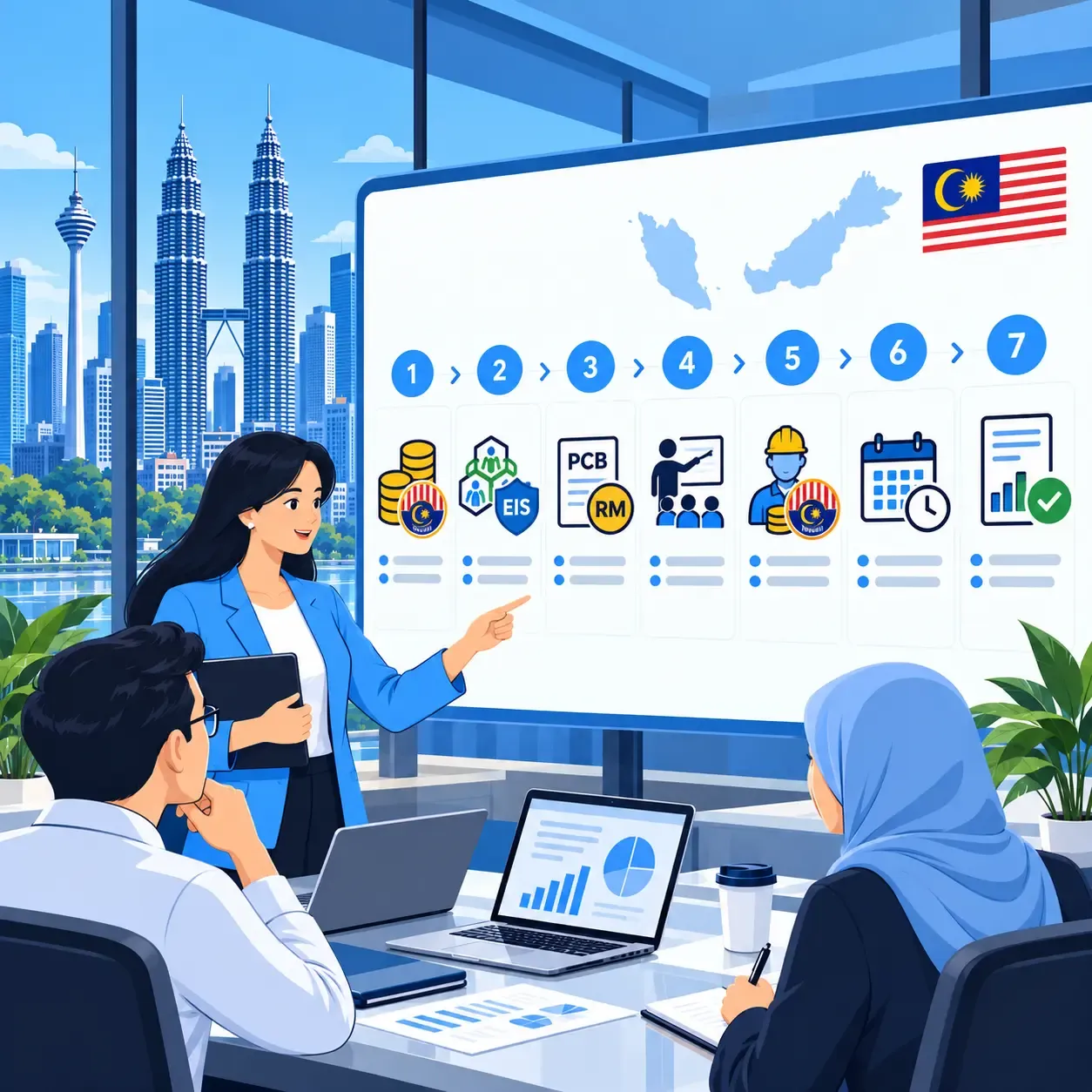
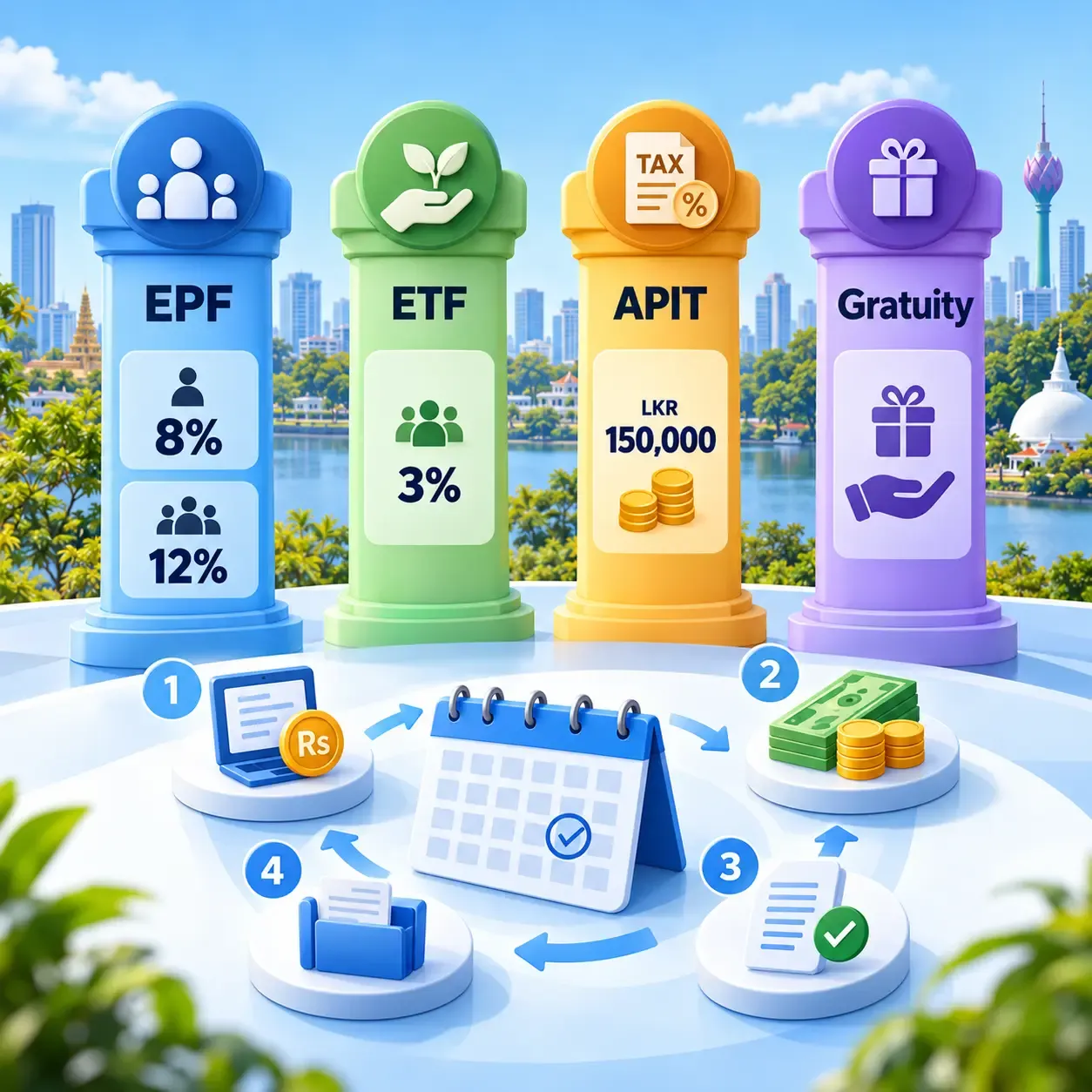
Payroll that is local in every market. MiHCM Enterprise provides native payroll in 13 countries across South and South East Asia, with statutory rules configured for each market and run from the same employee record.
Analytics on the same platform. MiHCM brings workforce, attendance, talent and other HR analytics into the same connected platform used for HR and payroll data, so HR and finance work from the same numbers.
Security across the record. A connected platform can centralise access controls and audit trails across HR and payroll processes. MiHCM holds ISO/IEC 27001:2022 and ISO/IEC 27701:2025 certifications for its Sri Lanka and Malaysia operations and has a SOC 2 Type II report available to customers on request.
Intelligence on top of a single record
Clean, connected data is also what makes AI useful. Three MiHCM solutions build on it:
• Syntra, the AI intelligence layer built on Microsoft Azure, lets leaders ask workforce questions in natural language and returns insights, charts, tables and graphs, linking data such as attendance, performance and resignations for deeper follow-up analysis.
• MiA ONE, an AI-powered personal assistant, gives employees conversational self-service by chat and voice across web, iOS and Android.
• MiHCM SmartAssist, an AI HR co-pilot suite, supports routine HR tasks, recruitment and workforce insights, irrespective of the HR system in use.
What one platform does not mean
One platform is not the same as one-size-fits-all. Enterprises still need local statutory expertise, careful configuration and implementation partners who know each market. Some will keep specialist tools alongside their core HCM. The aim is not to own every process in one product. It is to have one trusted record that every process draws on.
Five questions to ask any HCM vendor
1. Is payroll native in each of my countries, or delivered through third parties?
2. Do attendance and overtime rules run before payroll, or does payroll import them?
3. Do analytics run on the same data as payroll, or a copy?
4. What do the security certifications cover? Ask for scope statements and the SOC 2 Type II report.
5. Who maintains statutory changes, and how quickly do they reach production?
Built for enterprise scale
MiHCM Enterprise is designed for organisations of 250 to 20,000+ people, across multiple entities and countries. MiHCM operates across 22+ countries in Asia.
Beyond payroll is not a slogan. It is the recognition that payroll accuracy, workforce insight and compliance all depend on the same thing: one record that everyone trusts.
Frequently Asked Questions
Why run HCM, payroll and analytics on one platform?
Because they depend on the same data. A single employee record reduces the export and import steps between systems, so payroll calculates from approved data and HR and finance work from the same numbers.
How many countries does MiHCM payroll support?
MiHCM Enterprise provides native payroll in 13 countries across South and South East Asia, run from a single employee record.
What security certifications does MiHCM hold?
MiHCM holds ISO/IEC 27001:2022 and ISO/IEC 27701:2025 certifications for its Sri Lanka and Malaysia operations and has a SOC 2 Type II report available to customers on request.
What is Syntra?
Syntra is MiHCM’s AI intelligence layer built on Microsoft Azure. It lets leaders ask workforce questions in natural language and returns insights, charts, tables and graphs for follow-up analysis.
What size of organisation is MiHCM Enterprise for?
MiHCM Enterprise is designed for organisations of 250 to 20,000+ people, across multiple entities and countries.
Sources
• MiHCM, MiHCM Enterprise – native payroll in 13 countries; 250 to 20,000+ people; workforce management and dashboards
• MiHCM Trust Centre – ISO/IEC 27001:2022 and ISO/IEC 27701:2025 (Sri Lanka and Malaysia) and SOC 2 Type II report
• MiHCM, Syntra product page – current Syntra capability wording
• MiHCM, MiHCM achieves ISO/IEC 27701:2025 certification across Malaysia, Sri Lanka – 22+ countries
• MiHCM, Payroll – supported payroll countries