Few employers face as much scrutiny as a Thai bank. The Bank of Thailand (BOT) supervises who sits on its board and who runs it. Internal and external auditors test its controls, including how it pays people. Employees and regulators alike expect personal data to be protected.
For HR, that changes the job. Records are not just administrative. They are evidence.
This blog explains what BOT governance requirements mean for HR in banks and financial institutions, why payroll must be audit-ready, and how an HR system can keep people and pay records in order.
Who regulates whom
Commercial banks and finance companies in Thailand operate under the Financial Institutions Businesses Act B.E. 2551 (2008), and the BOT issues notifications under that Act. Securities businesses are supervised separately by the Securities and Exchange Commission. Many financial groups answer to both.
For HR, the most direct BOT requirements concern the people who govern and manage a financial institution.
Fit and proper: the people at the top
Thai banks must make sure that directors, managers, persons with power of management and advisers, using the role definitions in the applicable Bank of Thailand notification, have suitable qualifications and capabilities, and do not have prohibited characteristics, as set out in BOT notifications. Appointments to these roles require BOT approval in advance. The BOT has issued guidelines on approving the appointment of directors, managers, persons with power of management and advisers, alongside notifications on the roles, responsibilities and composition of boards.
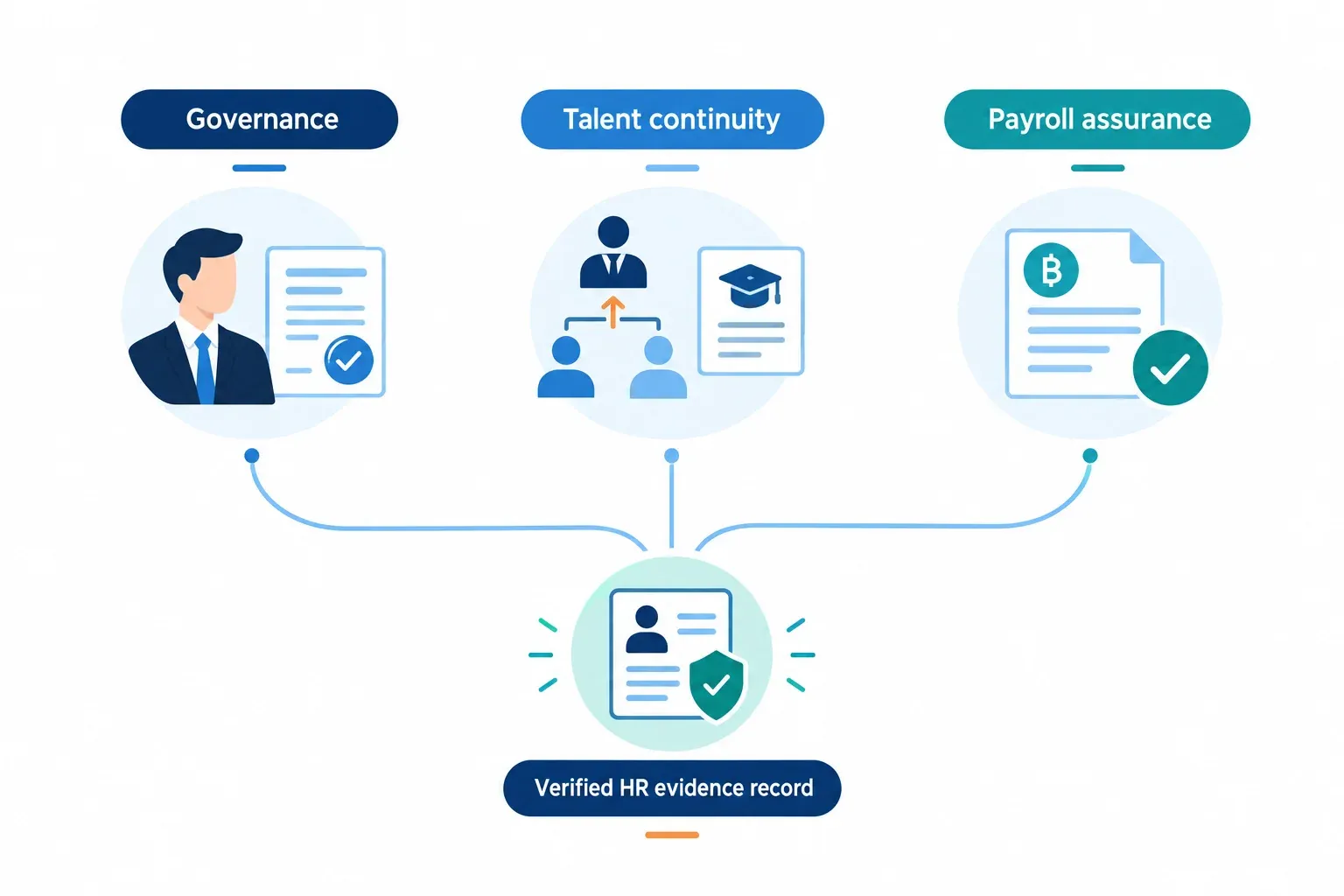
In practice, that puts several records at the centre of governance:
- Qualifications and experience: education, career history and relevant expertise for every person in a covered role.
- Training: director and executive training completed, and when.
- Appointment history: approvals sought, dates granted and changes in role.
- Succession: who is ready to step into a covered role, and what they still need.
These records usually sit across HR, the company secretary and compliance. When they live in different places, preparing an approval request or answering a regulator becomes slower than it should be.
Audit-ready payroll
Payroll is one of the most tested processes in any bank audit. Auditors want to see that people were paid what they were entitled to, that changes were authorised, and that the numbers reconcile.
Audit-ready payroll has four characteristics:
- Every change is authorised: salary changes, increments and allowances follow an approved process.
- Every run is checked: attendance, loans and increments are confirmed before salaries are processed.
- Every figure reconciles: payroll totals match bank payments and general ledger entries.
- Every report is reproducible: the same report run twice gives the same answer.
Employee data under the PDPA
Under the Personal Data Protection Act B.E. 2562 (2019), employee records such as identity numbers, bank details and performance reviews are personal data. Health information is sensitive personal data and requires the additional safeguards and lawful basis applicable under Thailand's PDPA. Any HR system a bank uses becomes part of that obligation.
What this means for HR, record by record
Regulatory or audit expectation | HR record | How MiHCM supports it |
|---|---|---|
Fit-and-proper qualifications for covered roles | Qualifications, experience and training records | Employee Profile and Learning Management |
Prior approval of appointments | Appointment and role-change history | Employee Dynamics for lifecycle events |
Continuity in key roles | Succession plans and readiness | Succession Planning |
Performance-linked pay and conduct | Performance reviews and outcomes | Performance Management, with Compensation and Benefits Management |
Audit-ready payroll | Authorised changes, checked runs, reconciled reports | MiHCM Payroll with the payroll checklist and pay-related reports |
Policy acknowledgement | Evidence that employees received and acknowledged policies | MiA ONE policy and governance assurance |
Protection of employee data | Controls over HR data | SOC 2 Type II, ISO/IEC 27001 and ISO/IEC 27701:2025 assurance |
How MiHCM supports Thai financial institutions
MiHCM Enterprise brings core HR, talent and payroll into one platform for medium and large organisations.
Talent records for covered roles
Employee Profile and Employee Dynamics keep each person's history, from qualifications to role changes, in one place. Learning Management records training. Succession Planning identifies who is ready for key roles and what development they need. Performance Management and Compensation and Benefits Management connect performance outcomes to pay decisions.
Payroll built for audit
MiHCM Payroll runs automated calculations and localised statutory requirements in one system, and supports Thailand among the countries it covers. The payroll checklist confirms that attendance, loans and increments are covered before salaries are processed. HR can build pay-related reports alongside existing attendance and leave reports, and the Advanced Formula Builder keeps pay rules consistent across grades and entities.
Policies that are acknowledged and auditable
MiA ONE, MiHCM's AI-powered personal assistant, brings policies, guidance and updates directly into the flow of work, so actions are aligned, acknowledged and auditable. For a bank, that means evidence that employees received a policy update, not just that it was sent.
Leadership views without manual reports
Syntra, MiHCM's AI-powered HR intelligence solution, answers workforce questions in plain language. HR leadership can ask about headcount, attrition or training across branches and business units, then export the analysis to PowerPoint, Excel or PDF for board and committee papers.
Security and data protection
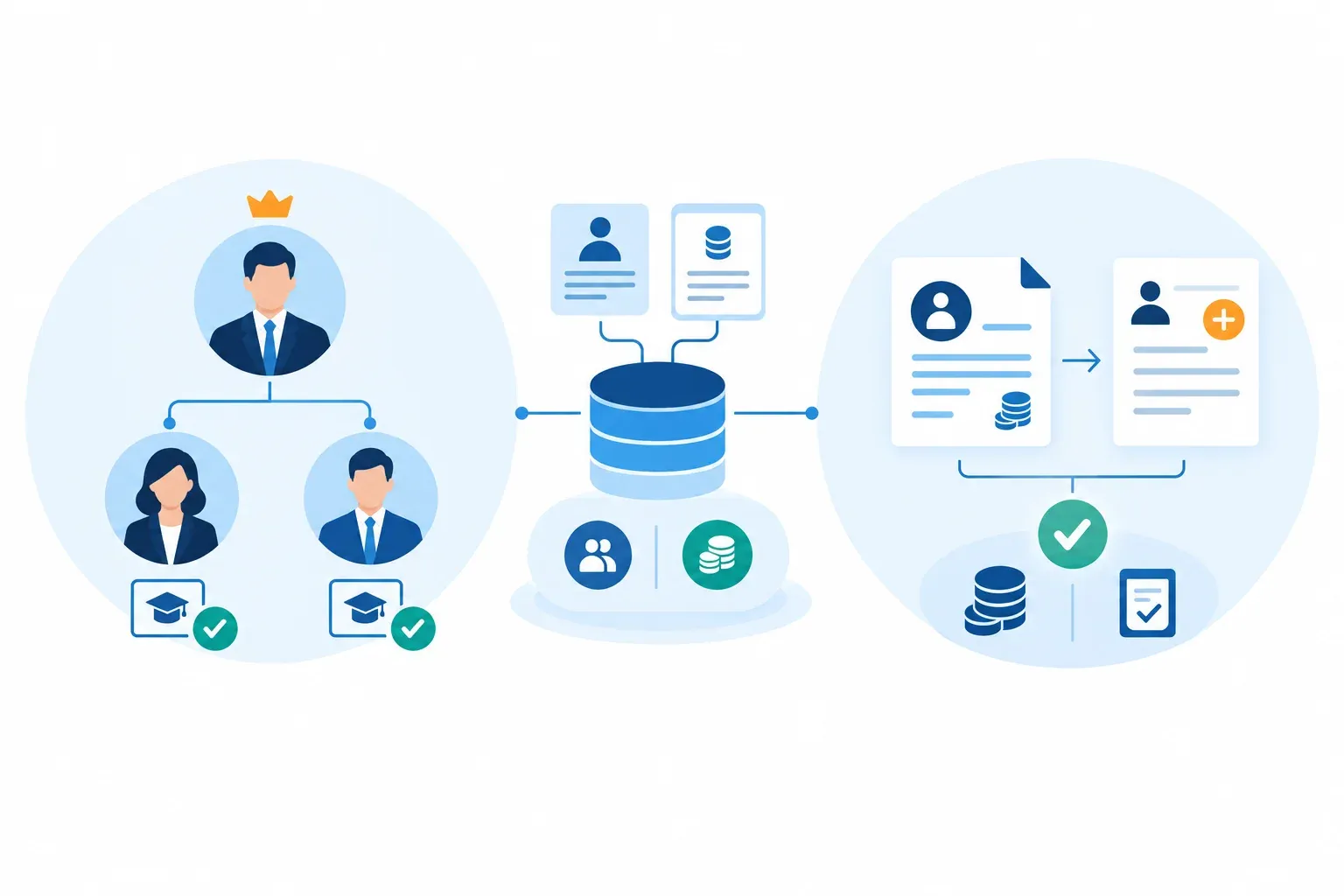
Banks expect their vendors to meet their own standard. MiHCM states that customer data remains logically isolated and is not used to train foundation AI models. Prompts and responses may be retained under internal governance controls for evaluation, retrieval-augmented generation and prompt improvement. MiHCM's Trust Portal lists ISO/IEC 27001, ISO/IEC 27701:2025 and SOC 2 Type II assurance; confirm the applicable legal entity and report availability during procurement.
An illustrative scenario: a busy quarter for a Thai bank
Consider a Thai commercial bank with a Bangkok head office and a national branch network. The scenario is illustrative.
In the first month, the bank plans to appoint a new executive to a role that requires BOT approval. HR pulls the candidate's qualifications, career history and training records from MiHCM in one step, and compliance prepares the submission.
In the second month, internal audit tests payroll. For the sample of employees selected, HR produces authorised salary changes, the payroll checklist for each run and reconciled pay reports. There are no gaps to explain.
In the third month, the board's nomination committee reviews succession for senior roles. HR leadership asks Syntra which critical roles have no ready-now successor, and takes the answer, with a chart, to the committee.
A checklist for BFSI HR teams
- Map every role covered by BOT fit-and-proper requirements in your institution.
- Keep qualifications, experience and training records current for every person in those roles.
- Record appointment approvals and role changes as they happen.
- Maintain succession plans for covered and critical roles.
- Run a payroll checklist before every pay cycle and keep the evidence.
- Reconcile payroll to bank payments and the general ledger every month.
- Review how employee data is protected, including by every HR vendor.
The bottom line
In banking, HR records are regulatory evidence. Fit-and-proper approvals, succession, payroll and data protection all depend on records that are complete, consistent and quick to produce. One HR system that keeps talent and payroll together makes that evidence part of everyday work, not a scramble before every review.
Book a demo to see how MiHCM supports HR compliance for financial institutions.
Sources
- Bank of Thailand notification issued under the Financial Institutions Businesses Act B.E. 2551 (2008)
- Thai Credit Bank: Corporate governance policy (fit-and-proper requirements and BOT approval)
- LINE BK: Shareholder meetings (list of applicable BOT notifications)
- MiHCM Enterprise
- MiHCM: MiA ONE
- MiHCM: Syntra
- MiHCM Trust Portal