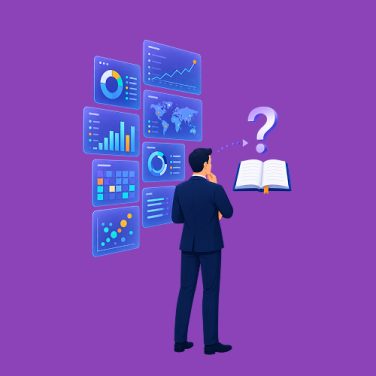

AI in HR analytics integrates Artificial Intelligence, machine learning, and predictive analytics to transform raw HR data into strategic insights.
Evolving from static dashboards to adaptive algorithms, teams now forecast attrition, optimise hiring, and spot performance trends in real time.
Data-driven HR shifts decisions from intuition to evidence, improving workforce planning and business outcomes.
ทำไม AI ถึงมีความสำคัญสำหรับ HR สมัยใหม่
- Speed: Automated analysis of attendance, performance, and demographic data in seconds.
- Precision: Predictive models identify flight risk, future top performers, and skill gaps.
- Scalability: Processes large, diverse datasets without manual effort.
- Actionable insights: Integrates with Power BI for visual analytics, enabling strategic workforce decisions.
Key topics covered include defining AI in HR analytics, comparing AI, ML, and predictive analytics approaches, and detailed use cases across recruitment, retention, and engagement. The guide outlines steps to implement AI with governance, change management, and success metrics. Readers will explore leading platforms, ethical considerations, and ROI measurement.
The MiHCM Data & AI module embeds predictive attrition and performance forecasting into MiHCM Enterprise. With out-of-the-box dashboards and seamless Power BI integration, role-based insights help HR managers and executives anticipate turnover and absenteeism proactively, uncover hidden patterns to boost productivity, and make strategic workforce decisions with visual analytics.
Key takeaways
- AI transforms HR by enabling predictive talent management across recruiting, retention, and engagement.
- Core benefits include turnover prediction, performance forecasting, and engagement optimisation.
- MiHCM Data & AI delivers integrated dashboards and Power BI reports for real-time insights.
- Successful AI implementation requires a clear data strategy, governance framework, and change management.
What is AI in HR analytics?
- Descriptive analytics: Aggregating past data for reporting.
- Predictive analytics: Forecasting turnover and absenteeism.
- Prescriptive analytics: Recommending actions to improve engagement.
| Approach | คำนิยาม | Use Case |
|---|---|---|
| Rule-based Analytics | Static if-then rules | Alert for low performance scores |
| Machine Learning | Adaptive algorithms trained on data | Predicting flight-risk scores |
How AI enhances HR decision-making

Unlike retrospective reporting, AI-driven platforms provide real-time insights by continuously analysing HR data streams. This shift from gut feel to evidence-based strategies empowers HR leaders to:
- Detect early signs of disengagement and intervene before performance declines.
- Adjust workforce plans dynamically based on predictive performance forecasts.
- Align talent initiatives with business goals by linking HR KPIs—such as attrition rates—to financial impact.
Scenario: A proactive retention campaign uses a flight-risk score derived from machine learning. HP’s pilot generated a Flight Risk score, estimating $ 300 million in potential savings by reducing unplanned departures WSJ, 2013. Leaders target high-risk employees with tailored development plans, mentorship, or compensation adjustments to retain critical talent.
By correlating reduction in attrition with cost avoidance, organisations gain clarity on the ROI of HR programs. For instance, Nielsen noted that a 1% decrease in attrition saves $ 5 million annually Fast Company, 2019. Linking such insights to strategic objectives drives informed investment in people initiatives.
Key benefits of AI in HR
Implementing AI in HR yields measurable advantages across the talent lifecycle:
- Improved Talent Acquisition: Automated resume screening and candidate matching reduce time-to-hire by up to 30%, ensuring the best-fit candidates advance quickly.
- Enhanced Retention: Predictive turnover models identify high-risk employees, enabling targeted interventions to reduce attrition.
- Optimised Workforce Planning: Performance forecasting powers scenario modelling, ensuring the right capacity for future business needs.
- Diversity and Inclusion: Unbiased algorithms surface diverse candidate pools and monitor pay equity to boost inclusion metrics.
- Streamlined Compliance: Automated policy checks and risk assessments maintain GDPR and CCPA compliance with minimal manual effort.
Moreover, Best Buy found that a 0.1 percentage-point increase in engagement translated to approximately $ 100,000 in additional store operating income Raconteur, 2020. These benefits underscore AI’s ability to drive business results through smarter people decisions.
HR functions that benefit most from AI

- Recruitment: AI-powered sourcing platforms automatically screen resumes, match candidates to job requirements, and rank talent based on predictive fit scores.
- Onboarding: Chatbots guide new hires through documentation, training schedules, and FAQs, creating personalised journeys that accelerate productivity.
- Performance Management: Continuous feedback loops, powered by sentiment analysis and goal-tracking algorithms, replace annual reviews with real-time coaching insights.
- Learning & Development: Skills gap analysis recommends tailored training modules, while adaptive learning paths evolve as employees gain new competencies.
- Workforce Planning: Capacity forecasting and scenario modelling simulate headcount needs under various business conditions, optimising resource allocation.
AI vs. ML vs. predictive analytics in HR
- Artificial Intelligence (AI): Broad field encompassing algorithms that perform tasks traditionally requiring human intelligence.
- Machine Learning (ML): Subset of AI where models learn patterns from data without explicit programming, improving predictions over time.
- Predictive Analytics: Combines statistical techniques and ML to forecast future events based on historical data.
Choosing the right approach depends on goals and data maturity.
Use statistical predictive analytics for well-defined forecasts like turnover rates. Adopt machine learning models when complex, non-linear relationships exist, such as parsing text from pulse surveys.
Integrating AI, ML, and predictive analytics within a unified platform ensures comprehensive insights—from descriptive dashboards to prescriptive recommendations.
Common AI use cases in HR

- Predicting Employee Turnover: Algorithms analyse factors like tenure, performance, and engagement to flag high-risk employees.
- Absenteeism Forecasting: Time-series models identify patterns in leave data to predict future absence trends.
- High-Potential Talent Identification: ML ranks employees by performance trajectories and promotion likelihood.
- Automating Resume Screening and Initial Interviews: Natural language processing parses applications and conducts standardised assessments at scale.
- Pulse Surveys with NLP: Sentiment analysis of open-text feedback uncovers organisational mood shifts.
- Compensation Benchmarking: Data-driven pay equity analysis ensures market-aligned, fair compensation.
Steps to implement AI in HR
- Assess Data Readiness and Quality: Audit existing HR data sources, ensure completeness and consistency.
- Define Clear Use Cases and Success Metrics: Select high-impact scenarios—like turnover prediction—and establish KPIs (e.g., reduction in attrition rate).
- Choose Technology Stack and Platforms: Evaluate solutions for scalability, integration, and Power BI compatibility.
- Pilot with Small User Groups: Run controlled tests, gather feedback, and refine models iteratively.
- Scale Deployment and Manage Change: Train stakeholders, roll out across teams, and maintain ongoing support.
Embedding AI into HR processes demands cross-functional alignment between HR, IT, and data teams. A robust governance framework ensures data privacy and model transparency, while a change management plan drives user adoption.
Challenges and ethical considerations
- Data Privacy, Consent, and Compliance: Adhere to GDPR and CCPA by securing employee consent and anonymising sensitive records.
- Mitigating Algorithmic Bias: Regularly audit models for disparate impact, retrain with balanced datasets, and apply fairness constraints.
- Transparency and Explainability: Implement interpretable models or post-hoc explanations to build trust and satisfy regulatory requirements.
- Change Management and Trust Building: Communicate AI benefits clearly, involve end users in design, and address concerns proactively.
- Balancing Automation with Human Judgment: Use AI to augment—rather than replace—critical HR decisions, ensuring human oversight at key junctures.
Selecting and evaluating AI tools for HR
| เกณฑ์ | Importance |
|---|---|
| ความสามารถในการขยายขนาด | Supports growing data volumes and users |
| บูรณาการ | Seamless with existing HRIS and Power BI |
| Usability | Intuitive interfaces for HR and leadership |
| Vendor Track Record | Proven ROI and reputable case studies |
When evaluating vendors, review case studies, customer references, and total cost of ownership. Ensure robust Power BI integration for custom reporting and role-based dashboards with access controls.
The future of AI in HR
Advances on the horizon include:
- Prescriptive Analytics and AI Co-Pilots: Systems will not only forecast outcomes but suggest optimal interventions.
- Generative AI for Content and Policy Drafting: Automated creation of job descriptions, policy documents, and training materials.
- Cross-Enterprise Data Sharing and Federated Learning: Collaborative models that learn from anonymised data across organisations.
- Continuous Learning Loops: Adaptive models updating in real time as employee behaviours and market conditions evolve.
- Evolving HR Roles: Shift from administrative tasks to strategic workforce architects skilled in data science and human insights.
How MiHCM Data & AI delivers analytics
MiHCM Data & AI offers a comprehensive suite of predictive and prescriptive analytics capabilities embedded within MiHCM Enterprise:
- HR Analytics for Better Decision Making: Prebuilt dashboards visualise attrition trends, performance forecasts, and diversity metrics.
- Interactive Dashboards with Power BI: Custom reports and drilldowns empower users to explore data at any granularity.
- Predict Workforce Performance: ML-powered modules generate flight-risk and high-potential scores automatically.
Role-based access ensures HR managers, recruiters, and executives see tailored insights. A quick-start process—data integration, model training, and dashboard setup—accelerates time to value.
ขั้นตอนต่อไป
AI in HR analytics empowers organisations to move from reactive reporting to proactive workforce strategies. By leveraging predictive models and real-time insights, HR teams can reduce turnover, enhance engagement, and align talent initiatives with business goals.
- Recap: AI shifts HR from gut feel to data-driven decisions and embeds predictive forecasting into everyday workflows.
- Call to Action: Pilot the MiHCM Data & AI module to experience seamless integration of analytics and Power BI dashboards.
- Next Step: Schedule a consultation with our experts to tailor a roadmap for your organisation.
คำถามที่พบบ่อย
How accurate are AI turnover predictions?
What data sources feed ai in hr analytics?
How quickly can MiHCM integrate with existing HRIS?
What training is required for HR teams?
How do you measure ROI of HR analytics?
Track metrics such as reduction in attrition rate, time-to-fill, engagement scores, and cost savings associated with turnover decreases.