Using AI for performance reviews can speed drafting, surface evidence and produce rolespecific suggestions, while leaving rating, disciplinary and hiring decisions to humans.
This guide explains where AI should sit in the review lifecycle, what HR must control, and how managers get better feedback faster without sacrificing fairness or auditability.
Where AI belongs in the review lifecycle
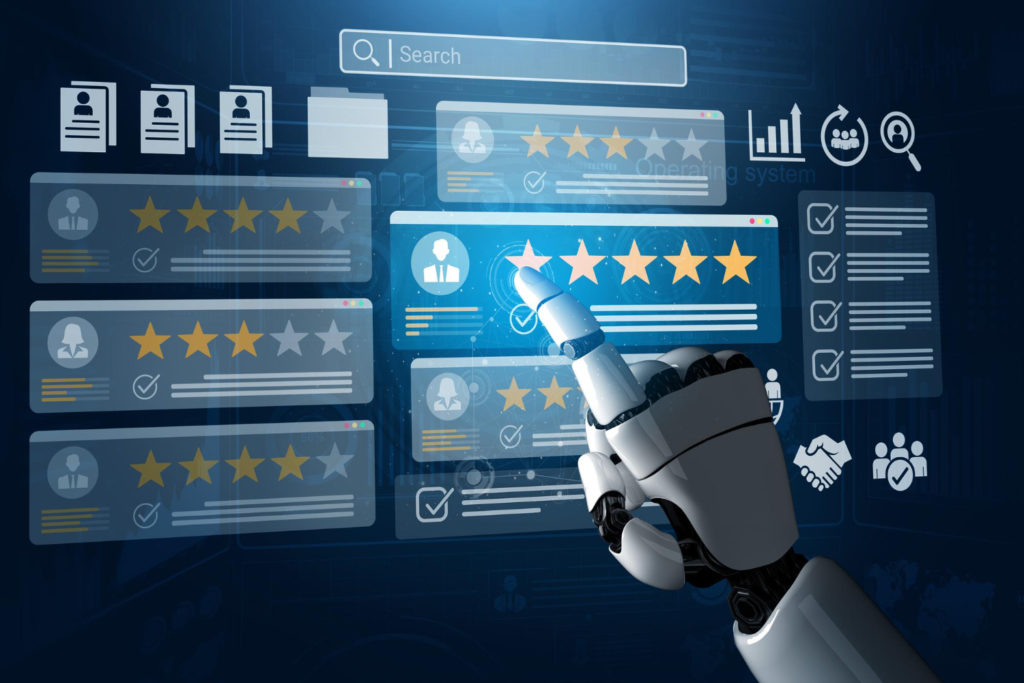
- Draft language and talking points: generate clear opening lines, evidencebacked summaries and suggested next steps.
- Goal drafting: propose SMART goals seeded from past objectives and business priorities.
- Evidence surfacing: aggregate goals, peer feedback and project milestones for manager review.
- Analytics & alerts: flag outliers, skills gaps and atrisk performers for human followup.
Quick definitions: LLMs, ML models, synthetic bias tests
- LLMs: generative language models that compose free text (high utility, higher guardrail needs).
- Classical ML: scoring and clustering models that identify patterns but do not craft narrative.
- Synthetic bias tests: counterfactual checks that swap demographic markers to detect differential outputs.
Immediate risks include bias amplification from historical data, hallucinations in generative models and data privacy concerns. Success measures are practical: higher manager confidence, documented reduction in prep time in pilots, improved calibration metrics and an enforced humanintheloop approval process.
Key actions for HR adopting AI in reviews
Quick action checklist for HR teams evaluating using ai for performance reviews:
- Start small: pilot AI for drafts and phrasing, not final ratings or disciplinary decisions.
- Require manager signoff on every AI suggestion and store edits in an edit log.
- Use standardised prompts and templates to reduce variance across managers.
- Run fairness tests (including synthetic/counterfactual checks) before rollout and sample audits quarterly. See Kusner et al., Counterfactual Fairness (2017) for methodology.
- Train managers with before/after editing exercises and include examples in calibration meetings.
For a deeper technical playbook, refer to the complete guide on AI in performance management — the complete guide.
How AI helps managers write better performance feedback

AI improves feedback quality by turning disparate signals into a structured draft managers can edit. Systems ingest goals, peer and customer feedback, time records, and task milestones and surface the most relevant facts with suggested phrasing. This reduces the cognitive load on managers and focuses their time on judgement, not assembly.
Core capabilities:
- Evidence aggregation: collect and prioritise verifiable data points (e.g., target attainment, peer comments, project delivery dates) for manager review. See SHRM’s coverage of generative AI summarising multiple feedback sources (SHRM, 2023).
- Structured language: provide an opening statement, one to two evidence lines, impact description and practical next steps to keep feedback concise and actionable.
- Tone control: produce variants matched to desired tone — coaching, recognition, or corrective — to avoid absolutes and reduce defensiveness.
- Smart suggestions: map recommended development actions to internal L&D modules and competency frameworks so feedback links directly to available resources.
- Calibrated comparisons: present peerdistribution context (peer quartile) and offer phrasing appropriate for each performance band.
Practical impact: managers keep final accountability while using AI drafts to accelerate preparation and improve consistency. Note: vendor claims of specific time savings vary—treat timesavings figures as implementationdependent and measure them in pilot projects.
Prompt library: templates and prompts for balanced, actionable feedback
Example prompt templates (managerfacing): Design prompts to include role context, timeframe, performance facts and desired tone. Require the AI to cite sources for each factual claim. Below are compact templates managers can copy and paste into a drafting assistant.
Highperformer (recognition): “Context: [Role], Review period: [Q1 2025]. Inputs: top 3 accomplishments, one customer quote, OKR status. Tone: celebratory but specific. Produce a 23 sentence recognition paragraph linking outcomes to business impact and suggest 1 stretch goal.”
Steady performer (developmental): “Context: [Role], Review period: [last 12 months]. Inputs: 3 accomplishments, 1 area for growth, training history. Tone: coaching. Produce an opening, 2 evidence lines, impact, and 2 specific development actions linked to L&D modules.”
Underperformer (behavioural): “Context: [Role], Review period: [6 months]. Inputs: missed KPIs (list), dates, peer feedback. Tone: factual, nonaccusatory. Produce a behaviourbased summary, examples with dates, impact statement and a suggested PIP conversation opener.”
Promotionready: “Context: [Role], Review period: [12 months]. Inputs: measurable outcomes, leadership examples, peer ratings. Tone: evaluative. Produce promotion case summary with 3 measurable achievements and 2 recommended stretch responsibilities.”
Guardrails to embed in prompts:
- Require source citations for every factual claim (goal %, dates, customer quote).
- Limit conjecture: do not infer motive or personal circumstances.
- Flag unverifiable statements and return “insufficient evidence” when sources are missing.
Manager workflow integrations:
- SmartAssist stores approved templates and generates oneclick drafts populated from HRIS fields.
- MiA can autofill inputs from HR data (goals, timesheets, peer feedback) so managers see source links preserved in drafts.
Example manager prompt using autofill: “Using the attached goal results and peer notes, draft a 3sentence performance summary with one suggested SMART goal. Cite the goal ID and peer note IDs.”
These templates create consistent language across managers, speed draft creation and make calibration easier during review cycles.
Before & after — realistic manager edits of AI-generated drafts
AI draft: “Alex meets their objectives, shows collaborative behaviour and should continue developing communication skills. Recommend attending a communication workshop.”
Manager edit: “Alex met 3/4 Q4 sales targets, led the crossteam migration delivering milestone B two weeks early, and received a client praise email on 12 Nov (see note #234). To improve stakeholder updates, propose a weekly 15minute sync and enrol Alex in the internal presentation skills module (LDM101) by endQ2.”
Annotation: Manager adds measurable outcomes, dates, source IDs and a concrete next step — transforming a bland summary into actionable feedback.
Sample 2 — underperformer: phrasing that reduces defensiveness
AI draft: “Jordan’s performance is below expectations and requires improvement.”
Manager edit: “Jordan missed the Q1 delivery deadlines for Projects X and Y (see milestones 3/4 and 1/2). This affected customer SLA compliance by 8%. Discuss root causes in the 1:1: workload prioritisation, blocker removal and two targeted coaching sessions on task scoping. Agree clear deliverables for the next 30 days.”
Annotation: Behaviourbased language, evidence and a clear plan reduce perceived personal blame and make the next step constructive.
Turning a draft into 1:1 talking points
- Open with a short affirmation of intent (“I want to help you succeed on these priorities”).
- Read 1–2 evidence lines aloud, then pause for employee response.
- Propose one concrete action and confirm timelines together.
These before/after examples train managers to convert AI text into human, contextualised feedback and avoid overreliance on canned language.
Fairness & bias mitigation — how to validate AI outputs
Validation tests to run before production
Bias can enter via historical ratings, uneven input coverage across roles, or model training data. Run the following checks before production:
- Synthetic/counterfactual tests: submit identical performance records with altered demographic markers to surface differential output language. See counterfactual fairness methodology (Kusner et al., 2017).
- Statistical audits: measure variance in praise vs corrective language by gender, ethnicity, job band and tenure.
- Explainability checks: require the model to return the evidence lines that justify each positive/negative claim (e.g., “Exceeded Q3 revenue by 12% vs target — source: Goal ID 455”).
- Sampling audits: randomly inspect 5–10% of AI drafts each cycle for accuracy, tone and fairness.
- Prompt redteaming: diverse HR and legal reviewers probe prompts to find bias triggers and refine guardrails.
Automated tooling can speed these checks. MiHCM Data & AI includes cohort analytics and biasdetection capabilities to surface systemic variance before it affects employees. For operational governance, enforce confidence thresholds, require source citations and escalate uncertain outputs to HR for review.
Run audits quarterly and track metrics: edit rate, accept rate, average difference in sentiment by cohort, and proportion of drafts flagged for HR review. These metrics feed executive dashboards for transparency and remediation planning.
When to override AI — human-in-the-loop rules managers should follow

Managers must always exercise final judgement. Use these humanintheloop rules:
- Always review and edit: every AI sentence should be verified for accuracy and tone before saving to records or sharing with the employee.
- Context gaps: override when AI omits recent context (temporary role changes, approved leaves, informal coaching conversations).
- Legal sensitivity: any statement tied to discipline, contractual changes or dismissal requires HR/legal review before inclusion.
- Unverifiable claims: remove or correct AI statements referencing data the manager cannot confirm.
- Escalation criteria: set clear thresholds (e.g., recommendation for a Performance Improvement Plan, or disciplinary phrasing) that automatically require HR signoff.
Embed brief manager confirmations in the workflow (e.g., “I confirm I reviewed and verified the factual claims above”) to create accountability and reduce blind acceptance of AI text.
AI approaches compared — rule-based, ML models and LLMs
| Approach | Strengths | Limitations | Best fit |
|---|---|---|---|
| Rulebased | Transparent, low risk of hallucination | Limited nuance; brittle at scale | Standardised phrasing, regulatory checks |
| Classical ML (scoring) | Good at flagging trends and at-risk cohorts | Not suitable for free-text drafting | Risk detection, cohort analytics |
| LLMs (generative) | High-quality drafts and tone control | Hallucination risk; needs grounding and monitoring | Drafting, phrasing variants, manager coaching prompts |
| Hybrid (recommended) | Combines signals and safe templates | Requires integration effort | Seed LLM drafts with ML signals; use templates for final structure |
Use ML systems to surface objective signals and seed LLM drafts. Then apply deterministic templates and human review to reduce hallucination and ensure consistency. Larger organisations should budget for prompt engineering, monitoring and periodic validation; smaller teams can start with templatedriven assistants like SmartAssist in MiHCM Lite.
Governance, audit logs & record-keeping — building an auditable system
Minimum audit fields to record (prompt, model, source IDs, manager ID, edit diff, timestamp)
To build a defensible system, capture the following for every AI interaction:
- Prompt text and any autofilled HRIS fields.
- Model identifier and version (including date/stamp).
- Source IDs for evidence lines (goal IDs, peer note IDs, timesheet entries).
- Generated draft and the final manager edit (diff) with timestamps.
- Manager and reviewer IDs and approval timestamps.
Standards bodies recommend keeping provenance metadata to support oversight; for example, NIST’s AI guidance advises tracking model provenance and inputs to enable auditing (NIST, 2024).
Other governance considerations:
- Retention policy: align draft retention with local employment and data protection laws.
- Access controls: restrict who can generate drafts, view raw outputs and approve final text.
- Calibration usage: use saved drafts and edits in calibration meetings to update templates and prompt phrasing.
- Reporting: executive dashboards should surface adoption, bias metrics, edit rates and occasions requiring HR intervention.
Implementation roadmap — pilot, train, measure and scale
Phased rollout to reduce risk and prove impact:
- Phase 1 — Discover & design: map data sources, select a lowrisk pilot (e.g., midyear checkin drafting for nonsensitive roles), and define KPIs (prep time, edit rate, calibration variance).
- Phase 2 — Build & pilot: assemble a prompt library, run synthetic bias tests, and pilot with volunteer managers for 2–3 cycles. Include legal and peopleanalytics in the pilot panel.
- Phase 3 — Evaluate & iterate: measure time saved, manager satisfaction, edit rates and fairness metrics; refine prompts and guardrails based on findings.
- Phase 4 — Scale & govern: expand to more populations, embed audit logging, enforce human signoff policies and integrate the assistant into HR workflows.
Training & enablement: run handson workshops where managers practise editing AI drafts, review before/after examples and calibrate language together.
KPIs to track:
- Average prep time per review (baseline and postpilot).
- Edit rate: proportion of AI text changed (high accept rates without edits should trigger review).
- Calibration variance across teams.
- Bias metrics by cohort (sentiment and outcome differences).
Measure impact iteratively and keep governance adaptive: update prompts quarterly or after any detected bias signal.
Governance checklist (quick)
- Define scope: drafting only; exclude ratings and dismissal recommendations.
- Create a prompt library and template store (SmartAssist).
- Run synthetic/counterfactual bias tests before production (Kusner et al., 2017).
- Pilot with volunteers and measure KPIs.
- Require human signoff on every AI draft and store the edit diff.
- Maintain immutable audit logs and retention aligned to local law.
- Train managers: handson editing workshops and calibration sessions.
- Review prompts and audit results quarterly.