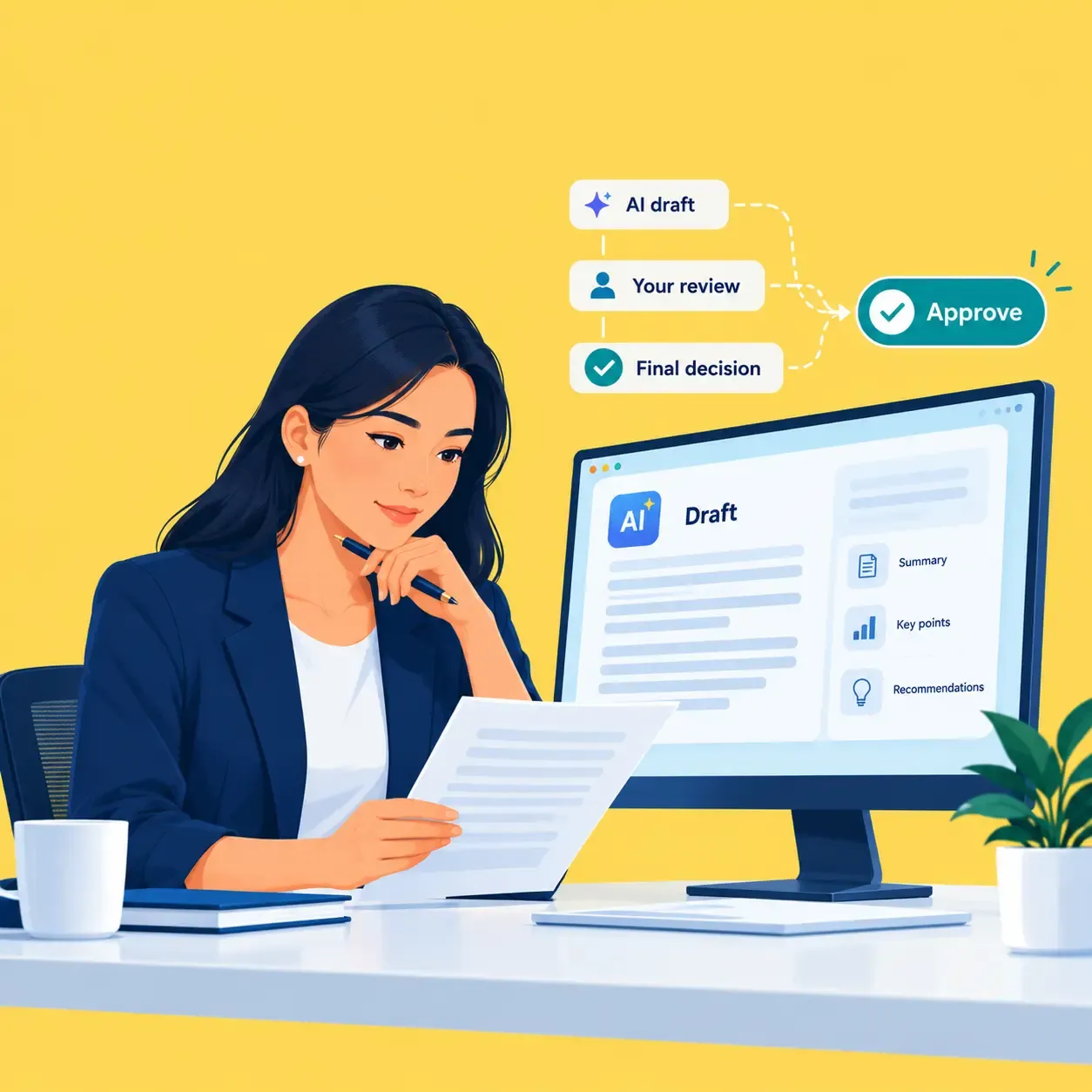
Ask HR in any large Malaysian enterprise where the working day goes. The answer is rarely strategy. It is leave balances, check-in corrections, approval chases and the same policy question, asked again and again.
None of these requests is hard on its own. Together, they crowd out the work HR is there to do. For employees, every one of them means a portal, a form or another email thread.
MiA ONE, MiHCM's AI-powered personal assistant, is built for exactly this layer of work. This blog sets out what it does, how it fits a Malaysian enterprise, and what to get right before you roll it out.
The problem is volume, not complexity
In an organisation of several hundred or several thousand people, routine HR requests never stop. Someone needs a day off. Someone forgot to check in. A manager has six approvals waiting and no time to open the system.
Each request also carries a rule. Leave entitlements, working hours, rest days and approval limits all sit behind the simplest question. In Peninsular Malaysia and Labuan, the Employment (Amendment) Act 2022 came into force on 1 January 2023, cutting maximum working hours to 45 a week and extending maternity leave to 98 days. Changes like these flow straight into leave rules, rosters and timesheets, and straight into the questions employees ask HR.
The result is a high-volume, rule-heavy workload. That is precisely the kind of work an AI-powered assistant handles well.
What MiA ONE is
MiA ONE is a personal AI assistant for every employee. It works on top of the HR system, so people complete everyday tasks by asking rather than by navigating screens.
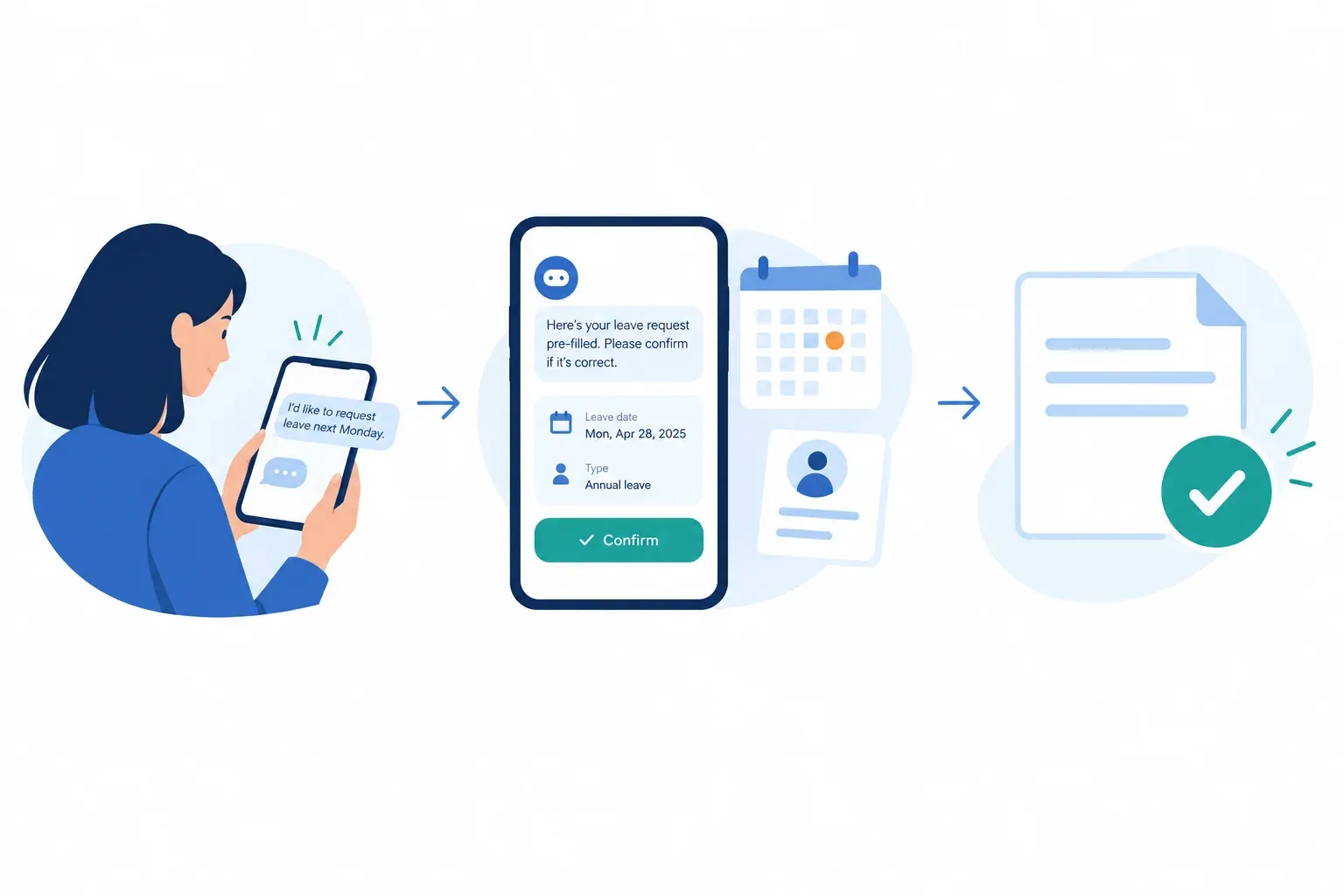
The pattern is simple: ask, confirm the details, move on. MiA ONE validates the request against policy, pre-fills what it can and completes the task in the background. Employees can use it on the web and on iOS and Android, by chat or by voice.
What MiA ONE handles, day to day
For employees
- Leave: check balances and apply for leave in a single sentence, with the request checked against entitlement before it is submitted.
- Attendance: check in with geo-based check-ins and keep timesheets up to date.
- Policy questions: get answers on policies and guidance in the flow of work, instead of searching a handbook.
- Notices and reminders: receive organisation-wide updates and reminders where they already work.
For managers
- Approvals: review requests that arrive already validated against policy, and approve them in the conversation.
- Team insight: draw on organisational and team data, accessed securely, to make clearer day-to-day decisions.
- Follow-through: keep track of pending actions without opening a separate system.
For HR
- Fewer routine queries: questions that once landed in HR's inbox are answered at source.
- Policy assurance: policies, guidance and updates reach employees in the flow of work, so actions are aligned, acknowledged and auditable.
- Cleaner records: requests validated before submission mean fewer corrections later.
Why "validated before it is submitted" matters
Most HR errors are not made at approval. They are made at the point of request. An employee applies for more leave than they have. A timesheet misses a day. A request goes to the wrong approver.
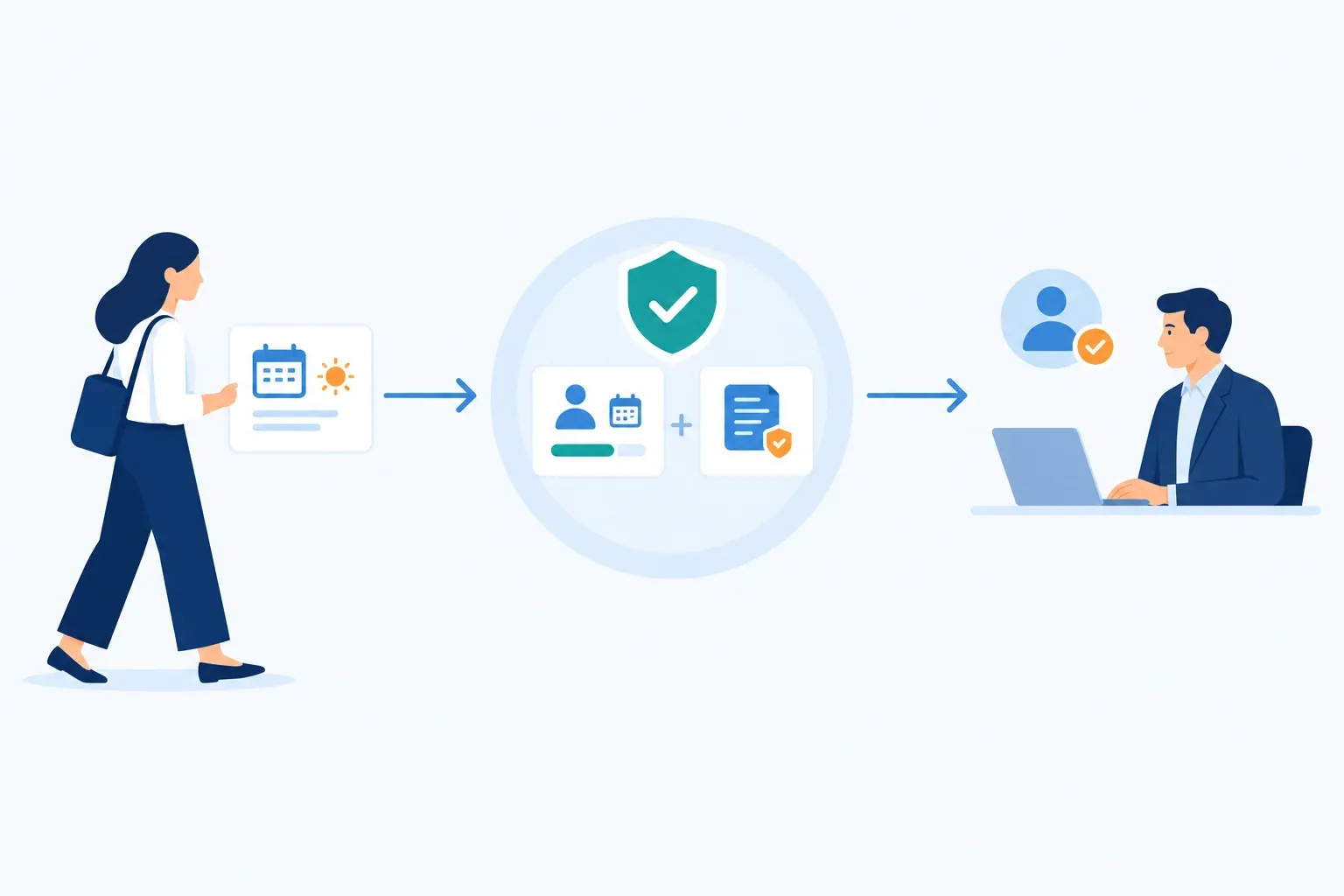
Traditional self-service catches these mistakes late, often after a manager has approved and HR has started processing. MiA ONE moves the check to the start. Because it validates against policy and pre-fills from the employee's own records, a request that breaks a rule is flagged while the employee is still asking.
That shift matters most at scale. Every error stopped at source is one less correction for HR and one less query for payroll.
A day with MiA ONE: an illustrative scenario
Consider a Malaysian enterprise with its head office in Kuala Lumpur, an operations site in Shah Alam and a sales team in Penang. The scenario below is illustrative.
At 8:05, an operations supervisor in Shah Alam checks in through MiA ONE on her phone. Her location is captured with the check-in. No paper, and no correction later.
At 9:30, a sales executive in Penang asks MiA ONE for two days of annual leave next week. MiA ONE checks his balance and the leave policy, pre-fills the request and asks him to confirm. It reaches his manager straight away.
At 11:00, his manager approves it inside the conversation, alongside two other pending requests.
At 2:00, a new father asks about his paternity leave entitlement. MiA ONE answers from the leave policy the company has configured, which must at least meet the statutory minimum. For eligible married male employees in Peninsular Malaysia and Labuan, the Employment Act provides seven consecutive days of paid paternity leave, subject to statutory conditions.
By the end of the day, HR at head office has handled none of these requests by hand. Each one is recorded in the HR system, against the right employee, with the policy check attached.
How MiA ONE fits with the rest of MiHCM
MiA ONE is one part of a wider platform. Each part has a clear job.
Product | Who it is for | What it does |
|---|---|---|
MiHCM Enterprise | HR, payroll and operations teams | Runs core HR, leave, time and attendance, and payroll for medium and large organisations. |
MiA ONE | Every employee and line manager | Lets people complete everyday HR tasks and approvals by conversation. |
Syntra | Business leaders and HR leadership | Answers workforce questions in natural language, with charts and analysis across workforce data. |
MiHCM SmartAssist | HR practitioners | Acts as an AI-powered HR co-pilot for core HR tasks and recruitment. |
The split is deliberate. MiA ONE serves the employee experience. Broad, cross-functional analytics for executives sit with Syntra, which connects to MiHCM and third-party systems through secure APIs.
What MiA ONE does not do
Clarity about scope matters as much as the feature list. MiA ONE is built for the employee experience: everyday requests, approvals, policy answers and notices.
It is not an executive analytics tool. Cross-functional workforce intelligence, such as attrition trends or overtime analysis across regions, sits with Syntra. Nor does MiA ONE replace HR judgement. Sensitive or unusual cases still go to people, and the assistant's job is to clear the routine work so HR has time for them.
Security and governance
An assistant that touches employee records must meet the same standard as the HR system behind it. MiHCM holds SOC 2 Type II, ISO/IEC 27001 and ISO/IEC 27701:2025 certifications. Details are available on the MiHCM Trust Portal.
For Malaysian employers, employee data also falls under the Personal Data Protection Act 2010. Whichever assistant you choose, ask the vendor where data is processed, who can see it and how actions are logged.
What to get right before you roll out
- Start with high-volume, low-risk requests. Leave, check-ins and policy questions deliver value fastest.
- Clean up policies first. An assistant is only as accurate as the rules configured behind it.
- Map approval routes. Confirm who approves what, by grade and by location, before requests start flowing.
- Tell employees what it can do. Be clear about what MiA ONE handles and where to go for anything else.
- Agree what success looks like. Track request volumes, approval turnaround and the policy exceptions caught before submission.
The bottom line
Malaysian enterprises do not lack HR systems. They lack time. MiA ONE gives that time back by moving routine requests out of HR's inbox and into a conversation that checks the rules as it goes.
Employees get answers faster. Managers approve with confidence. HR gets back to the work that needs people.
Book a demo to see MiA ONE on your own HR processes.