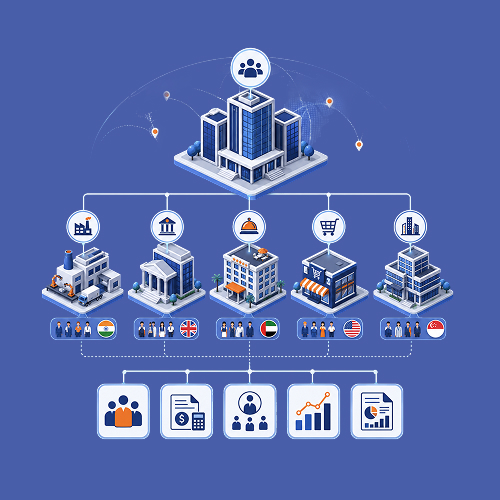
A conglomerate is, by definition, more than the sum of its parts. Several businesses under one group structure, each with its own operations, workforce, management, and often its own legal and regulatory environment. For group HR leaders, that structure creates a complexity that standard HR systems are simply not designed to handle.
Single-entity HR software assumes a unified workforce operating under a common set of rules. Multi-entity, multi-country reality is the opposite: different statutory frameworks, different payroll structures, different employment classifications, and different business contexts, all of which must be managed individually and reported on collectively.
This blog examines the specific HR challenges that conglomerates face and what enterprise HR software must deliver to address them.
The defining characteristics of conglomerate HR complexity
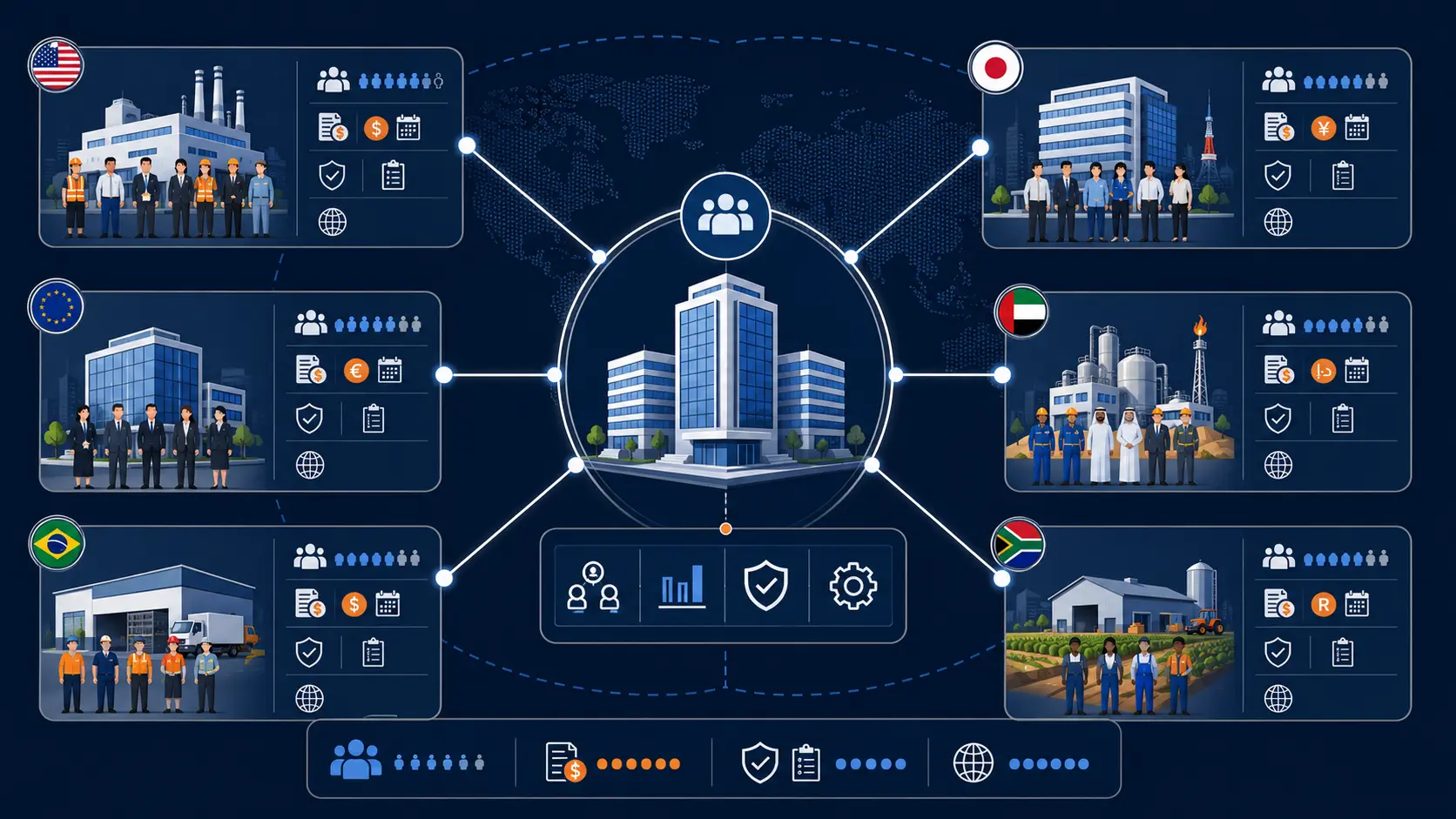
Multiple legal entities, each with distinct obligations
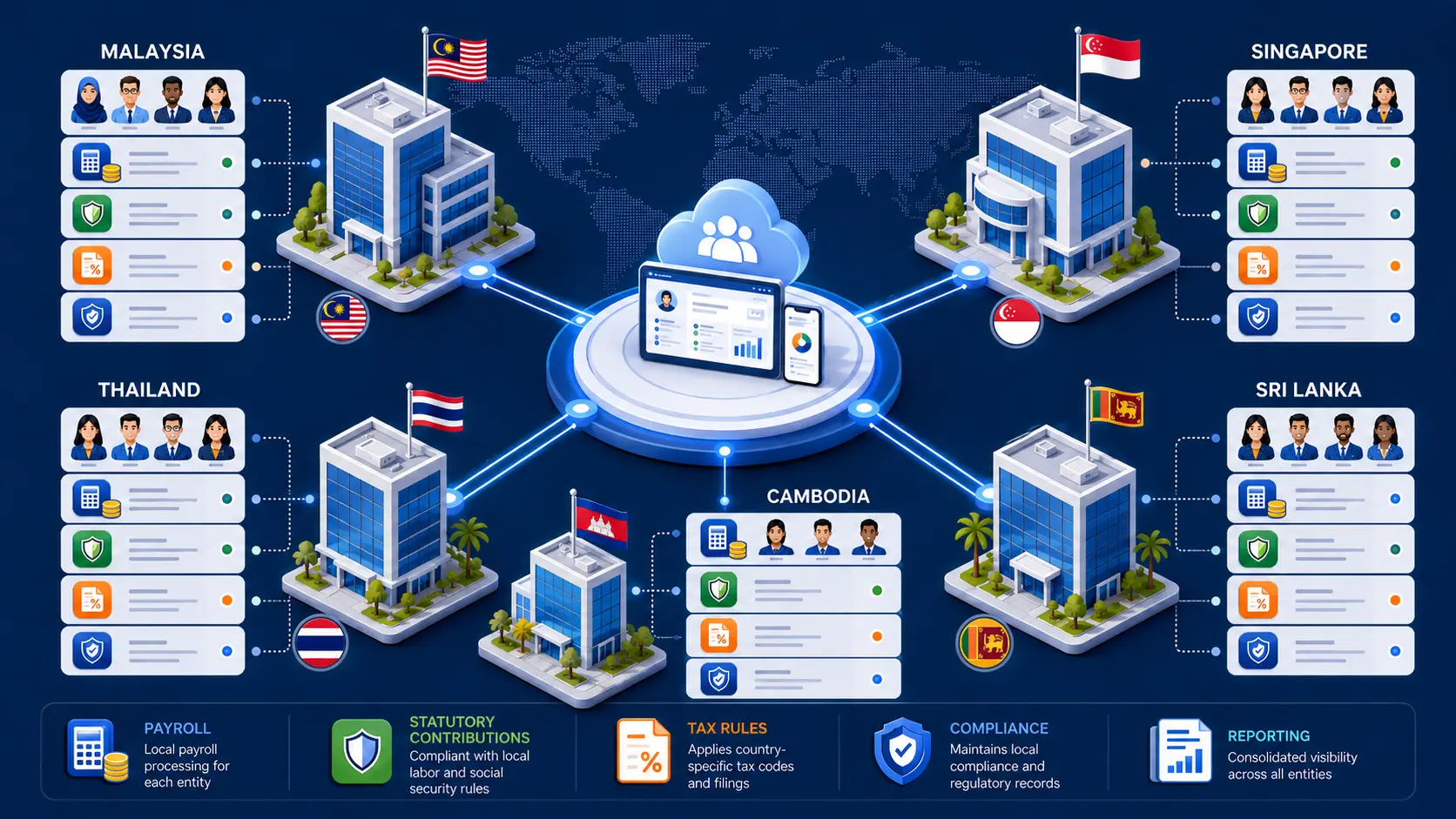
Within a conglomerate, each subsidiary or business unit is typically a separate legal entity. Employment contracts are issued by the entity, not the group. Payroll is processed by the entity. Statutory obligations — tax, social security, pension contributions — are filed by the entity, to the relevant authority in its market.
For a group operating across Malaysia, Singapore, Thailand, Cambodia, and Sri Lanka, this means five distinct statutory frameworks, five sets of contribution rules, five payroll filing requirements — and the need to manage all of them simultaneously, accurately, and in compliance with each market’s current regulations. What is correct practice in Malaysia is not necessarily correct in Thailand. What the Employees Provident Fund requires in Malaysia differs structurally from CPF requirements in Singapore and SSO requirements in Thailand.
The HR system must handle this not as an exception but as a core design principle — with separate rule sets per entity, separate payroll runs, and separate statutory reporting, all managed within a single platform.
Diverse business units with different HR requirements
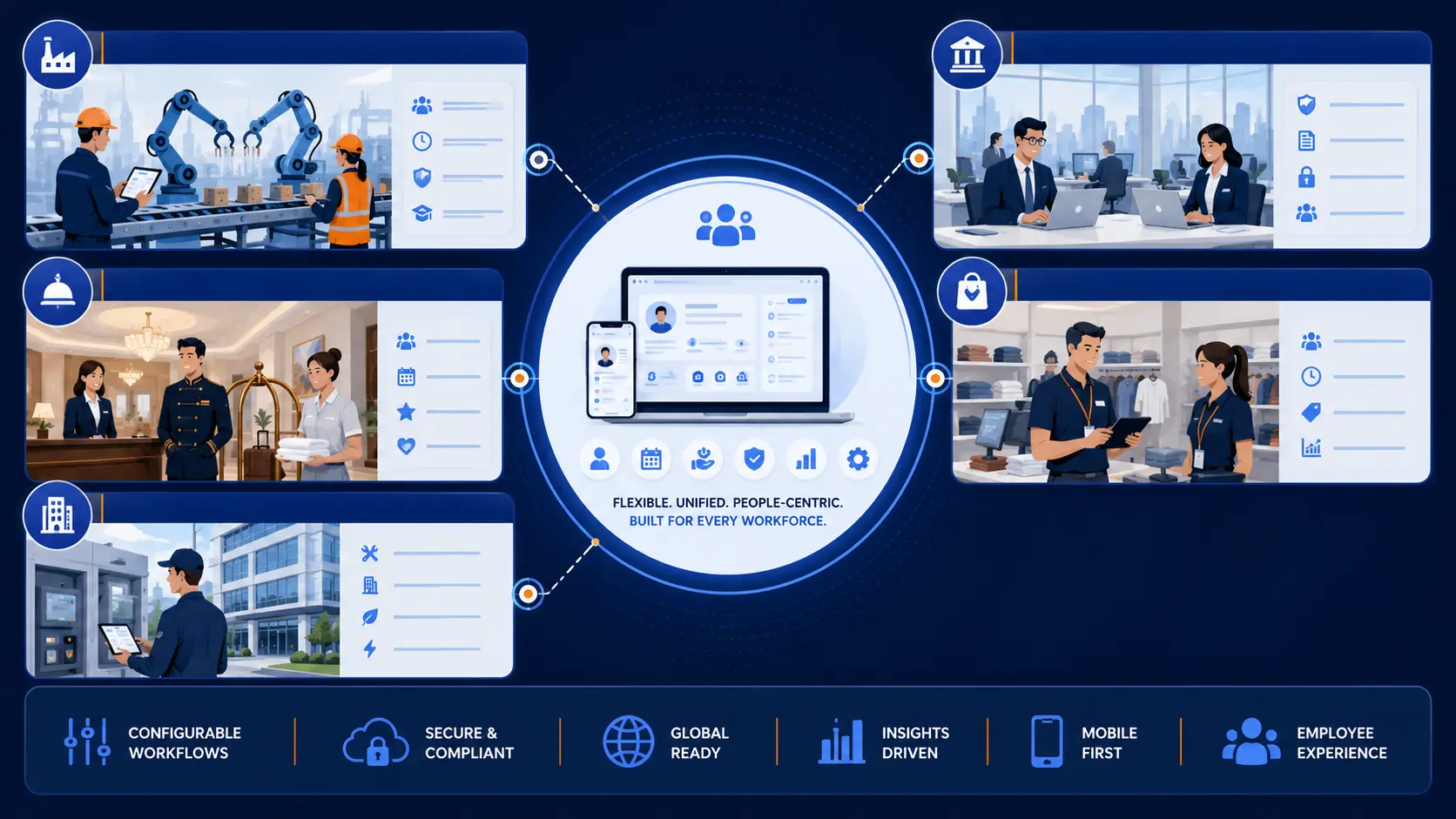
Conglomerates are typically diversified — operating across industries with different workforce profiles. A group might include a manufacturing business with shift workers and piece-rate pay, a financial services arm with regulatory compliance requirements, a hospitality division managing seasonal staffing and service charge distributions, and a retail or property business with high turnover and part-time workforce considerations.
Each vertical has different HR needs — different attendance rules, different payroll structures, different compliance requirements, and different performance management frameworks. A single platform must accommodate all of these without requiring separate systems for each business unit.
Group reporting versus entity-level operations
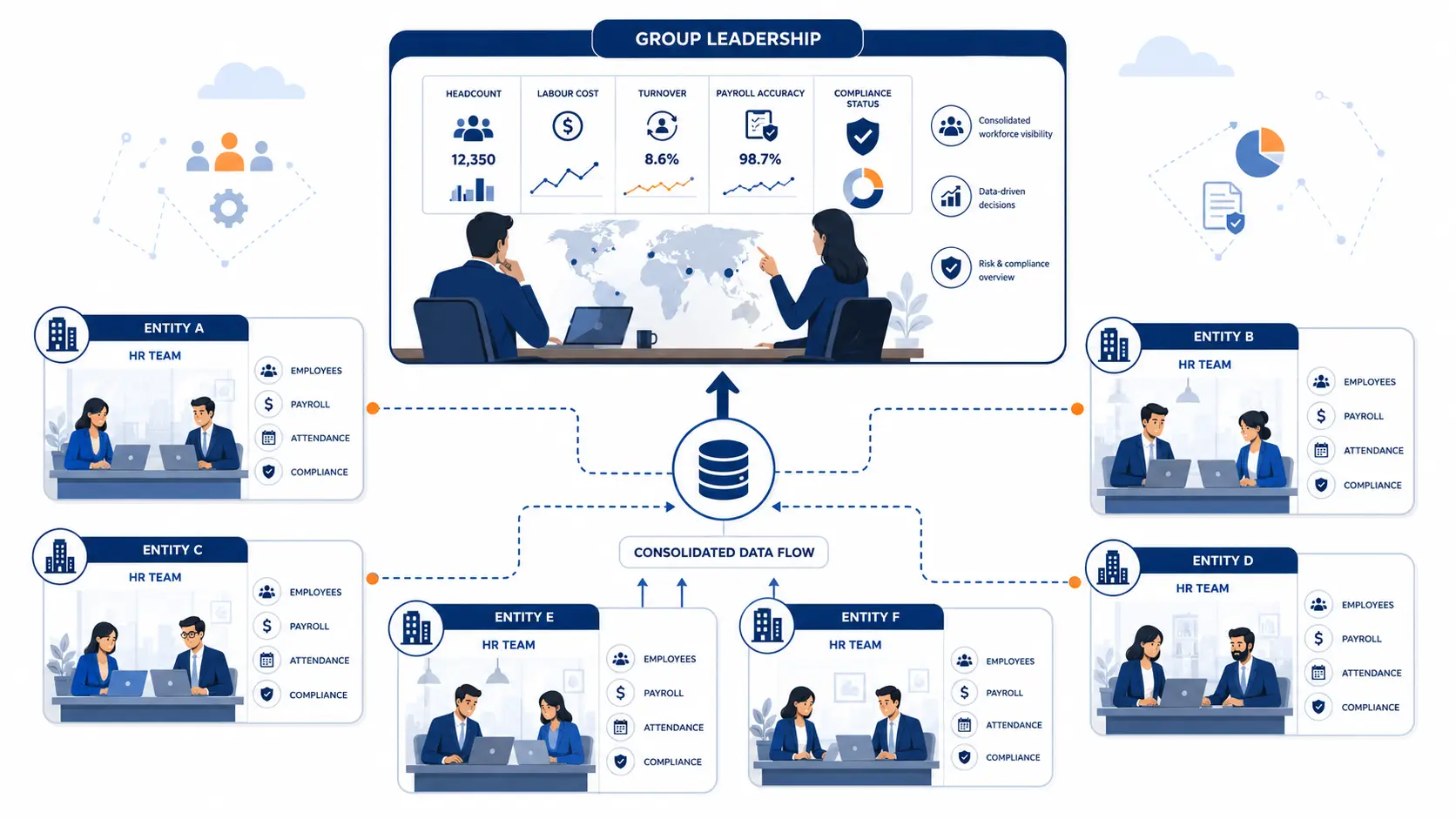
Group leadership — the board, the group CEO, and the group CFO — needs a consolidated view of workforce data across all entities: total headcount, labour cost by entity and group, turnover trends, payroll accuracy, and compliance status. But each entity’s HR team manages its own operations and needs entity-level control and reporting.
This creates a dual-layer requirement that most standard HR systems cannot fulfil. The platform must support entity-level operations with entity-specific rules, while simultaneously aggregating data into a group-level view that is accurate, current, and immediately accessible to group leadership.
Standardisation versus local flexibility
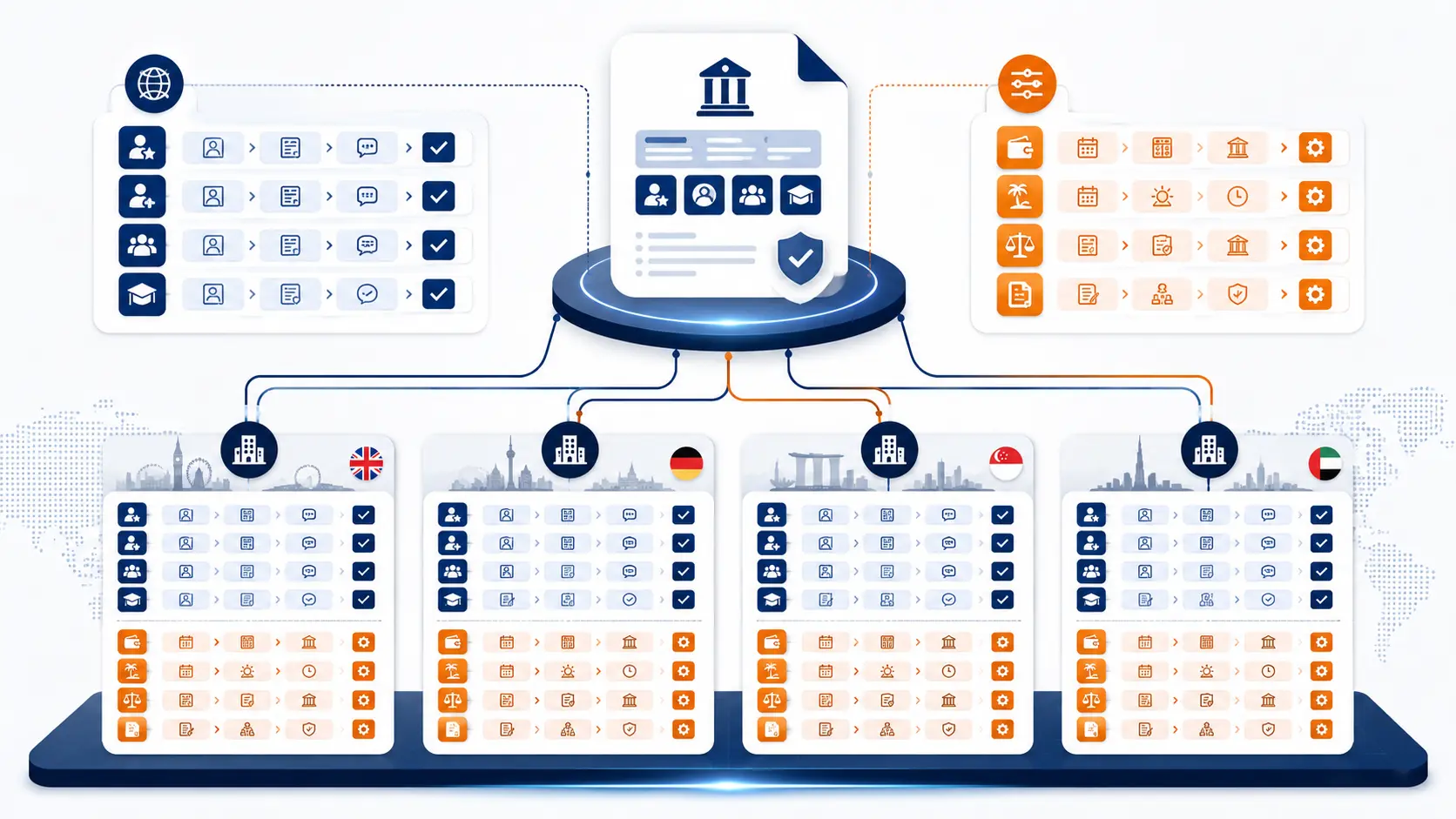
One of the central tensions in conglomerate HR management is the balance between group-wide standardisation and local flexibility. HR policy frameworks, performance review cycles, talent management processes, and learning and development programmes benefit from standardisation — it builds a unified group culture and enables consistent performance management across entities.
But payroll, statutory compliance, employment terms, and certain HR policies must reflect local legal requirements and market norms. The right platform enables this: standardising what should be standardised, and localising what must remain local — without requiring manual configuration work each time a local rule changes.
Data governance across multiple markets
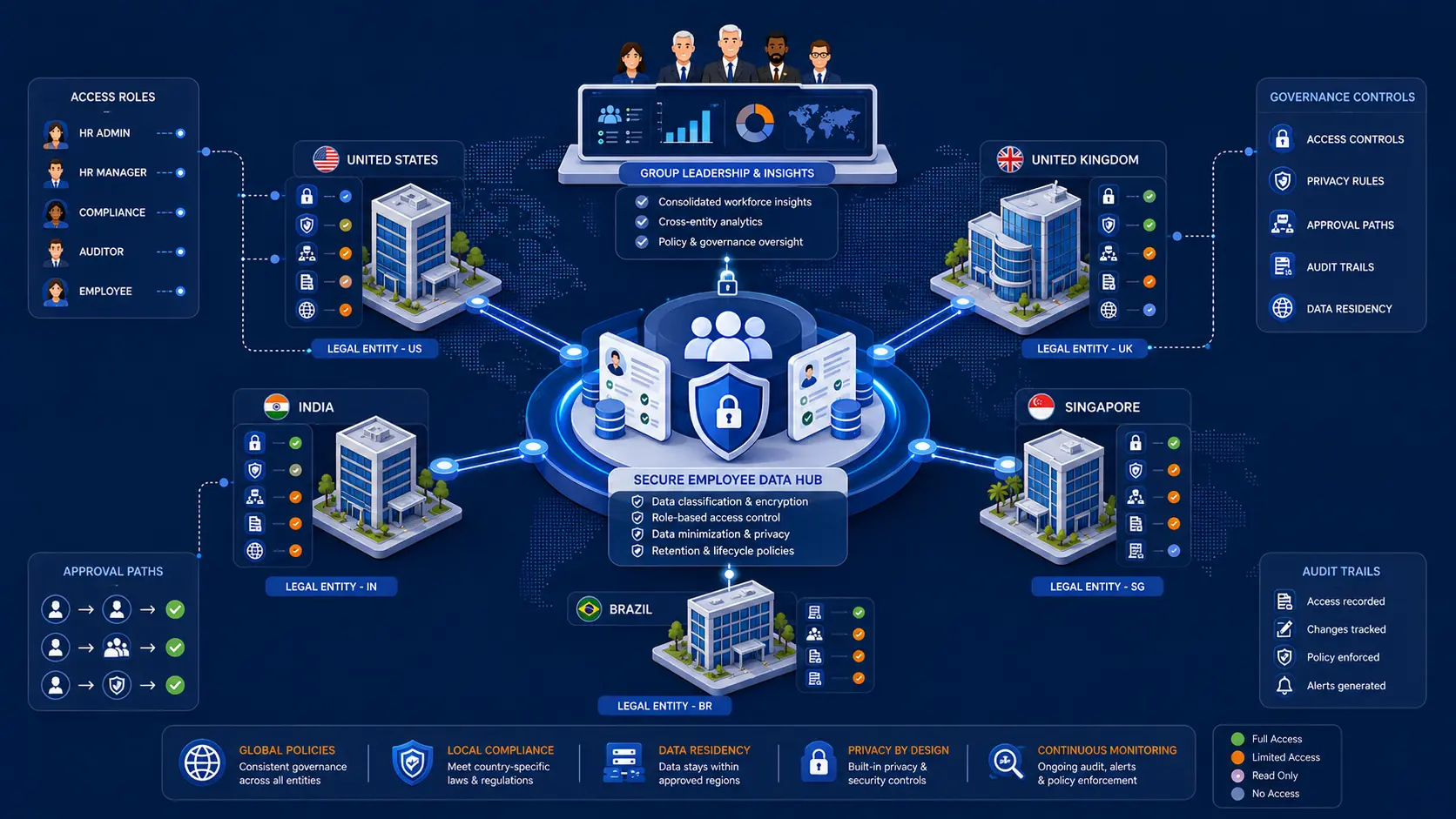
Conglomerates operating across ASEAN and South Asia must navigate data protection regulations that differ by market — Malaysia’s PDPA, Singapore’s PDPC framework, Thailand’s PDPA, and the data governance requirements of other markets. Employee data held within an HR system must be managed in compliance with the rules applicable to each entity’s jurisdiction, which includes data residency considerations and access control requirements.
Group-level HR reporting must be achieved without compromising entity-level data governance obligations. This requires a platform with configurable data access controls, audit trails, and an underlying infrastructure that meets enterprise security and compliance standards.
What enterprise HR software must deliver for conglomerates
Multi-entity architecture as a design principle. The platform must natively support multiple legal entities within a single instance, with separate payroll runs, separate statutory rules, and separate reporting for each entity. This is different from running separate HR system instances — it requires a unified platform with entity-level partitioning.
Country-specific statutory compliance, automatically maintained. Each entity’s payroll engine must apply the correct statutory rules for its market — contribution rates, tax bands, filing formats — and update automatically when those rules change. Manual maintenance of statutory rules across multiple entities in multiple countries is unsustainable and a source of persistent compliance risk.
Multi-currency payroll. Groups operating across borders process payroll in multiple currencies. The platform must handle multi-currency pay runs with configurable exchange rate settings, producing accurate payroll records for each entity in the correct currency.
Consolidated group analytics alongside entity-level reporting. Group leadership needs a single dashboard showing workforce KPIs across all entities — headcount, labour cost, turnover, payroll accuracy, attendance. Entity HR teams need granular access to their own data. Both requirements must be met by the same platform, with role-based access controls governing what each user can see.
Configurable HR policy frameworks with local overrides. The platform must support group-level HR policy templates — performance review structures, leave entitlement frameworks, onboarding workflows — that can be applied uniformly across entities while allowing local overrides where statutory or market requirements necessitate them.
Workforce intelligence for group decision-making. At group level, decisions about talent allocation, succession planning, workforce restructuring, and cost management require reliable, real-time people data across all entities. The platform must surface this intelligence — not just store the data.
Integration with group enterprise systems. Conglomerates typically run ERP, finance, and other enterprise systems at group or entity level. The HR platform must integrate with these systems to eliminate manual data reconciliation and provide a single source of truth for workforce cost and headcount data.
MiHCM for conglomerates and diversified groups
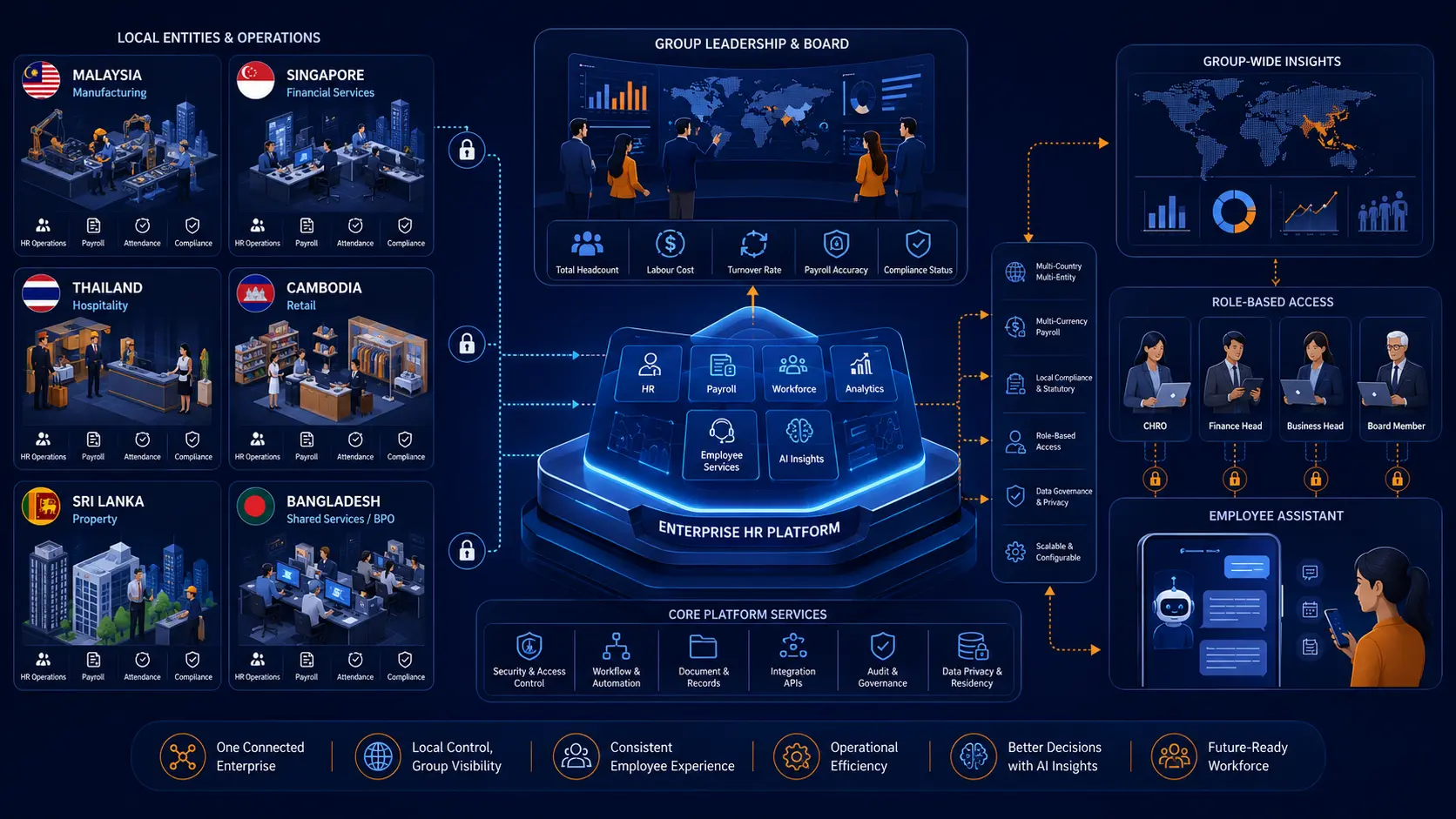
MiHCM Enterprise is built for the kind of multi-entity, multi-country, multi-industry complexity that defines conglomerate HR operations. It is deployed by groups operating across several Asian markets, spanning diverse industry verticals and workforce profiles.
MiHCM’s client base across Asia includes organisations in diversified groups, banking and financial services, manufacturing, telecommunications, and retail — often within the same group structure. The platform is designed to serve both the group and the entity simultaneously.
Key capabilities for conglomerates include:
- MiHCM Enterprise with multi-entity architecture, supporting separate payroll, statutory compliance, and HR operations per legal entity within a single platform instance
- MiHCM Payroll with multi-currency support, automated statutory compliance across Malaysia, Singapore, Thailand, Cambodia, Sri Lanka, Bangladesh, and additional markets, and flexible salary formula configuration per entity
- Syntra, MiHCM’s AI-powered intelligence platform, which consolidates workforce data across entities and delivers real-time analytics, interactive dashboards, and natural language query capability for group leadership — generating board-ready reports in PowerPoint, Excel, or PDF instantly
- MiHCM Data & AI, providing custom analytics and workforce intelligence solutions built on Microsoft Azure — including predictive modelling, machine learning, and advanced workforce analytics for group-level decision-making
- Role-based access controls ensuring entity-level HR teams access only their own data, while group HR leadership retains consolidated visibility across all entities
- SmartAssist, the AI-powered HR co-pilot, automating documentation, reducing administrative load at both entity and group level
- MiA ONE, MiHCM’s personal AI agent, providing all employees across all entities with a consistent, conversational HR experience regardless of which entity they belong to
- ISO/IEC 27701:2025 Privacy Information Management certification and Microsoft Azure infrastructure, providing the data governance and security standards that group compliance and legal teams require
“MiHCM clients span large banking and financial institutions, telecommunications, manufacturing, conglomerates, retail, start-ups and technology companies. MiHCM helps these enterprises to build digital HR organisations that leverage the diverse portfolio of digital HR experiences.”
MiHCM currently serves over 1,000 Enterprise clients across 22 countries, with a strong presence in Asia across diverse industry verticals including diversified groups and conglomerates. Visit mihcm.com to learn more.
The bottom line
Conglomerate HR is not just more HR; it is structurally different HR.
The multi-entity, multi-country, multi-industry nature of a diversified group creates complexity that requires a platform designed specifically to handle it: entity-level operations that remain locally compliant, and group-level visibility that remains accurate and current.
Getting this right does not just reduce administrative burden. It gives group leadership the workforce intelligence they need to make decisions that drive performance across the whole organisation.
To find out how MiHCM Enterprise supports conglomerates and diversified groups, visit `.com` or book a demo.