
Southeast Asia’s HR technology market is no longer an emerging story; it is a fast-moving one.
The region’s HR software market was valued at approximately USD 578.4 million in 2024 and is forecast to grow at a compound annual growth rate of around 15% through 2030¹, as enterprises move away from spreadsheets and manual payroll runs towards cloud-based platforms.
IDC estimates that by 2026, more than 55% of Southeast Asian enterprises with over 200 employees will have at least partially migrated their core HR processes to the cloud, up from roughly 34% in 2023². The appetite for HR software is not in question. What separates the organisations that get real value from their investment from those that don’t is how the implementation itself is run.
The uncomfortable truth about HR system rollouts
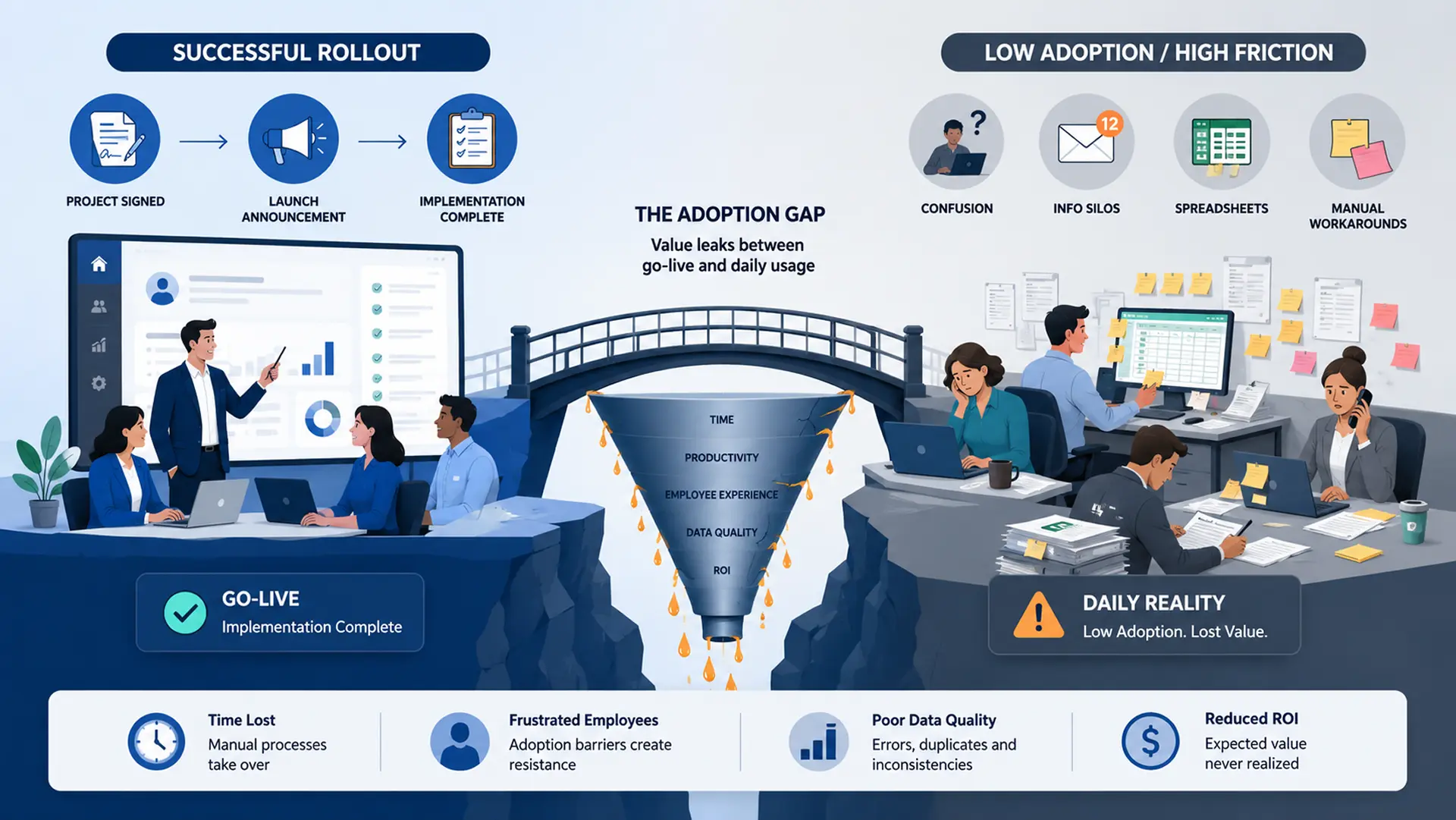
Enterprise software projects fail more often than most leaders expect.
Gartner research puts ERP implementation failure rates at between 55% and 75%³, and a separate Gartner survey found that the average HRIS is actively used by only 32% of employees⁴ once it goes live. That gap between a signed contract and a system people actually rely on is where most of the value leaks away.
The good news is that the pattern is well understood, and ASEAN’s most successful implementations consistently avoid the same handful of mistakes.
“HRIS implementation fails most often because of dirty data and weak change management, not the software itself.”
— HR Cloud, HRIS Implementation Playbook
What successful ASEAN companies do differently
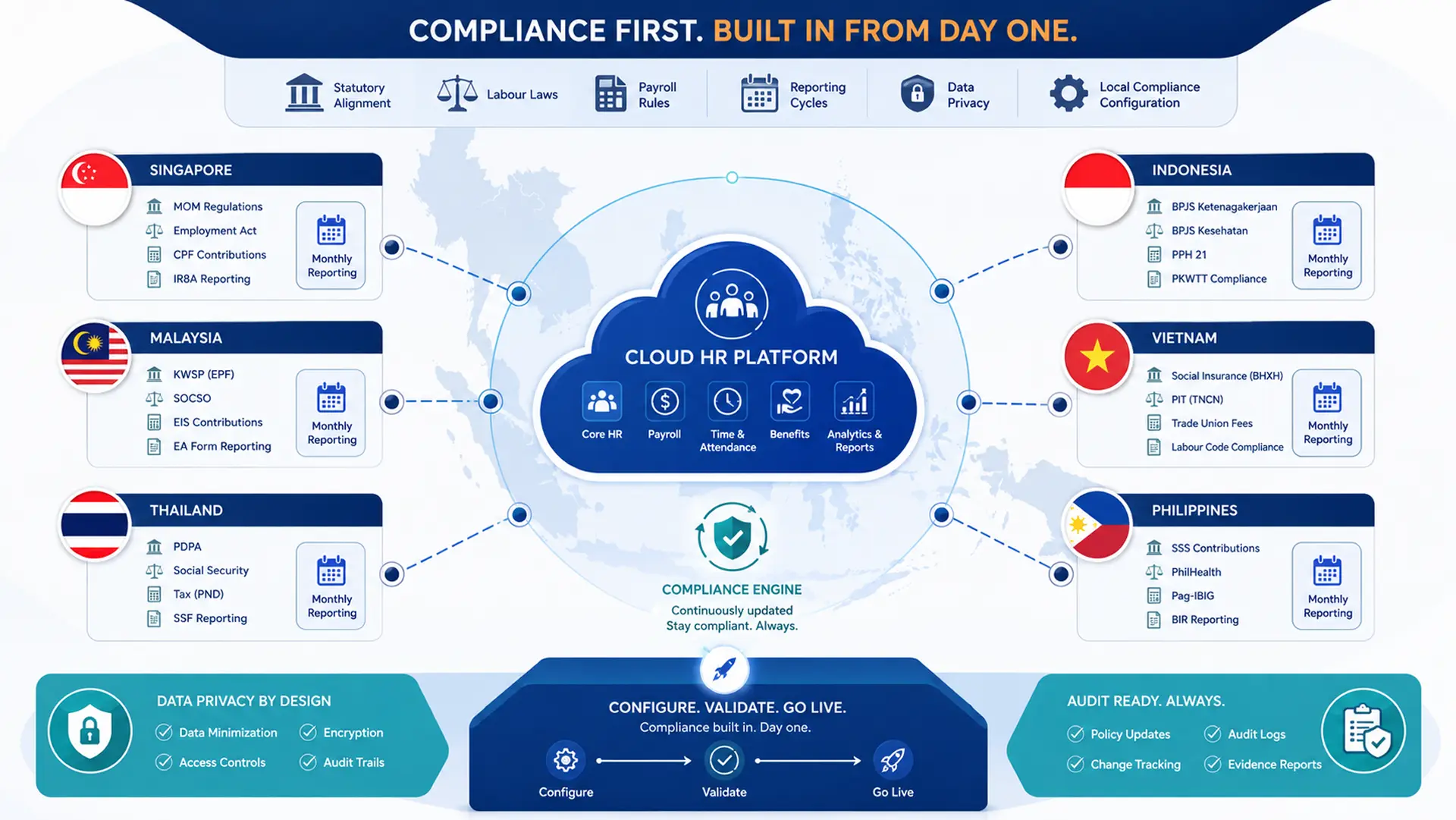
1. They design for compliance from day one, not as an afterthought: ASEAN is not one market; it is ten, each with its own statutory bodies, labour laws and reporting cycles. Analysis of the region’s HR technology services sector shows that platforms provide the software layer, but the real complexity sits in configuration, data migration, compliance alignment and continuous optimisation across different regulatory environments, languages and organisational cultures⁵. Enterprises that build their implementation plan around local statutory requirements from the outset, rather than retrofitting compliance later, avoid the costliest rework. This is also why local vendor expertise matters: research into the region’s HCM software adoption found that solutions designed for local organisations, with local compliance knowledge built in, are consistently the preferred choice⁶.
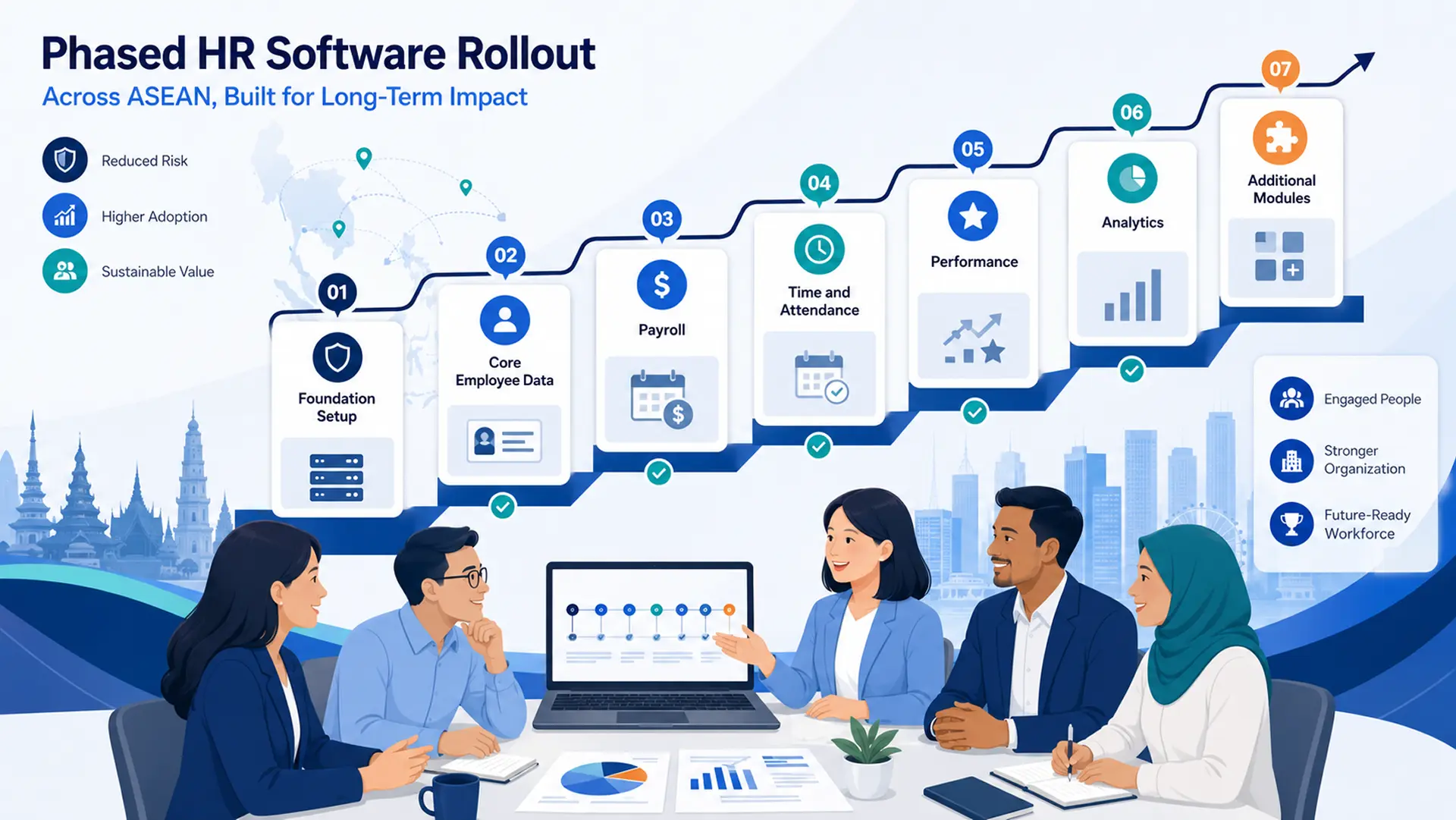
2. They roll out in phases, not all at once: A defined, phased rollout consistently outperforms a big-bang launch. The recommended sequence starts with core employee data and payroll, then expands to performance management and other modules once the foundation is stable⁷. Full-scale, all-at-once implementations deliver benefits sooner on paper, but they risk overwhelming HR teams and frontline staff at the same time, which is precisely when adoption breaks down. Timing also matters: successful teams avoid launching during high-stress HR periods such as performance review cycles, benefits enrolment, or year-end payroll processing⁷.
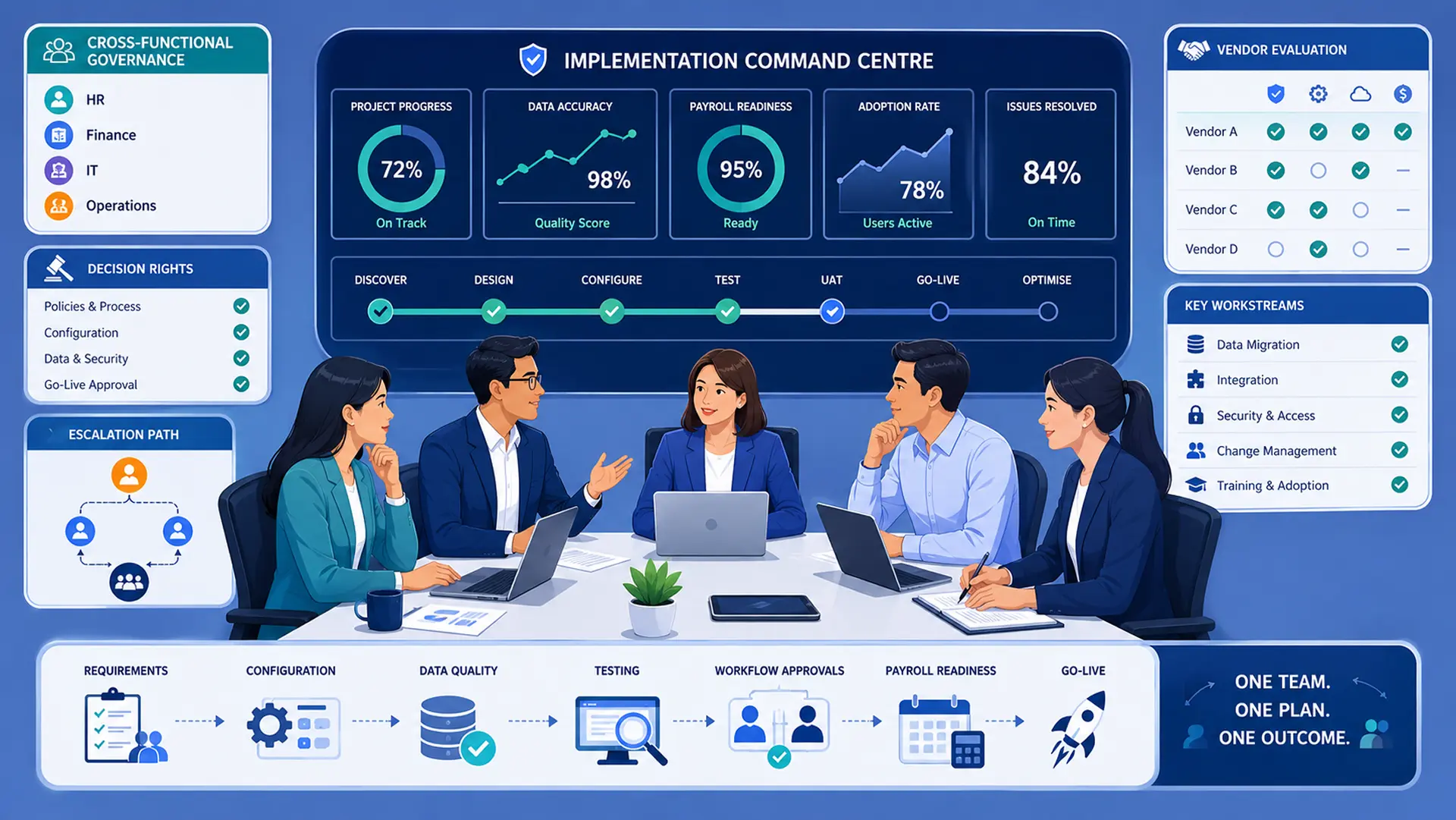
3. They build cross-functional governance, not an HR-only project: A recurring feature of successful implementations is a governance team that spans HR, Finance, IT and Operations, with clear decision-making rights and escalation paths, and specific KPIs such as time to approve offers, data accuracy rates, or processing speed for compensation cycles⁷. Vendor selection is treated with the same rigour: sending a detailed request for proposal to multiple vendors and shortlisting three or four finalists for demonstrations against real-world scenarios, rather than defaulting to the first credible pitch⁷.
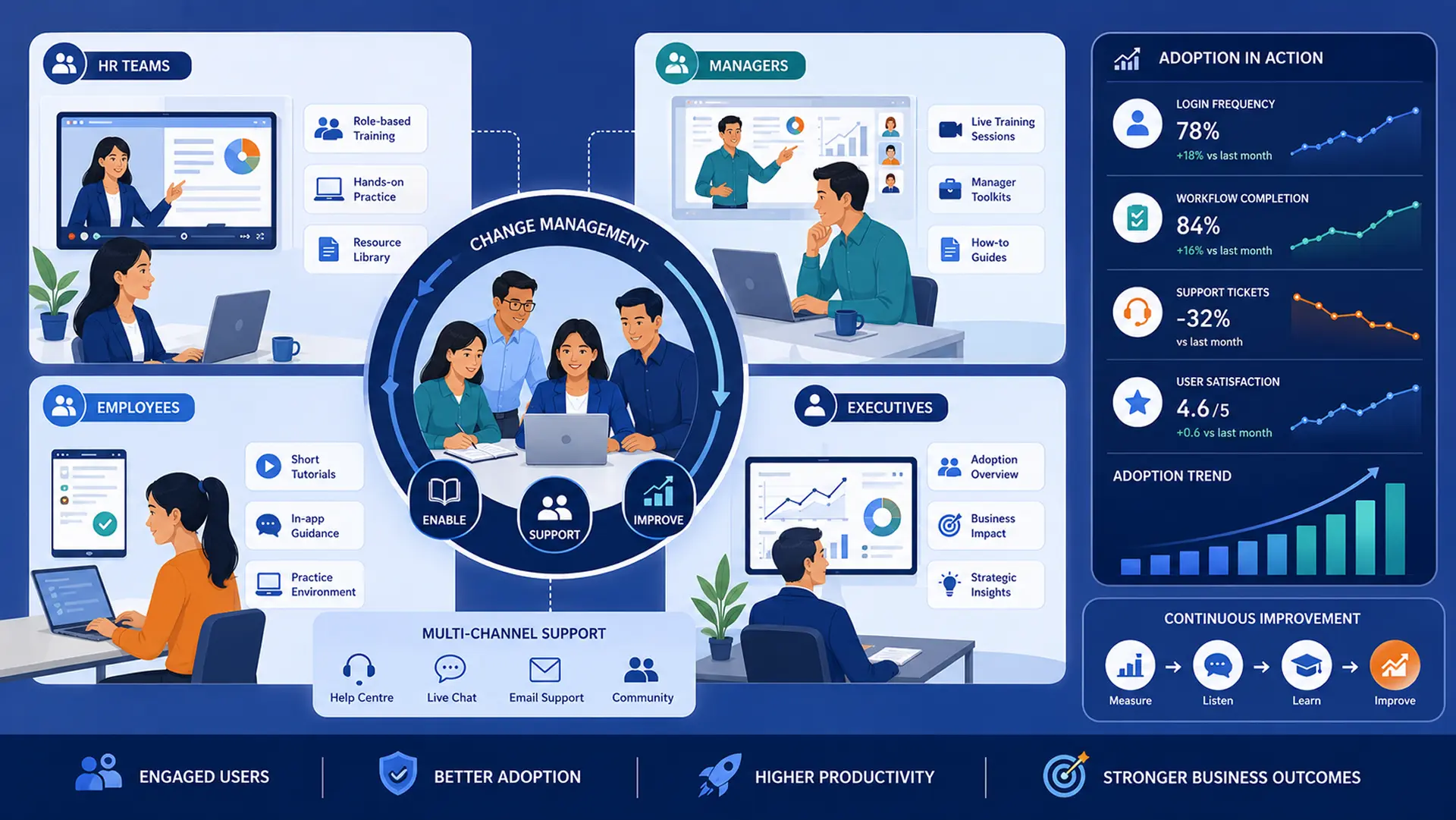
4. They invest in change management as seriously as the technology: Employee resistance, not software limitations, is the most commonly cited cause of failed adoption. Effective programmes go beyond a single training session: they build role-based training, since managers, HR staff and executives all need different depth of system knowledge, and they offer multiple formats, from live sessions to recorded tutorials and hands-on practice environments⁸. Change management does not end at go-live either; the strongest organisations convert their change programme into a continuous improvement cycle, tracking login frequency, workflow completion, and support ticket volume so that retraining can be targeted where adoption is lagging⁹.
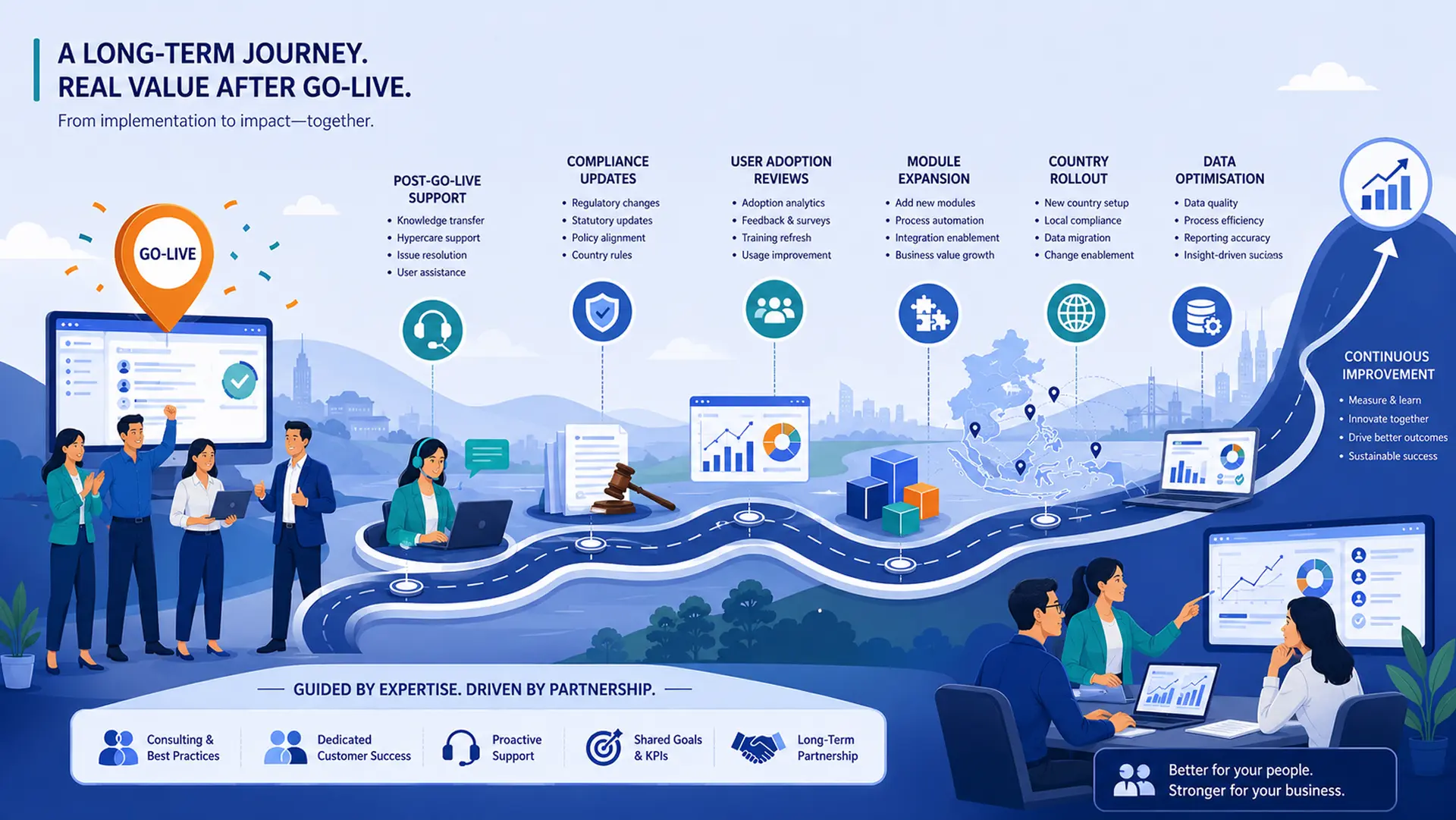
5. They plan for a long operational journey, not a single event: The decision to adopt an enterprise HR platform is typically made once every decade, but the operational journey that follows, covering configuration, data migration, compliance alignment and continuous optimisation, is ongoing⁵. Organisations that treat go-live as the finish line consistently under-invest in the post-implementation support that protects the long-term value of the platform. Those that treat it as the starting point of an ongoing partnership get more out of every subsequent regulatory update, module expansion and country rollout.
Where MiHCM fits
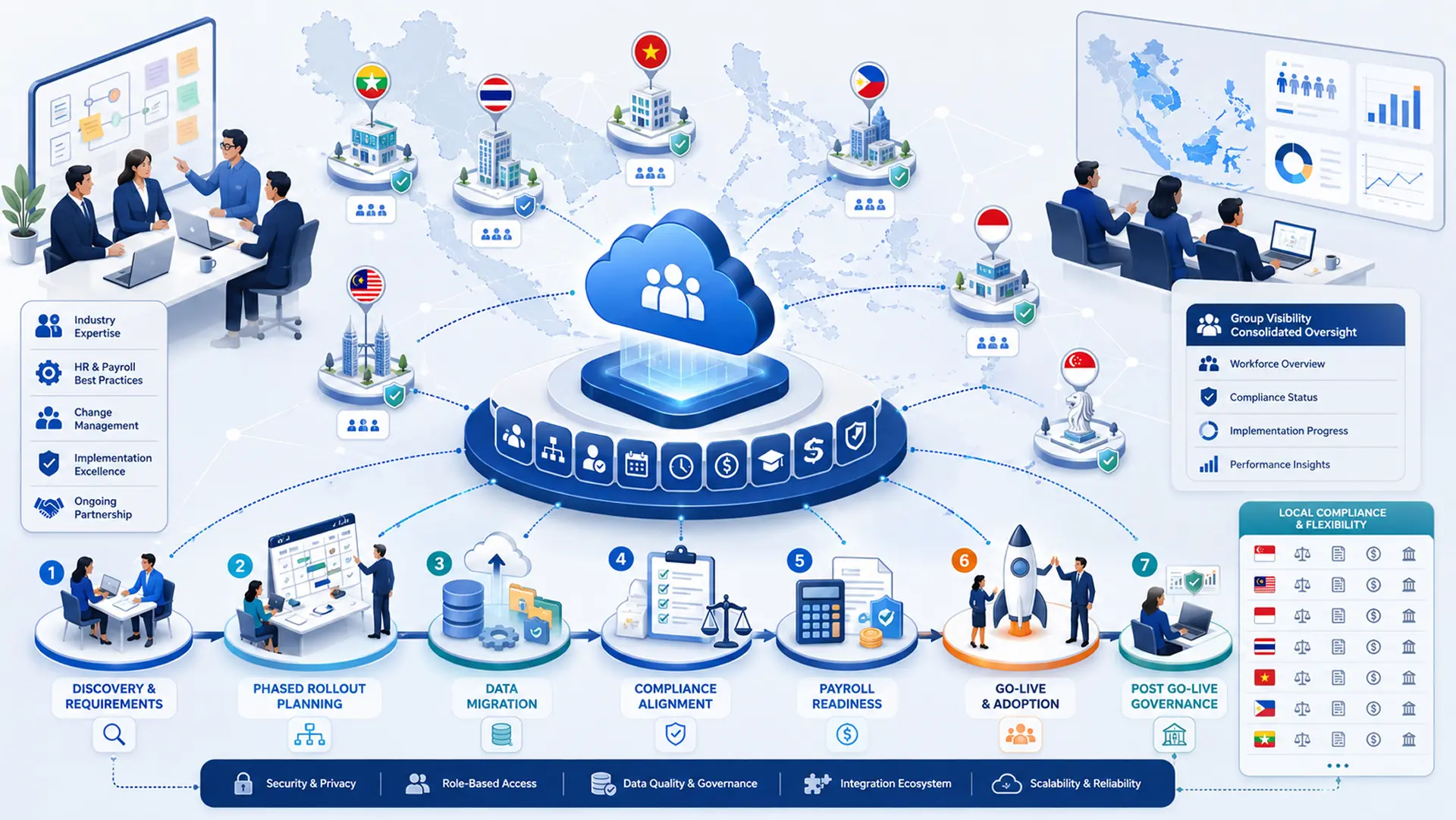
MiHCM has supported enterprises across 22+ countries in Asia, including BFSI, manufacturing, hospitality, apparel and conglomerate groups, through exactly this kind of multi-country, compliance-first implementation.
MiHCM Enterprise (including MiHCM Payroll) is built around local statutory requirements as standard, not as a customisation, which shortens the compliance-alignment phase that typically consumes the most implementation time in ASEAN.
For organisations that want dedicated implementation expertise, MiHCM Consulting provides the execution layer, from discovery and phased rollout planning through to post-go-live governance, backed by MiHCM’s Microsoft Data and AI Solutions Partner credential for organisations that want their HR data integrated into a wider analytics strategy.
The bottom line
The technology gap between HR platforms has narrowed. The gap between organisations that plan for local compliance, phase their rollout sensibly, govern the project cross-functionally, and invest properly in change management, and those that don’t, has widened. That is the real differentiator behind ASEAN’s most successful HR software implementations.
This article references third-party market research and statistics current as of publication. Figures such as market size, adoption rates and failure rates can change as new studies are released; readers making budget or planning decisions are encouraged to verify current figures against the original sources listed below.
References
- Grand View Research, ‘Southeast Asia Human Resource Software Market, 2030’ — grandviewresearch.com
- Market Intelo, ‘Southeast Asia Human Resource Software Market Research Report 2034’ — marketintelo.com
- Tambla, ‘HRIS Transformation — 6 Challenges Hindering Progress’, citing Gartner ERP implementation research — tambla.com.au
- HR Cloud, ‘HRIS Implementation Playbook’, citing a 2022 Gartner survey — hrcloud.com
- CDOTrends, ‘Why HRTech Services Firms Are Being Acquired Across Southeast Asia’ — cdotrends.com
- L.E.K. Consulting, ‘HCM Software Is Transforming HR in Southeast Asia’ — lek.com
- Payrun.app, ‘HR Software Implementation Complete Guide For 2026’ — payrun.app
- JH HR Consultants, ‘7 Mistakes You’re Making with HRIS Implementation’ — jhhrconsultants.com
- THRIVEA, ‘How to avoid common HRIS implementation mistakes’ — thrivea.com