Job titles are ageing faster than the people who hold them.
According to the World Economic Forum’s 2026 Future of Jobs Report, 44% of the core skills required in the average role will change between 2025 and 2028¹. A workforce plan built around role names alone masks that shift entirely, because the same job title can require a very different skills mix within the same company from one year to the next.
For HR leaders, the question for 2026 is no longer how many people the organisation needs. It is what the organisation needs people, and increasingly AI, to be able to do.
The cost of planning by headcount alone
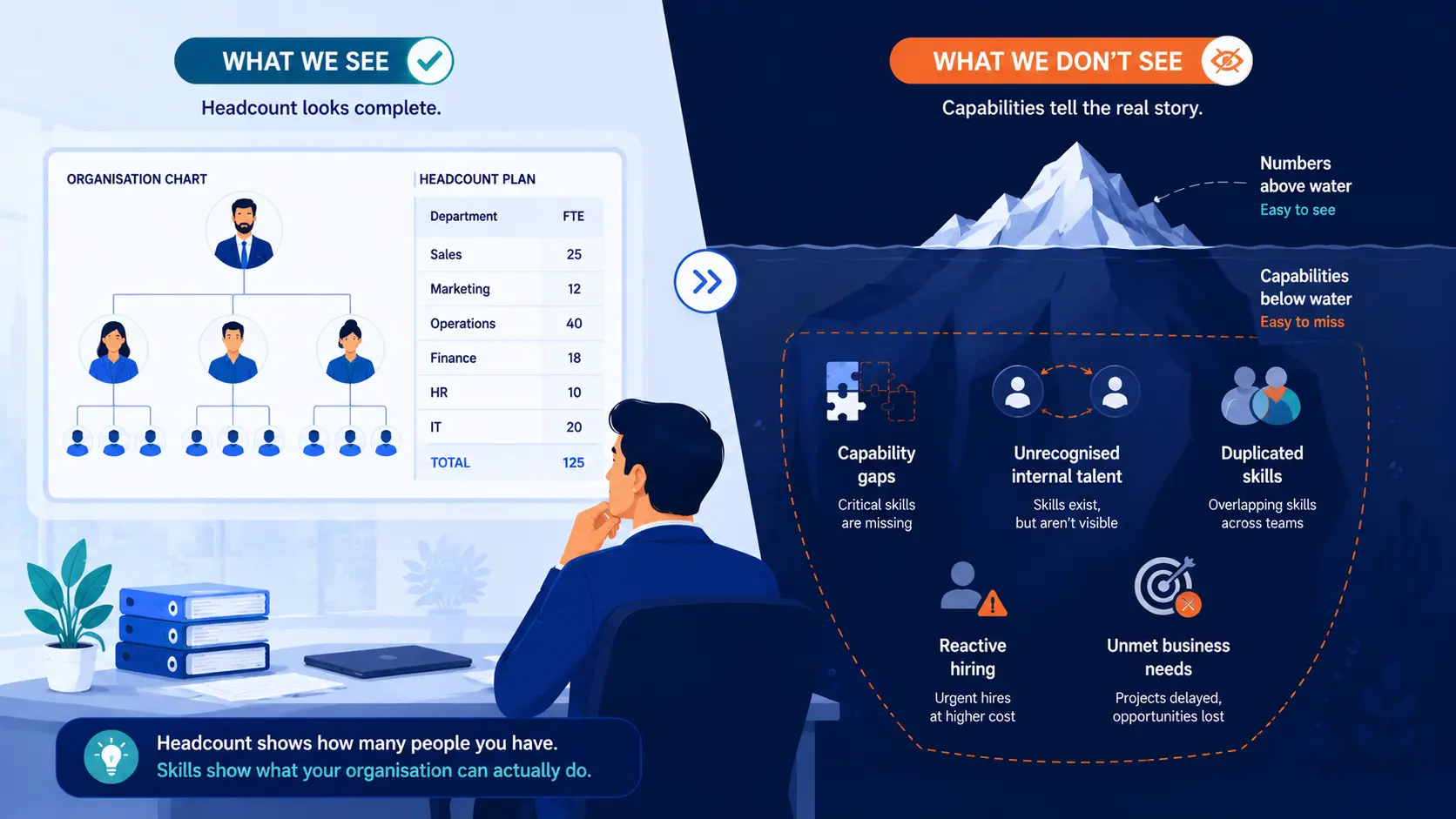
Reactive hiring is measurably more expensive. Organisations that hire without a workforce plan pay around 19% more per hire and see 23% lower first-year retention than those with a formal plan in place¹.
Yet formal planning remains the exception rather than the rule: research shows that companies with a formal workforce plan grew revenue 2.4 times faster than companies that hire reactively, but only 28% of HR leaders believe their current workforce plan would survive contact with a major business shock¹.
That gap between what good planning delivers and what most HR functions actually have in place is one of the most expensive blind spots in the modern HR function.
“Title-based planning assumes the role is the stable unit and the person is the variable. That inverted in 2026.”
— Metaview, Workforce Planning in 2026
Why skills-first pays off
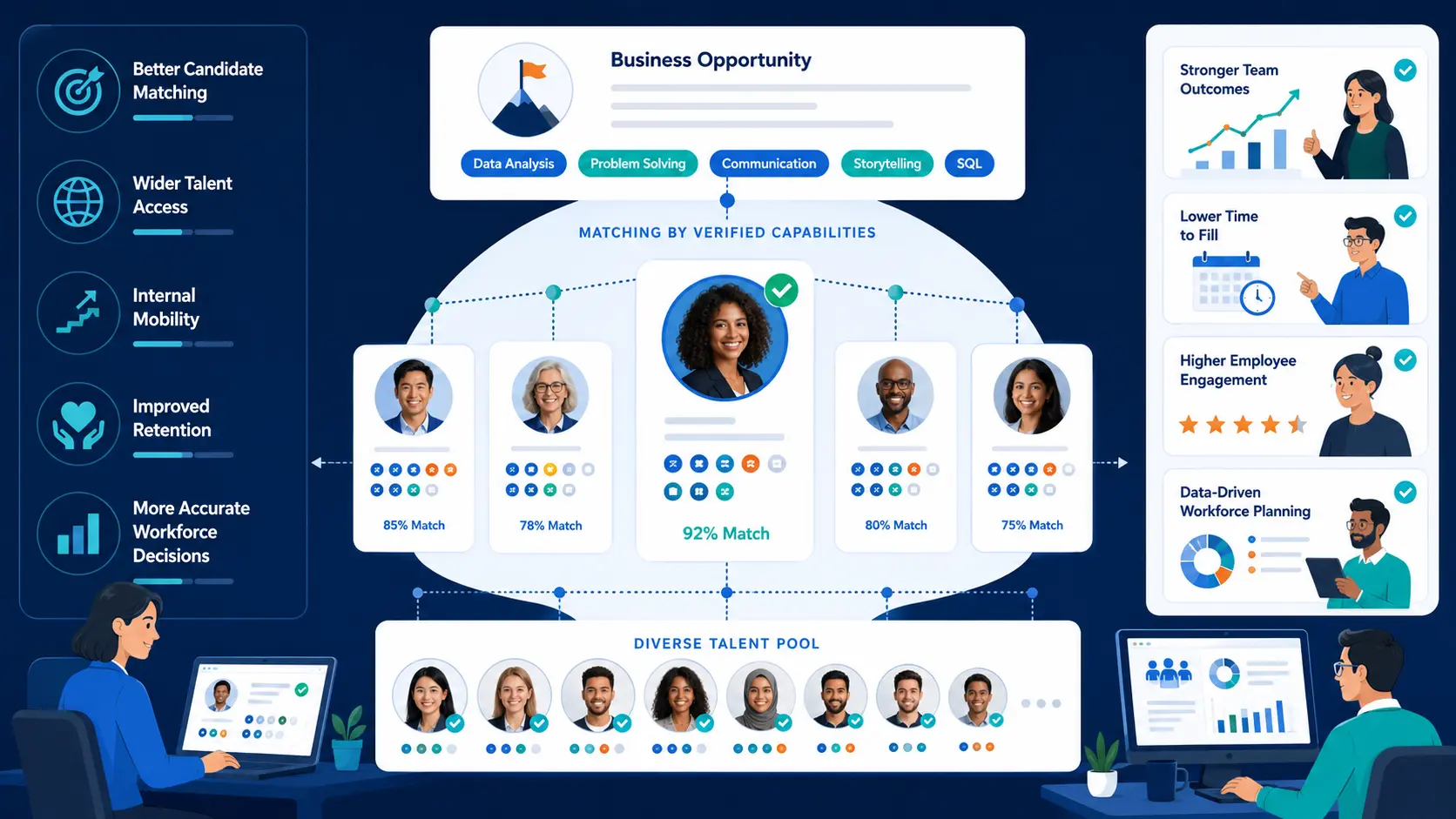
The commercial case for a skills-based approach is building quickly. LinkedIn data shows that skills-based hiring can expand the available talent pool by as much as 6.1 times, by opening roles to candidates who have the right capability but not the traditional credential².
Separate analysis from Revelio Labs found that employees without a four-year degree stay 34% longer in similar roles than degree-holders², which challenges the assumption that formal qualifications are a reliable proxy for retention.
Skills intelligence itself compounds the benefit: organisations using it report a 10% to 20% improvement in the accuracy of hiring, training and retention decisions³.
The practical playbook
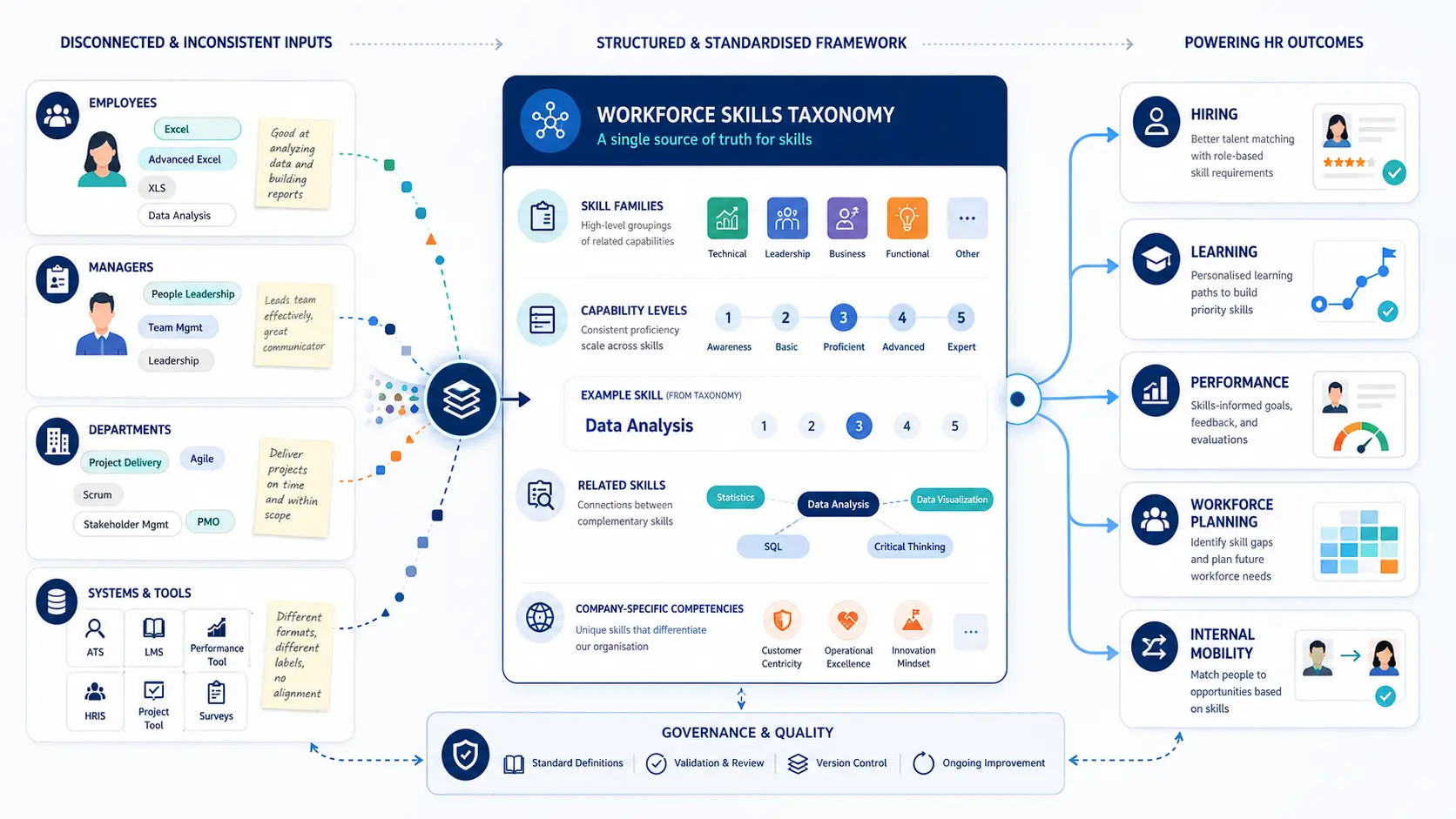
1. Build a skills taxonomy before anything else: Most organisations combine an established industry framework, such as SFIA for technology or the CIPD profession map for HR, with a small number of company-specific skills that reflect their own strategy¹. Without a shared taxonomy, every subsequent step, from assessment to redeployment, is built on inconsistent language.
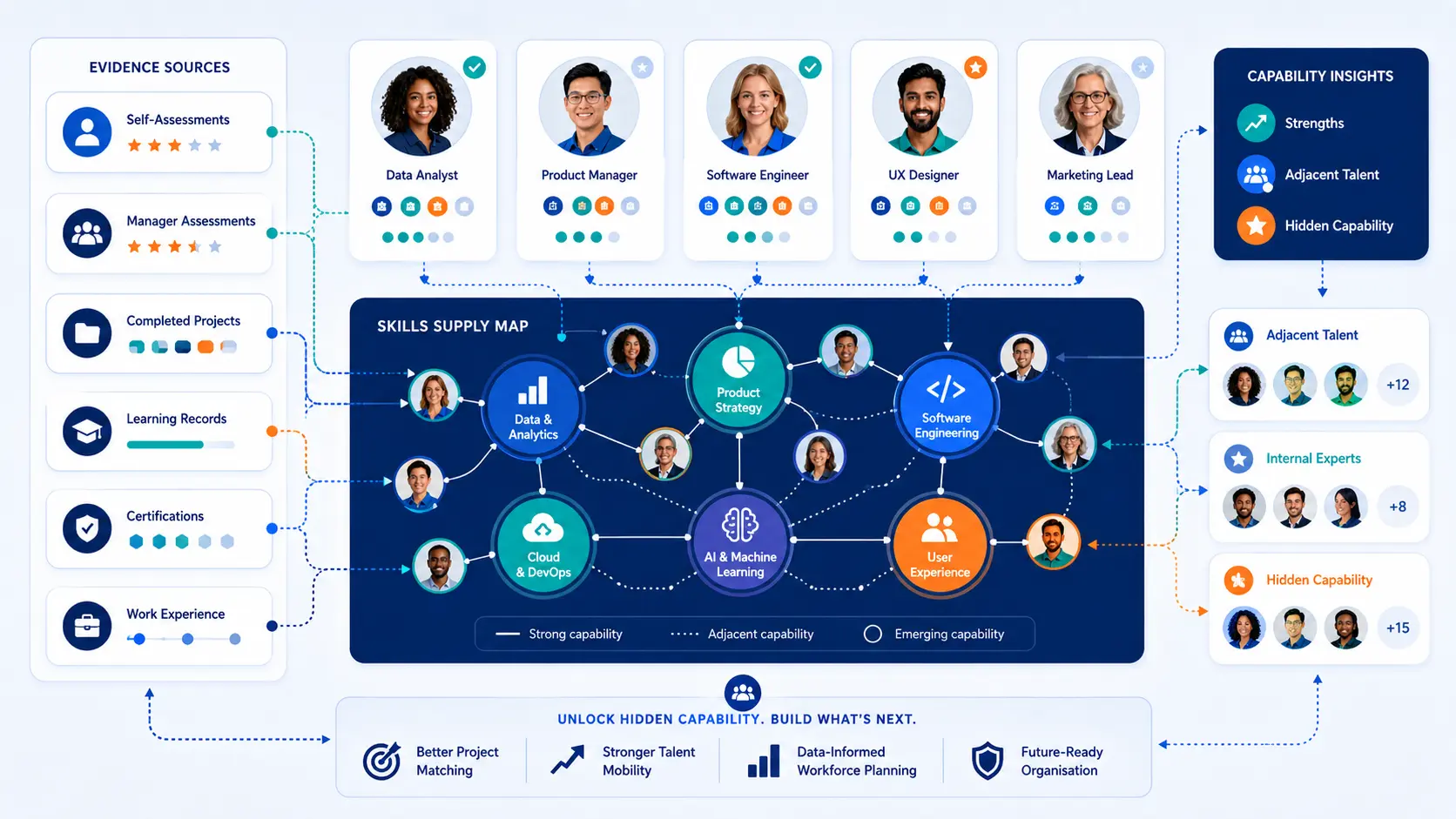
2. Inventory what the workforce can already do: The first skills inventory is always partial, combining self-assessment, manager assessment, and skills inferred from project history¹. The output is a skills supply curve that can be compared against a skills demand curve, revealing capability that already exists inside the organisation but isn’t visible on an org chart. This matters because title-based plans routinely miss internal supply: when a plan calls for ‘two senior analysts,’ nobody checks whether that capability already exists in an adjacent team, because the spreadsheet has no row for what people can actually do⁴.
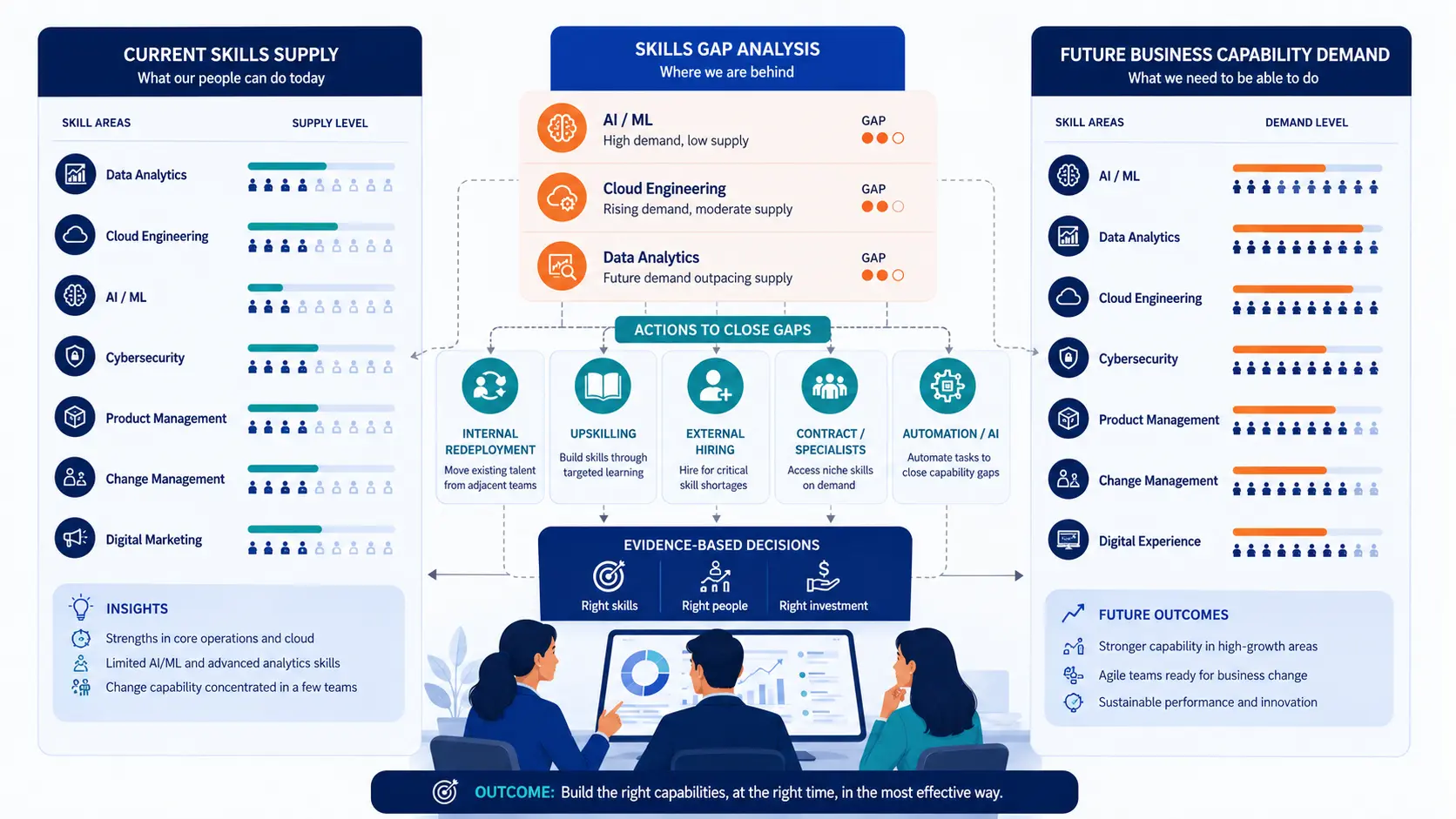
3. Plan at the skills level, not just the role level: Skills-first planning answers a sharper question than headcount planning: what does this team need to be able to do by a given point in the year, who can already do it, and what is the cheapest reliable way to close the gap, whether that’s internal redeployment, hiring, or contracting⁴. Titles become containers chosen per gap, rather than the plan itself.
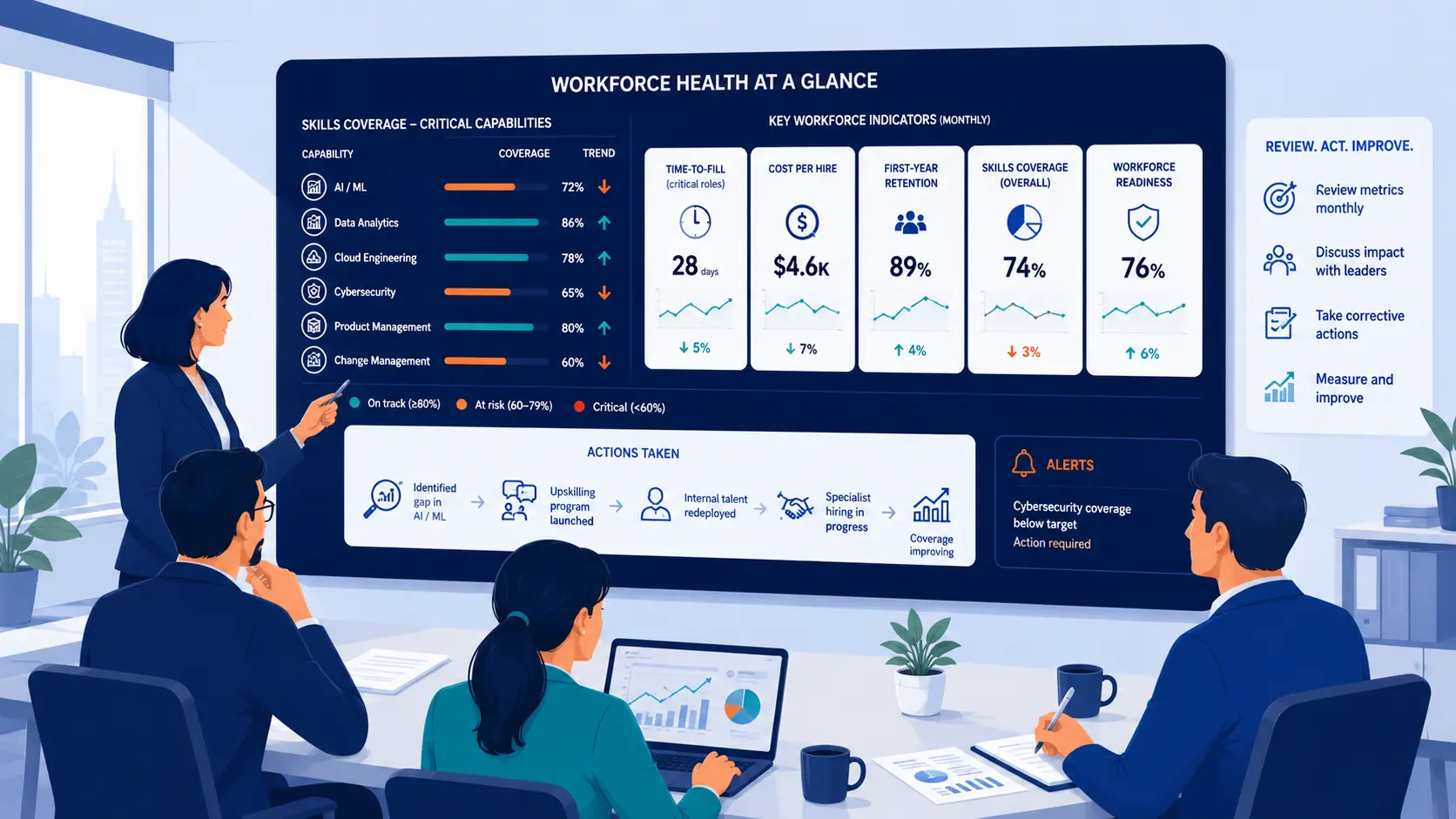
4. Track coverage with the same discipline as revenue metrics: Best-in-class organisations track four numbers monthly: time-to-fill on critical roles, cost per hire, first-year retention, and skills coverage on critical capabilities¹. If any of the four move the wrong way, the plan needs review, not a one-off explanation.
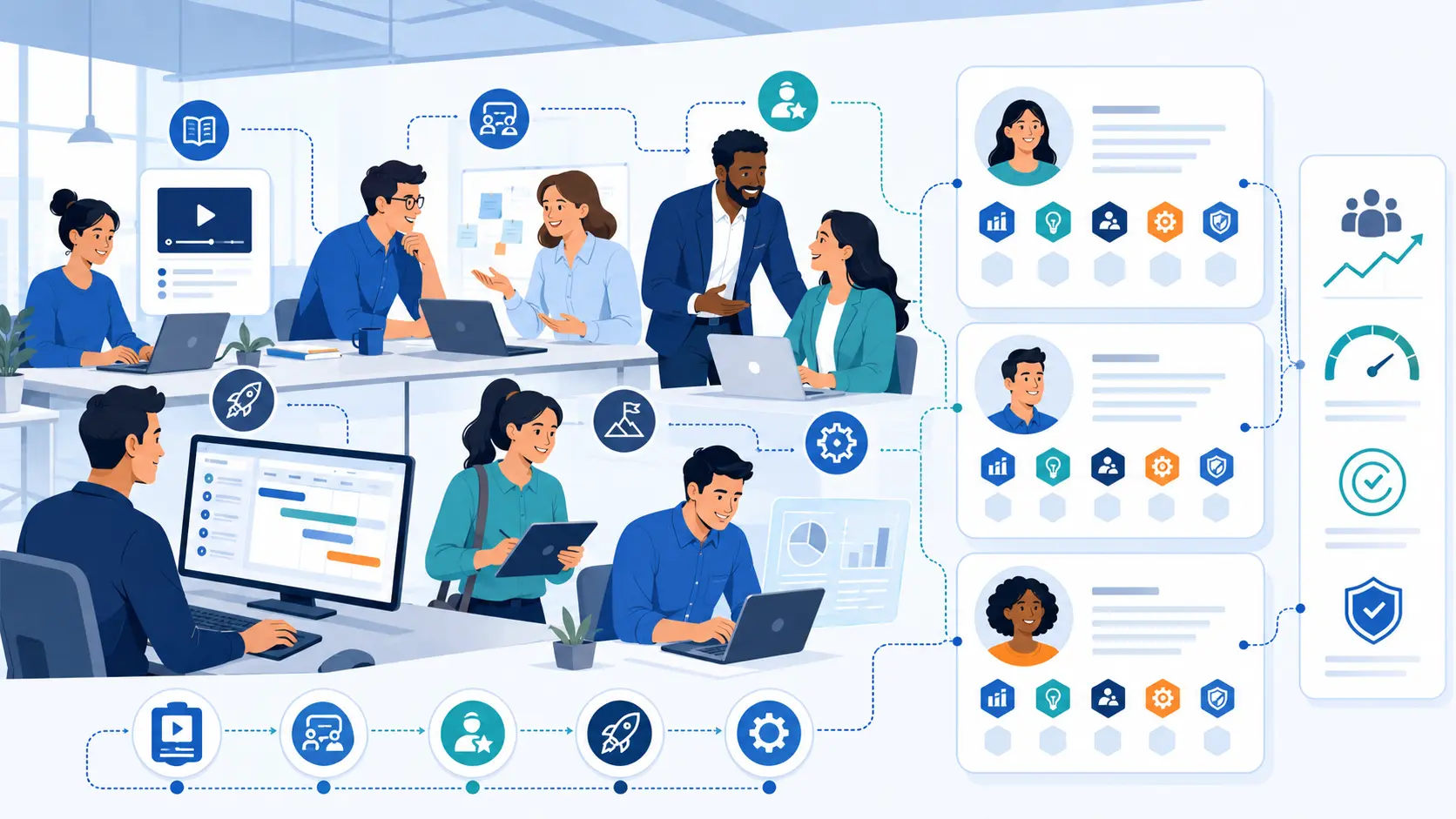
5. Make learning part of daily work, not a separate event: Organisations that embed development into the flow of work see stronger leadership effectiveness and greater adaptability than those that treat training as a standalone programme⁵. Skills-based hiring is only the entry point; continuous learning is what keeps the workforce plan current as skills continue to shift.
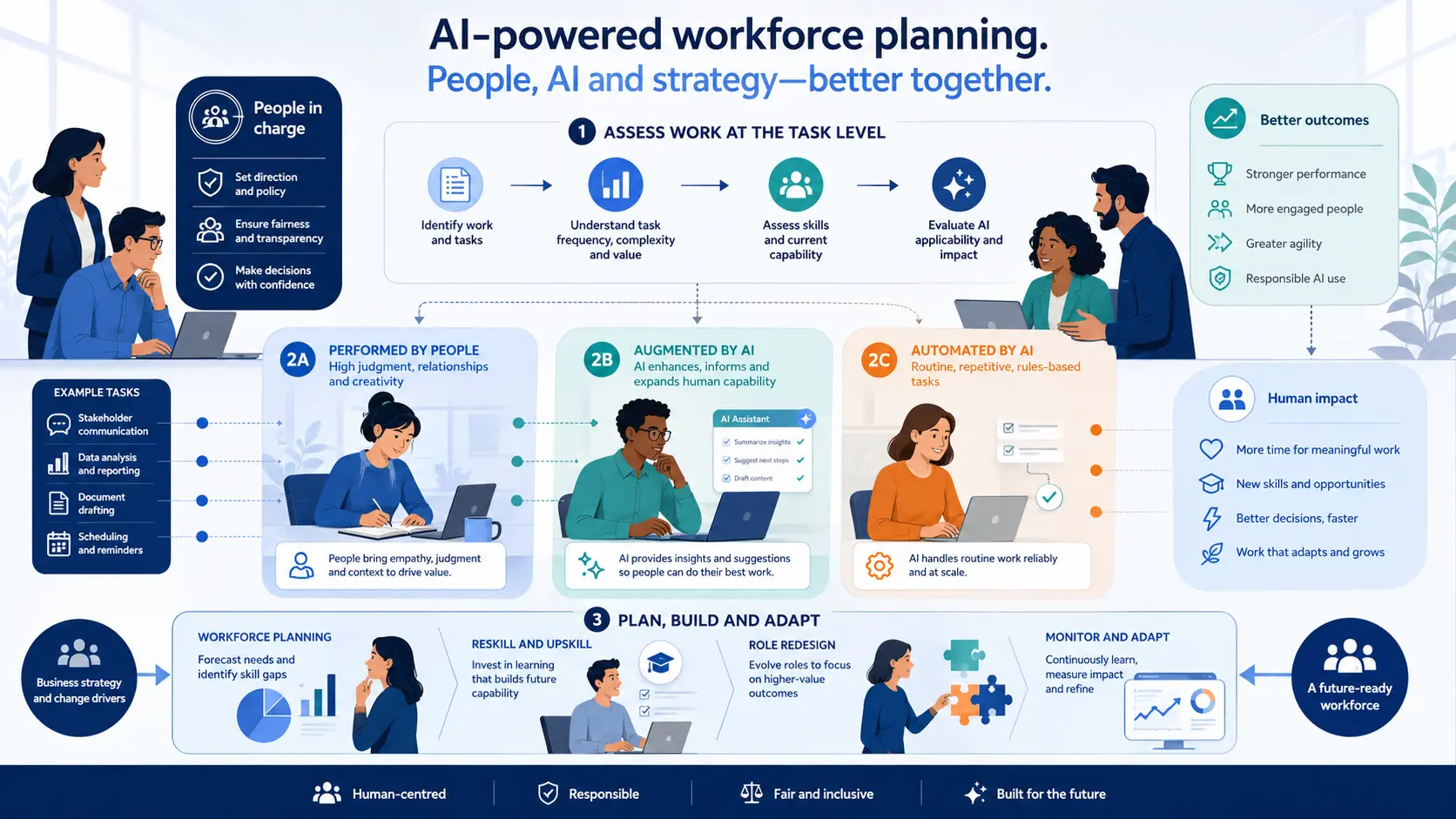
6. Give AI an explicit line in the plan: Around 28% of routine knowledge tasks are now automatable, and separate research suggests up to 30% of current worked hours could be automated by 2030¹, ⁶. A credible 2026 workforce plan includes automation as an explicit column alongside hiring and redeployment, rather than treating AI as a side conversation. Even so, 84% of large organisations agree that AI can streamline processes but will not replace employees outright⁶, which reinforces that the goal is augmentation, not substitution.
Where MiHCM fits in
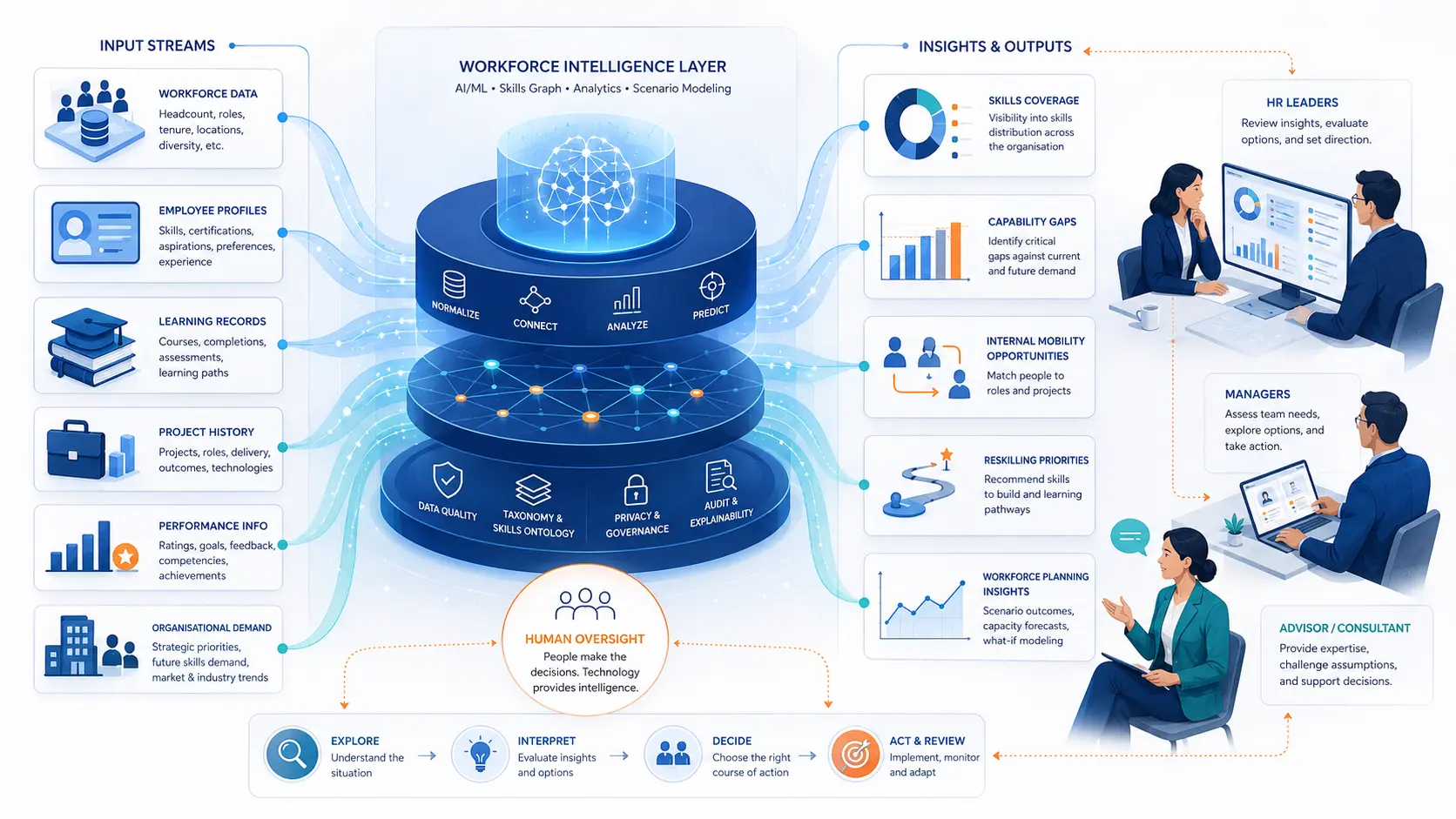
Syntra, MiHCM’s AI intelligence and analytics platform, is built to give HR leaders exactly this kind of skills-level visibility: connecting workforce data across MiHCM Enterprise to surface skills coverage, gaps and internal mobility opportunities that a role-based org chart cannot show.
For organisations building their taxonomy and workforce plan from scratch, MiHCM Consulting provides advisory support to translate strategy into a working operating cadence.
Throughout, MiHCM’s approach keeps human judgement central: Syntra is designed to surface insight for HR leaders and managers to act on, not to make workforce decisions on their behalf.
The bottom line
The organisations that will be resilient through 2026 and beyond are not the ones with the largest headcount. They are the ones that know, with evidence rather than guesswork, what their people can do today and how quickly they can close the gap to what the business needs next.
That shift, from counting heads to counting skills, is the real work of building a skills-based workforce.
This article references third-party market research and statistics current as of publication. Skills gap projections and adoption figures evolve quickly; readers are encouraged to verify current figures against the original sources listed below.
References
- KlearSkill. Workforce Planning: The HR Leader’s Guide for 2026. Available at: https://www.klearskill.com/blog/workforce-planning-guide-2026
- iMocha. Top 50 Skills-Based Hiring Trends and Statistics for 2026. Available at: https://www.imocha.io/blog/skills-based-hiring-trends
- iMocha. 33 Key Skills Statistics Every Leader Should Know for 2026. Available at: https://www.imocha.io/blog/skills-statistics
- Metaview. Workforce Planning in 2026: A Recruiter’s Playbook for Skills-First Hiring. Available at: https://www.metaview.ai/resources/workforce-planning-2026-skills-first-hiring
- Greater Houston Partnership. HR and Talent Trends of 2026 (featuring research from Korn Ferry, McLean & Company, Catalyst, and the Meltzer Center). Available at: https://www.houston.org/news/hr-and-talent-trends-2026
- ADP SPARK. Key Employee Experience Trends for 2026, and How to Prioritize. Available at: https://www.adp.com/spark/articles/key-employee-experience-trends.aspx