By Pubudini Abeyesekera
Workforce transformation is becoming increasingly important in the manufacturing sector, which has played a key role in Sri Lanka’s economy through the years.
This transformation is evident across apparel, textiles, food processing, rubber products, packaging, industrial production and export-oriented businesses, which are powered by large workforces and operate in production environments where attendance, shifts, overtime, productivity and compliance must be managed with precision.
In this context, HR is not simply an administrative function. It is an operational capability that directly impacts production continuity, cost efficiency, compliance, employee trust and business performance.
For manufacturing enterprises, digital HR and workforce management are becoming essential to improving productivity, controlling labour cost, supporting compliance, and creating a better employee experience for large blue-collar workforces.
Managing large blue-collar workforces requires discipline and visibility
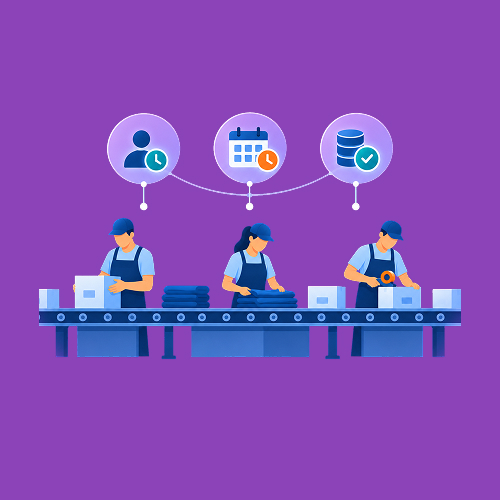
Manufacturing organisations operate at scale. A single facility may employ hundreds or thousands of employees across production lines, plants, departments, shifts, and locations.
Managing this workforce manually is increasingly difficult and prone to mistakes and manipulation.
Employee records, attendance data, leave requests, overtime approvals, shift changes, transfers, disciplinary records, payroll inputs, and statutory requirements must all be accurate and up to date. When these processes are handled through spreadsheets, paper forms, manual registers, or disconnected systems, HR and operations teams spend too much time reconciling information instead of using data to make better decisions.
For blue-collar workforces, accuracy also has a direct impact on trust. Employees expect their attendance, overtime, leave balances, allowances, and salaries to be calculated fairly and transparently. Even small errors can lead to dissatisfaction, disputes, and loss of confidence in the organisation. Such errors could lead to factory wide unrest and in turn bring factory operations to a standstill.
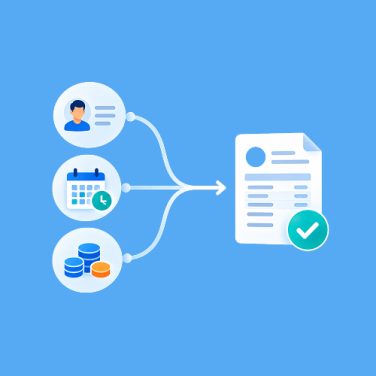
This is why manufacturing organisations need a more structured digital foundation for workforce management. HR, payroll, attendance, and operations teams must work from one source of truth, with clear workflows and reliable data.
When employee data is digitised and connected across the employee lifecycle, leaders gain better visibility into workforce availability, absenteeism, overtime patterns, labour cost, and productivity trends. This enables HR to move from reactive administration to proactive workforce planning.
Shift scheduling is directly linked to production continuity
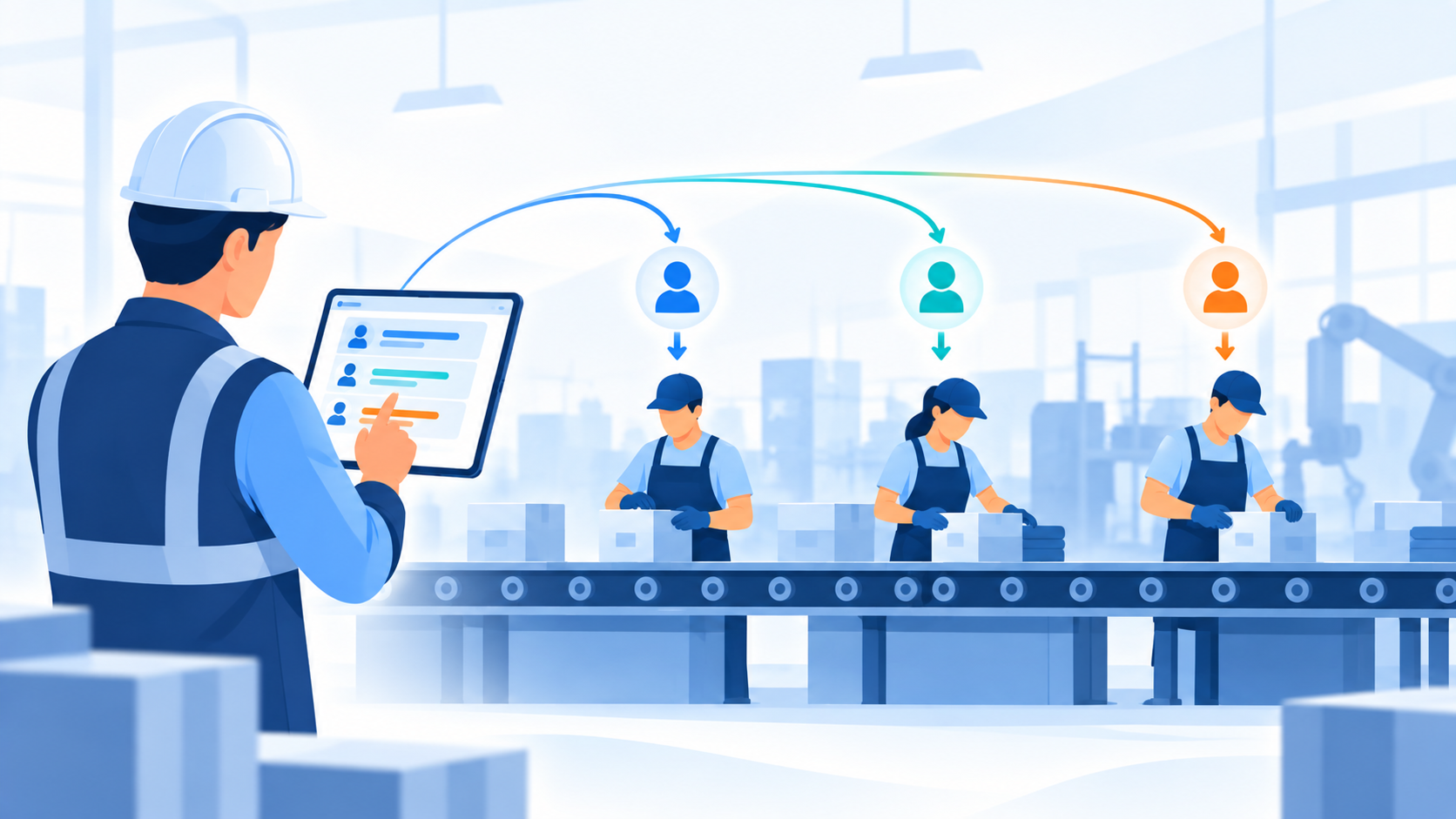
In manufacturing, shift scheduling is not just an HR task. It is directly linked to production capacity.
Factories must manage day shifts, night shifts, rotating shifts, split shifts, weekly rosters, public holidays, rest days, absenteeism, overtime, and last-minute replacements. In export-led manufacturing, the pressure is even greater because production timelines are closely tied to customer commitments and delivery deadlines.
Poor shift planning can create several business risks: understaffed production lines, excessive overtime, compliance gaps, employee fatigue, payroll errors, and reduced output.
A strong workforce management system should allow organisations to plan shifts in advance, manage roster changes, track attendance against assigned shifts, apply leave rules, and feed accurate data into payroll.
Shift and roster management capabilities have become highly relevant for manufacturing environments. With functionalities that support flexible shifts, split shifts, shift patterns, and attendance integration, organisations can reduce manual effort while improving control.
The goal is not only to build rosters faster. The goal is to ensure the right people are in the right place, at the right time, with the right level of compliance and cost discipline.
Compliance must be embedded into everyday workforce processes
Manufacturing organisations operate in environments where compliance matters deeply.
Leave, attendance, overtime, payroll, statutory contributions, employee records, approvals, and working time practices must be managed carefully and consistently. This is particularly important when dealing with large workforces, multiple employee categories, and shift-based operations.
The challenge is that compliance risk often emerges from everyday operational gaps. A missed attendance entry, an incorrectly approved overtime request, an outdated employee record, or an inconsistent leave calculation can create downstream payroll and compliance issues.
Compliance therefore cannot depend only on manual checking at month end. It must be embedded into the workflow from the point where data is captured.
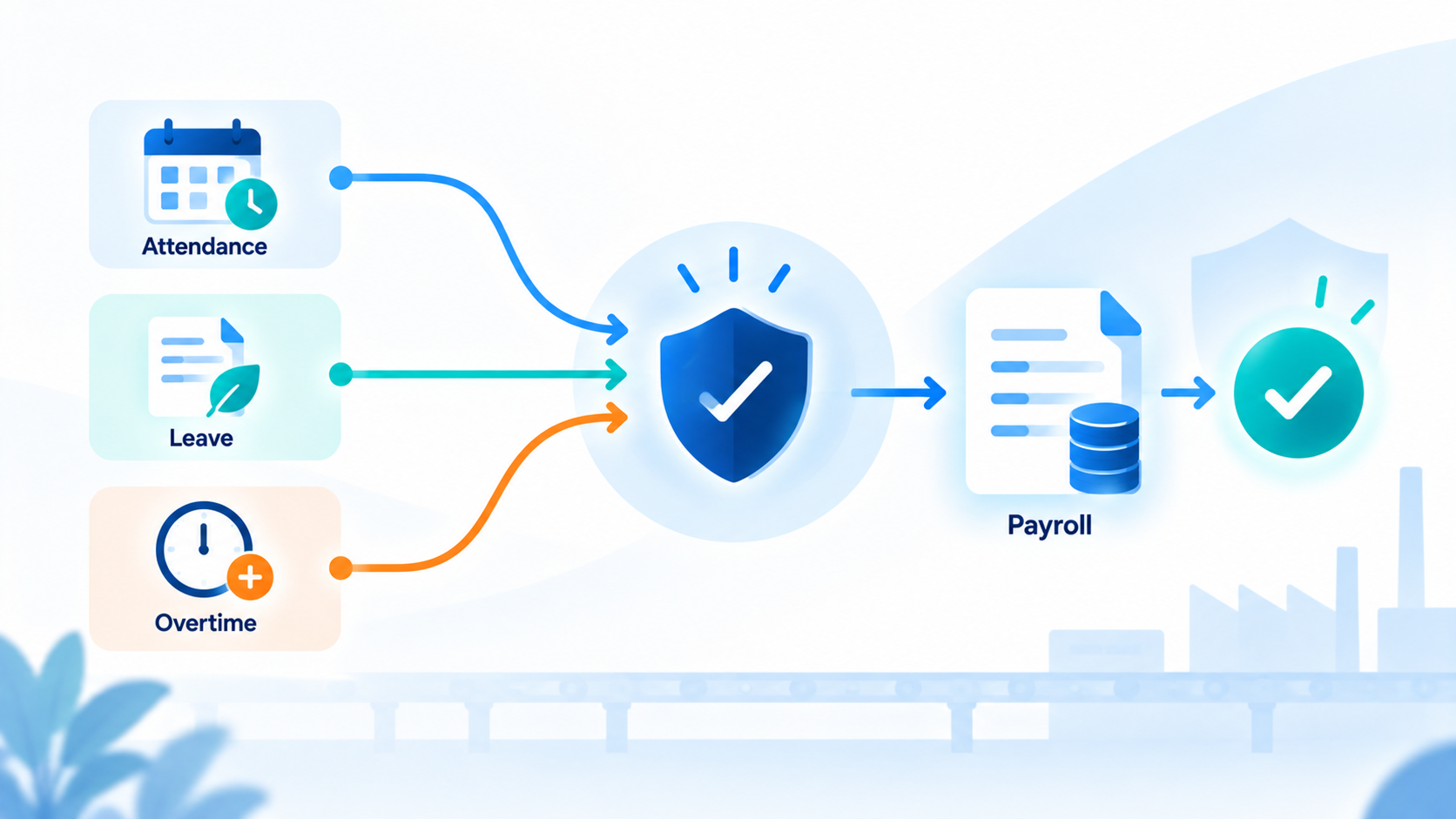
This includes automated calculations, approval workflows, role-based access and permissions, audit trails, accurate reporting, and integration between attendance, leave, and payroll. When these controls are built into daily operations, organisations reduce risk while improving speed and consistency.
An HRIS should support this by bringing core HR, attendance, leave, payroll, approval workflows, and compliance-related processes into a connected platform. For manufacturing organisations, this helps reduce fragmentation and gives leadership greater confidence in workforce data.
Labour cost control is now a strategic priority
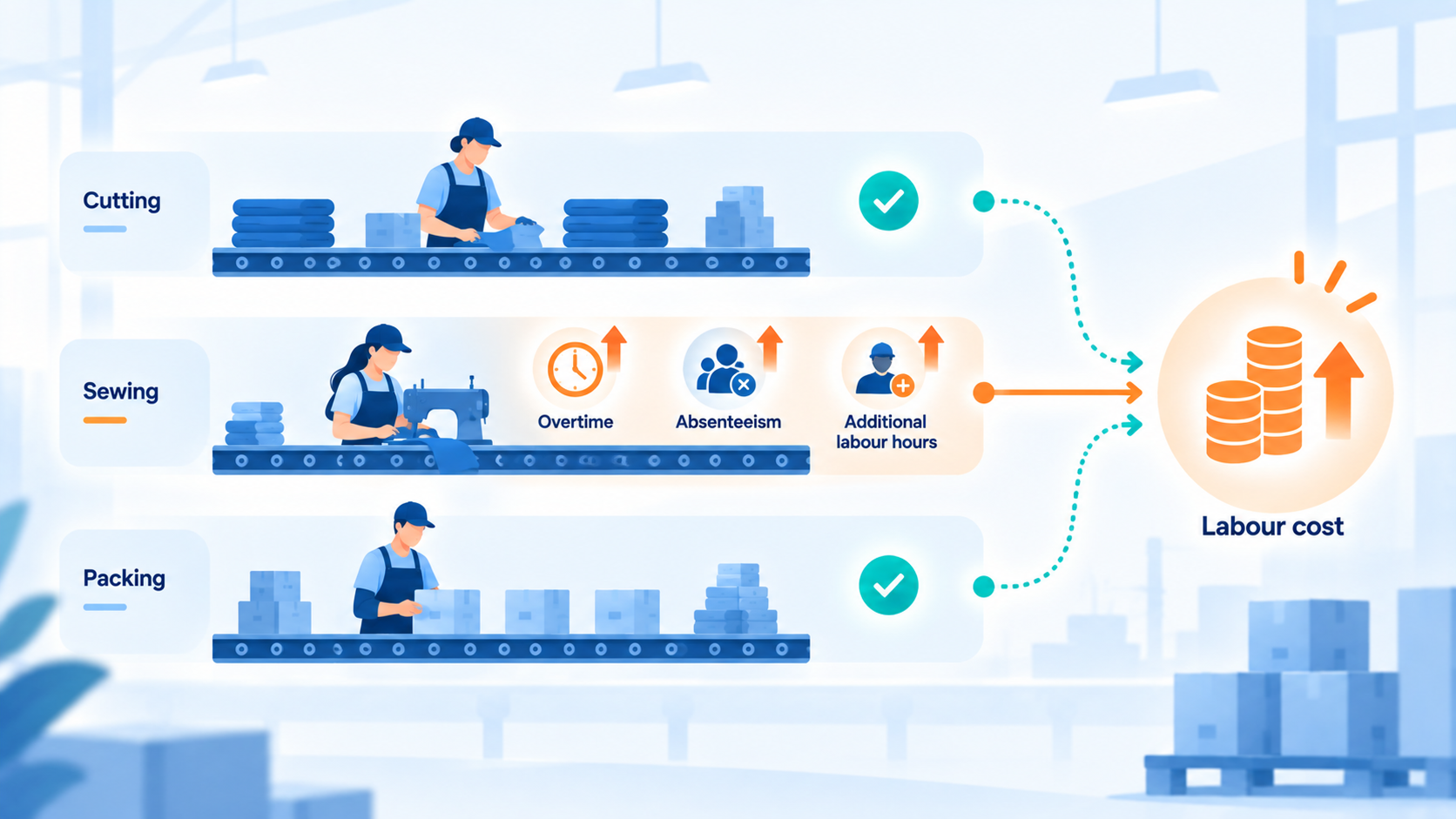
For manufacturers, labour cost is one of the most significant controllable cost areas.
This does not mean reducing headcount as the first response. It means understanding workforce cost with greater accuracy and managing it more intelligently.
Leaders need answers to key questions. How much overtime are we paying by plant, department, or shift? Where are absenteeism levels increasing? Which teams are consistently over-reliant on additional labour hours? Are payroll costs aligned to production plans? Are leave patterns affecting operational capacity? Are we using workforce data to plan better?
Without digital workforce data, these questions are difficult to answer in real time.
When attendance, overtime, leave, and payroll are connected, manufacturing leaders can identify where cost is leaking, reduce payroll errors, manage overtime more effectively, and make better workforce planning decisions.
An HRIS’s payroll, attendance and reporting capabilities support this level of control by helping organisations connect workforce activity to workforce cost. This is especially important in manufacturing, where small inefficiencies multiplied across a large workforce can have a significant financial impact.
The ability to review attendance patterns, overtime trends, and payroll inputs before salary processing also strengthens governance. It helps organisations move from post-payroll corrections to pre-payroll control.
Improving employee experience for frontline workers
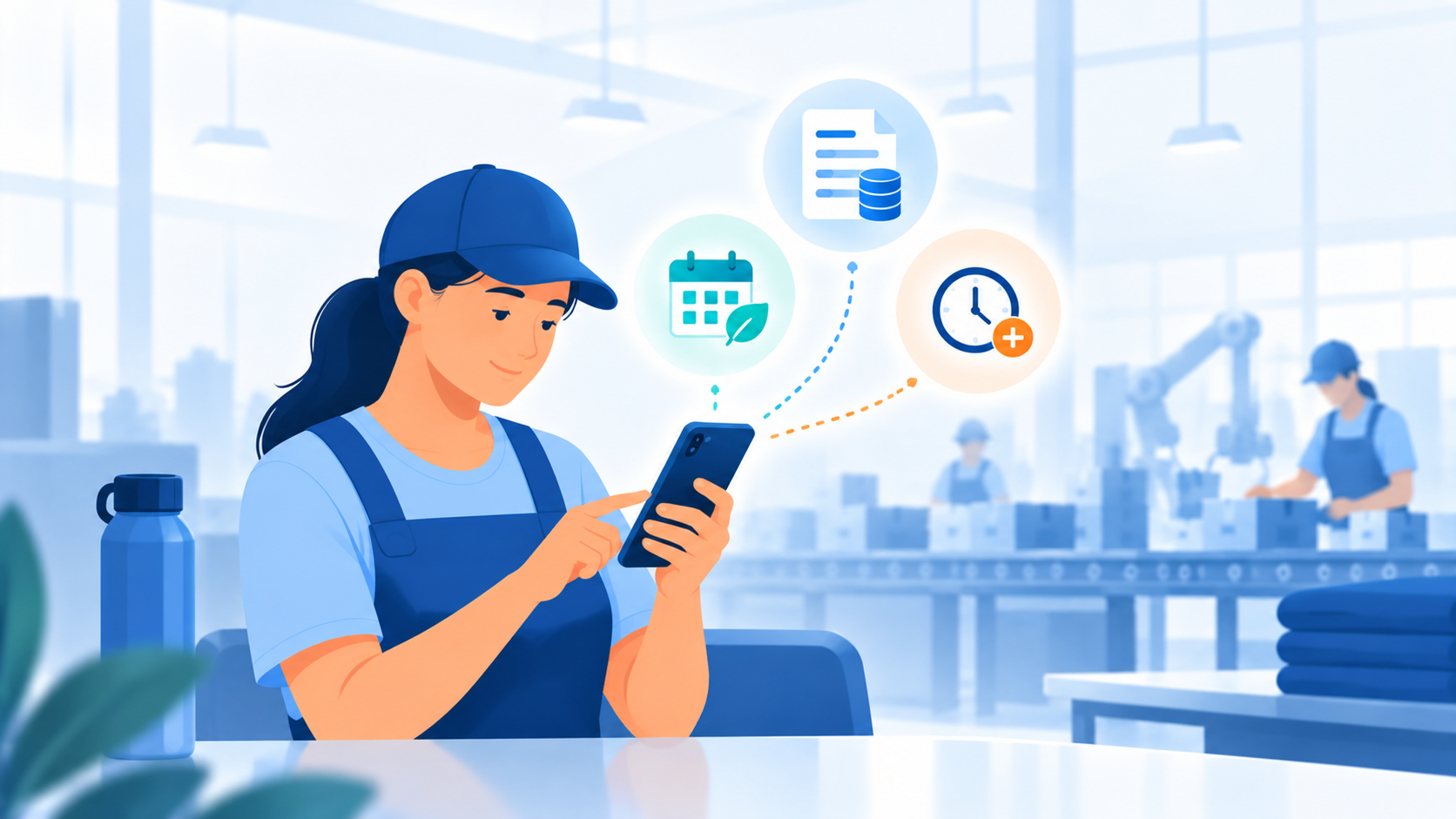
Digital HR in manufacturing is not only about control. It is also about inclusion.
Blue-collar and frontline employees are often the largest segment of the workforce, yet they are sometimes the least digitally connected to HR services. Many still depend on supervisors or HR teams for basic information such as leave balances, payslips, attendance records, approvals and personal data updates. This creates unnecessary dependency and administrative burden.
Mobile-enabled employee self-service can change this. When employees can access HR services through their phones, organisations improve transparency, reduce routine HR queries, and empower employees with direct access to their own information.
For manufacturing workforces, this can have a powerful impact. It improves communication, strengthens trust, and gives frontline employees a more modern workplace experience.
Looking ahead
Sri Lanka’s manufacturing sector must continue to compete on quality, reliability, productivity, compliance, and cost efficiency. To do this, organisations need more than strong production capabilities. They need strong workforce management capabilities.
The future of manufacturing will depend on how effectively organisations manage people at scale.
Large blue-collar workforces, complex shifts, compliance requirements, and labour cost pressures cannot be managed effectively through fragmented manual processes. They require integrated digital HR platforms that provide accuracy, visibility, governance, and agility.
At MiHCM, we believe the next phase of manufacturing competitiveness in Sri Lanka will be shaped by how well organisations connect workforce strategy with workforce operations.
Digital HR is no longer only for corporate offices or white-collar teams. It is becoming a critical enabler for factories, plants, production teams, and frontline employees.
For manufacturers, the message is clear: workforce management is now business management.
The organisations that digitise this foundation will be better positioned to control cost, improve compliance, strengthen employee trust, and compete with confidence in an increasingly demanding global market.
မကြာခဏမေးလေ့ရှိသောမေးခွန်းများ
What is manufacturing workforce management?
Manufacturing workforce management is the coordination of employee records, attendance, shift rosters, overtime, leave, payroll inputs, and statutory compliance across a production workforce. In a factory setting it sits between HR and operations, because the same data that determines pay also determines whether production lines are adequately staffed.
Why do manufacturers need digital HR rather than spreadsheets?
A single facility may employ hundreds or thousands of people across lines, plants, departments, shifts, and locations. Managing that volume through spreadsheets, paper registers or disconnected systems is slow, error-prone, and open to manipulation. HR and operations teams end up reconciling data rather than using it. Digital HR creates one source of truth across the employee lifecycle, so attendance, leave, overtime and payroll agree with each other.
How does shift scheduling affect production continuity?
Shift scheduling determines whether the right people are on the right line at the right time. Poor planning produces under-staffed production lines, excessive overtime, compliance gaps, employee fatigue, payroll errors, and reduced output. In export-led manufacturing the exposure is higher still, because production timelines are tied directly to customer delivery commitments.
How can a manufacturer reduce labour cost without cutting headcount?
By measuring it accurately. Connected attendance, overtime, leave, and payroll data lets leaders identify where cost is leaking — which departments carry persistent overtime, where absenteeism is rising, whether payroll cost is tracking the production plan — and correct it before salaries are processed rather than after. In a large workforce, small inefficiencies multiply quickly, so the reverse is also true of small corrections.
What compliance risks arise in factory workforce management?
Most compliance exposure originates in everyday operational gaps: a missed attendance entry, an incorrectly approved overtime request, an outdated employee record, or an inconsistent leave calculation. Each creates a downstream payroll and statutory issue. Embedding automated calculation, approval workflows, role-based access, and audit trails into daily operations addresses the cause rather than the symptom.
How does digital HR help blue-collar and frontline employees?
Blue-collar employees are often the largest segment of a manufacturing workforce and the least digitally connected to HR. Mobile self-service gives them direct access to leave balances, payslips, attendance records, and approvals, removing the dependency on supervisors for routine information and improving confidence that attendance, overtime and allowances have been calculated fairly.

Pubudini Abeyesekera
CEO – Sri Lanka & Maldives at MiHCM
(Pubudini Abeyesekera is CEO of MiHCM Sri Lanka and Maldives. She has over 20 years of experience in business development, business operations and client relationship management across technology, start-ups, education, real estate, airlines, banking and hospitality. She leads with a hands-on approach backed with empathy and thrives on identifying talent, nurturing individuals, and building high-performing teams.))