The skills clock is running faster than the training calendar
Most learning programmes were designed for a world where a skill lasted a career. That world has gone.
The World Economic Forum’s Future of Jobs Report 2025 found that employers expect 39% of workers’ core skills to change by 2030. The same report identified skills gaps as the single biggest barrier to business transformation, cited by 63% of employers — ahead of culture, regulation and capital. Of every 100 workers, 59 will need training by 2030; 11 of them are unlikely to receive it.
Meanwhile, the machinery meant to deliver that training has not kept pace. LinkedIn’s 2025 Workplace Learning Report found that only 15% of employees said their manager had helped them build a career plan in the previous six months — a five-point drop on the year before. Gartner research puts the picture in similar terms: just 46% of employees feel supported in growing their careers, and in one Gartner survey of HR leaders, close to 90% said career paths at their organisation were unclear to many employees.
The gap is not one of intent. It is one of capacity. No L&D team of ten can hand-build a development plan for ten thousand people. That is precisely the problem AI is well suited to solve.
Why the generic learning catalogue quietly fails
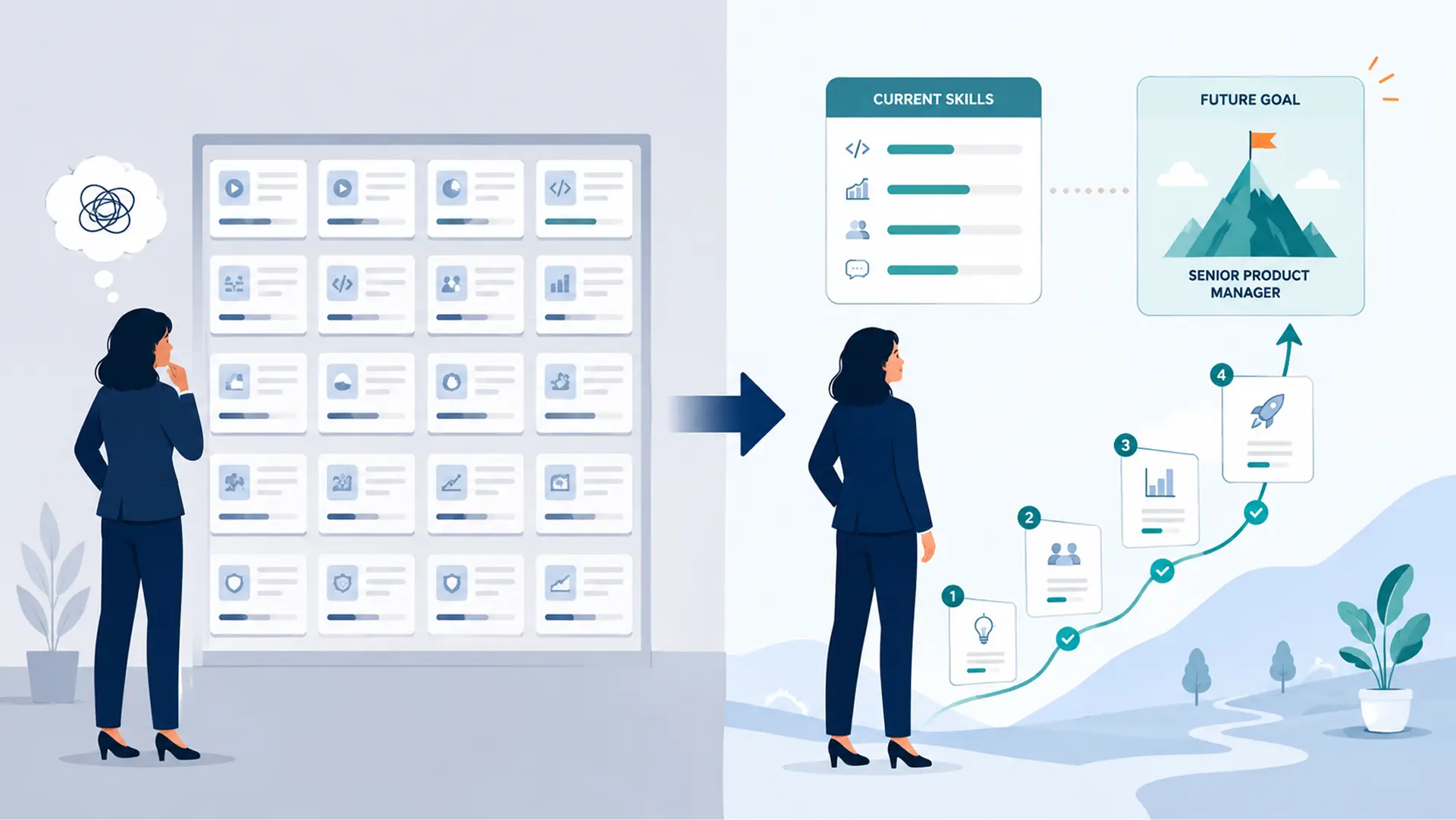
Put a 4,000-course library in front of an employee and you have not given them development. You have given them a search problem.
Generic learning fails for three reasons:
- It ignores starting point. Two people in the same job title can be years apart in capability. The same course serves neither well.
- It ignores destination. Learning without a visible career outcome feels like homework. Career progression is consistently what employees say motivates them to learn.
- It ignores context. A finance executive in Colombo, a payroll lead in Kuala Lumpur and a plant supervisor in Dhaka face different regulatory environments, different team structures, and different next steps.
Personalisation fixes all three — if you can do it at scale. AI is what makes scale possible.
What “personalised” should actually mean
Personalisation is not a recommendation carousel. Done properly, it answers four questions for every employee, continuously:
- What can I do today? An honest, evidence-based picture of current skills and proficiency.
- Where could I go next? The realistic roles, projects and lateral moves open to me inside this organisation.
- What stands between me and that? The specific gaps, ranked by how much they matter.
- What is the smallest useful next step? One action I can take this week, not a twelve-month curriculum.
Every capability below exists to answer one of those four questions.
Five ways AI personalises learning and career growth
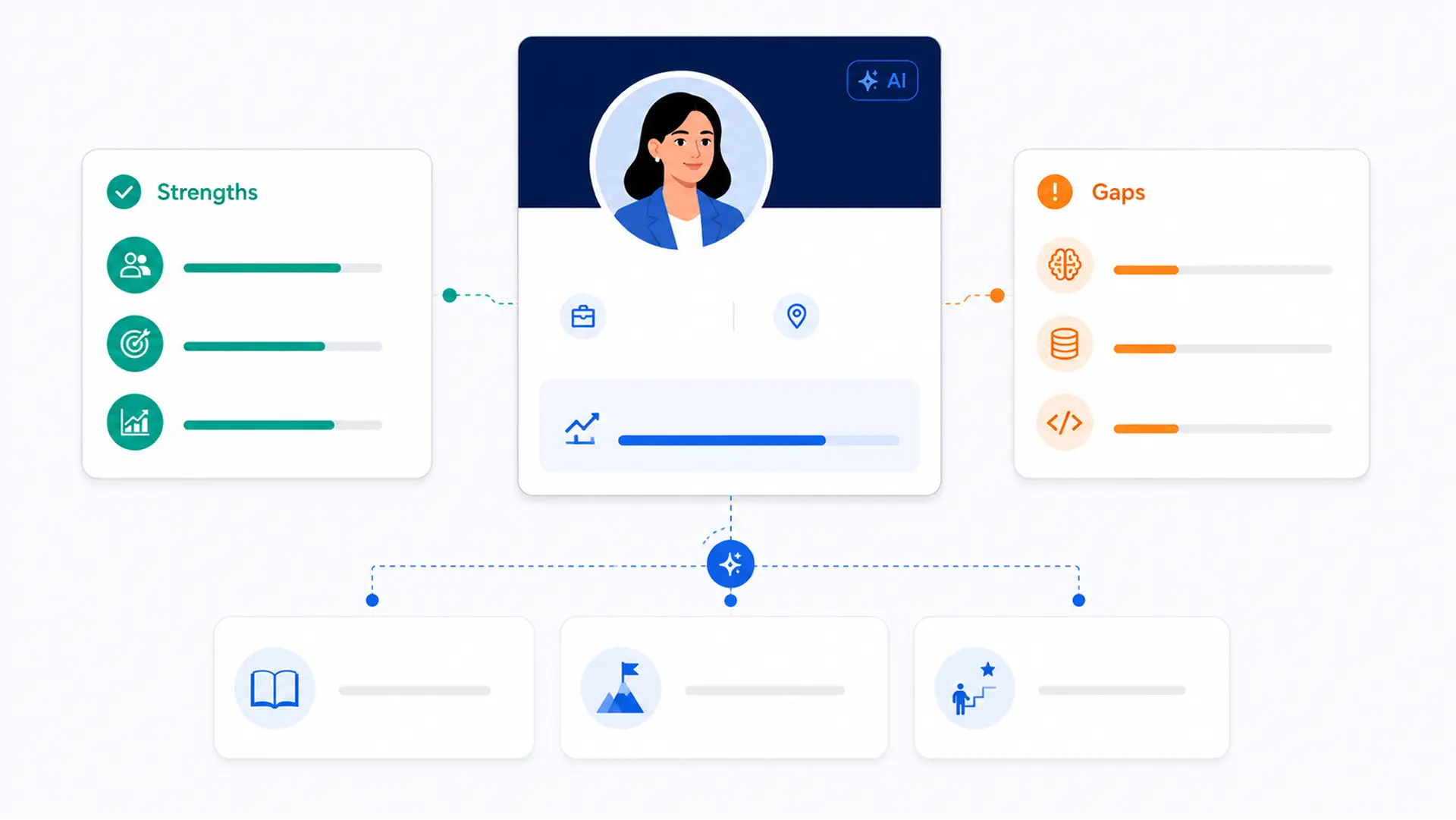
1. Skills inference — building the profile nobody has time to fill in
Skills data is the foundation, and it is where most organisations stall. Deloitte research found that only 10% of HR executives say they effectively classify and organise skills into a taxonomy or framework, despite most having efforts underway. You cannot match what you cannot describe.
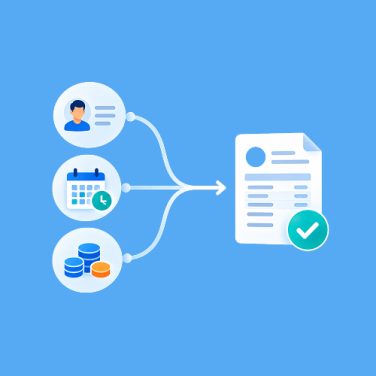
AI shortens that road considerably. Rather than asking employees to complete a 60-field skills form, models can infer a starting profile from what the organisation already holds: role history, project allocations, completed training, performance feedback, certifications and job architecture. The employee then confirms, corrects and adds — which takes minutes instead of hours, and produces data people actually trust because they had the final say.
2. Adaptive learning paths that respond to the learner
Once proficiency is visible, learning can be sequenced rather than merely offered. Adaptive systems adjust difficulty, pacing and format based on how someone is actually performing — accelerating past what they already know, slowing down where they are struggling, and switching modality when a format is not landing.
The practical effect is time saved. A twelve-hour compliance module becomes four hours for someone who already knows two thirds of the content, and stays twelve for someone who does not. Both people end at the same standard.
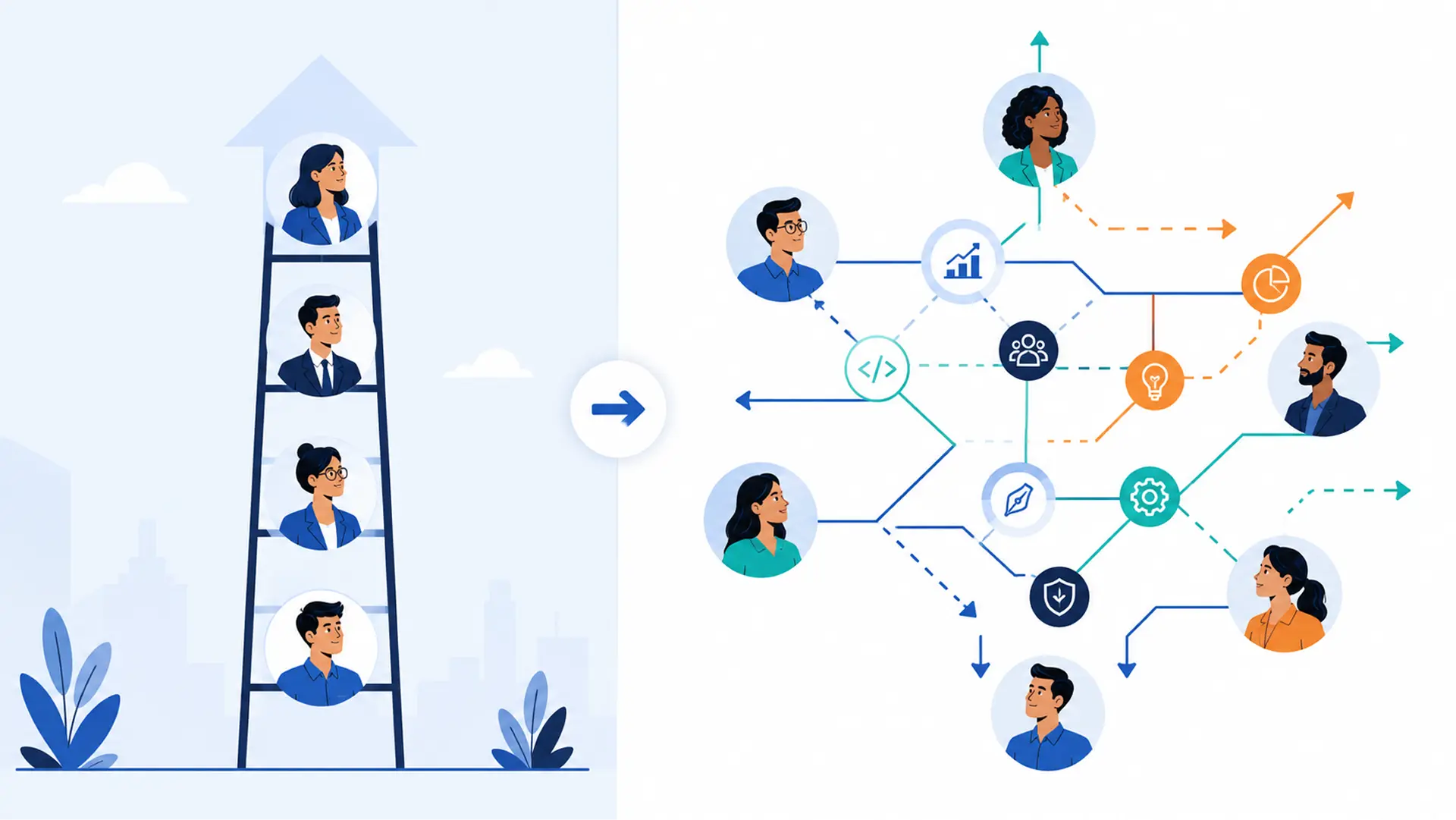
3. Career pathing that shows the lattice, not just the ladder
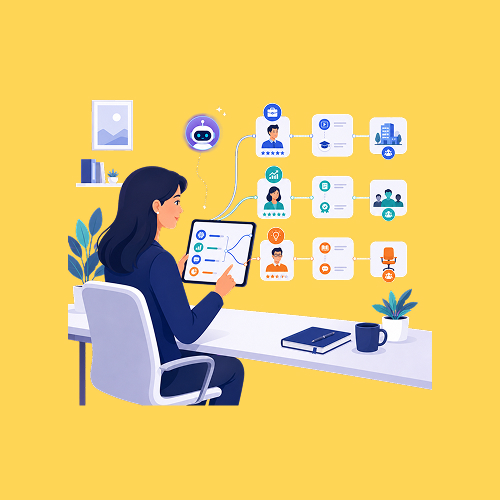
Traditional career frameworks show one route: up. Skills-based matching shows many. When roles are described as bundles of skills rather than job titles, an AI model can surface adjacencies an employee would never have found on their own — the payroll analyst who is 70% of the way to a compliance role, the service agent whose problem-solving profile fits an implementation consultant track.
This matters commercially as much as culturally. Deloitte research indicates that organisations adopting a skills-based approach are 107% more likely to place talent effectively and 98% more likely to retain high performers. Yet the same body of research has repeatedly found a readiness gap: 81% of executives call internal talent mobility important or very important, while only 49% feel ready to act on it.
4. Learning in the flow of work
The best-designed curriculum still competes with a full inbox. AI assistants embedded in the tools people already use change the economics of that competition — answering a policy question at the moment it is asked, suggesting a five-minute explainer alongside a task, prompting reflection after a project closes.
This is where personalisation becomes genuinely continuous. Development stops being an event in the calendar and becomes a property of the working day.
5. Manager enablement — the missing link
Career conversations fail more often through lack of preparation than lack of goodwill. Managers are stretched, and few have a reliable view of their team’s skills, aspirations or realistic options.
AI can close that gap by preparing the manager rather than replacing them: a pre-brief before a one-to-one, a summary of the team’s skill coverage and single points of failure, suggested stretch assignments matched to stated aspirations. LinkedIn’s 2025 research found that organisations it classified as career development champions were 32% more likely to be deploying AI training programmes and 88% more likely to offer project-based learning or career-enhancing gigs. Those two things move together for a reason.
The shift in one line
From “here is the catalogue, good luck” to “here is where you are, here is where you could go, and here is the next step” — delivered to every employee, not just the high-potential cohort.
Where human judgement stays firmly in charge
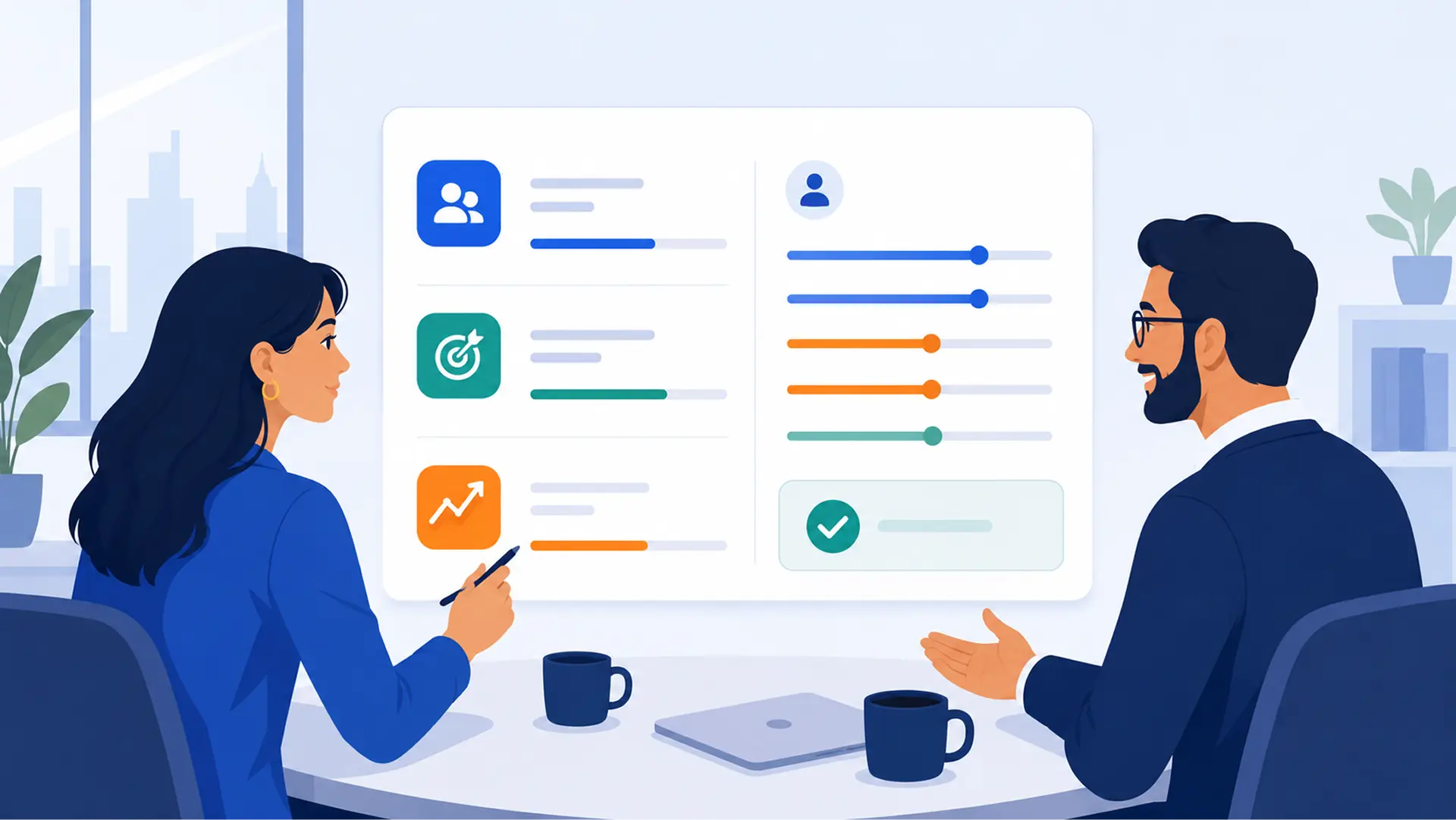
Personalised does not mean automated. Career decisions shape lives, and the risks of getting this wrong are real: models trained on historical progression data can quietly reproduce historical bias; skills inference can be confidently wrong; and an algorithmic nudge can feel like a verdict if it is presented as one.
Four principles keep the balance right:
- Recommend, never decide. AI proposes options. People choose. Promotion, mobility and development decisions stay with employees and managers.
- Explain every suggestion. If a system recommends a role, the employee should see which skills drove the match and which gaps remain. Unexplained recommendations do not get acted on.
- Let people correct the record. Inferred skills profiles must be editable. The employee is the authority on their own capability.
- Audit for fairness. Test recommendation patterns by gender, age, location and tenure. Anomalies are a signal, not noise.
Handled this way, AI does not reduce human judgement in career development. It gives managers and employees better material to exercise it on.
Getting started: a realistic sequence
Organisations that succeed here tend to follow a similar order.
- Fix the skills foundation first. Define a lightweight taxonomy for critical roles rather than attempting a complete enterprise library. Narrow and used beats comprehensive and ignored.
- Start with one population. A single function or country gives you a controlled environment to test matching quality before scaling.
- Make opportunities visible before making them intelligent. Employees cannot be matched to internal roles and projects that were never published.
- Equip managers early. If managers cannot have the conversation, the recommendation dies in the inbox.
- Measure movement, not activity. Course completions are an input. Internal fill rate, time-to-proficiency, lateral moves and regretted attrition are outcomes.
What good looks like after 12 months
A useful test: can you answer these five questions with data?
- What proportion of roles were filled internally this year, and how has that moved?
- How many employees have a current, self-confirmed skills profile?
- How many made a lateral or cross-functional move?
- What is your time-to-proficiency for critical roles, and is it falling?
- Among employees who received personalised development, is regretted attrition lower?
If the answers are unavailable, the programme is not yet instrumented — regardless of how sophisticated the underlying model is.
The bottom line
Skills are changing faster than any centrally planned curriculum can accommodate. Managers do not have the bandwidth to design ten thousand development plans. Employees leave when they cannot see a future where they are.
AI resolves the arithmetic. It makes personalisation affordable at scale — provided the skills foundation is sound, the recommendations are explainable, and the final decision always belongs to a person.
The question for HR leaders is no longer whether to personalise learning and career growth. It is how quickly they can build the data foundation that makes it possible.
Transparency note
statistics in this article are drawn from published research by the World Economic Forum, LinkedIn, Gartner and Deloitte. Readers are encouraged to verify figures against the original source publications, as research findings are periodically updated.
Sources referenced
- World Economic Forum — Future of Jobs Report 2025 (skills disruption, skills gaps as transformation barrier, reskilling need to 2030)
- LinkedIn Learning — 2025 Workplace Learning Report (manager-supported career planning, career development champions, AI training and project-based learning)
- Gartner — HR research on career development support, career path clarity and employee career confidence
- Deloitte — research on skills-based organisations, skills taxonomy maturity and internal talent mobility readiness