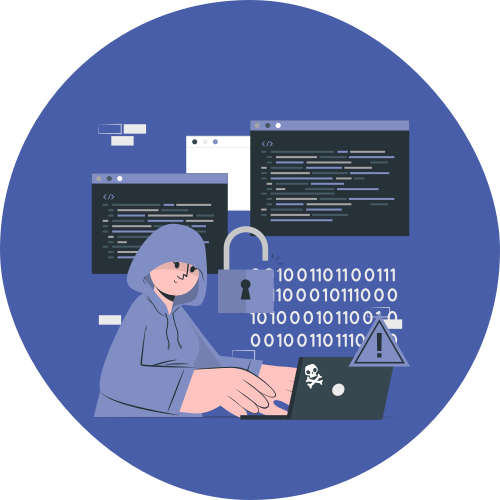

In today’s digital landscape, HR systems harbour a treasure trove of sensitive information, including a host of personal details, like social security numbers, payroll data, and performance records.
The importance of securing this data cannot be overstated, given the potential repercussions of data breaches which can include severe financial losses and significant damage to an organisation’s reputation.
How confident are you about the security of your company’s HR data?
Let’s look at some essential security measures.
Access control
Access control forms the backbone of secure HR management systems, primarily by dictating who can access sensitive employee data within an organisation.
Key components crucial to effective access control include:
- Authentication: Verification of user identities to ensure that only authorised individuals gain access to organisational data
- Authorisation: Assigning access rights to users based on their roles, ensuring they can perform necessary tasks
- Management: Ongoing monitoring and adjustment of user access rights to align with changing job responsibilities
- Auditing: Logging access activities for reviewing and ensuring compliance with industry regulations
Security audits and risk assessments
Continuously evaluate your data protection strategies through thorough security audits and risk assessments.
- Security audits: Conduct periodic reviews of your data infrastructure to identify potential vulnerabilities and ensure effective data protection measures are in place.
- Risk assessments: Evaluate current security protocols to identify weaknesses and the potential impact of data breaches, guiding improvements and remedial strategies.
Data security best practices
Human error is a significant factor in data breaches. Thus, equipping staff with knowledge of data security protocols is essential.
Regular training sessions can help employees understand the importance of data protection, recognise phishing attempts, and adopt best practices in daily operations.
- Data security training: Organise workshops and seminars to educate employees about the latest data protection techniques and protocols.
- Data breach simulations: Conduct mock data security incidents to test the staff’s readiness and improve response strategies.
Boost security with AI and ML
Artificial Intelligence (AI) and Machine Learning (ML) are transforming data protection by enabling smarter, faster, and more effective security measures:
- Anomaly detection: AI detects unusual patterns in real-time, identifying potential breaches before they escalate.
- Predictive analytics: ML analyses historical data to predict and prevent future threats.
- Automated response: AI-driven systems react instantly to mitigate risks, minimising damage and downtime.
MiHCM’s technological edge
In an era where data protection and data security are paramount, adopting advanced technology solutions is indispensable for HR systems.
By leveraging MiHCM’s technological edge, businesses can ensure comprehensive data protection measures are in place, safeguarding their HR information from potential breaches.