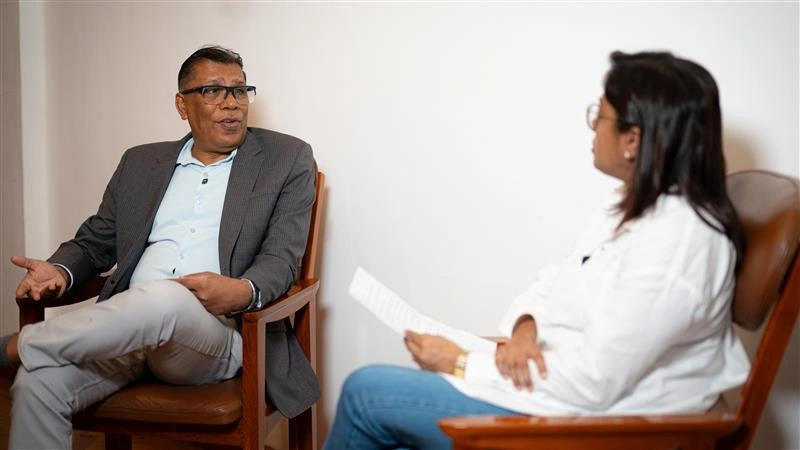
Ken Vijayakumar, Senior General Manager – HR, Admin, Purchasing & Sustainability at Baurs Sri Lanka, has played a key role in shaping Sri Lanka’s HR industry over the last three decades.
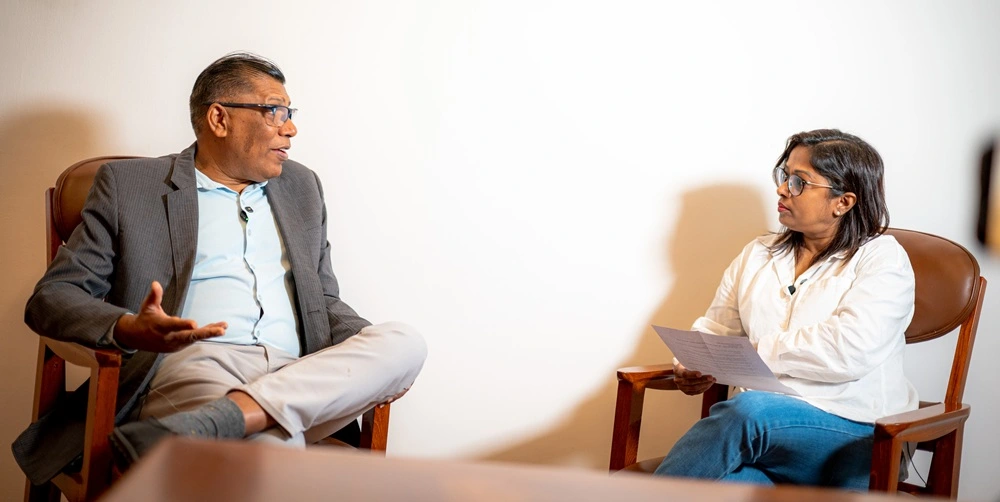
In this interview with ‘MiHCM Leadership Lens,’ he outlines Baurs’ overall HR philosophy and its key pillars, unique HR initiatives that have had the most impact on employee engagement, how Baurs is preparing its workforce for the future of work and digital transformation, how MiHCM solutions have transformed HR operations at Baurs, and the company’s approach to sustainability, given its operations across multiple sectors.
As one of Sri Lanka’s foremost HR business leaders who bridges HR concepts with innovative practices and leads with integrity and empathy and having mentored over 1,000 HR professionals as a senior lecturer at CIPM, he also shares some advice with aspiring HR professionals and outlines the key values that have held him in good stead over the course of his corporate journey.
In early 2025 he was conferred the Lifetime Gold Award, the highest individual recognition in Sri Lanka’s HR sphere, by the Chartered Institute of Personnel Management (CIPM). This award celebrates visionary leaders who have made enduring contributions to the HR profession at organisational, national, and international levels.
ต่อไปนี้คือข้อความที่คัดมา:
Watch the interview here
By Marianne David
Baurs’ overall HR philosophy and role in driving business success
You head HR, Admin, Purchasing, and Sustainability at Baurs Sri Lanka. How would you describe the company’s overall HR philosophy and its role in driving business success?
Thank you for this question. At Baurs, our no. 1 HR philosophy is called workforce protection. Under workforce protection, there are a couple of pillars we look into. No. 1 is their wellbeing. In terms of wellbeing, we look after them well, including by paying industry salaries, and groom them for future needs. That’s one of the important pillars – wellbeing and grooming for the future.
Baurs has been in the business for the last 128 years, so it’s legacy company. I came here in 2022. Baurs survived for 128 years; how do we shape Baurs for the future? That is my role. From that aspect, we have a couple of initiatives that we have started implementing. One is in relation to culture change, bringing about a more employee friendly culture. The second is leadership development. We have identified high potential, high performers, and key professionals. Another is employee engagement – how we engage them, especially during turbulent times such as the economic crisis to now.
We are a diversified company. During the crisis not only Baurs, but most companies also saw skilled migration. We have to keep the business going. Coming back to our objective of workforce protection, we have to protect the existing workforce and there has to be business viability.
During the crisis we looked after them and we started training them. On culture change, we also started reskilling and upskilling them and we increased our training. Even during the crisis, we went on training them. That was our priority.
We also looked at how we can make them digital savvy. We started implementing AI and Co-Pilot. We started training them on how to use Co-Pilot, encouraged them to use it, and paid for subscriptions. We keep talking to them about what they want to do and how we can build careers for them.
At Baurs we don’t believe in just giving a job; we believe in giving people a career. We have done career tracks for our employees. Anybody can give a job, but few people can give a career. You need to have the patience to follow the career path. If you join today, you can’t become a manager or a senior person tomorrow. It takes patience. But we will look after them through those years in which they wait patiently and develop for future requirements. That is one of the key things we look at. We also have lots of engagement activities for the staff.
Unique HR initiatives with most impact on employee engagement
From what you’ve observed over the years, what unique HR initiatives – for example, child support benefit, paternity leave, and things like that – have had the most impact on employee engagement and what do you implement at Baurs?
We are the first company to give a child support benefit in the salary itself. People can take that portion directly and put it into a bank account for their children’s future since there are specialised bank accounts for children’s protection.
Then we implemented extended maternity leave. The State gives 84 days, but we extended up to another three months, where they can work from home if they want. We have two options. One is, they can work from home for an extended three months, for which we will compensate them. They also have the option of not working during those three months without compensation. The option is given to them.
We also give two weeks of paternity leave and probably give the highest number of days. We give one week prior because you need to be with your spouse to support them and the other week post birth.
We have also introduced funeral assistance. A lot of companies have their own welfare fund, to which employees have to contribute. But here employees don’t have to contribute, we just grant this. At a time when families are grieving, we provide this funeral assistance.
Likewise, we have a lot of other benefits which are relevant to the company and relevant to our people.
Preparing employees for digital transformation
While doing these things for your employees and their personal wellbeing, you are also preparing them for the future, for digital transformation. Can you expand on those initiatives and how well they have been received by your employees?
I am also responsible for sustainability and digitisation and sustainability go together. We always encourage employees to use apps and platforms whenever possible. For instance, we have introduced SAP HANA and we use MiHCM. We also use other platforms for sales force automation and budgeting, etc. We always encourage people to use digital platforms.
Secondly, we give constant training to employees to be digital savvy. That’s a challenge regardless of blue collar or white collar; we encourage everyone.
The MiHCM platform is also available on mobile so when it comes to marking attendance and using leave, for example, they use the app. Most of our sales force is outstation so we encourage this. We also want to bring AI assistance to agents for their day-to-day requirements and we encourage them. We are slowly pushing people to go paperless.
How MiHCM solutions have transformed operations at Baurs
In terms of the MiHCM solutions that you have implemented, how have they transformed operations at Baurs?
MiHCM was very helpful in improving productivity. It is user friendly. We encourage everyone to use it; in fact, everyone has to use it for their employee self-service. Recently we implemented benefits management also via MiHCM.
We still have to do some more work, and we are contemplating how we should go about it. We are on the right path.
How 128-year-old legacy company is tackling change
Baurs is a 128-year-old company in Sri Lanka. How has having these new processes in place – going into HR tech, going online, and so on – been received?
It’s a very relevant question for legacy companies like Baurs. Legacy companies have so many manual systems and processes which have been in the system for a long time. If you look at our workforce, some of the people have 30-40 years of experience in the company itself.
To overcome the challenges, you need to have a change management approach. You have to change their way of thinking and their way of working. They will naturally have resistance to change, which any human being would have. However, my style of changing people is to talk to them and convince them.
People talk about ‘me-ology’; they ask, ‘What’s in it for me?’ You have to explain to them how they will benefit from the change. If we digitise, their work will become easy. Work which they took five days to do, they can now do within one day. That’s the philosophy in using all these AI applications – they increase productivity. Say someone wants to draft a job description; they must go into the details of the nature of the job, what they do, carry out an observation, etc., but here they only have to give a command.
But to do that, I would say that no fool can use AI agents. You should have the knowledge or be a n expert in whatever you do, otherwise AI will not help you. You need to have prompt management. We have trained our people on how to use AI and how to use the apps. That is important.
Change management always takes a lot of convincing. You need to tell them what’s in it for them, how they benefit from it, and how the company benefits. You can’t simply say, ‘From tomorrow we are going to implement this particular system.’ People resist because they don’t know. Naturally that’s how many project fail because you don’t engage people. You don’t explain to them. You’ve got to have an approach on how to convince them. At Baurs we do this very gradually.
Some people say, ‘This is the project timeline, and you have got to finish this within this timeline.’ However, when working with people, that theory won’t work. You can’t set a timeline to change people’s mindsets. You’ve got to have patience. A lot of people fail in change management implementation because they force the change. At Baurs, we don’t force change; we engage them, we involve them, and we inspire them to change.
Baurs’ approach to sustainability
Baurs operates across multiple sectors and has a very broad footprint with immense impact. Given that you also head Sustainability at Baurs, could you tell us about the company’s approach to sustainability?
Sustainability is turning out to be a fad. A lot of people say they do sustainability, that they engaged in a beach clean-up or a park clean-up. That is good, but it may be CSR. Sustainability must have a plan and a philosophy.
At Baurs we are not doing sustainability for the sake of doing it. Our first initiative is to create awareness among our employees. We are at that stage now. We have done some work on renewable energy. This office is fully solar powered, and we save 20-30% of our electricity consumption. Currently we are doing awareness via quizzes and competitions, so people know what sustainability is.
A lot of companies say ‘we have done this project/we have don that project’ in their annual reports, but do people really know what sustainability really is? If you ask any employee, they will say it is fixing solar power or not using plastic. But that is not sustainability. Sustainability is using your resources carefully and saving them for future generations. Currently we are not doing anything fancy. We are working to inculcate change in people’s mindsets.
We are also a member of UN Global Compact and there are certain deliverables, which we need to report on. We have started doing this. We are not rushing. This is relevant to what I said before about change management; it needs a gradual approach.
Advice to aspiring HR leaders
You are one of Sri Lanka’s foremost HR business leaders, with three decades of experience in the field. What advice would you give to aspiring HR leaders?
Aspiring HR leaders should first cultivate empathy, which is No. 1 for any HR leader. They should empathise with the employee and the business as well. Any HR should first understand what business they are in. The HR function is no longer a support function. HR is a strategic business partner. You’ve got to partner with the business and understand the business.
If you take Sri Lanka as a whole, HR people are not adding much value to the business. That’s a complaint we hear from the CEOs. They need to understand the business – how do we support in recruitment, how do we support in grooming people, how do we support in succession planning? There won’t be HR if the business is not there. How we help is important.
No. 1 is understanding people. No. 2 is understanding the business and supporting the business, which is priority. No. 3, you’ve got to be a genuine HR person. A HR job is not a popularity job. Some people think we should always do good things for people; yes, you have to help people and look after their welfare and so on. However, whilst doing that, you’ve got to also educate them and align them to the business strategy. Sometimes you’ve got to take hard decisions. If you want to please everybody you can sell ice cream, not do HR.
The importance of passion, commitment, and being genuine
Over the years, what are the values that have held you in good stead?
I am very committed. Commitment is No. 1. Then whatever I do, I do with passion.
When someone gives an opportunity – sometimes bosses say ‘this is not HR, but you have to do it’ – I have taken on that additional role always. Through this you learn. Always prepare to take additional responsibility. Sometimes you don’t get compensated for that. Nowadays people always think,’ Why should I do extra work? Am I being compensated?’ You learn. You gain competencies and experiences, which add value.
Besides passion, commitment, and being willing to take on additional responsibilities, you have got to be very genuine. Be genuine in your approach and be yourself. You can have a role model, but you can’t imitate someone else. You have natural instincts, so look at yourself and see what your natural personality traits and abilities are, work on them, and improve what you have.