

By Rashika Fazali
The resignation wasn’t the surprise.
What surprised the manager was who resigned.
She was one of the company’s strongest performers. Reliable. Consistent. Well-liked by her team. She delivered results, met deadlines, and had never raised any major concerns.
Then one morning, she handed in her resignation.
The manager’s response was immediate: “I didn’t see this coming.”
But here’s the uncomfortable truth: Employees rarely quit on the day they resign. They often quit weeks or months earlier.
Not physically.
But psychologically.
And that’s where many organisations get caught off guard.
In fact, one of the biggest challenges in employee retention is that the warning signs often appear long before an employee resigns. By the time employee turnover becomes visible, the disengagement process may have already been underway for months.
The myth of the sudden resignation and employee turnover
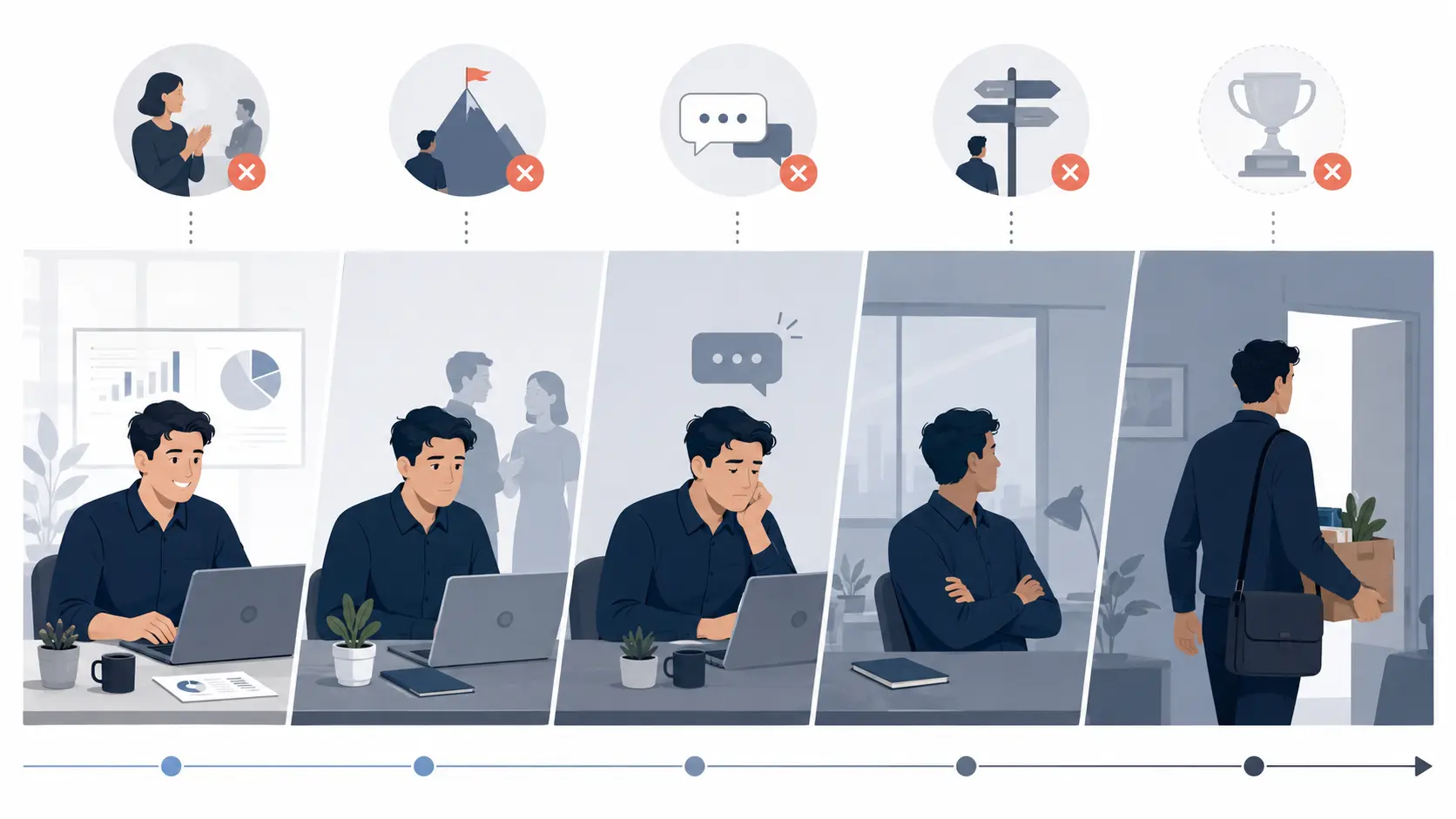
When an employee resigns, it often feels sudden. But human behaviour rarely works that way.
Psychologists have long understood that major decisions are usually the result of a gradual process rather than a single event. The theory of Progression of Job Withdrawal suggests that employees often begin by psychologically distancing themselves from their work before physically leaving the organisation.
This progression may start with reduced enthusiasm, lower participation in discussions, declining discretionary effort, or decreased engagement with colleagues and company initiatives. And they begin with small experiences that accumulate over time, such as:
- A missed opportunity
- A conversation that never happened
- A contribution that went unnoticed
- A manager who stopped listening
- A career path that became unclear
Individually, these moments seem insignificant. But collectively, they begin to change how someone feels about their work and their overall employee experience. And feelings matter more than we often realise.
5 warning signs that impact employee retention

- Growth stops feeling possible
Human beings are naturally motivated by progress.
Psychologists refer to this as the need for mastery, i.e., the desire to learn, improve, and move forward.
When employees feel they are no longer growing, motivation begins to decline. This doesn’t necessarily mean they want a promotion. Sometimes they simply want:
- new challenges
- new skills
- greater responsibility
- a sense of momentum
The problem is that many organisations only focus on performance management. Employees are often focused on progress, and those are not always the same thing.
- Recognition disappears
One of the biggest misconceptions in the workplace is that people only work for money.
Compensation matters. But recognition matters too.
Behavioural psychology tells us that humans repeat behaviours that are acknowledged and rewarded.
Recognition reinforces value. It tells people, “I see your effort”, “Your contribution matters”, dan “What you’re doing is making a difference.”
When recognition disappears, employee engagement often begins to decline. And once that question enters someone’s mind, disengagement isn’t far behind.
- Manager becomes the problem
People don’t leave companies. They leave managers.
Employees often experience the organisation through their immediate leader.
A strong culture can be weakened by poor leadership experiences. A strong manager can make difficult work enjoyable.
Leadership remains one of the strongest predictors of retention.
- Trust begins to erode
Trust is one of the most powerful forces in any organisation, and it is remarkably fragile.
Employees need to trust their manager, leadership, company decisions, and future opportunities.
When trust weakens, uncertainty grows, and uncertainty is psychologically exhausting. Humans naturally seek environments that feel predictable and psychologically safe. When they no longer feel safe, they begin looking elsewhere.
- Purpose becomes blurry
Humans have an extraordinary ability to tolerate hard work. What they struggle to tolerate is meaningless work.
People want to understand why their work matters, how they contribute, and where the organisation is heading.
When purpose becomes disconnected from daily work, motivation often declines.
Employees stop seeing the impact. Work becomes transactional. And transactional relationships are much easier to leave.
Why managers often miss employee retention risks
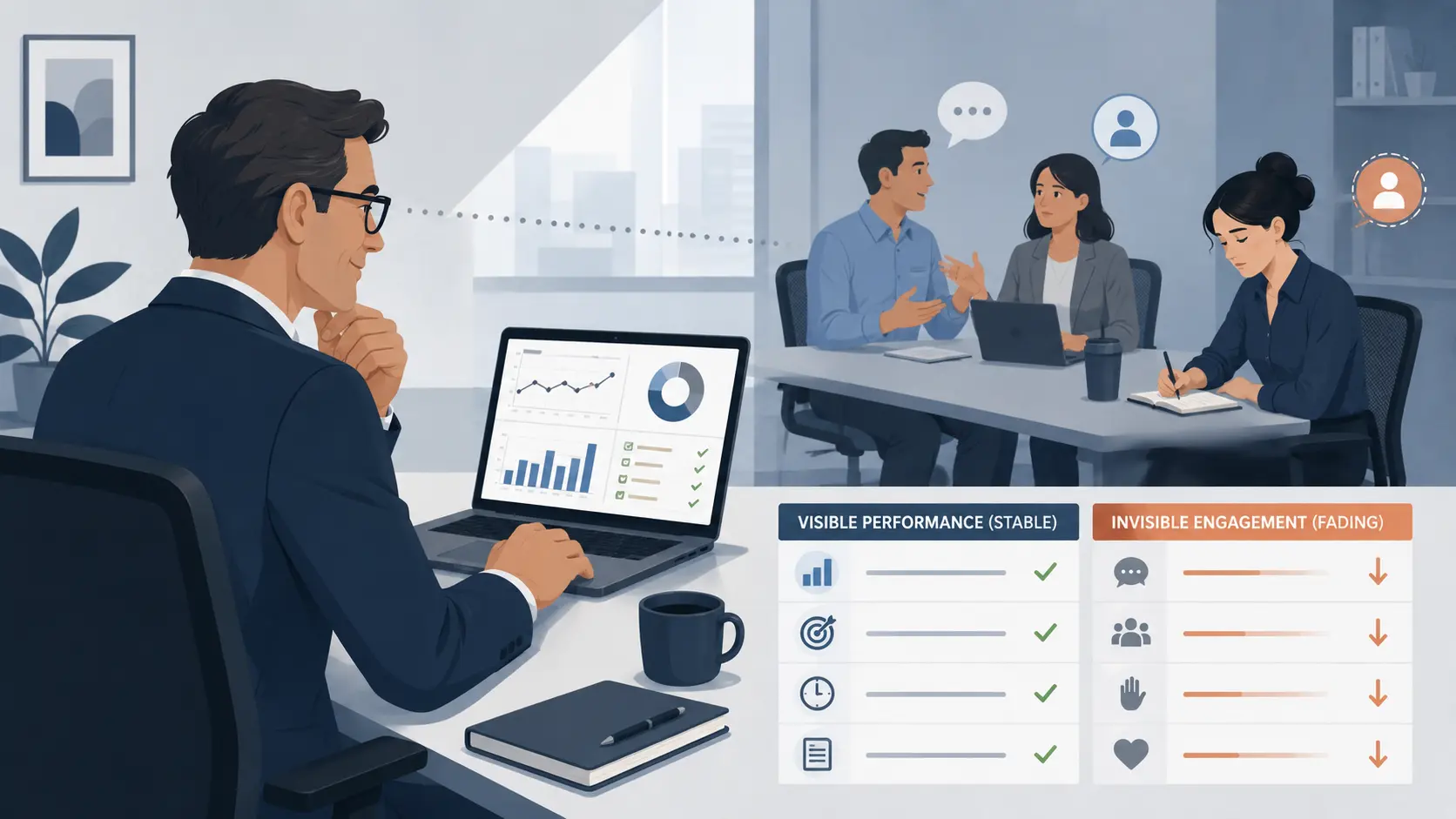
This is where psychology becomes particularly interesting.
Many leaders genuinely believe they would know if someone was unhappy. Unfortunately, human beings are subject to normalcy bias, which is our tendency to underestimate disasters and assume things will continue as they always have.
If an employee has been reliable for years, managers often assume everything is fine unless they hear otherwise.
But silence is not always satisfaction.
In fact, some of the most disengaged employees stop speaking up altogether. They stop volunteering ideas. They participate less in meetings. They become quieter.
Performance remains acceptable, but enthusiasm declines.
The problem is that many managers only notice when performance drops.
The cost of finding out too late
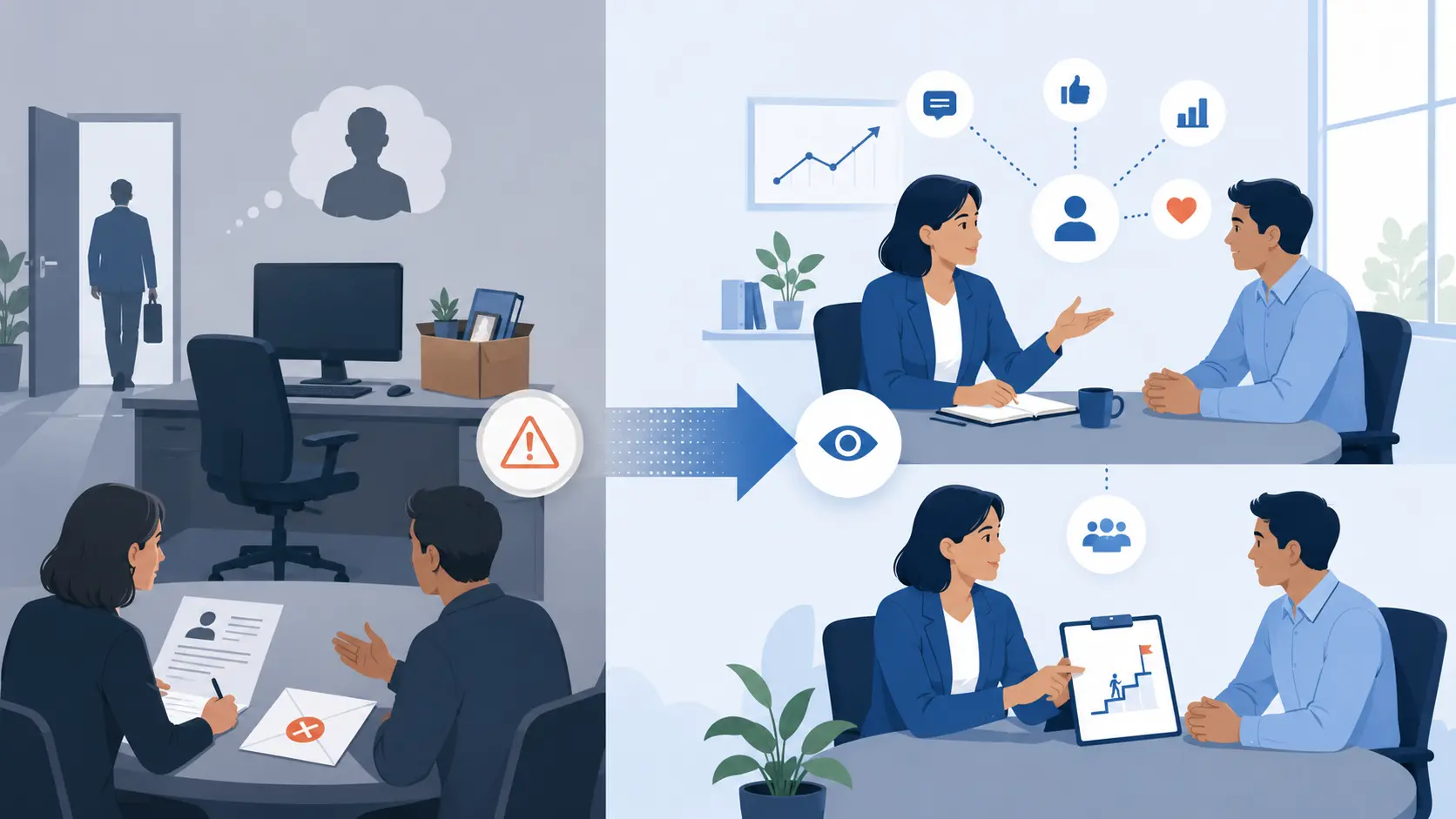
Traditionally, organisations discover retention problems through exit interviews.
- The employee resigns.
- HR asks questions.
- Insights are gathered.
- Lessons are learned.
The problem?
The employee is already gone. It’s a bit like discovering a leak after the roof has collapsed.
Useful information. Terrible timing.
The most successful organisations are moving away from reactive HR and toward proactive HR.
Instead of asking, “Why did they leave?”
They’re asking, “How can we identify disengagement before they leave?”
How HR technology and workforce analytics improve employee retention
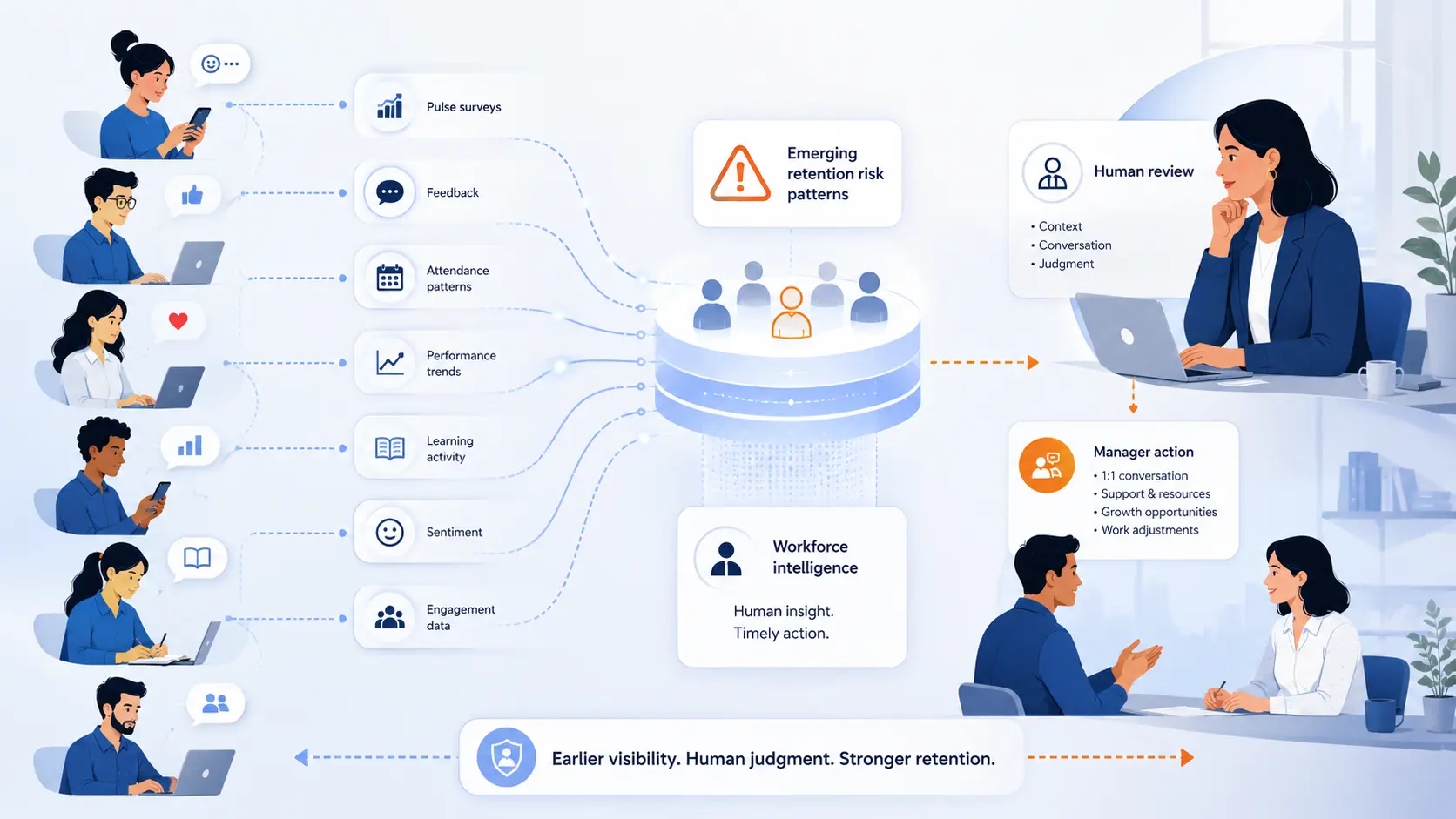
This is where modern HR technology is changing the conversation.
Historically, HR systems were primarily administrative. They stored records, managed payroll, and processed leave requests.
Today, the best HR software platforms do much more. They help organisations understand people through tools such as:
- continuous feedback
- pulse surveys
- manajemen kinerja
- learning and development tracking
- workforce and engagement analytics
- AI-powered workforce intelligence
They help answer questions such as:
- How engaged are employees?
- Which teams show declining sentiment?
- Where are performance patterns changing?
- Which managers have higher turnover rates?
- What skills or career paths are employees seeking?
These insights allow organisations to intervene before disengagement becomes resignation.
A platform like MiHCM doesn’t replace human judgment. It strengthens it.
Managers cannot solve problems they cannot see. And disengagement is often invisible until it becomes resignation.
The ability to identify retention risks early is becoming one of the most valuable capabilities in modern workforce management.
For instance, using pulse surveys on MiHCM, you can find the most common theme through a word cloud and understand what employees think or feel about a certain subject. Our digital HR assistant, MiA One, checks in with employees daily to understand how they feel emotionally.
And MiHCM has other important dashboards and reports that help you understand employee attendance, productivity, and performance, and further predict absenteeism and turnover.
This gives HR teams the insight they never had into the human psyche, which is, in all honesty, inseparable from the workplace.
The organisations that retain great employees are not necessarily those with the highest salaries or the most impressive office spaces.
They’re often the organisations that understand people better. They understand that employees need:
- growth
- recognition
- trust
- purpose
- belonging
They understand that these factors can be measured, monitored, and improved through a combination of leadership, employee engagement initiatives, and workforce intelligence.
Because employee retention is not simply an HR metric. It’s a reflection of the employee experience.
The future of employee retention is understanding human behaviour

No one leaves without warning
The employees who leave unexpectedly are rarely the ones who decided overnight. Their resignation letter was simply the first moment leadership noticed.
The real challenge for organisations isn’t understanding employee turnover after it happens. It’s recognising the signals while employees still want to stay.
Because the best employees don’t usually leave without warning. The warning signs were there all along.
The question is whether anyone was paying attention.
The goal is not to replace human judgment. It is to provide leaders with earlier visibility. Because you cannot solve a problem you cannot see.

Rashika Fazali
Data & AI Business Lead
(Rashika Fazali is the Data & AI Business Lead at MiHCM and Deputy General Manager at Futura Tech Labs. She holds a Master’s degree in Business Psychology from London Metropolitan University and brings over 16 years of experience spanning the media, entertainment, and technology industries. From employee engagement and workplace behaviour to consumer decision-making and audience psychology, her work examines the human factors that shape organisations, brands, and communities. Her writing brings together psychology, artificial intelligence, leadership, and broadcasting, combining psychological insights with real-world experience to help organisations build more engaged, productive, and human-centred workplaces.)