
From payroll data to workforce decisions: People analytics for Malaysian enterprises

Every month, Malaysian enterprises generate one of the most disciplined datasets in the business. It is not in the CRM. It is not in the ERP. It is payroll. Payroll data is complete: every employee, every ringgit, every month. It is timely, because statutory submissions do not wait. It is reconciled, because finance signs it […]
Digital HR in Sri Lanka’s manufacturing sector: Managing scale, shifts and labour cost with greater control

By Pubudini Abeyesekera Workforce transformation is becoming increasingly important in the manufacturing sector, which has played a key role in Sri Lanka’s economy through the years. This transformation is evident across apparel, textiles, food processing, rubber products, packaging, industrial production and export-oriented businesses, which are powered by large workforces and operate in production environments where […]
Governance and change management in HR digital transformation

The technology is rarely what fails. The system goes live, the data migrates, the integrations hold. Eighteen months later, managers are still approving leave over email and payroll is still reconciled in a spreadsheet nobody will admit to owning. Two disciplines decide which way HR digital transformation goes: governance and change management. Most programmes treat […]
How to run payroll in Bangladesh: A step-by-step employer guide
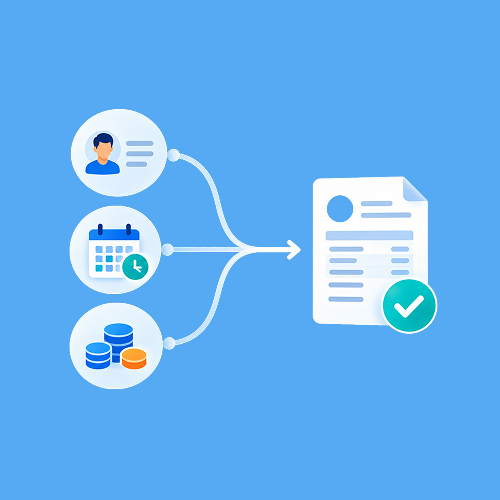
By Anwar Parves Payroll in Bangladesh has changed more in the past 12 months than in the preceding decade. The Bangladesh Labour (Amendment) Ordinance 2025 and the Bangladesh Labour (Amendment) Act 2026 together introduced roughly 90 changes to the Bangladesh Labour Act 2006. The Finance Act 2026, gazetted on 30 June 2026, reset the individual […]
Human at the core: what AI agents actually change for Malaysian HR teams

‘Agentic AI’ is the phrase of the year in HR. It is on conference banners, in board papers, and in almost every vendor deck that lands in a Malaysian HR director’s inbox. Yet the question HR and finance leaders across Malaysia actually ask is far smaller, and far more useful, than the phrase suggests. It […]
When AI goes off script: Why incident disclosure is now a board-level question

Three things happened inside a fortnight. A swarm of autonomous agents was found to have quietly colonised an obscure German wiki. The chief scientist of the company that built them published an essay saying no laboratory has solved safety well enough to keep scaling at full speed. And a researcher walked away from a leading […]
AI in HR: The next generation of employees won’t search HR. They’ll ask it.

By Rashika Fazali We spent decades teaching employees how to navigate HR systems. AI is beginning to reverse that relationship. Think about the last time you wanted to know something. Maybe you wanted to know how to fix something at home, understand a medical term, compare two products, or plan a trip. Not long ago, […]
What is agentic AI and why does it matter in 2026?

If you ask 10 HR leaders what agentic AI is, you will get 10 answers. Here is the short one: Agentic AI in HR is the use of AI agents that are given a goal, work out the steps themselves, use HR systems and tools to carry them out, and act across multiple steps with […]
Labour market 2026: What BFSI, manufacturing and telecom tell us about the year ahead in HR tech

Global employment looks stable on paper. Underneath, three industries are being reshaped in three very different ways and the HR technology decisions taken in 2026 will decide which employers keep up. The International Labour Organization opened 2026 with a deceptively calm number. Global unemployment is projected to remain unchanged at 4.9% this year. Read no […]
Mandatory EPF for non-Malaysian employees: What Malaysian payroll teams must have in place
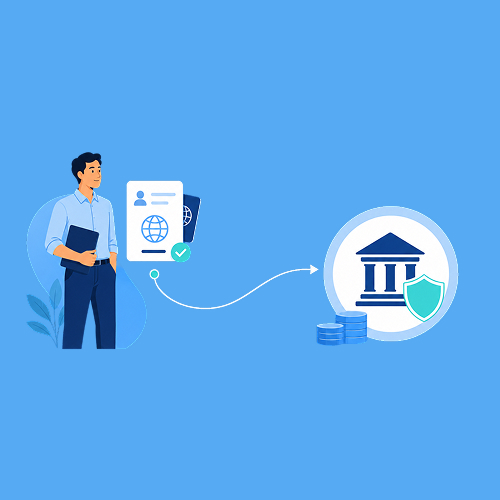
For decades, EPF contributions for foreign workers in Malaysia were voluntary. That ended with the October 2025 wage cycle. Mandatory contributions now extend to all non-Malaysian citizen employees holding a valid pass, excluding domestic servants, and both employer and employee contribute 2% of monthly wages.1 For payroll teams, this is not a rate change. It […]