Why the future of HR may belong to AI-first enterprise platforms

Share on

Table of Contents

Build Your AI-First HR Future

Why the future of HR may belong to AI-first enterprise platforms 1

By Vindya Cumaratunga

The conversation around Artificial Intelligence (AI) in HR has moved far beyond curiosity.

Across boardrooms and leadership forums, organisations are actively exploring how AI can reshape workforce management, employee engagement, productivity, and decision making. Yet amid all the excitement, many enterprises are standing at an important crossroads.

Some organisations are experimenting with standalone AI tools and attempting to build HR applications internally. Others are quietly taking a different route by aligning themselves with credible AI-first enterprise HR platforms that are already designed for the realities of the modern workplace.

At first glance, both approaches may appear to lead toward the same destination. However, as many business leaders are beginning to realise, the road itself often determines how smoothly the journey unfolds.

In today’s rapidly changing world of work, organisations are not simply looking for automation. They are looking for continuity, intelligence, scalability, and resilience. They are searching for technology ecosystems that can evolve as fast as the workforce itself. That is where AI-first enterprise HR platforms are beginning to stand apart.

The AI excitement is real, but the foundation matters more

AI has become one of the most talked about capabilities in enterprise technology. New tools appear almost every week, promising smarter workflows, automated processes, predictive insights, and conversational experiences.

While these innovations are impressive, many organisations eventually discover that introducing AI into HR is not simply about plugging in a tool and expecting transformation overnight.

HR is not a standalone process sitting in isolation. It is deeply connected to every layer of the organisation including people, culture, leadership, compliance, operations, and strategy. As the saying goes: “You cannot build a house on sand and expect it to weather the storm.”

Without a strong enterprise foundation, AI can sometimes create disconnected experiences instead of connected transformation. This is why forward-thinking organisations are increasingly paying attention to platforms that are AI-first by design rather than AI-enabled as an afterthought.

AI-first by design, not AI-enabled as an afterthought

Why the future of HR may belong to AI-first enterprise platforms 2

There is a meaningful difference between a system that merely integrates AI features and a platform that has AI embedded into its DNA.

Many traditional systems are now attempting to add AI capabilities on top of existing architectures. While this may improve specific tasks, it often leaves organisations managing fragmented workflows, disconnected data, and inconsistent user experiences.

An AI-first enterprise HR platform approaches the challenge differently. Instead of treating AI as an accessory, intelligence is woven into the entire employee lifecycle from recruitment and onboarding to performance, learning, workforce planning, and engagement. The result is not just automation. It is a more connected and intelligent way of working. In many ways, it reflects the old idiom, “The whole is greater than the sum of its parts.”

When every aspect of the HR ecosystem communicates seamlessly, organisations gain more than efficiency. They gain visibility, agility, and confidence.

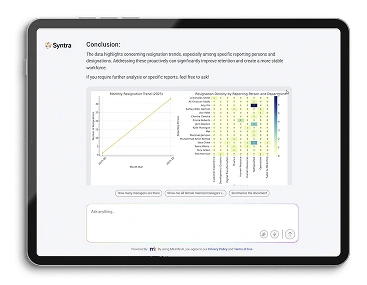
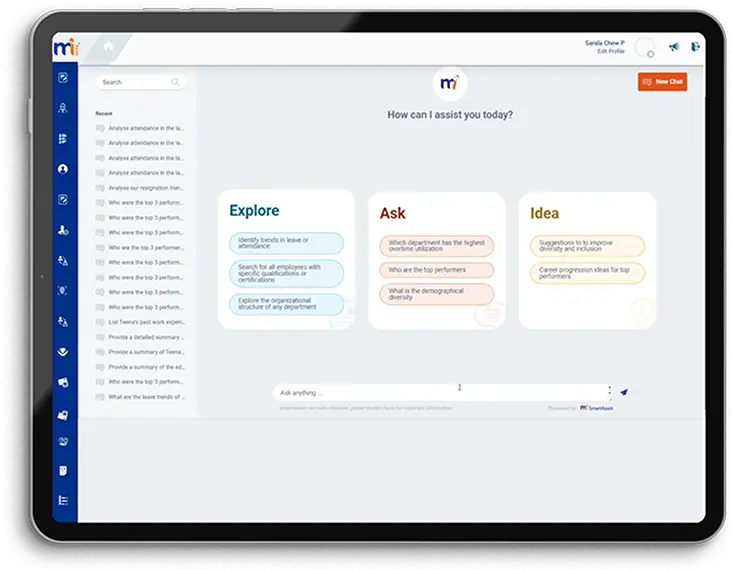
This is increasingly evident in modern enterprise HR platforms such as MiHCM, where AI is gradually becoming part of the operational fabric rather than a standalone feature sitting on the sidelines. Instead of approaching AI as an isolated productivity layer, platforms designed with AI-first thinking are enabling organisations to experience more intelligent workflows across recruitment, talent management, workforce analytics, employee engagement, payroll operations, and people decision making.

The advantage is often subtle yet powerful. Employees experience smoother interactions, managers receive more contextual insights, and HR teams gain the ability to operate with greater agility and foresight. In many ways, the platform quietly evolves alongside the organisation itself, helping tenants navigate changing workforce expectations without constantly reinventing their HR technology landscape.

Employee and manager expectations are reshaping the platform conversation

Why the future of HR may belong to AI-first enterprise platforms 3

Employee expectations are changing at lightning speed. Today’s workforce expects workplace experiences that feel intuitive, responsive, and personalised. Employees want systems that understand their needs, simplify complexity, and provide timely support without friction.

Managers also expect real time insights rather than static reports buried inside spreadsheets. Organisations therefore face growing pressure to modernise not only their HR processes but also the employee experience itself. This is where AI-first enterprise platforms quietly become strategic enablers.

Rather than forcing organisations to stitch together multiple disconnected tools, these platforms create a unified digital environment where intelligence flows naturally across the workforce ecosystem. For tenants operating in competitive industries, this becomes particularly important.

When organisations are trying to navigate digital transformation, talent shortages, changing workforce demographics, and evolving compliance expectations, technology cannot afford to become another obstacle. It must become a silent partner in progress.

The hidden cost of building HR intelligence in-house

Why the future of HR may belong to AI-first enterprise platforms 4

For many organisations, building internally appears attractive in the early stages. With AI tools becoming increasingly accessible, the idea of developing customised HR applications may seem both innovative and cost effective. However, enterprise HR environments are rarely simple.

What starts as a small AI initiative often grows into a much larger operational responsibility involving governance, integration, scalability, security, workflow management, employee privacy, localisation, and continuous enhancement. Before long, internal teams may find themselves trying to maintain an ecosystem rather than solving business problems. As another familiar saying reminds us: “The devil is in the details.”

The challenge is not only building functionality. The challenge is sustaining enterprise readiness over time while workforce expectations and technology standards continue to evolve. AI-first enterprise HR platforms remove much of this hidden complexity because the architecture, governance, scalability, and innovation pipelines are already built into the ecosystem. This allows organisations to focus less on maintaining infrastructure and more on creating workforce value.

Connected intelligence is becoming the real differentiator

Why the future of HR may belong to AI-first enterprise platforms 5

One of the greatest strengths of a modern enterprise HR platform lies in connected intelligence. Standalone tools often operate within narrow boundaries. They may automate tasks efficiently but still rely on fragmented data scattered across multiple systems.

An AI-first HR ecosystem creates a more holistic workforce view by connecting recruitment, performance, learning, engagement, payroll, career progression, and organisational insights within a unified environment. This connected intelligence allows organisations to make smarter decisions with greater confidence.

Leaders can begin answering more strategic questions such as which skills are emerging across the workforce, which teams may face retention risks, which learning investments drive performance, which leadership pipelines require strengthening, and which workforce trends may impact future growth.

When data begins speaking the same language across the organisation, decision making becomes more proactive rather than reactive. In a world where change is constant, that visibility becomes invaluable.

Trust, governance, and the rising importance of responsible AI

Why the future of HR may belong to AI-first enterprise platforms 6

As AI adoption accelerates, trust is becoming one of the defining success factors for enterprise technology.

HR systems manage some of the most sensitive information within an organisation including employee records, compensation, performance data, and organisational structures. This means AI-driven HR environments must operate with strong governance, security, compliance, and transparency.

Credible AI-first enterprise platforms invest heavily in these areas because enterprise trust cannot be built overnight. For organisations attempting to navigate AI transformation independently, this responsibility can quickly become overwhelming.

Security frameworks, compliance requirements, responsible AI governance, and continuous system monitoring all require long term investment and specialised expertise. By partnering with a mature enterprise platform, organisations gain the reassurance that these foundations are already being continuously strengthened behind the scenes. After all,
“a chain is only as strong as its weakest link”.

Preparing for a future that refuses to stand still

The future of work is unlikely to stand still. Hybrid workforces, skills-based organisations, workforce analytics, intelligent automation, and employee personalisation are rapidly becoming part of mainstream business strategy.

In this environment, organisations need technology ecosystems capable of evolving continuously without forcing constant reinvention. This is where AI-first enterprise HR platforms such as MiHCM are beginning to play an increasingly important role.

Rather than requiring tenants to repeatedly rebuild capabilities from scratch, platforms designed around AI innovation help organisations move forward with greater stability and confidence. The advantage is not merely technological. It is strategic.

When organisations operate on a credible AI-first HR ecosystem, they position themselves to embrace future workforce changes more seamlessly while minimising operational disruption. In many ways, the platform becomes more than software. It becomes part of the organisation’s long-term transformation journey.

Where consulting expertise quietly becomes the difference

Why the future of HR may belong to AI-first enterprise platforms 7

Equally important in this journey is the role of experienced consulting guidance. Technology alone rarely transforms organisations. Successful transformation often comes from aligning people, processes, culture, and business objectives together. This is where consulting expertise quietly becomes the bridge between technology potential and business reality.

As organisations move toward next generation HR operating models, advisory and implementation support from experienced teams such as MiHCM Consulting can help enterprises navigate change management, process transformation, workforce alignment, governance readiness, and long-term adoption strategies more effectively.

Much like having a seasoned navigator during a long voyage, the value often lies not only in reaching the destination, but in avoiding unnecessary turbulence along the way. By combining an AI-first platform with strategic consulting expertise, organisations are often better positioned to unlock sustainable value rather than pursuing isolated technology deployments.

The road ahead belongs to platforms built to evolve

Perhaps the greatest value of an AI-first enterprise HR platform is not visible in a single feature or dashboard. It is visible in the ability to evolve continuously without losing momentum. Technology should not force organisations to constantly start from square one. It should create an environment where innovation feels natural, scalable, and sustainable.

As enterprises continue navigating economic uncertainty, workforce transformation, and increasing digital expectations, the organisations that thrive may not necessarily be the ones chasing every new AI tool that enters the market.

More often, success may belong to organisations that build upon trusted foundations capable of growing with them over time. Because in the end, transformation is rarely about taking the fastest shortcut. It is about choosing the road that allows the journey to continue smoothly for years to come.

Why the future of HR may belong to AI-first enterprise platforms 8

Vindya Cumaratunga
Head of Consulting – South Asia

(Vindya Cumaratunga, MiHCM’s Head of Consulting – South Asia, is a seasoned strategic HR professional with close to three decades of experience. An HR practitioner with a strong business focus and proven capability to strategise and deliver HR projects to meet business goals, she has functioned in many senior roles and is a dynamic thinker and leader who consistently harnesses world-class exposure in HR business partnering to shape teams and achieve corporate goals across teams, companies, domains, and generations.)

Written By : Vindya Cumaratunga

Spread the word
Facebook
X
LinkedIn
SOMETHING YOU MIGHT FIND INTERESTING
Rach blog 2 - The future of work in Thailand Digital, distributed, and data-driven
The future of work in Thailand: Digital, distributed, and data-driven

By Rachadapon Prasomsub Thailand stands at a defining moment. The Thailand 4.0 agenda is no

How MiA ONE is redefining the HR assistant for Enterprise teams

For more than a decade, HR self-service has meant portals and apps: structured menus, form-based

Workforce Intelligence in the Boardroom_ turning people data into strategic decisions
Workforce Intelligence in the Boardroom: turning people data into strategic decisions

The conversation in boardrooms has changed. Where workforce decisions were once guided by instinct, precedent,