Workforce planning and analytics is the combined discipline that links demand-and-supply forecasting for people with data-driven HR analytics (from descriptive through prescriptive) to align talent to strategy and cost.
This guide shows how to move from raw HR, payroll and timesheet data to validated forecasts, scenario simulations and operational actions that shorten vacancy time, reduce cost-per-hire and link headcount to revenue.
Context matters: hybrid and remote working patterns remain materially higher than prepandemic levels, shaping hiring, retention and location strategies.
Top 5 KPIs to watch this quarter:
- Headcount forecast error (MAPE) — measures forecast accuracy.
- Timetofill (median days) — operational hiring velocity.
- Voluntary turnover rate (rolling 12 months) — retention signal.
- Internal mobility rate — percent of hires filled internally.
- Productivity per FTE (revenue or transactions per FTE) — output link to cost.
Quick implementation checklist:
- Identify stakeholders and a single executive sponsor.
- Audit data sources; publish a minimum viable dataset (see section 6).
- Choose models and metrics for a single highimpact pilot (turnover or hiring forecast recommended).
- Build descriptive dashboards and validate assumptions with HRBPs and Finance.
- Run one scenario set, translate decisions into operational playbooks and iterate.
When to escalate to Finance or executives: any workforce scenario that changes payroll spend by more than ~2% of budget, or a skills gap that threatens an upcoming product release or regulatory milestone.
Estimated pilot timeline (recommended): 8–12 weeks for a focused use case — phase 1: data mapping and descriptive dashboards (2–4 weeks); phase 2: predictive model build and validation (3–5 weeks); phase 3: scenario runs and operationalisation (2–3 weeks). Treat this as a recommended schedule and adapt to organisational complexity.
What is workforce planning and analytics?
Workforce planning is the strategic forecasting of people needs — identifying how many people, with which skills, are required and when — to meet operational and strategic goals. Workforce analytics is the set of data, methods and models that turn HR, payroll and operational signals into insights and forecasts that inform those decisions.
Definitions and where analytics adds value
Key terms:
- Workforce planning: forward-looking supply-and-demand modelling for headcount and skills.
- Workforce analytics/people analytics: descriptive, diagnostic, predictive and prescriptive analytics applied to HR data.
- HR analytics: analytical work focused on HR processes (overlaps with workforce analytics but often narrower).
- Manpower planning/labour forecasting: legacy terms emphasising staffing levels and headcount economics.
Organisational roles and ownership
- HR Business Partner (HRBP): translates business needs to people actions and validates assumptions.
- People Analytics/Workforce Planning team: builds models and dashboards, owns forecast accuracy and scenario analysis.
- Workforce Planner: operationalises hiring, redeployment and contractor strategies.
- Finance partner: aligns headcount forecasts to P&L and capital plans and approves tradeoffs.
Common pitfalls
- Siloed data and inconsistent definitions (FTE vs headcount, gross vs net hiring) that prevent accurate joins.
- Overfitting models to rare historical shocks; failing to include external labour signals.
- No owner for model maintenance — forecasts drift when no one recalibrates parameters.
Expected outcomes when done well: shorter vacancy cycles, lower replacement cost per attrition event, improved internal mobility and higher confidence in linking workforce plans to revenue and delivery timelines.
Why workforce planning matters for business performance
People are the largest controllable expense for most firms; aligning talent to demand directly affects revenue, margin and delivery risk. Accurate workforce plans make hiring and redeployment decisions more costeffective and reduce reactive substitutes such as expensive contractors or overtime.
How headcount and skills affect financial outcomes
- Understaffing delays product releases, increasing timetomarket and lost revenue.
- Overstaffing increases fixed payroll burden and reduces unit economics.
- Misaligned skills create hidden costs: onboarding time, lower productivity and repeated recruitments.
Costs of poor planning — real examples
- Reactive hiring premium: reliance on contractors and agencies raises perhour costs and timetovalue.
- Lost opportunity: delayed launches and unmet sales quotas when critical roles are vacant.
- Knowledge loss: avoidable turnover in specialist roles causes institutional knowledge gaps and rehiring costs.
Strategic use cases
- Mergers & acquisitions: plan role rationalisation and retention incentives for key talent.
- New product or market expansion: align sales and delivery headcount to revenue forecasts.
- Seasonal businesses: layer demand scenarios to staff for peaks without long-term headcount inflation.
Evidence and ROI
Quantify ROI by linking forecast improvements to measurable outcomes: reduced vacancy days, lower contractor spend and lower replacement costs. Present scenarios to stakeholders with P&L impact lines and sensitivity ranges so decisions become trade-off analyses rather than anecdotes.
Stakeholder alignment
Present workforce scenarios with clear assumptions, expected P&L impact and recommended actions. Use executive scorecards for strategic decisions and operational dashboards for HRBPs to manage execution.
Types of workforce analytics
Workforce analytics is commonly grouped into four types that form a maturity roadmap. Each type answers different questions and requires progressively richer data and governance.
Descriptive analytics
What it does: provides current and historical snapshots — headcount by function, turnover rates, tenure distributions and simple cohort analyses. It is the foundation for all downstream work and essential for data trust.
Diagnostic analytics
What it does: investigates causes — for example, why turnover spiked in a team. Methods include correlation analysis, regression and cohort joins (manager, grade, hire source).
Predictive analytics
What it does: forecasts future events such as attrition risk, hiring needs and absenteeism. Techniques range from timeseries (ARIMA, exponential smoothing) to supervised ML (logistic regression, treebased models).
Prescriptive analytics
What it does: provides recommended actions and constrained optimisations — hire vs redeploy decisions, training allocations and costminimising staffing mixes. Prescriptive layers require business rules and cost inputs from Finance.
Maturity sequence and practical tips
- Start with descriptive dashboards to build trust and consistent definitions.
- Add diagnostic work to validate causal hypotheses with business owners.
- Pilot predictive models for one use case; prioritise explainability (SHAP or feature importance) for manager adoption.
- Move to prescriptive automation only after validated uplift (A/B tests or pilot ROI tracking).
Model validation and bias mitigation
- Use holdout periods and back-testing to measure real-world uplift.
- Monitor fairness and bias across protected groups; anonymise sensitive attributes during model training where possible and apply posthoc fairness checks.
- Track model drift and schedule quarterly recalibration when inputs or business rules change.
Data sources and integration best practices for HR analytics
Reliable forecasting depends on a canonical HR dataset joined to payroll and operational systems. Standardise definitions and then automate ingestion and refresh to shorten timetoinsight.
Inventory internal sources
- HRIS: employee master, job history, manager hierarchy and org assignments.
- ATS: requisitions, candidates, offer acceptance timelines and source metrics.
- Payroll: salary, pay components, cost centres and effective dates.
- Time & attendance/timesheets: hours, project codes and overtime.
- LMS and performance systems: training completions, competency scores and performance ratings.
- Finance: GL, P&L and project hour forecasts for demandlinking.
Ingest external signals
- Labour market trends and salary benchmarks from market providers.
- Macro indicators (unemployment, sector hiring intensity) and competitor jobposting signals.
Data quality checklist
- Canonical employee identifier used across systems.
- Consistent date conventions and time-zone handling.
- Agreed FTE vs headcount definitions and contract types.
- Documented join keys and field mappings.
Integration patterns
Centralised data warehouse: recommended for enterprises that need governed reporting and repeatable model training. Federated queries: faster to implement for midmarket orgs with fewer systems but increases integration complexity over time.
Privacy & security
- Minimise PII exposure — use anonymised or tokenised identifiers for model development.
- Rolebased access control for dashboards and drilldowns.
- Comply with local labour laws and data residency requirements when exporting or sharing datasets.
Minimum viable dataset (MVD) for workforce forecasting
| Field | Why it matters |
|---|---|
| Employee ID | Canonical join key across systems |
| Hire date / Termination date | Tenure and attrition calculation |
| Role / Job code / Grade | Mapping to skills and pay bands |
| Location / Cost centre | Demand and legal considerations |
| Salary / Total compensation | Cost modelling and P&L linkage |
| Time worked / Project hours | Capacity and utilisation calculations |
| Manager ID | Manager-level effects and retention signals |
| Leave & absence records | Absenteeism and temporary capacity planning |
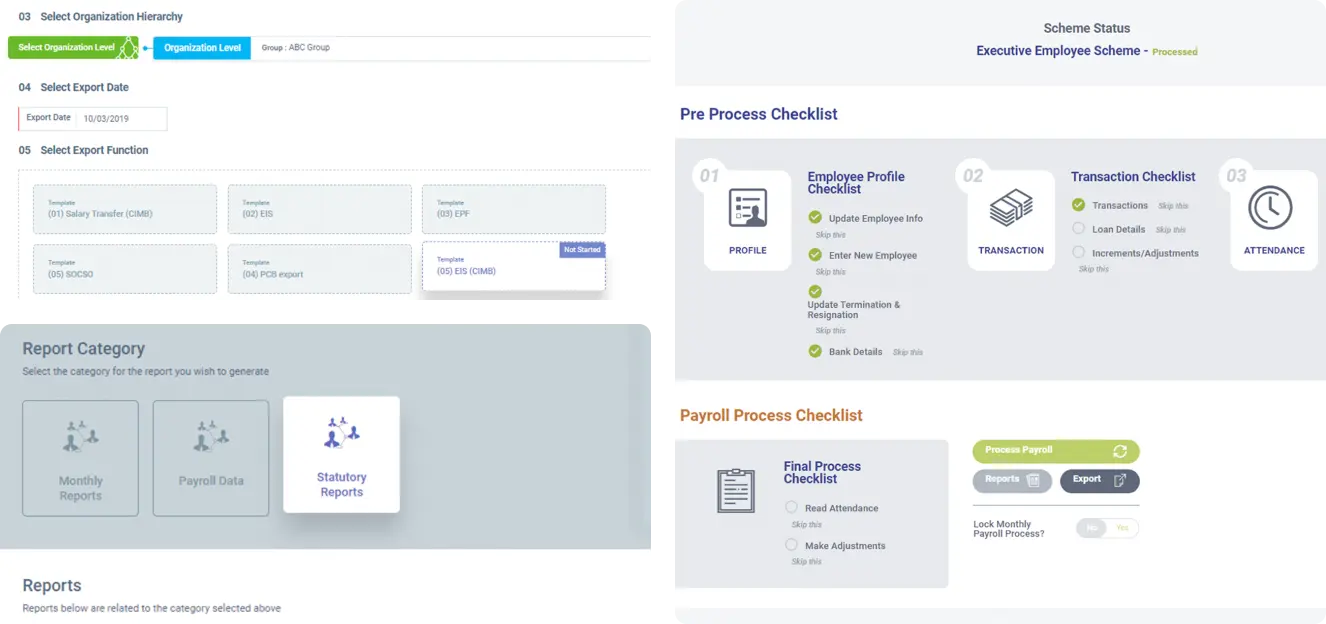
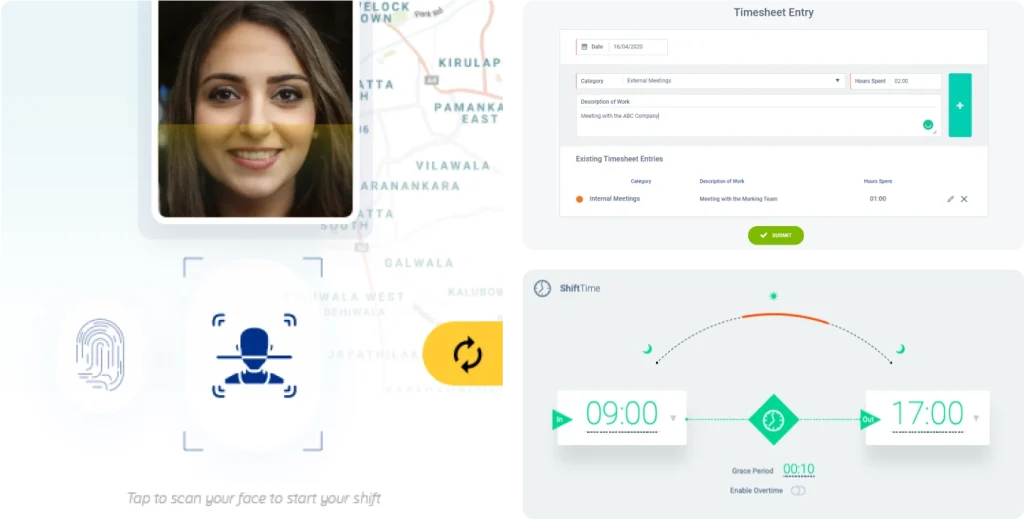
MiHCM features that accelerate integration: global payroll insights and mobile attendance capture (GPS/geofencing) that provide timely payroll and timesheet signals for improved forecast accuracy.
Key metrics and KPIs for workforce planning and analytics
Choose a balanced KPI set that links operational execution to strategic outcomes. Below are recommended primary, operational and quality KPIs and notes on dashboard design and cadence.
Primary KPIs
- Headcount forecast vs actual (by function and location) — tracked as variance and MAPE.
- Forecast error (MAPE) — single number to track model accuracy over time.
- Vacancy days — average days between req open and start date.
- Timetofill — median days per role family and seniority band.
- Costperhire and costtoreplace — includes agency, advertising and onboarding cost estimates.
Operational KPIs
- Overtime hours and premium pay exposure.
- Utilisation by team (productive hours/available hours).
- Internal mobility rate — percent of positions filled internally.
- Learning completion rates for critical skill programs.
Quality KPIs
- New hire retention at 90 days and 12 months.
- Performance distribution (top/mid/bottom quartiles) correlated with hiring source.
- Skills coverage % for critical roles (percent of roles with required skills filled).
Building KPI dashboards
- Combine trend lines with cohort analyses and heatmaps for attrition risk.
- Enable drillthrough from aggregate risk to individual employee profiles for HRBP action (with access controls).
- Use trafficlight indicators for thresholds and attach recommended next steps in the dashboard for each alert.
Benchmarking and cadence
Set targets using historical baselines plus external benchmarks. Recommended reporting cadence: weekly operational dashboards (recruiting/ops teams), monthly scorecards for senior HR and Finance, quarterly strategy reviews with executives.
Forecasting methods: building demand and supply models
Accurate workforce forecasts combine business drivers with statistical timeseries methods and judgemental adjustments. Use a threetier approach (baseline, conservative, aggressive) with clear documented assumptions.
Demand forecasting methods
- Driverbased models: link revenue, transactions or project hours to required FTE using productivity ratios (revenue per FTE, transactions per agent).
- Projectbased staffing: translate project plans and milestones to role and skill needs.
- Capacity planning: convert planned available hours into usable capacity by accounting for leave, training and nonproductive time.
Supply forecasting
- Attrition models: use historical turnover rates adjusted for cohort effects (hire source, tenure, manager).
- Promotions and internal mobility: probability tables by role band and historical rates.
- External hires and pipeline: ATS conversion ratios and market hiring velocity assumptions.
Timeseries approaches
ARIMA and exponential smoothing work well for stable historical headcount series but struggle with structural breaks (reorgs or major hiring freezes). Use timeseries for smoothing and shortterm forecasts; rely on driverbased models for structural changes.
Hybrid models
Combine driverbased forecasts for structural components (new product lines, revenue changes) with timeseries residuals to capture recurring seasonality and momentum. Document how residuals are blended and recalibrate quarterly.
A 5step recipe to build a headcount forecast
- Define scope and horizon (role families, locations, 3–12 months vs 1–3 years).
- Collect MVD fields and align definitions (FTE, hire types).
- Build a driverbased baseline using productivity ratios or project hours.
- Overlay supply adjustments (attrition, promotions, known offers) and ATS pipeline.
- Produce conservative/baseline/aggressive scenarios, backtest against past periods and calculate MAPE.
Validation: back-test forecasts on historical windows and measure MAPE; use holdout periods and create a model governance sheet that records last calibration date and responsible owner.
Predictive models: turnover, absenteeism and skills-gap forecasting
Predictive models translate observable features into probabilities of future events; careful feature engineering and explainability are critical for manager trust and intervention design.
Turnover prediction
Common features: tenure, promotion history, manager tenure, performance ratings, engagement/pulse scores, pay competitiveness and absence patterns. Common model types: logistic regression for baseline interpretability, random forest and gradient boosting for higher predictive power, and survival analysis to model timetoevent.
Absenteeism forecasting
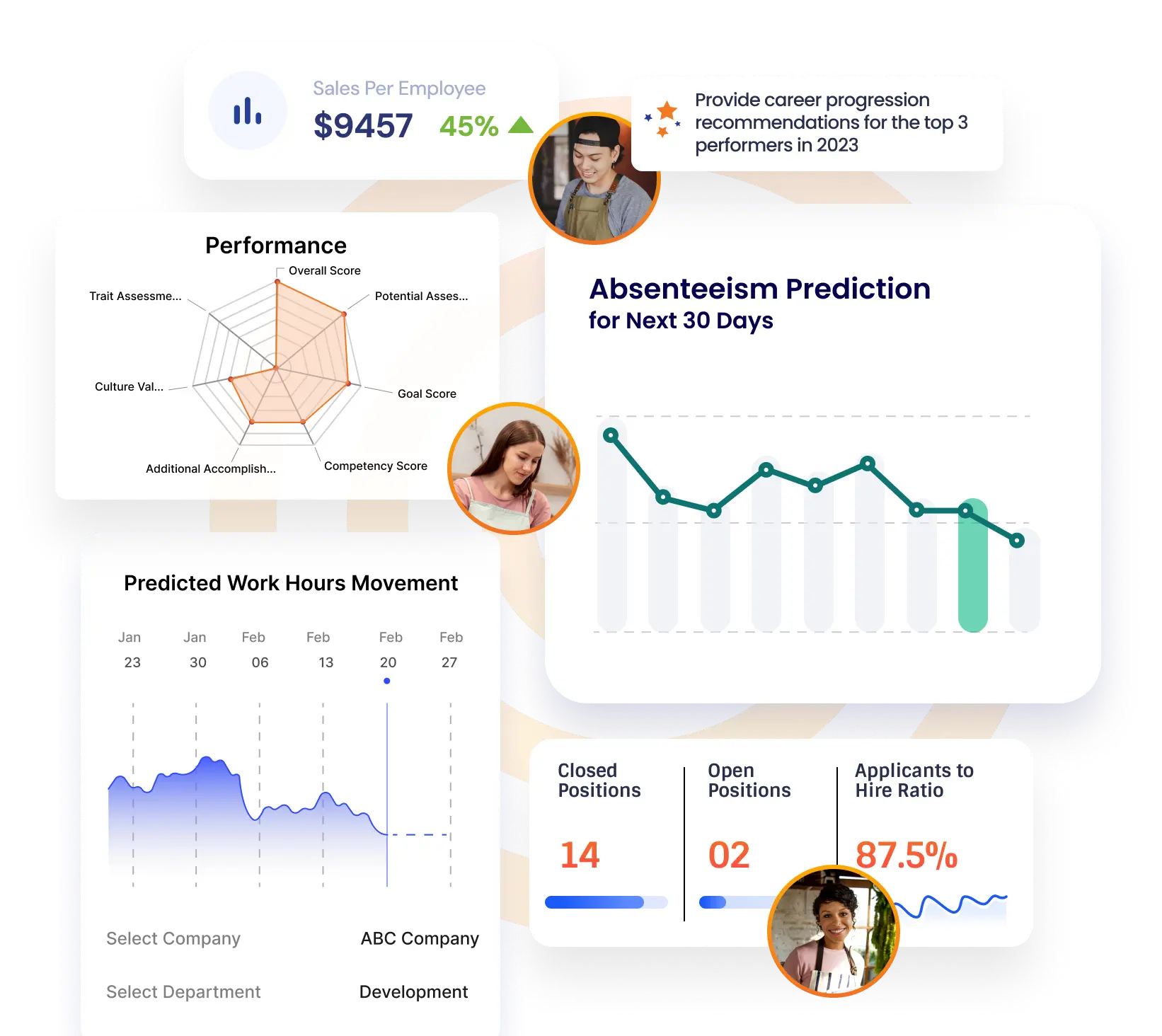
Use timeseries decomposition to separate trend and seasonality, clustering to find highrisk roles and link pulse survey responses or wellbeing signals where available. Correlate predicted peaks with planned leave windows to inform temporary sourcing.
Skillsgap forecasting
Create a skills taxonomy tied to role families, estimate current skills coverage and project future demand from product/market roadmaps. Model skills decay rates, internal mobility probabilities and likely external hiring lead times to produce probabilityweighted timeframes for gaps.
Explainable ML
Surface feature importance or SHAP explanations on predicted highrisk employees so HRBPs can see actionable drivers (pay, manager change, lack of promotion). Explainability improves intervention uptake and reduces perceived blackbox risk.
From prediction to action
- Common interventions: stay interviews, targeted retention bonuses, role redesign, internal mobility offers and tailored learning paths.
- Estimate ROI: calculate avoided replacement cost and matched productivity gains for each intervention and prioritise highest expected ROI actions.
Modelling checklist: features, labels, evaluation and explainability
| Item | Notes |
|---|---|
| Features | Tenure, pay, manager history, performance, engagement, absence |
| Label | Attrition flag (binary) and optional time-to-event |
| Evaluation | Precision/recall, AUC, business KPIs (reduction in replacement cost) |
| Explainability | SHAP values or feature importance with manager-friendly summaries |
| Governance | Retrain cadence, owner, fairness checks |
Scenario planning and simulation: comparing workforce futures
Scenario planning lets decision makers stress test workforce plans against uncertainty — demand shocks, hiring freezes or accelerated growth — and choose robust actions with known P&L impacts.
How to construct useful scenarios
- Define 3–5 drivers (revenue growth, productivity per FTE, hiring velocity, attrition) and set plausible ranges for each.
- Create deterministic scenarios (best/worst/base) and probabilistic ranges using Monte Carlo simulations where appropriate.
Simulation tools
Monte Carlo provides distributions for headcount and cost outcomes; deterministic scenario tables make tradeoffs clear for executives. Use optimisation solvers for constrained decisions (minimise cost subject to X% skill coverage).
Decision rules and playbooks
Define thresholds that trigger automated playbooks (for example: if forecasted headcount shortfall >10% for critical roles, open internal redeployment and prioritise requisitions). Embed trigger thresholds in dashboards with owners and timelines.
Presenting scenarios to leadership
Show expected P&L impact, probability ranges and recommended contingency actions. Keep executive slides to 1–2 pages: summary scenario, assumption table and recommended decision with 90/50/10 percentile outcomes.
Practical example
Example: shift 15% of shortterm demand to contractors in the accelerated growth scenario. Show direct cost delta, timetovalue and knowledgetransfer risk; compare to hiring and training pathways and present the recommended blended approach with expected cost and delivery timelines.
Designing dashboards and visualisations that drive action
Good dashboards answer a single operational question per chart and make it obvious what action is needed. Design for audience, with clear owners and embedded playbooks to increase adoption.
Design principles
- Audiencefirst: executives need concise scorecards; HRBPs need drilldown and transaction capabilities.
- One question per chart: avoid multipurpose visuals that confuse interpretation.
- Clear targets and trafficlight indicators for quick triage.
Recommended visuals
- Trend lines for headcount and forecast vs actual.
- Cohort waterfall for attrition (hire → promotion → exit).
- Heatmap for skills gaps by role and location.
- Sankey diagrams for internal mobility flows.
Interactivity and automation
- Filters by location, function, job grade and time horizon.
- Drillthrough to employeelevel profiles for HRBP action, guarded by rolebased access.
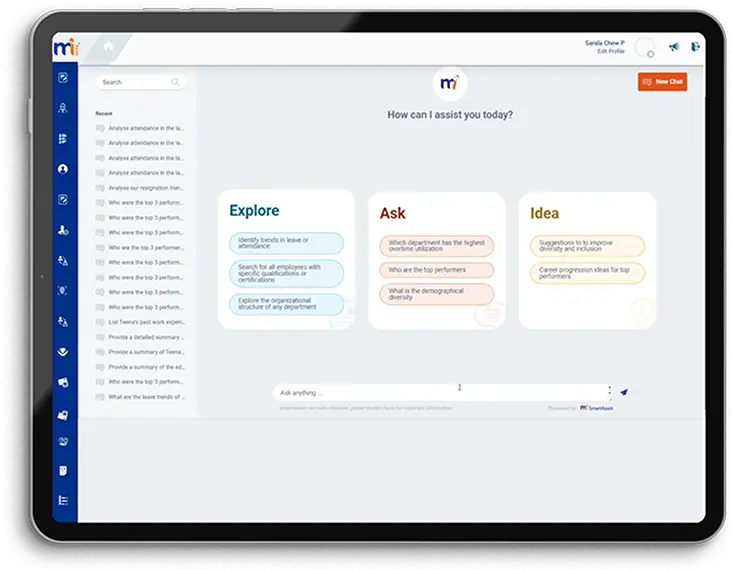
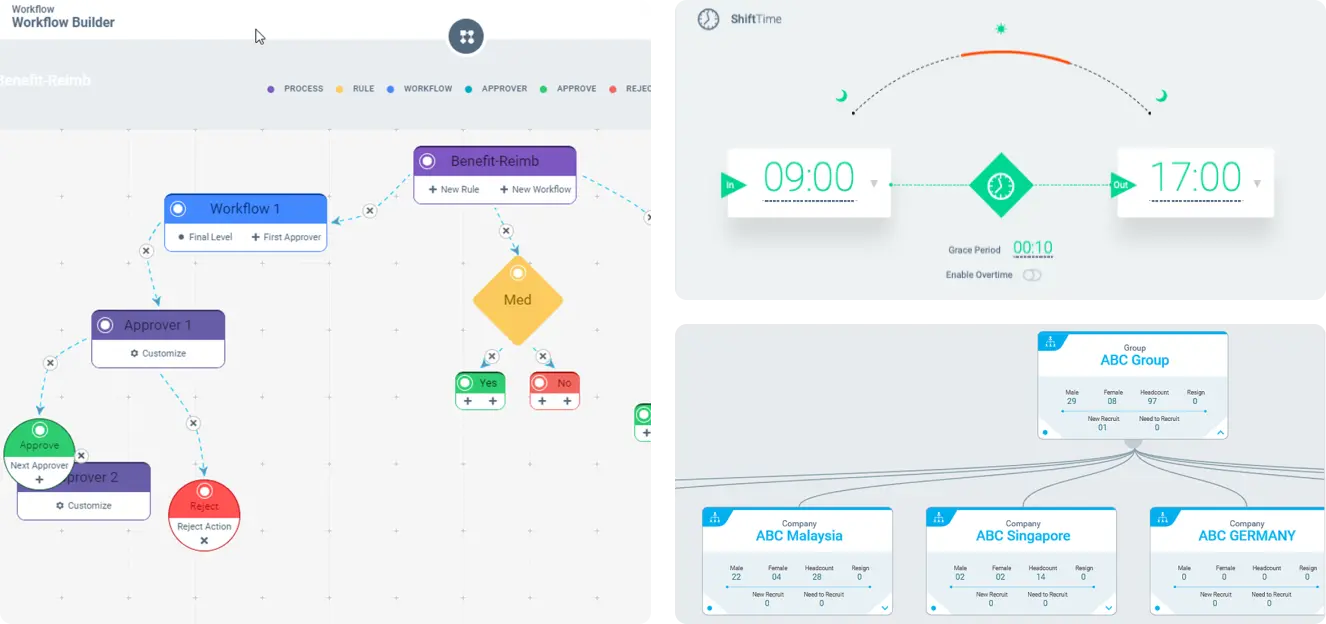
- Automated alerts: when forecasts exceed tolerance thresholds, trigger workflows (open requisition, redeploy request) via SmartAssist or similar tools.
Power BI integration tips
- Use a common data model with shared datasets for governed reporting and incremental refresh for large HR tables.
- Publish certified datasets and standardise measures (FTE, headcount, vacancy days) in a central semantic layer.
- Embed suggested actions and owner fields within dashboards so users treat them as decision tools rather than static reports.
Implementing an analytics-driven workforce planning process — a 10-step checklist
- Define business questions and success metrics; quantify P&L impact where possible.
- Form a crossfunctional team: HR, Finance, IT, Business owners and Analytics.
- Audit and map data; build the minimum viable dataset and pipelines.
- Start with one highimpact pilot (turnover or hiring forecast) with clear acceptance criteria.
- Build descriptive dashboards and validate definitions with stakeholders.
- Train and validate predictive models; emphasise explainability and fairness.
- Create scenario templates and run executive reviews with P&L impacts shown.
- Operationalise decisions via automated workflows (SmartAssist) and open requisition flows.
- Monitor model drift and KPI changes — schedule quarterly recalibration and owner reviews.
- Scale: document playbooks, automate data refresh and extend to additional functions and regions.
Operational tips
| Area | Recommendation |
|---|---|
| Governance | Executive sponsor, data steward and analytics owner with clear SLA. |
| Change management | Use small pilots, embed playbooks and measure adoption metrics. |
| Training | Train HRBPs on dashboard interpretation and the triggers that start workflows. |
Next steps
Workforce planning and analytics delivers measurable returns when organisations move from static reports to continuous, modeldriven planning and operationalisation.
Start by auditing data, piloting a focused use case and building dashboarddriven playbooks that route decisions to owners.
- Run an 812 week pilot: data mapping (weeks 1–3), model build (weeks 4–8), scenario and operationalisation (weeks 9–12).
- Schedule a demo of MiHCM Data & AI and SmartAssist to see endtoend automation and Power BI export capabilities.
For teams ready to pilot workforce analytics: identify a single sponsor, pick one highimpact use case and set measurable success criteria. Use MiHCM to accelerate integration, modelling and automated playbooks.
Ethics and governance
Use anonymised datasets for model development, apply fairness checks across protected attributes and limit access to PII. Maintain clear retention policies and document model decisions and retraining cadence.