AI can be a gift to talent acquisition: fewer hours spent on repetitive screening, more consistent shortlists, faster cycle times. But the minute an algorithm starts ranking people, HR inherits a new kind of risk: one that doesn’t show up as a system error. It shows up as patterns: certain groups making it through at lower rates, qualified candidates being rejected more often, or the “top matches” looking suspiciously similar.
That’s what AI resume screening bias looks like in the real world: systematic differences in outcomes that correlate with protected or sensitive attributes. And it’s not only a legal problem. It’s an employer-brand problem, a quality-of-hire problem, and often a “we didn’t realise this was happening” problem.
The good news: you don’t need to throw AI out. You need to run it like a high-impact business system: with measurement, controls, and humans in the loop.
The quiet ways bias enters AI screening
Bias usually creeps in through “reasonable” inputs:
- Historical hiring data: if past decisions reflected bias, models trained on “who got hired” learn those patterns.
- Proxy variables: postcode, school, certain extracurriculars, even employment gaps can act as stand-ins for socioeconomic status, gender, ethnicity, disability, or caregiving responsibilities.
- Language and formatting effects: CVs written in different dialects, cultures, or styles can be scored differently by NLP models—without anyone intending it.
And because AI systems are fast and consistent, they can scale these patterns at speed.
The one metric HR should stop ignoring
Most organisations track time-to-hire religiously. Far fewer track fairness in the funnel with the same discipline.
A practical starting point is the selection-rate ratio (often discussed via the “four-fifths rule”): if a group’s selection rate is less than 80% of the highest group’s rate, that’s a strong signal to investigate. Importantly, it’s not the final word on legality; it’s a screening indicator meant to trigger deeper review. (EEOC)
But selection rate alone isn’t enough. You also need to know:
- False rejections: who is being incorrectly filtered out?
- Error gaps: are some groups experiencing higher false rejection rates than others?
If you only measure “overall accuracy,” you can miss unequal harm.
Don’t let AI reject people on its own
Here’s a rule that keeps you safe, practical, and fast: Use AI to prioritise and draft, don’t use it as the final judge.
In GDPR/UK GDPR contexts, there are restrictions and heightened expectations around solely automated decisions with significant effects, and meaningful human involvement matters in practice. (GDPR)
Even outside Europe, the operational logic holds: automated rejection is where risk concentrates—legally, ethically, and reputationally.
A safer pattern looks like this:
- AI pre-screens to rank and surface likely matches (with reasons).
- Blinded human review checks the shortlist and borderline candidates (minimise irrelevant signals).
- Adjudication step for close calls, with a documented rationale.
This isn’t bureaucracy. It’s how you keep speed and defend decisions when questioned.
What “good governance” looks like in 90 days
You don’t need a year-long ethics programme to start responsibly. You need a tight 90-day operating rhythm:
Weeks 1–2: Baseline reality check
- Run selection-rate ratios across the funnel (applied → screened → interviewed).
- Sample “rejected” candidates and estimate false rejection rates.
Weeks 3–6: Put humans back where it matters
- Pause automated rejection for high-volume or high-risk roles.
- Introduce review queues for low-confidence scores and borderline applicants.
Weeks 7–12: Make fairness measurable
- Set investigation triggers (e.g., selection-rate ratio below 0.8; material FRR gaps).
- Log model version, scoring outputs, reviewer edits, and final decisions—so audits are possible later.
And in procurement, require evidence: model documentation, monitoring commitments, and audit rights. (If a vendor can’t explain how bias is tested and monitored, you’re buying risk.)
The compliance landscape is moving toward
“prove it”
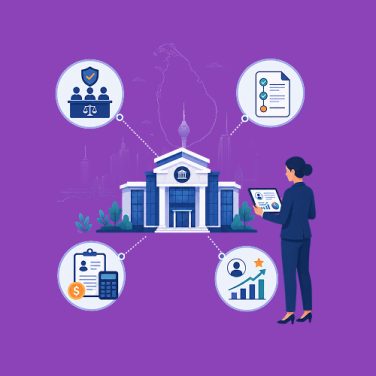
Across jurisdictions, the direction is consistent: transparency, oversight, and evidence. In the EU, the AI Act’s risk-based approach explicitly raises expectations for high-risk use cases, including areas related to employment decisions. (Digital Strategy)
You don’t need to be a lawyer to act sensibly here. Think of it like ISO thinking applied to algorithms: define controls, test regularly, document everything, and make accountability explicit.
Where MiHCM fits in
MiHCM approaches AI in recruitment with a clear human-in-the-loop philosophy.
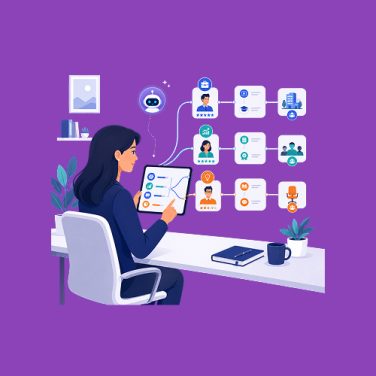
Through SmartAssist for Recruitment, AI is used to parse CVs, surface skill matches, prioritise candidates, generate structured interview questions and draft communications, but not to make irreversible hiring decisions on its own.
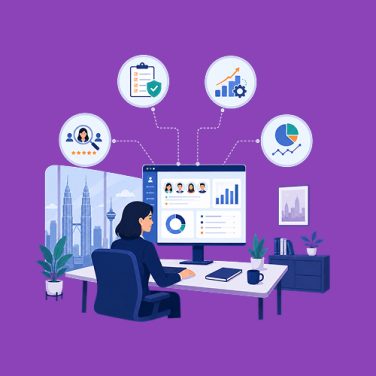
Recruiters retain full control over shortlisting, interview progression and final selection, with AI providing explainable scoring signals and contextual summaries to support consistent judgement. Screening workflows can be staged to prevent automated rejections, and audit logs capture model outputs, reviewer edits and final decisions to ensure traceability.
By combining AI-driven efficiency with governance controls, review checkpoints and transparency, MiHCM enables faster hiring while protecting fairness, compliance and employer brand integrity.
How it works:
- Define your ideal candidate: Easily define the ideal candidate you’re looking for via a prompt. MiHCM SmartAssist builds and displays screening criteria rules according to your prompt, for your verification. Change your criteria at any point by simply adjusting your prompt.
- Create HR templates with ease: MiHCM SmartAssist scrapes candidate CVs and compiles their job application, providing a seamless application experience. Candidates can verify, edit, and add to their scraped information before applying.
- Candidates shortlisted according to your requirements: Candidates are ranked according to how they compare against your defined criteria. Leverage the drill-down option to see which criteria points have been fulfilled by a specific candidate. Tweak your selection criteria at any point to re-screen all candidates according to any requirement changes.
That’s the difference between “we use AI” and “we use AI responsibly.”
See Recruitment Solutions | MiHCM HR Software for more information.
The takeaway
AI can absolutely make screening faster and more consistent. But if you don’t measure fairness and design for human oversight, you’re effectively outsourcing a sensitive decision to a system you can’t confidently
Start small. Measure the funnel. Keep humans in the decision path. And treat fairness like a performance KPI, not a PR statement.