By Pubudini Abeyesekera
In my previous articles, I explored two important priorities shaping the future of work in Sri Lanka: building a digitally competitive workforce and strengthening HR compliance as an enterprise-level responsibility.
The next priority is equally important, and increasingly urgent: employee data protection.
As organisations digitise HR, payroll, attendance, performance management, recruitment, learning, and employee engagement, they are collecting and processing more workforce data than ever before. This data can help businesses make better decisions, improve employee experience, and operate more efficiently. However, it also creates new responsibilities.
With Sri Lanka’s Personal Data Protection Act now shaping the regulatory landscape, employers must rethink how they collect, store, use, share, and protect employee data.
Data protection is no longer only an IT or legal matter. It is a leadership issue, an HR governance issue, and a trust issue.
Employee data is some of the most sensitive data an organisation holds
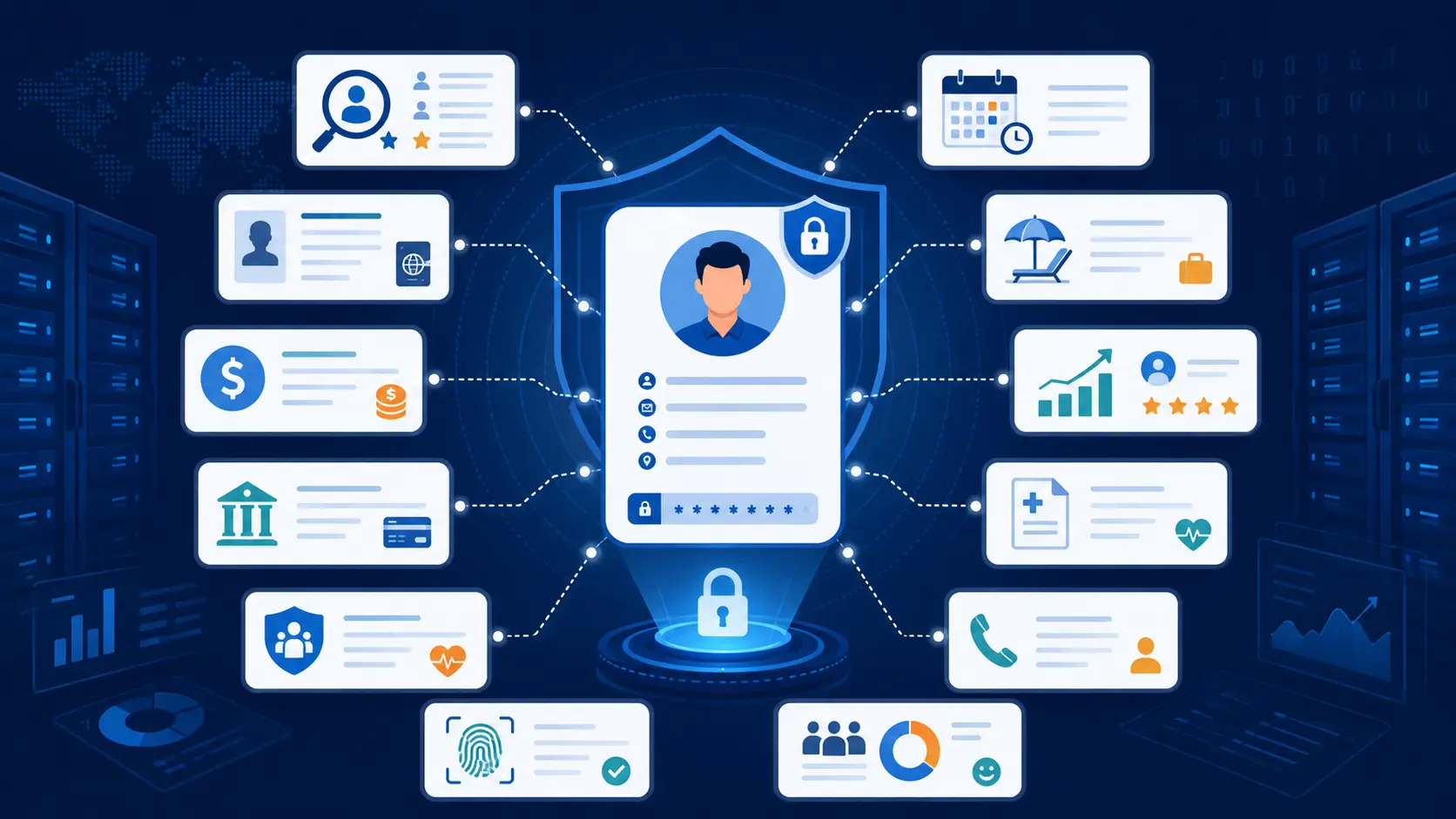
Every employer holds a significant amount of personal data. This may include recruitment information, identification details, payroll records, bank account details, EPF/ETF information, attendance records, leave data, performance reviews, disciplinary records, medical certificates, emergency contact details, and dependent information.
In some organisations, this may also extend to biometric attendance data, location-based information, CCTV records, employee engagement surveys, productivity data, or AI-generated workforce insights.
This makes HR one of the most data-intensive functions in the enterprise.
The challenge for Sri Lankan employers is that many HR data practices have historically evolved through operational convenience rather than formal governance. Employee documents may be stored across emails, spreadsheets, shared drives, physical files, payroll systems, and department level records.
In a data protection environment, this approach creates risk.
Employers must now be able to answer important questions:
– What employee data do we collect?
– Why do we collect it?
– Where is it stored?
– Who has access to it?
– How long do we retain it?
– Who do we share it with?
– Can we respond if an employee exercises a data protection, right?
These are no longer theoretical questions. They are becoming essential elements of responsible workforce governance.
What Sri Lankan employers must change
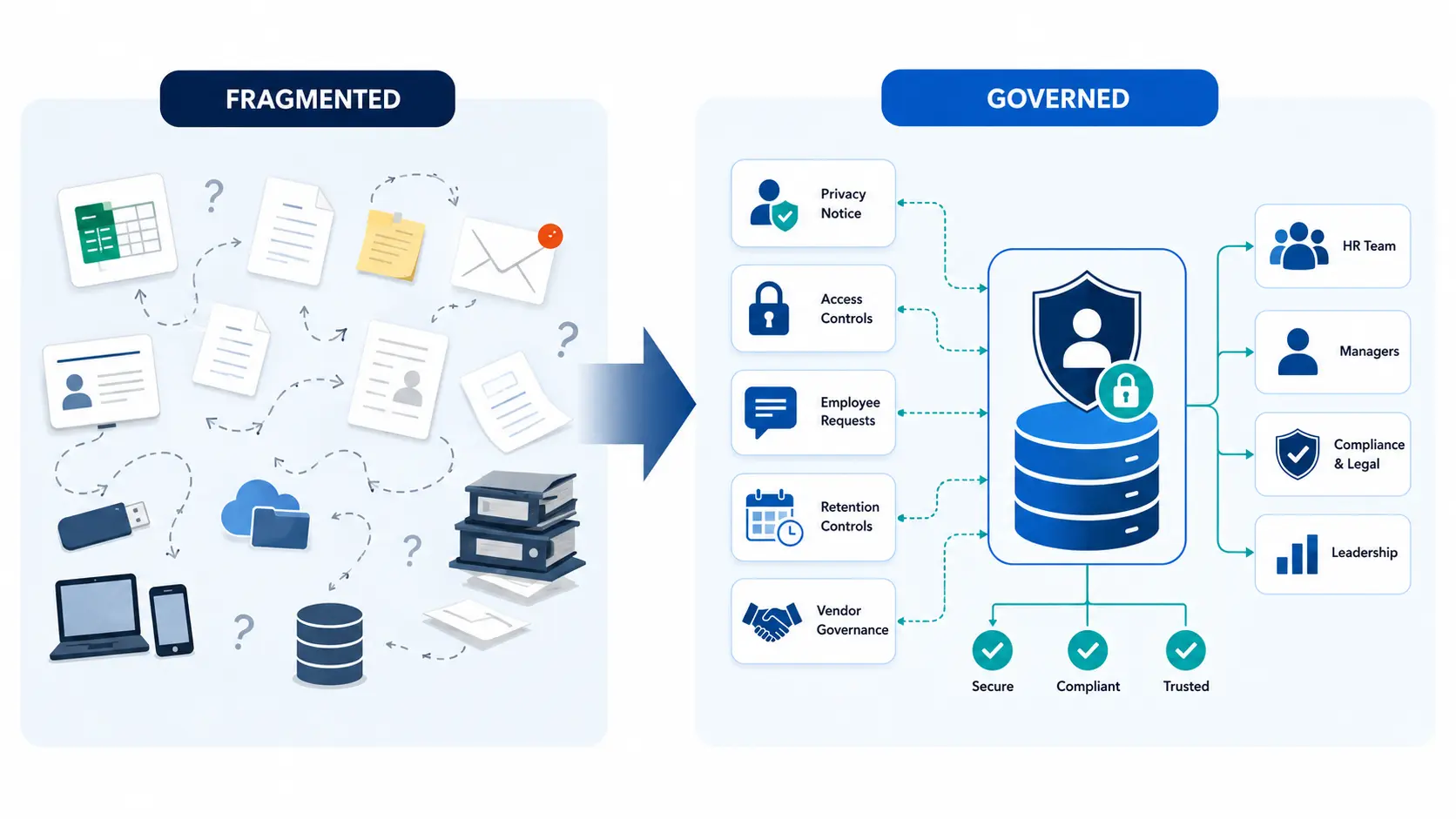
The first change employers must make is moving from a “collect everything” mindset to a “collect what is necessary” mindset.
Employee data should be collected for clear and legitimate purposes. If data is no longer required, it should not be retained indefinitely. If sensitive data is being processed, there must be stronger controls around access, usage, and retention.
Second, employers must improve transparency. Employees should understand what data is collected about them, why it is collected, how it is used, and who it may be shared with. This requires clear privacy notices, updated HR policies, and better communication during onboarding and throughout employment.
Third, organisations must strengthen access controls. Not every manager, HR user, payroll officer, or department head should have access to all employee information. Access must be role-based, controlled with strict permissions, and regularly reviewed.
Fourth, employers must prepare for data subject rights. Employees may increasingly expect access to their personal data, corrections to inaccurate records, and greater transparency over how their data is used. Enterprises must ensure they have the processes and systems to respond properly.
Finally, employers must treat third-party HR vendors, payroll processors, consultants, and technology providers as part of the data governance ecosystem. If employee data is shared externally, organisations must ensure that those partners meet appropriate standards of confidentiality, security, and compliance.
HR data governance best practices
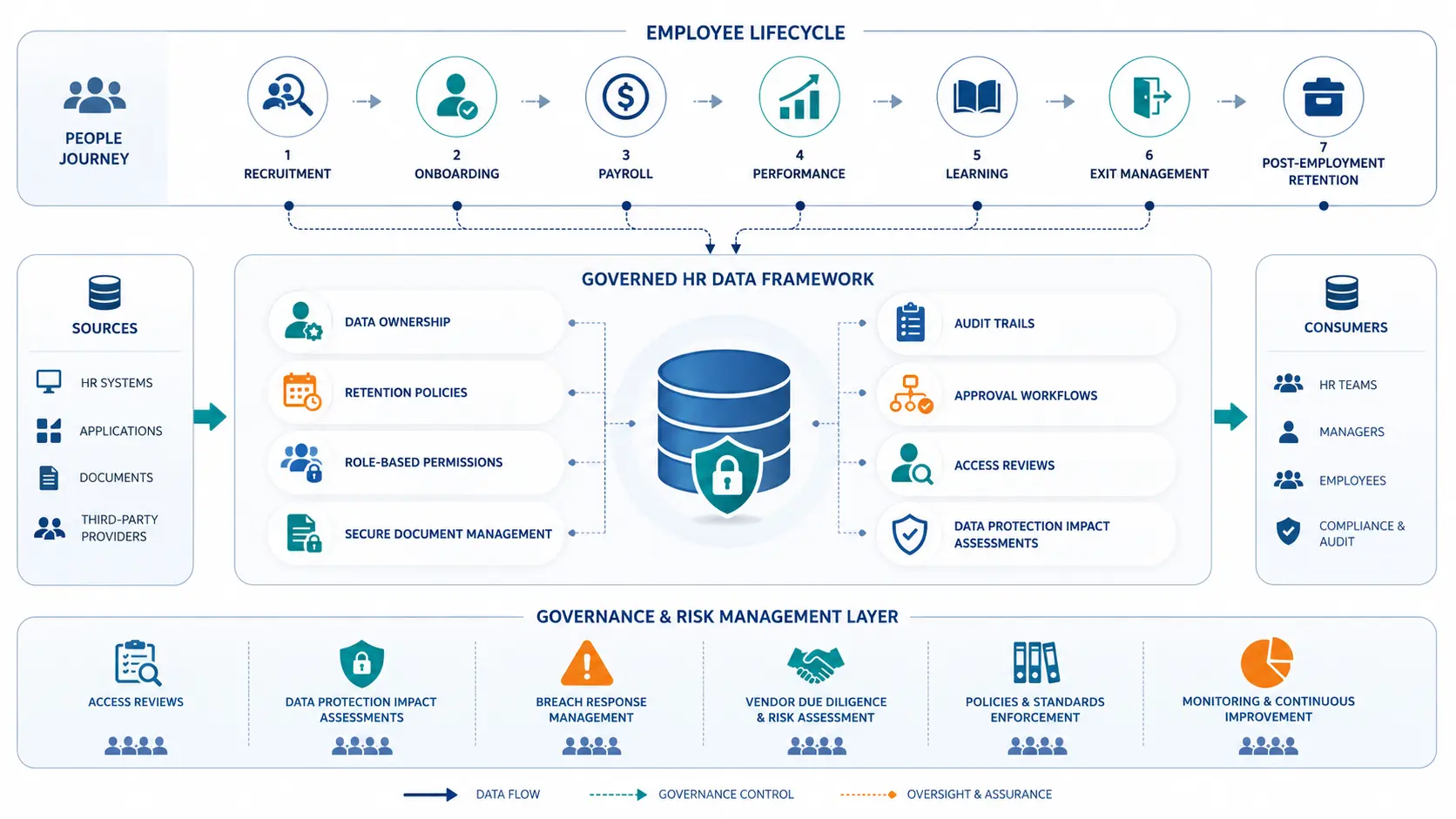
Good HR data governance begins with visibility.
Enterprises should maintain a clear inventory of employee data across the employee lifecycle, from recruitment and onboarding to payroll, performance, learning, exit management, and post-employment record retention.
This should be supported by practical governance measures such as:
- Clear ownership of HR data
- Defined data retention policies
- Role-based access controls with strict permissions
- Secure document management
- Audit trails for sensitive actions
- Approval workflows for data changes
- Regular reviews of user access
- Data protection impact assessments for high-risk processing
- Breach response procedures
- Vendor due diligence for HR technology partners
For many organisations, the biggest gap is not intent. It is execution.
Policies alone are not enough if the underlying systems are fragmented. A beautifully written privacy policy cannot protect employee data if payroll is handled on spreadsheets, access is uncontrolled, documents are shared informally, and records are retained without discipline.
This is where enterprise-ready HR technology becomes critical.
A modern HR platform should help organisations manage employee data securely, consistently, and transparently. It should enable auditability, access control, process discipline, and compliance reporting — not as afterthoughts, but as part of the core design.
AI, HR analytics, and data ethics
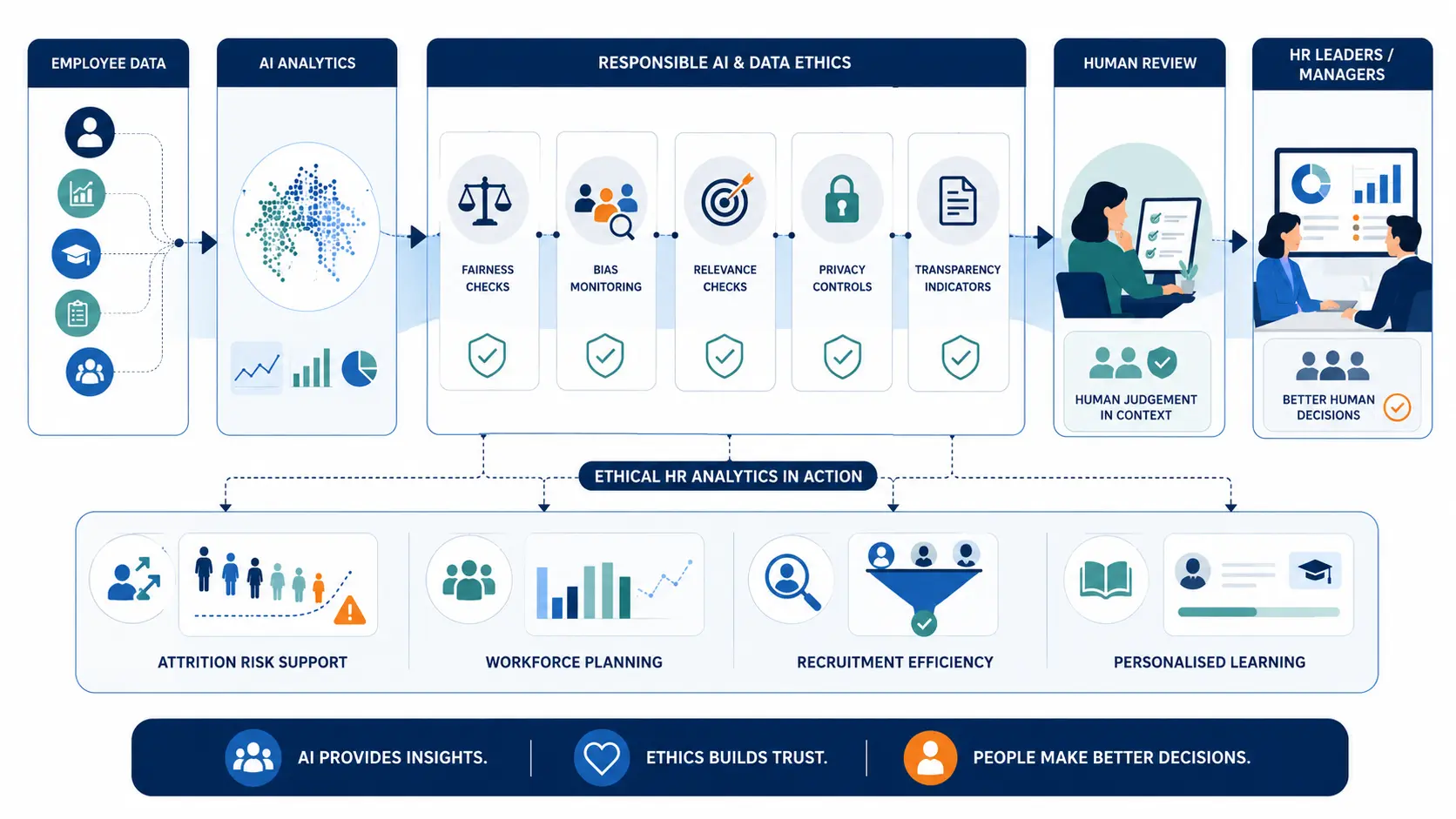
As AI becomes more embedded in HR, employers must also think beyond compliance and consider ethics.
AI and analytics can bring significant value to HR. They can help identify attrition risks, improve workforce planning, support recruitment efficiency, personalise learning, and provide leaders with better insights.
But AI must be used responsibly.
In the Sri Lankan context, where organisations are still maturing in digital HR governance, leaders must be especially careful about how employee data is used to make or influence decisions.
AI-driven HR should be guided by clear principles:
- Employees should not be unfairly profiled
- Automated insights should not replace human judgment
- Data used for AI should be relevant and accurate
- Bias should be actively monitored
- Sensitive employee data should be protected carefully
- Employees should have reasonable transparency over how data is used
- AI should support better decisions, not create hidden decision-making
For example, an attrition prediction model may help HR identify where engagement support is needed. But it should not be used to label employees unfairly or restrict opportunities. Similarly, recruitment automation may improve efficiency, but it should not introduce bias or exclude candidates without appropriate human oversight.
The future of HR will be increasingly data driven. But it must also remain human centred.
Why compliance-first HR technology matters
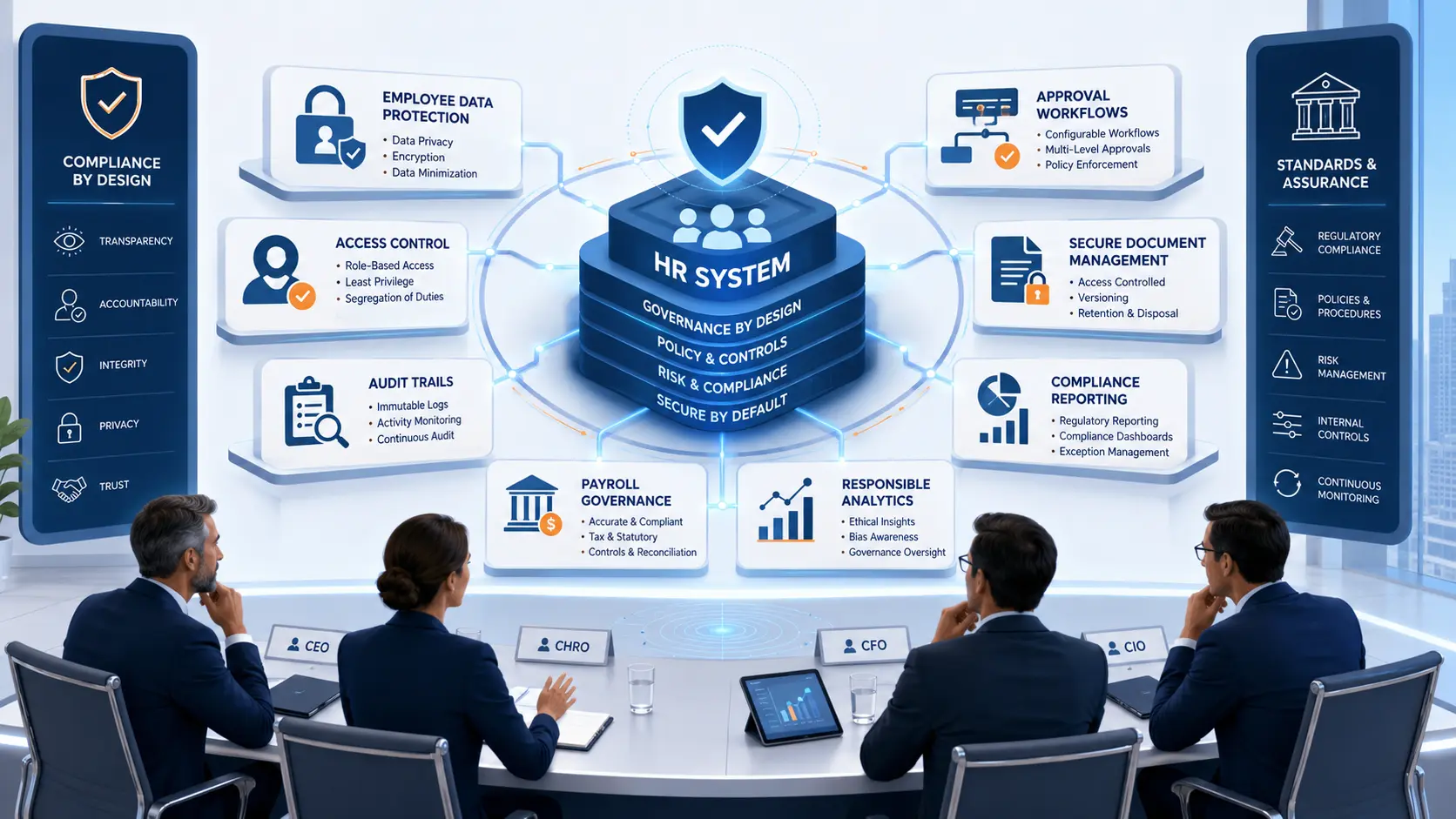
For enterprises, data protection cannot depend on manual discipline alone. It must be embedded into systems, workflows, permissions, reporting, and governance structures.
This is why compliance-first HR software is becoming a strategic requirement.
At MiHCM, we believe enterprise HR technology must support not only efficiency and employee experience, but also trust, security, and compliance readiness. As organisations scale, expand across markets, and adopt AI-enabled HR practices, they need systems that are designed with governance at the core.
For CEOs, CHROs, CFOs, and CIOs, the question is no longer whether HR should be digitised. The question is whether HR is being digitised responsibly.
Enterprise-ready HR software must help organisations protect employee data, control access, maintain audit trails, support compliance processes, and enable better decision-making without compromising privacy.
This is the direction HR technology must take in Sri Lanka.
Data protection is a trust advantage
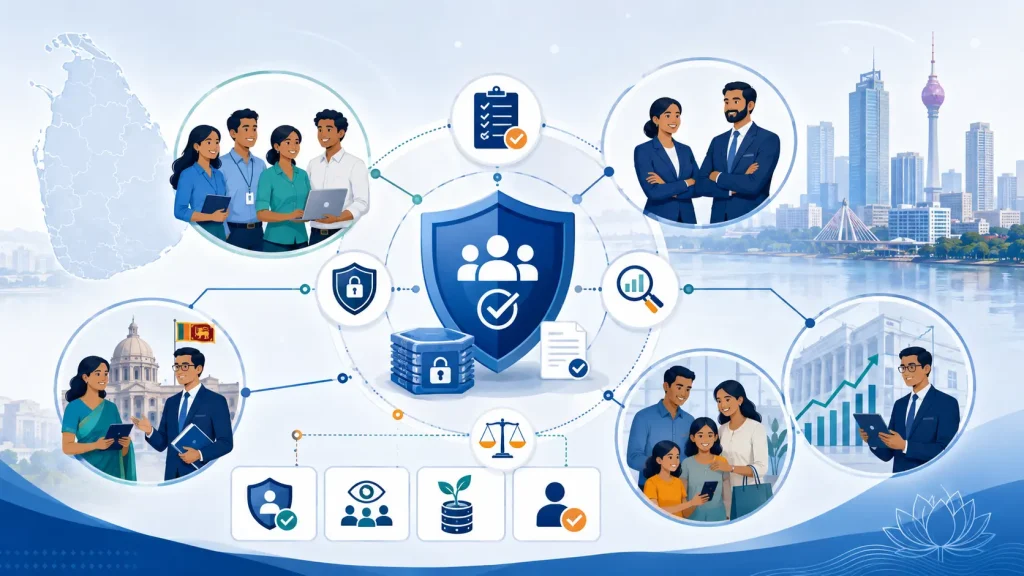
The Personal Data Protection Act marks an important step in Sri Lanka’s digital maturity. It signals that privacy, transparency, and responsible data use are now part of the country’s business environment.
For employers, this is not simply a regulatory obligation. It is an opportunity to build trust.
Employees trust organisations that handle their data responsibly. Customers and investors trust businesses that demonstrate maturity of governance. Regulators trust organisations that can show accountability and control.
As Sri Lanka continues to build a digitally competitive workforce, employee privacy must become part of that journey.
The organisations that succeed will be those that see data protection not as a constraint, but as a foundation for sustainable digital transformation.
In the future of work, trust will be a competitive advantage. And that trust begins with how responsibly we protect our employee data.

ปุพุดินี อะเบเยเซเกรา
CEO – Sri Lanka & Maldives at MiHCM
(MiHCM CEO – Sri Lanka and Maldives Pubudini Abeyesekera has over 20 years of experience in Business Development, Business Operations and Client Relationship Management within various industries of Tech, Start-ups, Education, Real Estate, Airlines, Banking, and Hospitality. She leads with a hands-on approach backed with empathy and thrives on identifying talent, nurturing individuals, and building high-performing teams.)