Artificial intelligence is becoming part of everyday HR. It can help employees find information faster, support managers with workforce insights, automate repetitive processes, analyse patterns across large volumes of data and make HR services more accessible.
But the more AI influences decisions about people, the more important one question becomes: who is accountable for the outcome? That question sits at the centre of AI governance in HR.
For HR leaders in 2026, responsible AI is no longer simply about choosing a capable model or introducing an AI policy. It means establishing clear rules around what AI can do, what data it can use, how its outputs are reviewed and where human judgement must remain in control.
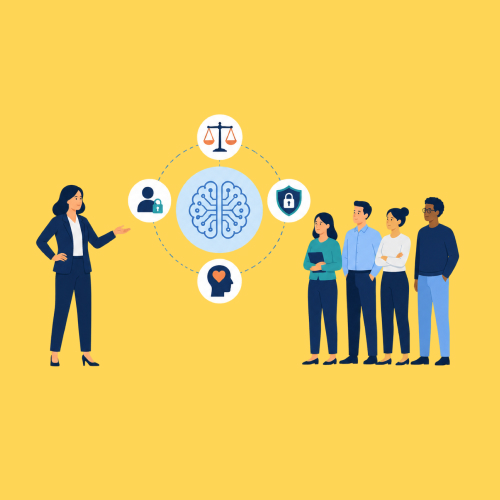
The ASEAN Guide on AI Governance and Ethics provides a useful regional foundation. Its guiding principles include transparency and explainability, fairness and equity, security and safety, robustness and reliability, human-centricity, privacy and data governance, and accountability. It also recommends governance structures, risk assessments, and different levels of human involvement depending on the risk of an AI-supported decision.
AI in HR is different because the decisions affect people
An AI recommendation about inventory is one thing. An AI recommendation about whether someone should be shortlisted for a job, promoted, transferred, monitored, or identified as a retention risk is fundamentally different.
These decisions can affect careers, income, opportunity, and employee trust.
The International Labour Organization defines algorithmic management broadly enough to include systems that use worker data to organise, assign, monitor, supervise, and evaluate work. As workplace AI develops, organisations can also collect and analyse substantially more employee and applicant data, raising concerns around monitoring, profiling, privacy, discrimination, transparency, and accountability.
That is why HR cannot outsource AI governance entirely to IT. HR needs a seat at the table.
1. Start by knowing where AI is being used
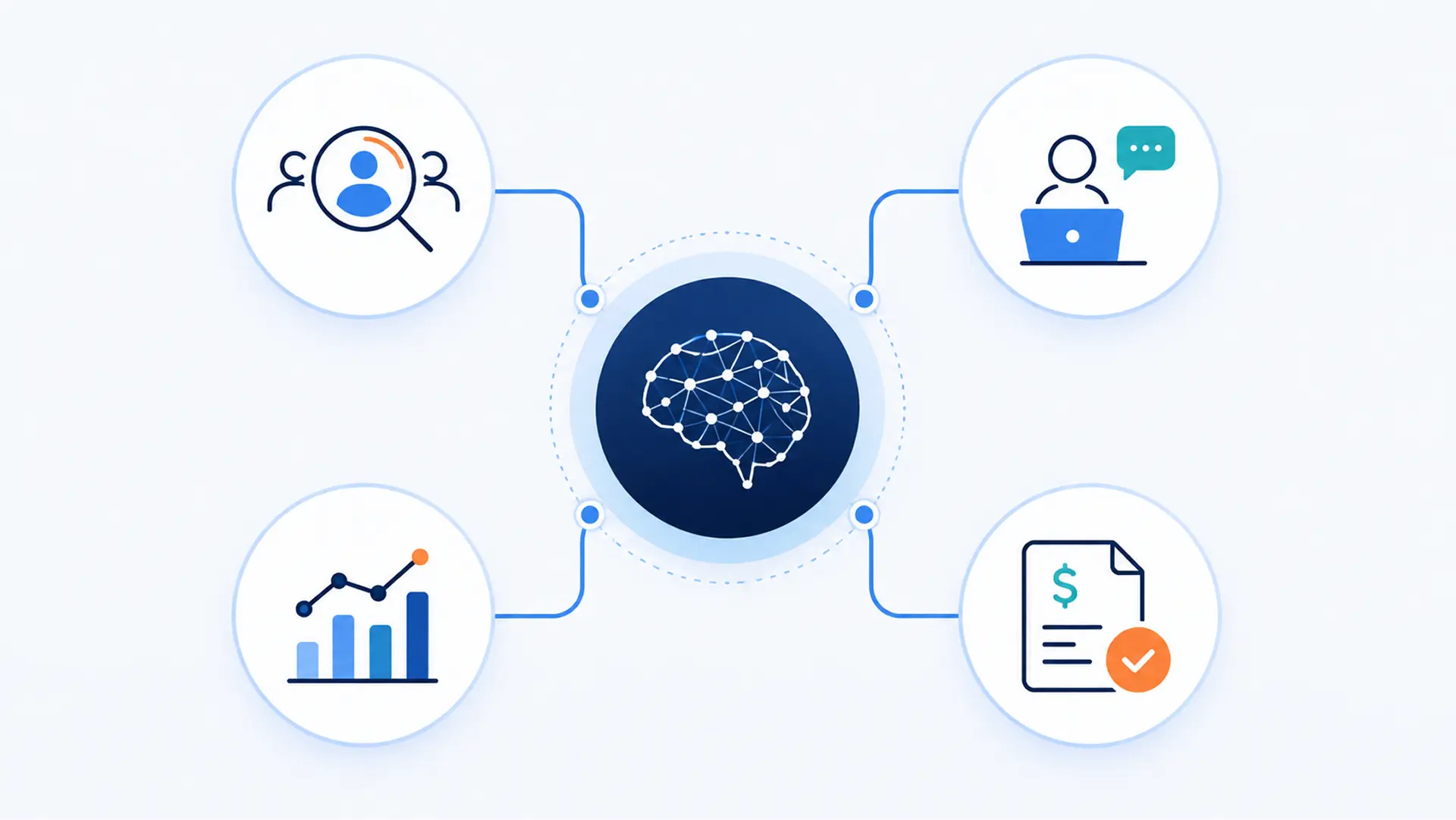
Governance becomes difficult when organisations do not have visibility over their AI footprint. Start with an inventory. Where is AI currently used across the employee lifecycle?
- Candidate screening and recruitment
- บริการตนเองสำหรับพนักงาน
- Workforce analytics
- Learning recommendations
- Employee sentiment analysis
- Performance support
- Scheduling and workforce allocation
- Payroll and HR support
- Productivity tools
- Document generation
- Management decision support
Do not limit the exercise to software labelled as an “AI platform”. AI functionality is increasingly being introduced inside existing enterprise applications. For each use case, HR should understand what data enters the system, what output is produced, who uses the output, and whether it influences a decision about an employee.
A practical starting point is a single register that records the use case, the business owner, the data involved, whether the output affects an employment decision, and who reviews it. That register becomes the backbone of every other control described below.
2. Not every AI decision requires the same level of control
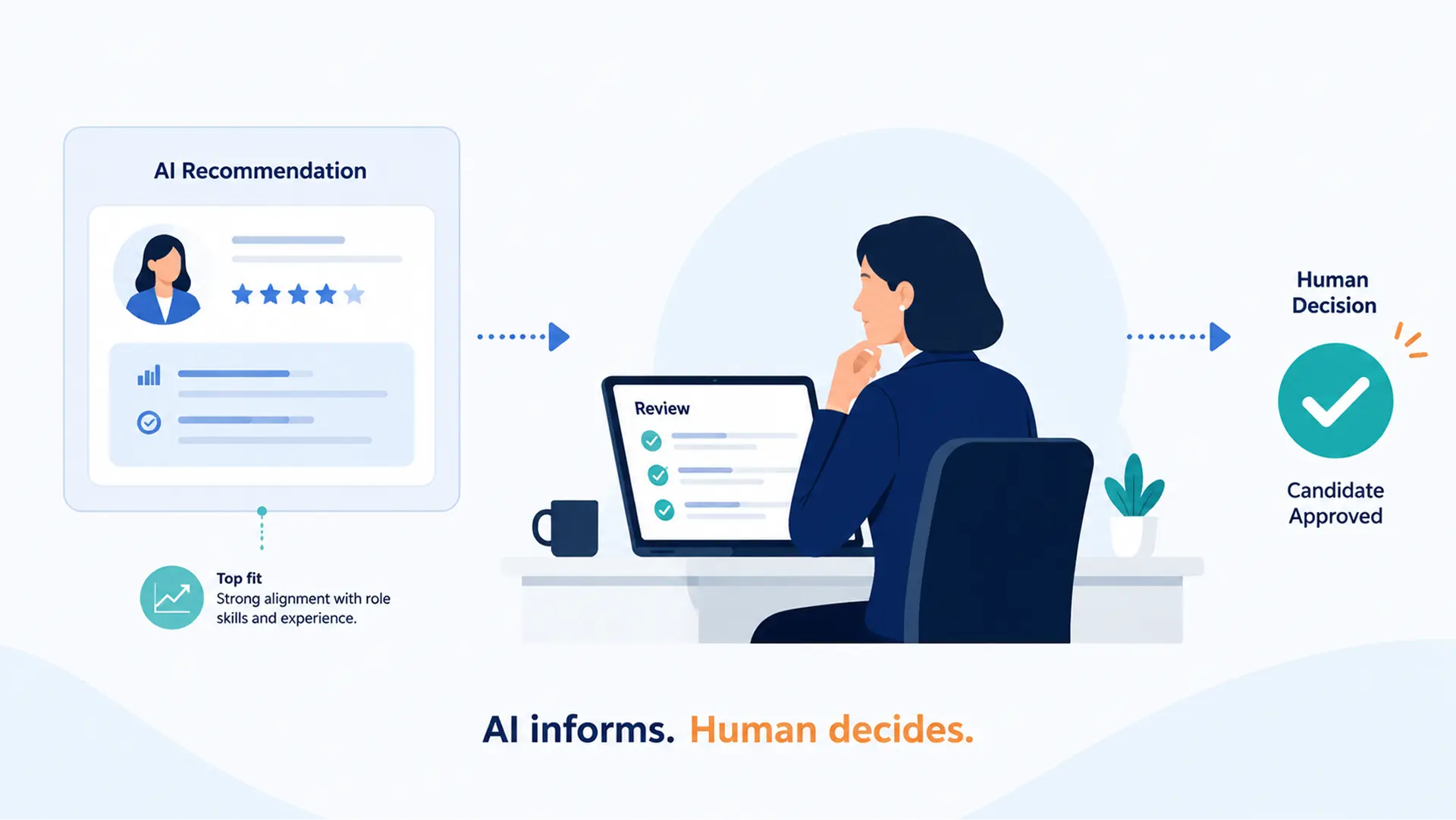
AI governance should be proportionate to risk. An AI assistant summarising an HR policy presents a very different level of risk from a system automatically recommending that a candidate be rejected.
The ASEAN framework describes different approaches including human-in-the-loop, human-over-the-loop, and human-out-of-the-loop models, with the appropriate level of human involvement determined through risk assessment.
AI can inform. People decide.
A manager may use AI-generated workforce insights. A recruiter may receive AI-supported candidate information. An HR leader may use predictive analytics when examining attrition. But the technology should support informed judgement rather than silently becoming the final decision-maker.
A simple three-tier model works well for most HR functions. Low-risk use cases, such as policy summarisation or drafting support, can operate with light-touch review. Medium-risk use cases, such as workforce analytics or learning recommendations, require a named reviewer and periodic sampling. High-risk use cases, such as anything influencing selection, progression, discipline, or exit, require documented human decision-making and an appeal route.
3. Test for bias — before and after deployment
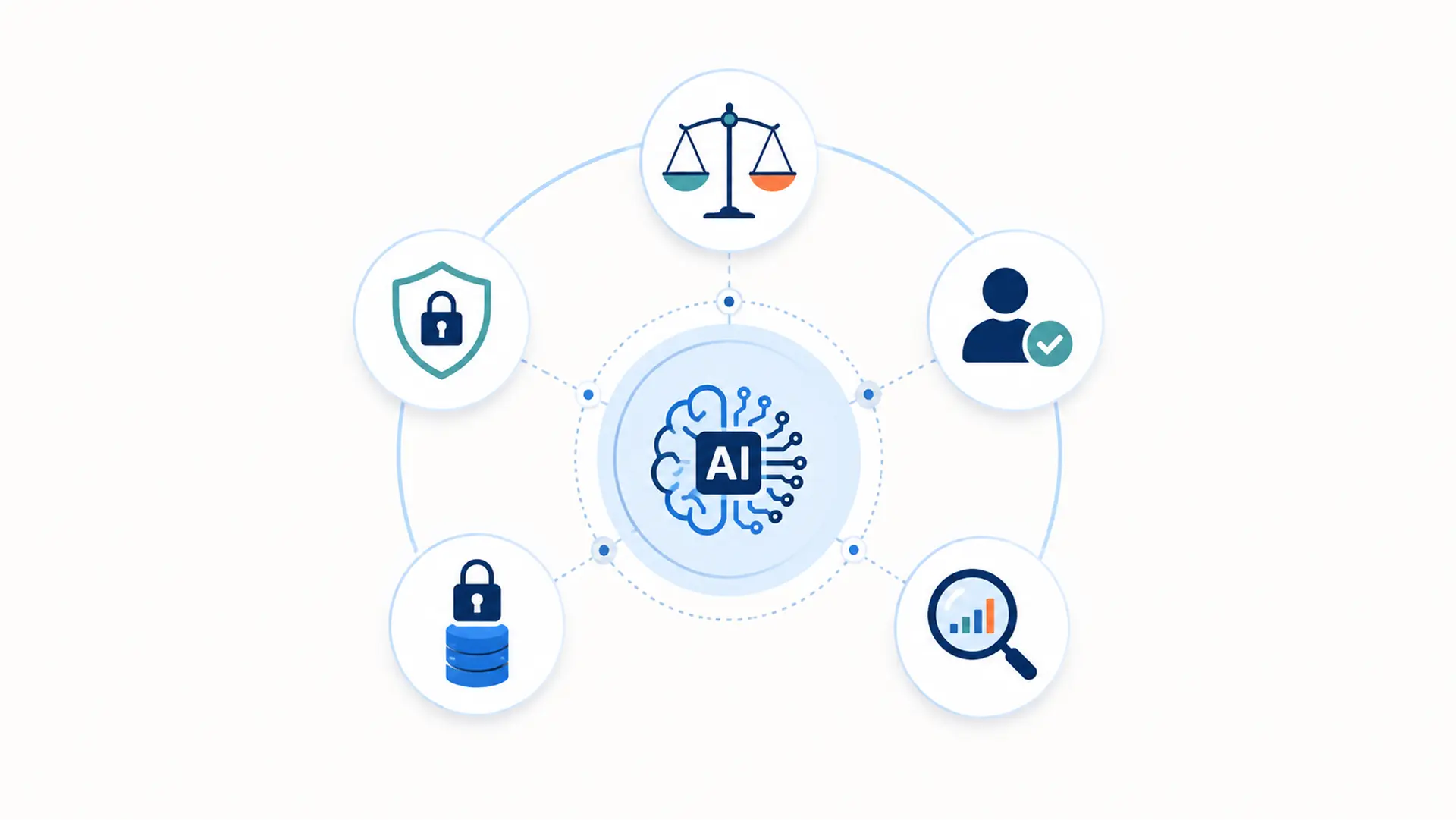
AI learns from data, and historical workforce data can contain historical inequalities. If previous hiring outcomes disproportionately favoured one group, a model trained on those outcomes may reproduce patterns that the organisation never intended to automate.
Responsible AI governance therefore requires more than testing whether a model is technically accurate. HR teams should examine whether results differ materially across relevant groups, investigate unexplained patterns, and regularly reassess models as data and workplace conditions change.
Fairness is not a one-time implementation exercise. It is an ongoing governance responsibility, and it needs an owner, a review frequency, and a documented method — not simply a commitment in a policy document.
4. Employee data should not become unlimited AI fuel
HR holds some of the organisation’s most sensitive operational data: compensation, performance, attendance, career history, qualifications, contact information, employee communications, and potentially other personal information.
Introducing AI does not remove the organisation’s obligations around data governance. It makes those obligations more important.
Before employee information is made available to an AI system, HR leaders should be able to answer:
- Why does the system need this information?
- Is all of it necessary?
- Where is it processed?
- Who can access it?
- How long is it retained?
- Can employees understand how their information is being used?
Privacy by design should sit at the beginning of an AI project, not at the end. For organisations operating across several jurisdictions, this also means recognising that data protection expectations differ by market, and that a control designed for one country may not satisfy another.
5. Explainability matters when decisions matter
HR should be cautious about any system that produces important recommendations nobody can meaningfully explain.
Explainability does not mean every employee needs to understand the mathematics behind a model. It means organisations should be able to explain, at an appropriate level, the purpose of the system, the information influencing an outcome, the role AI played, and how a human can challenge or review the result.
A useful test: if an employee asked why a particular recommendation was made, could an HR business partner answer in plain language within a few minutes? If not, the use case needs more human control, not more model documentation.
6. Governance must include third-party AI
Buying technology does not transfer accountability to the vendor. HR technology procurement should increasingly include questions such as:
- What AI capabilities are being used?
- Which models support them?
- What customer or employee data is processed?
- Is customer data used to train models?
- What security controls apply?
- What controls exist for hallucination or incorrect output?
- How is bias evaluated?
- What audit information is available?
- Can certain AI functions be disabled?
- What happens when models or providers change?
AI governance is therefore becoming a joint responsibility across HR, IT, security, privacy, legal, procurement, and leadership. Where a vendor cannot answer these questions clearly, that in itself is useful information.
7. Employees need AI literacy, not just AI access
Giving every employee an AI tool does not create an AI-ready workforce. People need to understand when AI is useful — and when it should not be trusted without verification. They need to recognise sensitive information, know the difference between a generated answer and an authoritative source, and understand when human escalation is required.
AI literacy should therefore become part of workforce capability building, delivered continuously rather than through a single awareness session at rollout.
What good AI governance looks like in practice
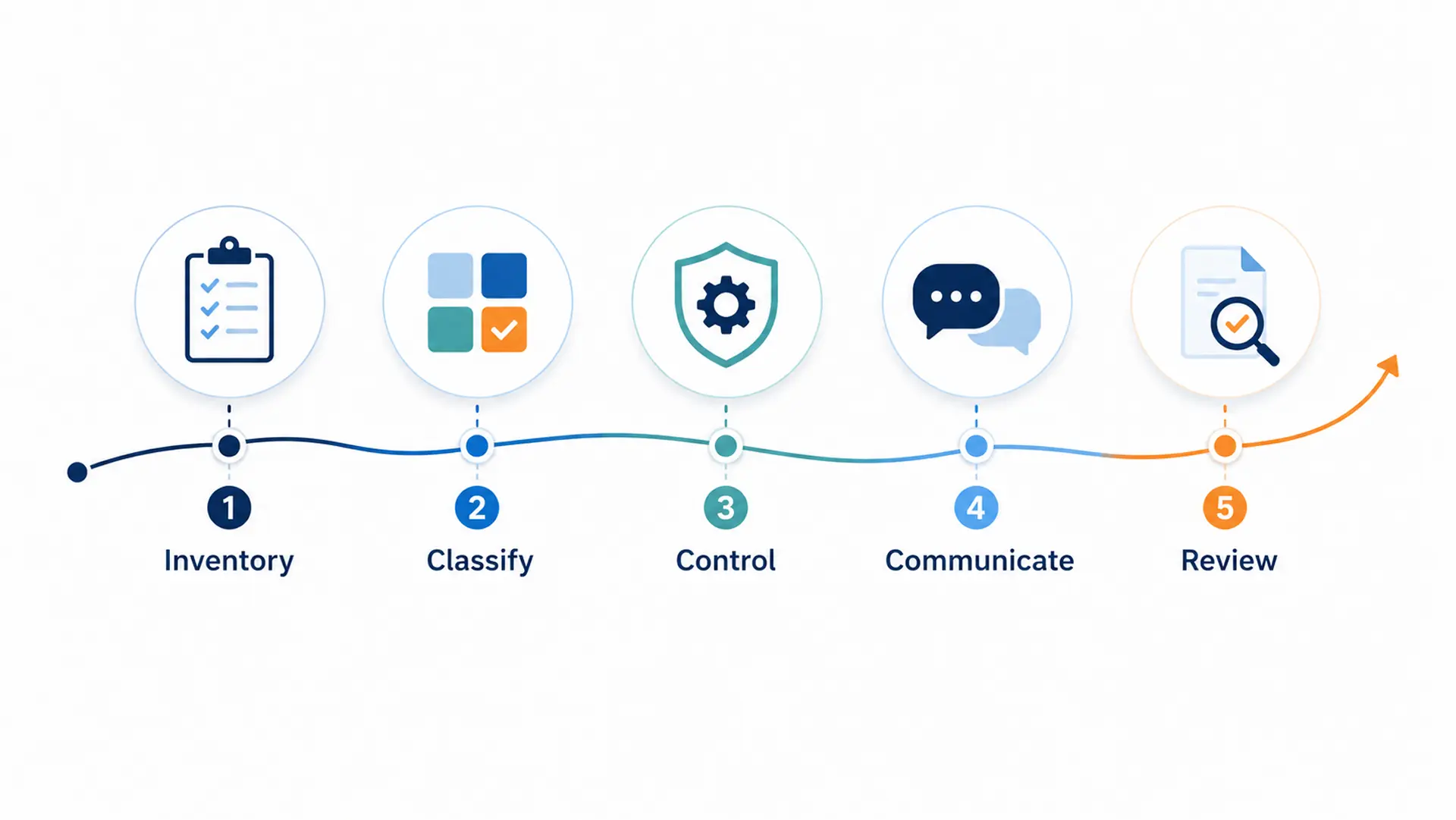
For HR teams beginning this work, the sequence matters more than the sophistication of any individual control.
- Inventory — record every AI use case that touches employee or applicant data.
- Classify — assign each use case a risk tier and the level of human involvement it requires.
- Control — define data, access, retention, review and escalation rules for each tier.
- Communicate — tell employees where AI is used and how they can question an outcome.
- Review — reassess models, outputs and vendors on a defined cycle, and keep the evidence.
None of these steps requires a large governance function. They require ownership, documentation, and a willingness to revisit decisions as the technology changes.
How MiHCM approaches responsible AI
MiHCM builds AI into HR workflows on the principle that human judgement remains central rather than secondary.
Syntra, our AI intelligence and analytics platform, is designed to surface workforce insight for leaders to interpret and act on. MiA ONE, our personal AI agent, and SmartAssist, our AI HR co-pilot, are built to help employees and HR teams find information and complete routine tasks — not to make employment decisions on their behalf.
That design intent is supported by data governance commitments. MiHCM holds ISO/IEC 27701:2025 certification covering its Malaysia and Sri Lanka operations and is a Microsoft Data and AI Solutions Partner. For HR leaders evaluating AI-enabled HR technology, the questions in this article are the right ones to ask of any vendor, including us.
The goal is not less AI. It is better-governed AI.
The opportunity for HR is significant. AI can reduce administrative work, make information easier to access, and help organisations understand their workforce in ways that were previously difficult at scale.
But adoption without governance can create a different kind of complexity: unclear accountability, data risk, inconsistent decisions, and declining employee trust.
The organisations that benefit most from AI will not necessarily be those that deploy the most AI. They will be those that create the strongest relationship between technology, governance and human judgement. That is the foundation for responsible AI in HR.
Transparency disclaimer :
This article is intended as general guidance for HR and business leaders. It does not constitute legal advice. All frameworks, definitions and principles referenced are drawn from the named public sources listed below, which were reviewed at the time of writing. Organisations should verify the current position with the relevant authority or their own legal advisers before acting.
Sources:
- ASEAN Guide on AI Governance and Ethics — https://asean.org/wp-content/uploads/2024/02/ASEAN-Guide-on-AI-Governance-and-Ethics_beautified_201223_v2.pdf
- International Labour Organization: Algorithmic management in the workplace — https://www.ilo.org/algorithmic-management-workplace
- OECD: AI and work — https://www.oecd.org/en/topics/ai-and-work.html
- OECD: Skills in the AI age — https://www.oecd.org/en/publications/skills-in-the-ai-age_972bd15e-en.html