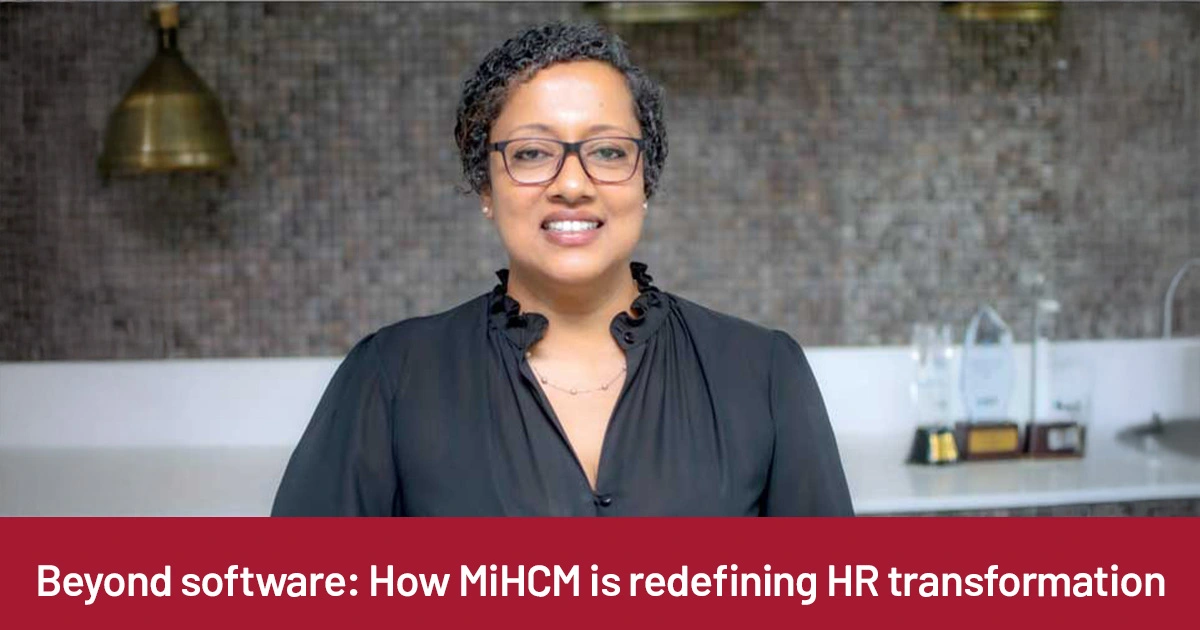
Implementing HR software is the starting point, not the destination. For organisations serious about workforce transformation, the harder work of aligning strategy, redesigning processes, managing change, and embedding new ways of working is what determines whether technology delivers its promise. MiHCM has built its reputation on understanding that distinction. In this interview, MiHCM CEO for Sri Lanka and Maldives Pubudini Abeyesekera explains how the company is expanding its role from technology provider to end-to-end transformation partner.
ต่อไปนี้คือข้อความที่คัดมา:
A new financial year is always a moment to reset and refocus. As CEO for Sri Lanka and the Maldives, what is your overarching ambition for MiHCM in these markets this year?
A new financial year isn’t just about setting new targets. It is about redefining the level of impact we want to create for businesses, people, and our clients.
Our ambition for Sri Lanka and the Maldives this year is clear: to strengthen MiHCM’s position as the region’s most trusted HR and workforce technology partner while helping organisations become more agile, productive, and future-ready.
Across both markets, we are seeing a significant shift in mindset. Businesses are no longer looking at HR technology as a support function. They now recognise it as a strategic driver of growth, workforce resilience, and operational efficiency. Our focus is to help organisations harness that shift through intelligent, AI-powered HR solutions that enable better decision-making, stronger employee experiences, and measurable business outcomes.
In Sri Lanka specifically, we believe technology has a critical role to play in rebuilding competitiveness and improving national productivity. We want MiHCM to be at the forefront of that transformation by empowering enterprises to modernise workforce operations and unlock the full potential of their people. In the Maldives, our ambition is to deepen our presence across key industries where workforce management and employee engagement are becoming increasingly important to sustaining growth.
Ultimately, our goal this year is not just growth in numbers. It is to lead meaningful workforce transformation across the markets we serve.
How would you assess the last financial year for MiHCM in Sri Lanka?
FY 2025/’26 was a strong and encouraging one. Despite ongoing economic pressures and cautious business sentiment in certain sectors, we continued to see organisations prioritising investments in workforce transformation, productivity, and digitalisation.
For MiHCM, this translated into healthy business growth, stronger enterprise engagement, and increased momentum across both new customer acquisitions and existing client expansion. We saw growing demand for solutions that go beyond traditional HR administration, particularly in areas such as workforce analytics, employee experience, automation, and AI-driven HR capabilities.
One of the most significant shifts was the change in how leadership teams view HR technology. Conversations are now happening at a far more strategic level. CEOs and business leaders increasingly recognise that workforce agility, talent retention, and productivity are directly linked to long-term business resilience.
We were also proud to strengthen relationships with leading organisations across banking, manufacturing, retail, hospitality, healthcare, and diversified groups. Overall, we see the last financial year as a period of strong progress not only in terms of business performance, but in reinforcing MiHCM’s role as a strategic HR technology partner helping organisations navigate the future of work with confidence.
What new products or solutions has MiHCM launched recently and which will resonate most strongly with clients?
Over the past year, MiHCM has continued to expand its product portfolio with a strong focus on AI, workforce intelligence, employee experience, and end-to-end HR transformation. Organisations today require far more than conventional HR systems. They need intelligent platforms that help businesses become more agile, data-driven, and people-centric.
One of the most significant developments has been the continued advancement of our AI-powered capabilities across the platform. AI is rapidly moving from being a future concept to a practical business need, and we believe HR will be one of the areas most transformed by it. We continue enhancing workforce analytics, performance management, recruitment, employee engagement, and mobile-first employee self-service experiences; solutions that are resonating strongly with organisations focused on improving productivity while building stronger retention and engagement strategies.
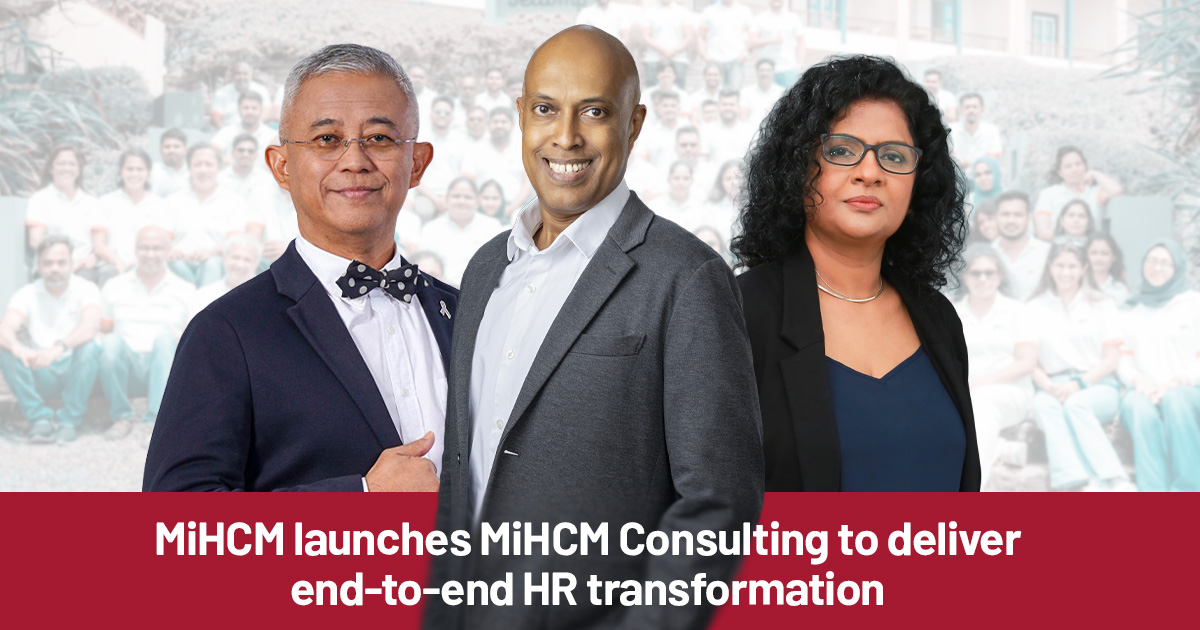
In addition, the launch of MiHCM Consulting has been an important strategic step. Many organisations today are not just seeking software. They are looking for guidance on HR transformation, workforce optimisation, and how to align people strategies with business goals. Through MiHCM Consulting, we support customers more holistically across both technology and transformation journeys.
Among all these developments, I believe our AI-driven HR capabilities and workforce experience solutions will resonate most strongly with clients. Our goal is to ensure MiHCM remains not only a technology provider, but a long-term transformation partner helping organisations build future-ready workforces.
Have you seen a change in trends and client demands with the advent of AI?
Absolutely. Over the past 12 to 18 months, we have seen a very clear shift in how organisations approach AI. Previously, many conversations were exploratory or experimental. Today, businesses are increasingly viewing AI as a strategic capability that can directly improve productivity, decision-making, employee experience, and operational efficiency.
Clients are no longer asking whether AI will impact workforce management. They are asking how quickly they can adopt it in ways that create measurable value. There is growing demand for intelligent automation, predictive insights, smarter talent management, and more personalised employee experiences. Organisations are also becoming more practical and outcome-focused; they want AI solutions that solve real business challenges rather than simply adding complexity.
Another important trend is that leadership teams are now linking AI adoption directly to competitiveness. In markets like Sri Lanka, where businesses are under pressure to improve productivity and optimise resources, AI is increasingly viewed as an enabler of sustainable growth. What is encouraging is that many organisations are also beginning to recognise the importance of responsible, human-centric AI adoption.
The future of HR will not be about replacing people. It will be about empowering people to work smarter, make better decisions, and focus on high-value contributions.
How is MiHCM adapting its strategy and product roadmap to thrive in this AI-driven era?
At MiHCM, we view AI not as a standalone feature, but as a fundamental shift in how organisations manage, engage, and empower their workforce. Our strategy and product roadmap are being shaped around building intelligent, adaptive, and experience-driven HR technologies that help businesses operate with greater agility and insight.
A major focus is embedding AI capabilities directly into the everyday employee and manager experience: intelligent automation, AI-assisted decision-making, predictive workforce insights, and conversational experiences that simplify HR processes while improving productivity. Our goal is to reduce administrative complexity and enable HR teams and business leaders to spend more time on strategic, high-value initiatives.
We are also investing heavily in workforce analytics and data intelligence. Organisations need access to real-time insights to make faster, more informed people decisions around talent retention, workforce planning, productivity, and employee engagement. We see data becoming one of the most valuable strategic assets for modern organisations.
Importantly, we believe the future of AI in HR must remain human-centric. Technology should strengthen employee experiences, support better leadership decisions, and create more meaningful work environments, not remove the human element from organisations. Our ambition is to combine AI innovation with deep HR expertise and regional market understanding to help organisations build truly future-ready workforces.
MiHCM launched a consulting arm earlier this year. What was the thinking behind that move and what gap does it fill?
The launch of MiHCM Consulting was a very deliberate and strategic move. Organisations are no longer looking only for HR software implementation. They are looking for a broader transformation partner who can help them rethink how their people, processes, technology, and business goals come together.
Many companies recognise the need to modernise HR, but the real challenge is often in knowing where to start, how to prioritise, and how to manage change effectively. This is the gap MiHCM Consulting is designed to fill, enabling us to go beyond technology deployment and work more closely with clients on their overall HR transformation journey, covering HR process optimisation, workforce strategy, change management, HR operating models, digital adoption, and aligning HR practices with business outcomes.
What we have learned is that even the best technology delivers its strongest value when supported by the right strategy, processes, and mindset. For organisations in Sri Lanka and the Maldives, this is particularly important. Businesses need practical guidance, not just systems. They need a partner who understands both the technology and the realities of operating in these markets.
Ultimately, the thinking behind this move is simple: our customers’ success depends not only on the technology they invest in, but on how effectively they use it to transform their organisations. MiHCM Consulting strengthens our ability to deliver that end-to-end value.
How did MiHCM fare in terms of client retention and new acquisitions, and what does it do differently to ensure clients grow with the platform over time?
Client retention has been one of the strongest indicators of the value MiHCM continues to deliver. Over the last financial year, we saw strong retention across our Sri Lankan client base and continued momentum in new client acquisitions.
For us, retention is not simply about customers renewing a platform. It is about whether we are consistently helping organisations solve real business challenges, improve workforce efficiency, and create better employee experiences.
We have seen healthy growth from existing clients expanding their use of MiHCM beyond Core HR, Time & Attendance, and Payroll into performance management, recruitment, workforce analytics, employee self-service, mobile HR, and broader employee experience solutions. Clients are not only staying with MiHCM; they are evolving with us.
What we do differently is take a long-term customer success approach. Our relationship with a client does not end after implementation. We work closely with organisations to understand their changing business priorities, support adoption, optimise usage, and help them unlock greater value from the platform over time. We also bring a strong combination of technology, HR domain expertise, local market understanding, and regional experience, which is particularly important in markets where organisations need solutions that are globally competitive but also practical, relevant, and built for local realities.
Ultimately, client retention and expansion are built on trust, consistency, and measurable value. That is where we continue to place our strongest emphasis.
How would you describe the mood among HR decision-makers in Sri Lanka right now and how is that shaping demand for HR tech?
HR decision-makers today are both cautious and constructive. After years of economic turbulence, cost pressures, talent migration, and global uncertainty, organisations are much more disciplined about where they invest. But there is also a strong recognition that businesses cannot afford to delay transformation, especially when it comes to people, productivity, and workforce resilience.
We are seeing a clear shift from short-term survival thinking to more structured, future-focused decision-making. Organisations are no longer looking at HR tech as a ‘nice to have’. They are looking for platforms that deliver measurable value through automation, stronger compliance, real-time analytics, better employee experiences, and improved decision-making. There is also a growing focus on agility; in an uncertain environment, businesses need to respond faster to change, and HR tech gives leaders the visibility and control to make those decisions with confidence.
Talent retention is another critical factor. Sri Lankan organisations compete not only locally but with regional and global employers, making employee experience, career development, and transparent performance management boardroom-level priorities. HR decision-makers are asking sharper questions: Will this improve efficiency? Will it help us retain talent? Will it give us better data? Will it scale as we grow? That is a healthy evolution for the market.
Overall, I would describe the mood as pragmatic optimism. There is caution, certainly, but there is also a strong appetite to build more resilient, intelligent, and future-ready organisations.
How does MiHCM approach data security and what measures are in place to protect client data?
Data security is one of the most important responsibilities we carry as an HR technology provider. HR platforms hold some of the most sensitive information within an organisation and protecting that data is not simply a technical requirement; it is fundamental to the trust our clients place in us.
Our approach is built around strong governance, secure architecture, continuous monitoring, and disciplined operational controls, with security considerations embedded across the full product and service lifecycle. We place strong emphasis on role-based access controls, secure authentication, encryption, audit trails, and controlled data visibility, all of which are especially important for enterprise clients operating across multiple locations, business units, and employee groups.
We continuously strengthen our cloud security, infrastructure resilience, and internal processes to align with evolving enterprise expectations and global best practices. As cyber risks become more sophisticated, security cannot be treated as a one-time exercise. It must be a continuous discipline. Technology is a major part of security, but governance and user discipline are equally critical, which is why we also support organisations in configuring the platform responsibly and ensuring that HR and business users understand the importance of secure data handling.
As you look to the year ahead, what are you most excited about?
What excites me most is the opportunity to help organisations move from digital adoption to true workforce transformation. Across Sri Lanka and the Maldives, there is a growing recognition that people, productivity, technology, and business growth are deeply connected and that creates a very powerful opportunity for MiHCM.
I am particularly excited about the role AI will play in reshaping HR. We are entering a period where HR leaders will have access to far more intelligent tools that can simplify work, generate insights, improve employee experiences, and help leadership teams make faster, more confident decisions. For MiHCM, this is a defining moment. We have been investing in AI-driven HR capabilities and are well positioned to support organisations through this next stage of transformation.
I am also excited by the maturity we are seeing in the market. HR technology is no longer viewed only as an operational system; it is increasingly recognised as a critical enabler of business performance. In Sri Lanka, there is a major opportunity to use technology to strengthen organisational competitiveness and productivity. In the Maldives, we see strong potential to support key industries as they continue to scale and modernise their workforce practices.
Ultimately, what excites me most is the ability to create meaningful impact. If we can help organisations become more agile, data-driven, and people-focused, then we are not just growing MiHCM, we are contributing to stronger businesses and better workplaces that are truly future-ready.
This interview was published in the Daily FT newspaper on 27 May 2026 and can be seen at Beyond software: How MiHCM is redefining HR transformation | Daily FT