
‘Agentic AI’ is the phrase of the year in HR. It is on conference banners, in board papers, and in almost every vendor deck that lands in a Malaysian HR director’s inbox. Yet the question HR and finance leaders across Malaysia actually ask is far smaller, and far more useful, than the phrase suggests.
It is this: what does this thing do? That is the right question, and it deserves a plain answer.
Key takeaways
- An AI agent in HR is software that completes multi-step tasks – routing an approval, chasing a timesheet, answering a workforce query – rather than only responding to prompts.
- In practice, what HR teams deploy is narrower: an AI-powered personal assistant embedded in existing HR systems and chat surfaces.
- The four changes teams feel first are leave and claim approvals, proactive reminders, timesheet capture at source, and plain-language workforce insight.
- Malaysian employees are ahead of Malaysian organisations: 24% of Malaysian workers rank among the world’s most advanced AI users, but only 32% say leadership is clearly aligned on AI.
- None of these use cases makes a decision. Documentation, permissions and a defined stop list determine whether a deployment succeeds.
What is an AI agent in HR?
An AI agent in HR is software that carries out multi-step tasks on a person’s behalf – routing an approval to the right manager, chasing an outstanding timesheet, or answering a workforce question – rather than simply responding when prompted.
In most HR deployments today, that capability reaches the user as an AI-powered personal assistant embedded in the systems and chat tools the team already uses.
Malaysian employees are already ahead of Malaysian organisations
Start with the evidence, because the evidence is unusually clear.
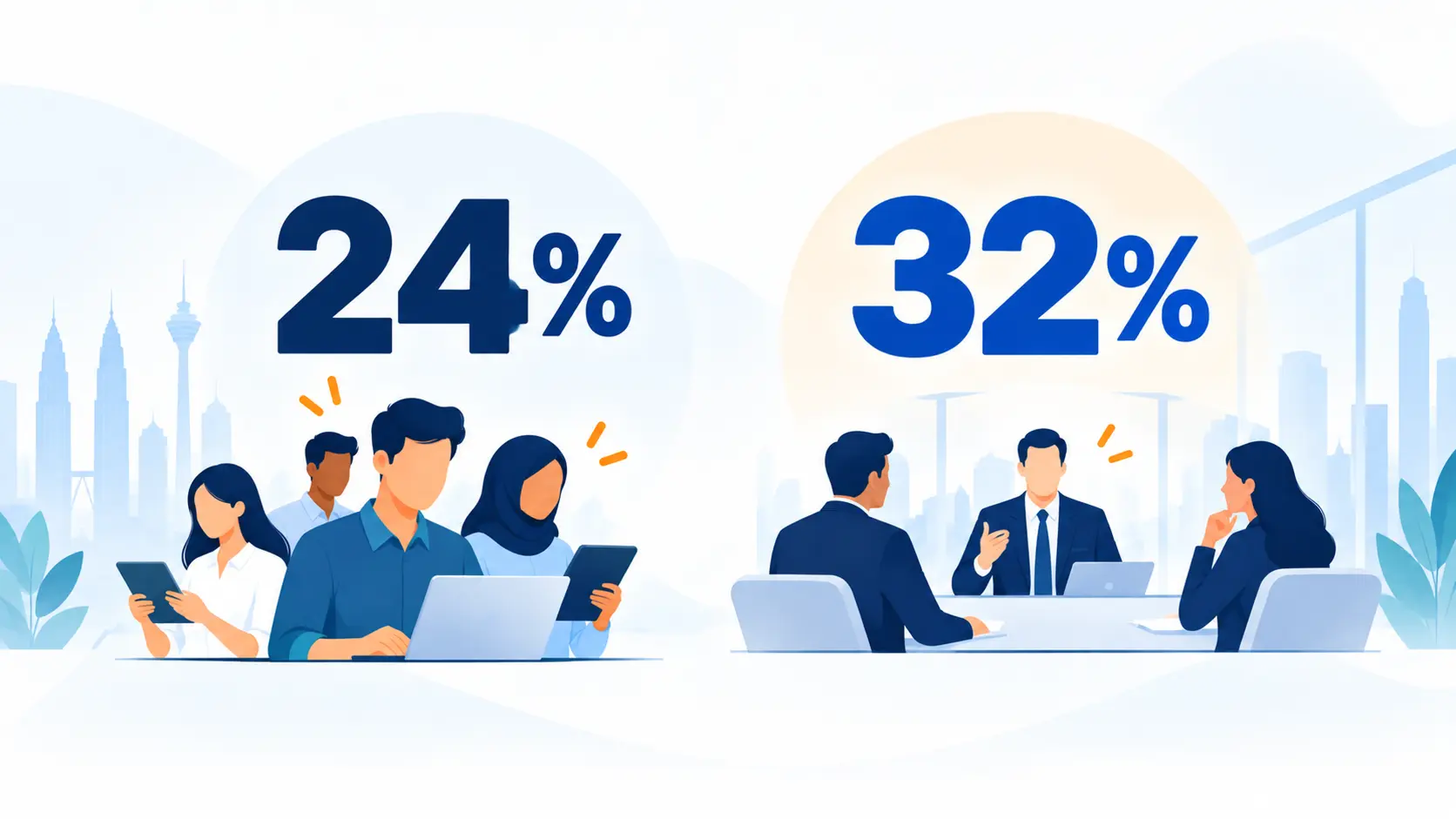
Microsoft’s 2026 Work Trend Index surveyed 2,000 knowledge workers in Malaysia. It found that 24% of Malaysian workers qualify as “Frontier Professionals” — the most advanced AI users in the research — against 16% globally. Meanwhile, 69% of Malaysian AI users say they are producing work they could not have produced a year ago.1
Then look at the other side of the ledger. In the same research, only 32% of Malaysian AI users say their leadership is clearly and consistently aligned on AI. Just 19% say they are rewarded for reinventing how work gets done when those efforts do not produce immediate results.1
The business-level picture matches. AWS’s ‘Unlocking Malaysia’s AI Potential 2026’ study found that 38% of Malaysian businesses now consistently use at least one AI tool, up from 27% a year earlier, but 67% of adopters remain on basic applications, and only 19% have a formal strategy for scaling AI across multiple functions.2
Malaysia’s AI readiness at a glance
Measure | มาเลเซีย | Source |
Workers ranking as the most advanced AI users (“Frontier Professionals”) | 24% (16% globally) | Microsoft 2026 Work Trend Index |
AI users producing work they could not have produced a year ago | 69% | Microsoft 2026 Work Trend Index |
AI users who treat AI output as a starting point, not a final answer | 92% | Microsoft 2026 Work Trend Index |
AI users saying leadership is clearly and consistently aligned on AI | 32% | Microsoft 2026 Work Trend Index |
Businesses consistently using at least one AI tool | 38% (from 27%) | AWS, Unlocking Malaysia’s AI Potential 2026 |
Adopters still using AI only for basic applications | 67% | AWS, Unlocking Malaysia’s AI Potential 2026 |
Businesses with a formal strategy for scaling AI across functions | 19% | AWS, Unlocking Malaysia’s AI Potential 2026 |
Adoption is not Malaysia’s bottleneck. Work design is.
People are experimenting faster than processes, incentives and job descriptions are changing. That gap is where most HR technology projects quietly fail; not in the demo, but in the six months afterwards, when nobody has decided what the team is supposed to stop doing.
The word is ‘agentic’; what lands on your desk is an assistant
Precision matters here, because loose language causes bad procurement.
“Agentic” describes a category of technology: software that can carry out multi-step tasks rather than simply answer a question. It is a useful industry term. It is not a product, and nobody buys a category.
What an HR team actually deploys is much narrower and much more concrete. For MiHCM, that is MiA ONE, an AI-powered personal assistant. It sits inside the systems where HR and workforce data already lives, and inside the chat surfaces where employees and managers already spend their day.
That is the whole design intent: not a new destination to visit, but a shorter path to something the user was already accountable for.
What does an AI assistant actually do for an HR team day-to-day?
Here is the honest, unglamorous version of what an AI-powered assistant changes for a Malaysian HR team.
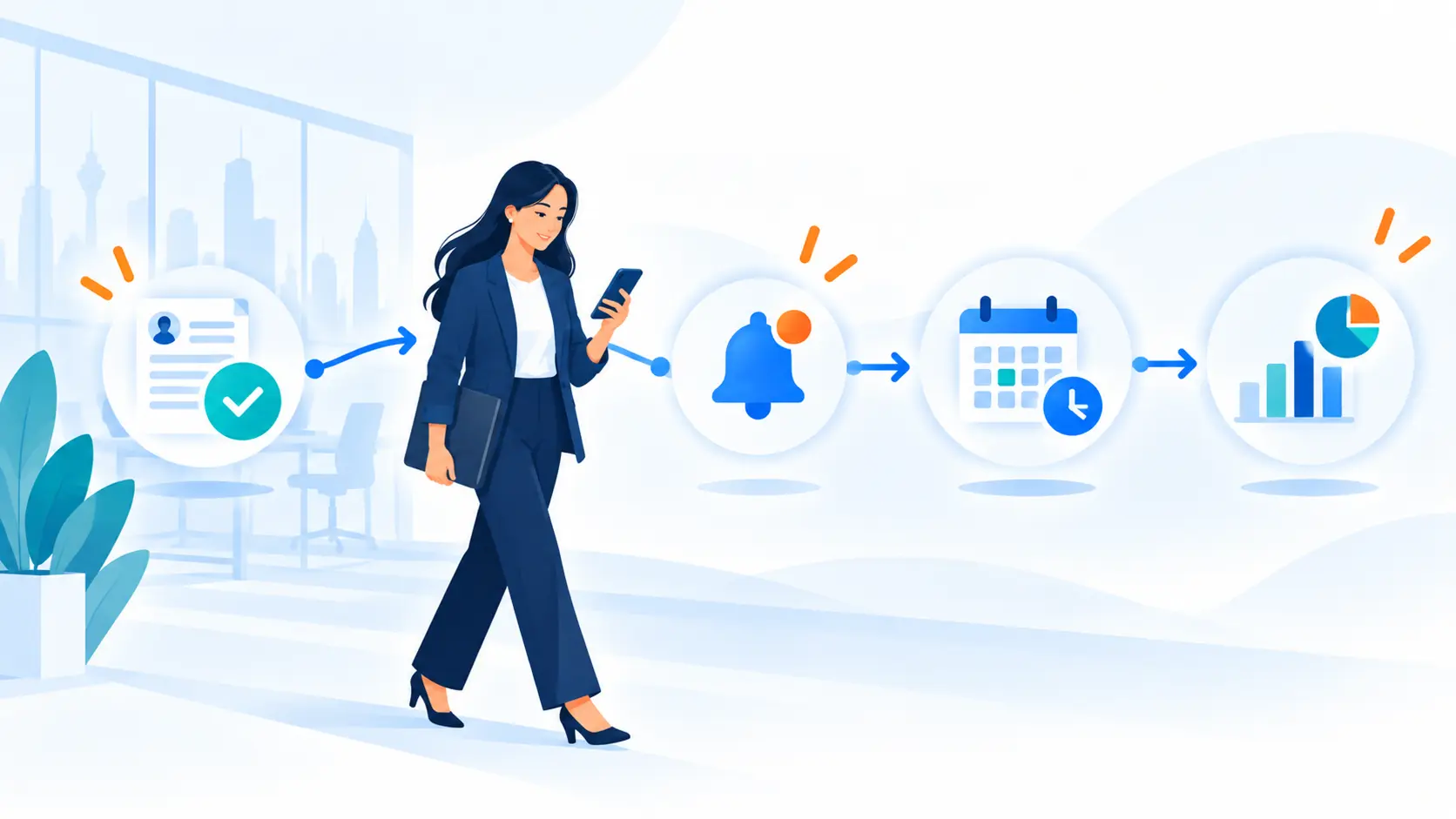
Leave and claim approvals: A manager receives an approval request in the flow of their work and acts on it there, with the relevant context attached — balance, team coverage, policy position — rather than logging into a portal, hunting for a queue and guessing. The approval decision is unchanged. The friction around it goes.
Reminders that actually close the loop: Timesheets not submitted. A probation review due next week. An approval that has been sitting untouched for three days. Every HR team in Malaysia already chases these things by WhatsApp and email, and the chasing is often the single largest consumer of an HR executive’s week. An assistant that nudges the right person at the right moment does not sound revolutionary. It is, however, the change most HR teams feel first.
Timesheets and attendance: Capture at source, in conversation, rather than reconstructed from memory on the last day of the month. The value is not the time saved on entry; it is that the data arriving in payroll is closer to what actually happened.
Workforce and productivity insight: A line manager asks a question in plain language and gets an answer, instead of raising a request with HR, who raise a request with whoever owns reporting. Overtime concentration in one shift. Leave clustering ahead of a public holiday. Attendance exceptions in a particular department. These are questions managers have always had and rarely asked, because asking cost too much.
Notice what these four have in common. Not one of them is a decision. Each one removes distance between a person and a judgement they were already responsible for making.
What can an AI assistant in HR not do?
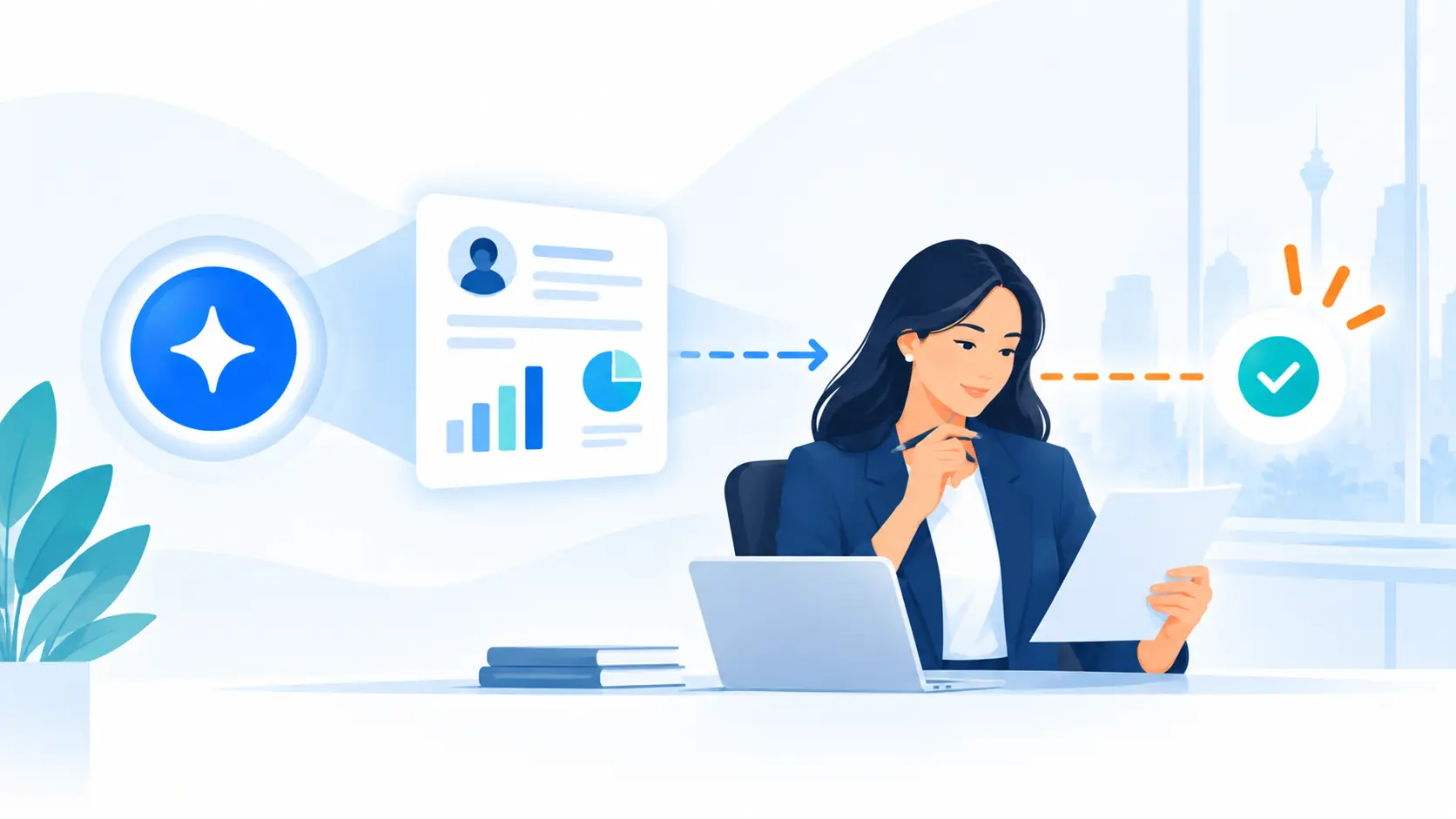
An AI-powered assistant does not decide who is promoted. It does not resolve a grievance. It does not interpret statutory obligations, and it should never be treated as a source of legal truth on the Employment Act 1955, EPF, or SOCSO treatment.
It does not replace the conversation an employer needs to have with an employee whose attendance pattern has changed for reasons no dashboard will ever surface.
Malaysian professionals seem to understand this better than the market gives them credit for. In the Work Trend Index data, 92% of Malaysian AI users say they treat AI output as a starting point rather than a final answer, and that they remain responsible for the thinking.
The most advanced users are the most deliberate about it: they are more likely to do some work without AI specifically to keep their own skills sharp (42% against 33%), and more likely to pause before starting a task to decide what should be done by a human and what should be handed to a machine (57% against 39%).1
Judgement, in other words, is a practice, not a fallback position for when the software fails.
What has to be in place before an AI assistant goes live?
If there is one operational point to take from all this, it is this one.
The same research found that the most advanced AI users are markedly more likely to report that their workflows, human handoffs and quality standards are documented and repeatable: 26% against 18%.1 Those are low numbers on both sides. They suggest that documentation, not model capability, is the constraint.
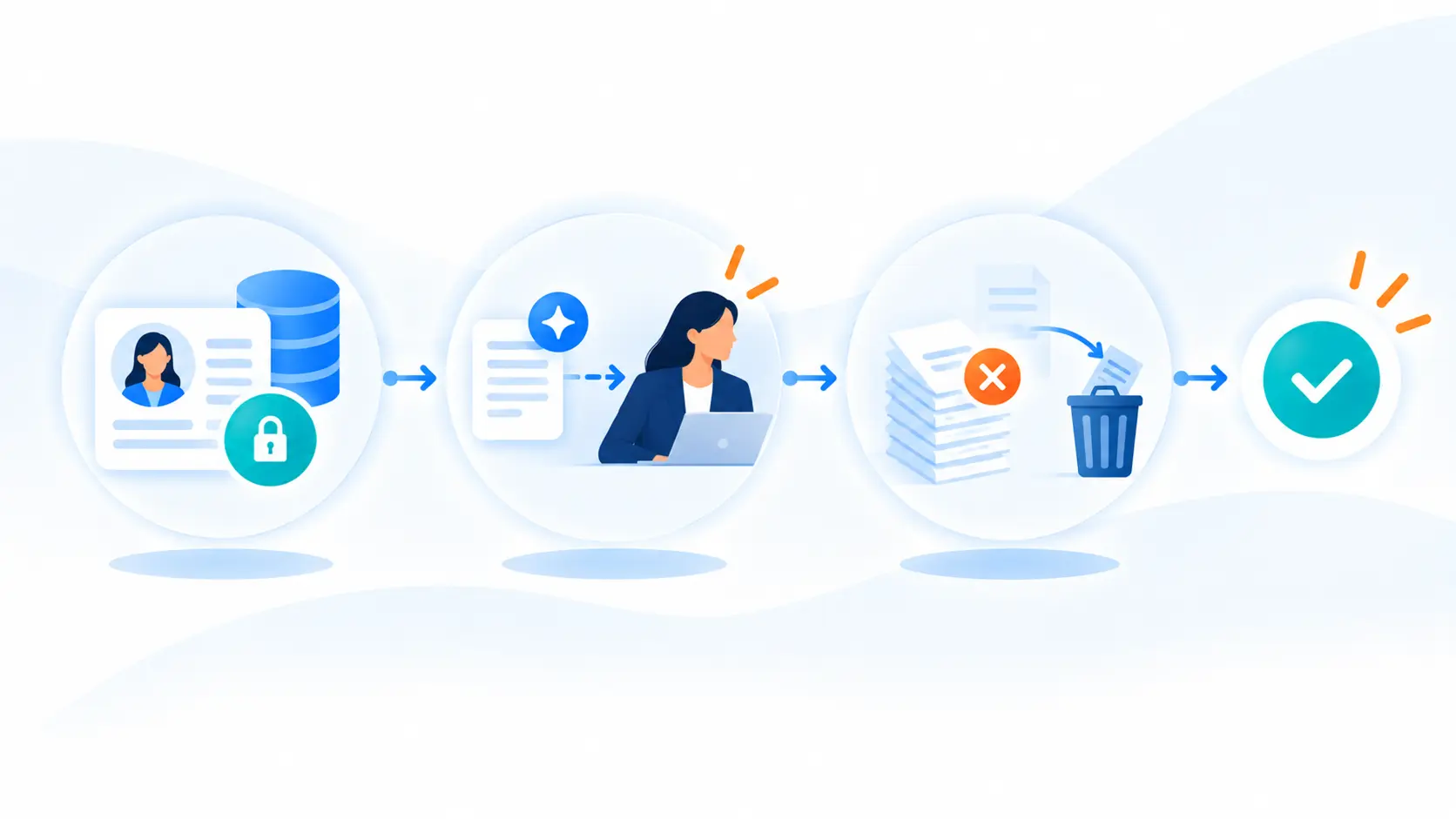
Before any assistant goes live, three things need an owner:
- Data quality and permissions. An assistant is only as trustworthy as the records and access rules underneath it. Get the role-based permissions right before widening the rollout, not after.
- Escalation and override. When the assistant surfaces something wrong, who catches it, and how is the correction logged?
- The stop list. Write down what the HR team and line managers will no longer do manually. If nothing comes off the list, nothing has changed — a channel has simply been added.
This is also where partner choice becomes a governance decision rather than a procurement formality. The AWS research found that 57% of Malaysian businesses primarily source AI capability through external providers, consultants or software vendors, and 69% say locally based software providers matter to their adoption.2
Most Malaysian organisations will not build this themselves. That makes the question of who understands the local statutory environment, shift patterns and workforce mix a great deal more important than the question of whose demo was smoother.
Three questions worth asking any vendor
- Show me one complete loop. Not a slide. A leave request raised, routed, approved and reflected in payroll, running against your own policy rules.
- What happens when it is wrong? Ask to see the audit trail, the override path and the escalation route. A vendor who has not thought about failure has not deployed at scale.
- What does my manager stop doing? If the honest answer is “nothing,” the project will not survive contact with a busy quarter.
Human at the core is a design constraint, not a slogan
The theme of this month’s Malaysia HR Tech & Innovation Conference & Expo is ‘Human at the Core: Reimagining Work, Workforce and Workplace for the Age of Agentic AI’. That framing is exactly right, and it is worth pushing one step further.
‘Human at the core’ is not a reassurance offered to employees at the end of a transformation programme. It is a constraint accepted at the start of one. It means the assistant handles the chasing, the routing, the collating and the reminding, and the human keeps the part that requires accountability, context and consequence. Any deployment that quietly inverts that has failed, however impressive the technology.
That is the conversation worth having in Kuala Lumpur this September.
คำถามที่พบบ่อย
What is the difference between an AI agent and an AI assistant in HR?
“AI agent” describes a category of software that can complete multi-step tasks. An AI assistant is the form that capability usually takes inside an HR product: a named assistant, such as MiHCM’s MiA ONE, that sits inside existing HR systems and chat surfaces and shortens the path to an action the user was already responsible for.
What HR tasks can an AI assistant handle in Malaysia?
The tasks HR teams adopt first are leave and claim approvals in the flow of work, proactive reminders for outstanding timesheets and due probation reviews, conversational timesheet and attendance capture, and plain-language workforce queries such as overtime concentration or leave clustering ahead of a public holiday.
Can an AI assistant handle Malaysian statutory compliance?
No. An AI assistant should never be treated as a source of legal truth on the Employment Act 1955, EPF, or SOCSO obligations. Statutory interpretation stays with qualified people. What the assistant changes is the administration around a compliance process, not the compliance judgement itself.
How ready are Malaysian organisations for AI in HR?
Employees are further ahead than employers. Microsoft’s 2026 Work Trend Index found 24% of Malaysian workers rank among the world’s most advanced AI users, against 16% globally, while only 32% say their leadership is clearly and consistently aligned on AI.1 AWS research found 38% of Malaysian businesses consistently use at least one AI tool, but only 19% have a formal strategy for scaling it across functions.2
Will an AI assistant replace HR jobs?
Not in the deployments described here. Every use case removes administration around a decision rather than making the decision. The practical risk is the opposite one: adding an assistant without removing any manual work, so nothing changes except the number of channels the team monitors.
What should HR teams ask an AI HR software vendor?
Ask to see one complete loop run against your own policy rules, from leave request through routing and approval to payroll. Ask what happens when the assistant is wrong, and to see the audit trail, override path and escalation route. Ask what line managers will stop doing once it is live.
MiHCM will be exhibiting at the Malaysia HR Tech & Innovation Conference & Expo 2026 on 22–23 September at the Connexion Conference & Event Centre (Nexus), Bangsar South, Kuala Lumpur. Come to our booth and ask us to run a full approval loop in front of you – leave request to payroll – and see what MiA ONE does with it. No slides required.
Learn more about MiHCM in Malaysia: MiHCM Malaysia | HR Solutions for Businesses
References:
- Microsoft, “Microsoft’s 2026 Work Trend Index: Malaysian workforce is ready for AI and organizations must keep pace”, Microsoft Source Asia, 23 June 2026. Based on trillions of anonymised Microsoft 365 productivity signals and a survey of 2,000 full-time employed and self-employed knowledge workers in Malaysia.
- Amazon Web Services, “Unlocking Malaysia’s AI Potential 2026”, research conducted by Strand Partners, August 2026. Based on a survey of 1,000 Malaysian business leaders and 1,000 members of the public.