Generative AI has been described as the most consequential shift in HR technology in a generation. It may well be. But the more useful question for an HR operations team this quarter is narrower: what can it actually do for us now, and what should we plan for rather than buy?
The gap between what GenAI can do and what HR is doing with it
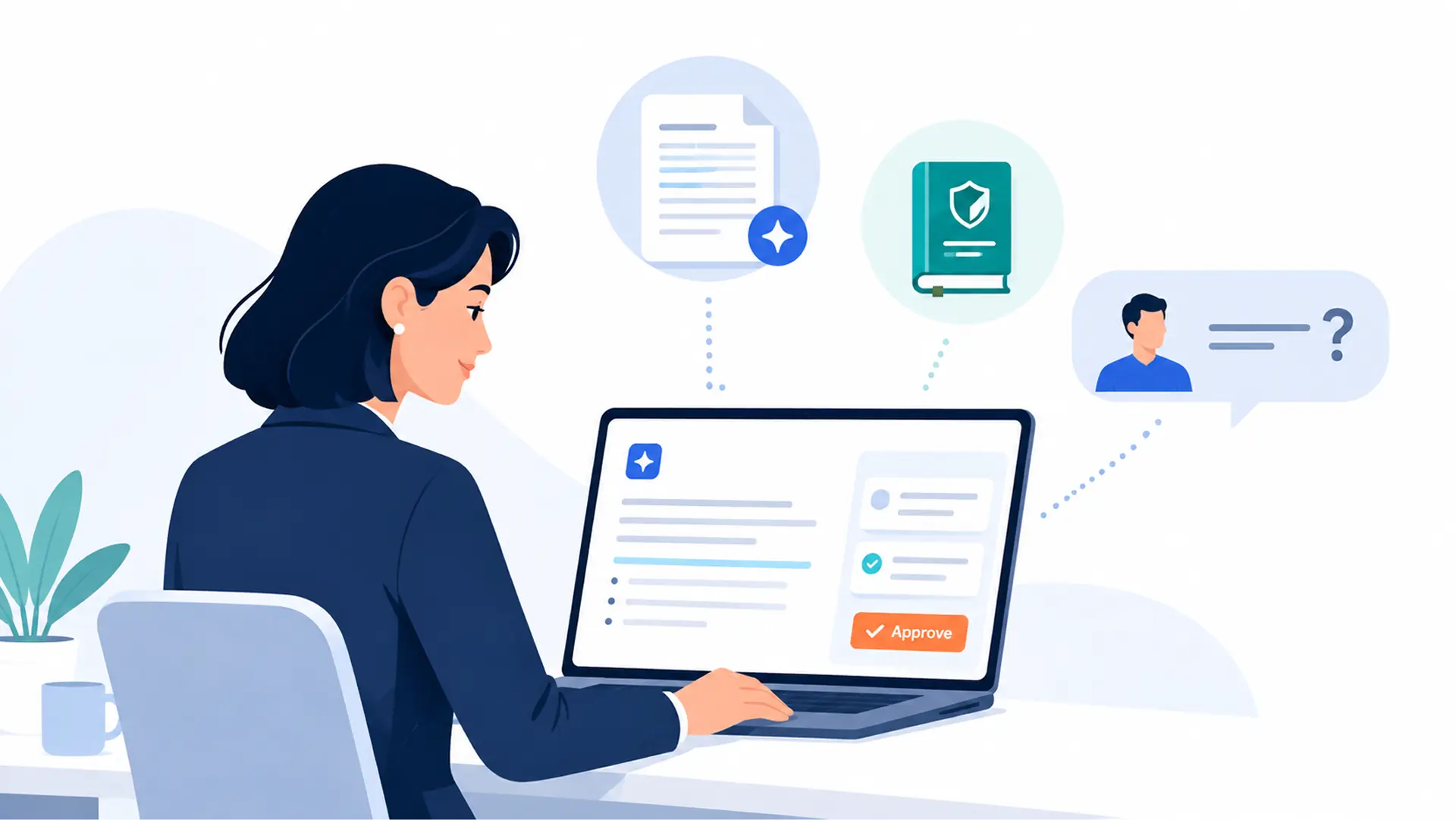
There is a widening distance between the capability of generative AI and its application inside HR functions. The technology can draft, summarise, translate, classify, retrieve and reason across large volumes of unstructured text. Very little HR work is beyond that description. And yet adoption remains concentrated in a handful of places.
SHRM’s State of AI in HR 2026, drawing on responses from 1,908 HR professionals, found that AI tools in HR are most common in recruiting (27%), HR technology (21%), learning and development (17%) and employee experience (14%). Less than half of organisations expected to be using AI in HR at all during 2026. For a technology routinely described as transformational, that is a narrow footprint.
The gap is not really about capability. It is about confidence, governance and sequencing — knowing which tasks are safe to hand over, which require a human in the loop, and which should not be automated at all.
A wealth of information creates a poverty of attention
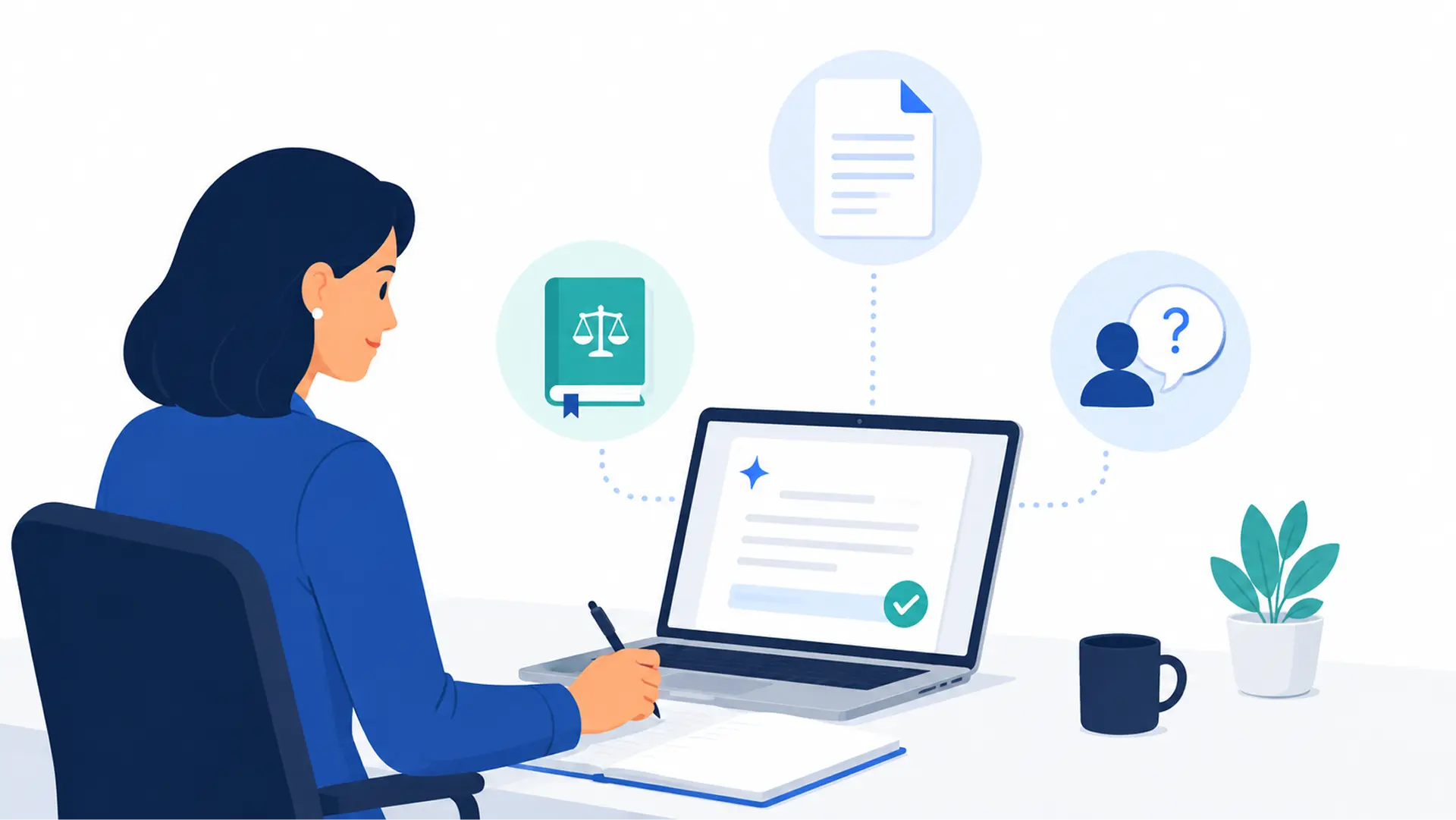
Strip away the ambition and a clear pattern emerges. Generative AI is delivering reliable value in HR operations where three conditions hold: the task is high-volume, the output is reviewable, and the cost of an error is recoverable. That describes more of HR than most teams assume.
Drafting and document work: Job descriptions, interview question sets, offer letters, policy summaries, onboarding checklists, internal announcements, performance review scaffolding. None of these are decisions. They are drafts that a person reviews, edits and owns. Moving from blank page to credible first draft is the single most reliable time saving available to HR teams today.
Policy and knowledge retrieval: Enterprise HR runs on documents that almost nobody reads end to end: handbooks, statutory guidance, benefits schedules, country-specific payroll rules. Retrieval-augmented assistants that answer a question by pointing to the governing clause — rather than generating an answer from general knowledge — turn those documents into something usable. This is where AI HR co-pilots such as SmartAssist are most immediately useful, because the answer is grounded in the organisation’s own source material.
First-line employee queries: Leave balances, payslip explanations, claim status, policy eligibility. These queries are repetitive, individually low-value and collectively enormous. Handling them conversationally, with escalation to a human whenever the question moves beyond retrieval, is proven ground. A personal AI agent such as MiA ONE operates in exactly this space — answering, prompting and routing, while leaving judgement with the employee and the HR team.
Summarising unstructured feedback: Engagement survey comments, exit interview notes, performance feedback, grievance themes. Human beings are poor at reading 600 free-text responses consistently; language models are good at clustering them into themes. The output is a starting point for analysis, not a conclusion — but it converts data that was previously ignored into something an HR business partner can work with.
Recruitment support, carefully bounded: Drafting adverts, generating structured interview guides, summarising a candidate’s written submissions for a panel. What is not practical today, and may never be advisable, is allowing a model to rank or reject candidates without a named human reviewing the reasoning.
The practical use cases share a common shape: AI produces a draft or a summary, and a person remains accountable for the decision. Where that structure breaks down, so does the business case
What the adoption data actually shows
Two findings sit awkwardly together. The first is that adoption is accelerating quickly. Gartner surveys of HR leaders found that the proportion of organisations piloting or implementing generative AI rose from 19% to 61% between June 2023 and January 2025. McKinsey’s 2025 global survey of 1,993 respondents across 105 nations found that more than two-thirds of organisations now use AI in more than one business function, and half in three or more.
The second is that value has not kept pace. Across multiple research bodies, the consistent theme of the last eighteen months is that organisations are deploying widely and capturing narrowly. Pilots proliferate; enterprise-level impact remains difficult to evidence.
For HR specifically, SHRM’s data offers a more encouraging reading of what adoption is doing to the work itself: AI’s organisational impact was found to be 5.7 times more likely to shift job responsibilities and three times more likely to create new roles than to displace jobs. The change is real, but it is a change in the shape of work rather than a subtraction from it.
The uncomfortable middle: busy pilots, thin returns
The most common failure mode is not choosing the wrong tool. It is skipping the unglamorous layer. Teams reach for autonomous, lifecycle-spanning ambitions before they have automated the high-volume, low-risk work properly — and then struggle to explain what the investment returned.
Three practical causes recur:
- Workflows are not redesigned. AI is added to a process that was built for manual handling, so the bottleneck simply moves.
- Data is not ready. Policy documents are out of date, employee records are inconsistent across systems, and the model inherits the mess.
- Ownership is unclear. Nobody is named as accountable for reviewing output, so either everything is reviewed (no saving) or nothing is (real risk).
SHRM’s 2026 workplace research found that among organisations that had adopted AI, fewer than half reported having policies governing its use by their workforce. Governance is lagging deployment, not leading it.
What is genuinely on the horizon
Some of what is described as imminent is credible. Some is marketing. It is worth being specific about which is which.
AI agents handling multi-step processes: This is the nearest genuine frontier. Rather than answering a single question, an AI agent completes a sequence — collecting missing onboarding documents, chasing an approval, updating a record, confirming completion. Gartner has predicted that half of current HR tasks will be automated or managed by AI agents by 2030. The technology is arriving faster than the control frameworks around it, which is precisely why Singapore’s IMDA published a Model AI Governance Framework for Agentic AI in January 2026, updated in May, addressing systems capable of planning and acting independently.
Predictive workforce planning: Attrition risk, skills gap forecasting, internal mobility matching. The models exist. What is missing in most enterprises is data of sufficient quality and history to make the predictions trustworthy, and the organisational maturity to act on them without them becoming self-fulfilling.
Personalised learning at scale: Adaptive learning pathways generated against an individual’s role, skills profile and career intent. Genuinely promising, and closer than predictive planning, because the cost of a mediocre recommendation is low.
Fully conversational HR service delivery: An employee describing a situation in natural language and the system resolving it end to end across payroll, leave, benefits and case management. Technically demonstrable today; operationally dependent on integration quality that most enterprises do not yet have.
Governance is what separates the two lists
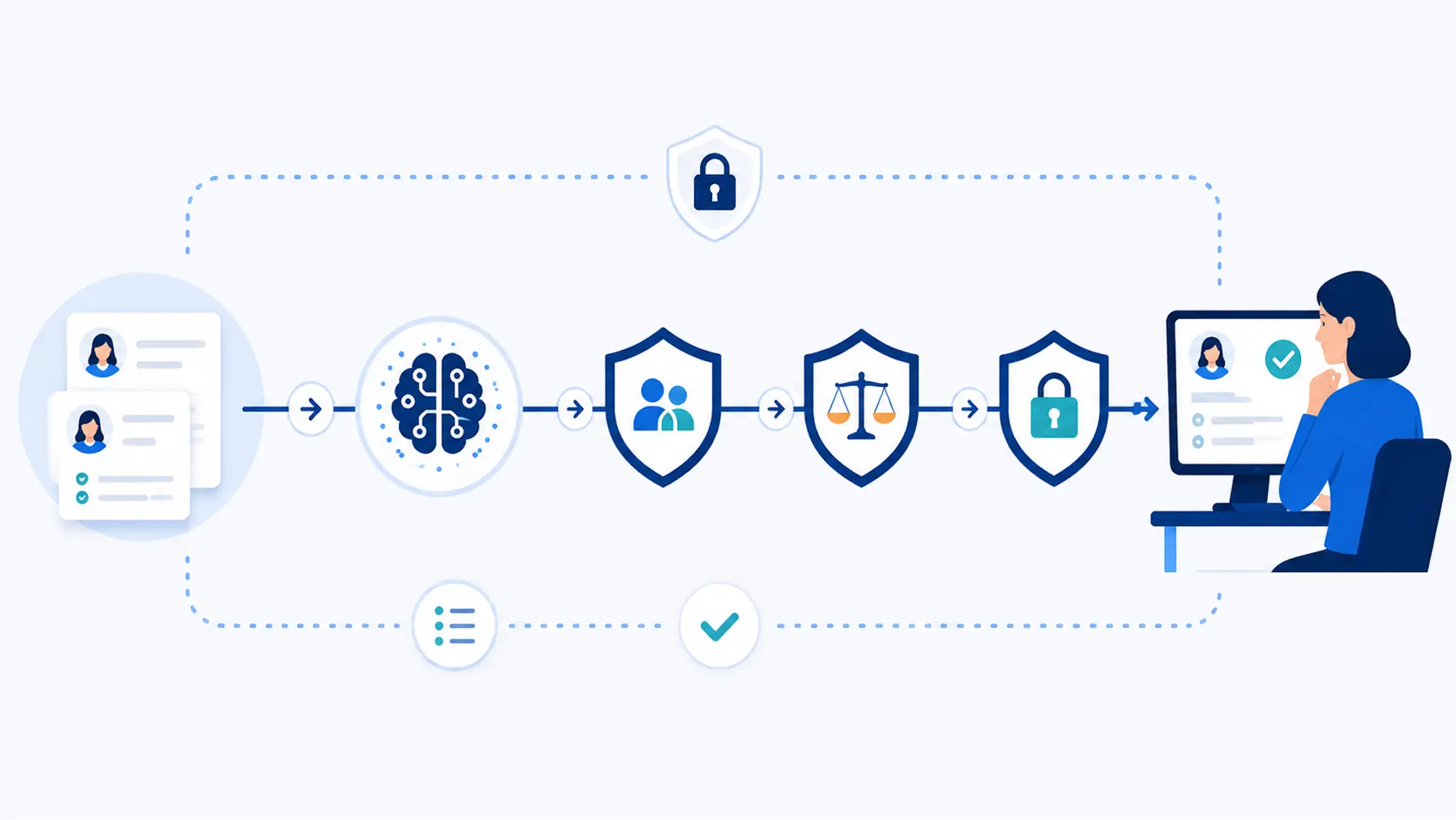
The line between “practical today” and “possible tomorrow” is drawn less by model capability than by whether an organisation can explain, evidence and defend a decision made with AI assistance.
For enterprises operating across multiple jurisdictions in Asia, the regulatory picture is fragmented and moving. The European Union’s AI Act classifies most employment-related AI as high risk; following the Digital Omnibus agreement reached in May 2026, the core obligations for those Annex III systems were deferred from August 2026 to December 2027, while separate duties — the workplace emotion-recognition prohibition, AI literacy requirements and most transparency obligations — remain on their original timelines. Singapore has taken a framework-led rather than statutory approach through IMDA. Other markets across South and South East Asia are at earlier stages.
The practical consequence for a regional employer is that designing to the strictest standard you touch is usually cheaper than maintaining several standards. Four controls travel well across all of them: disclosure that AI is involved, a named human reviewer for any decision affecting an individual, an audit trail of what the system produced and what the reviewer changed, and periodic testing for bias in outcomes.
A sequencing model HR leaders can use
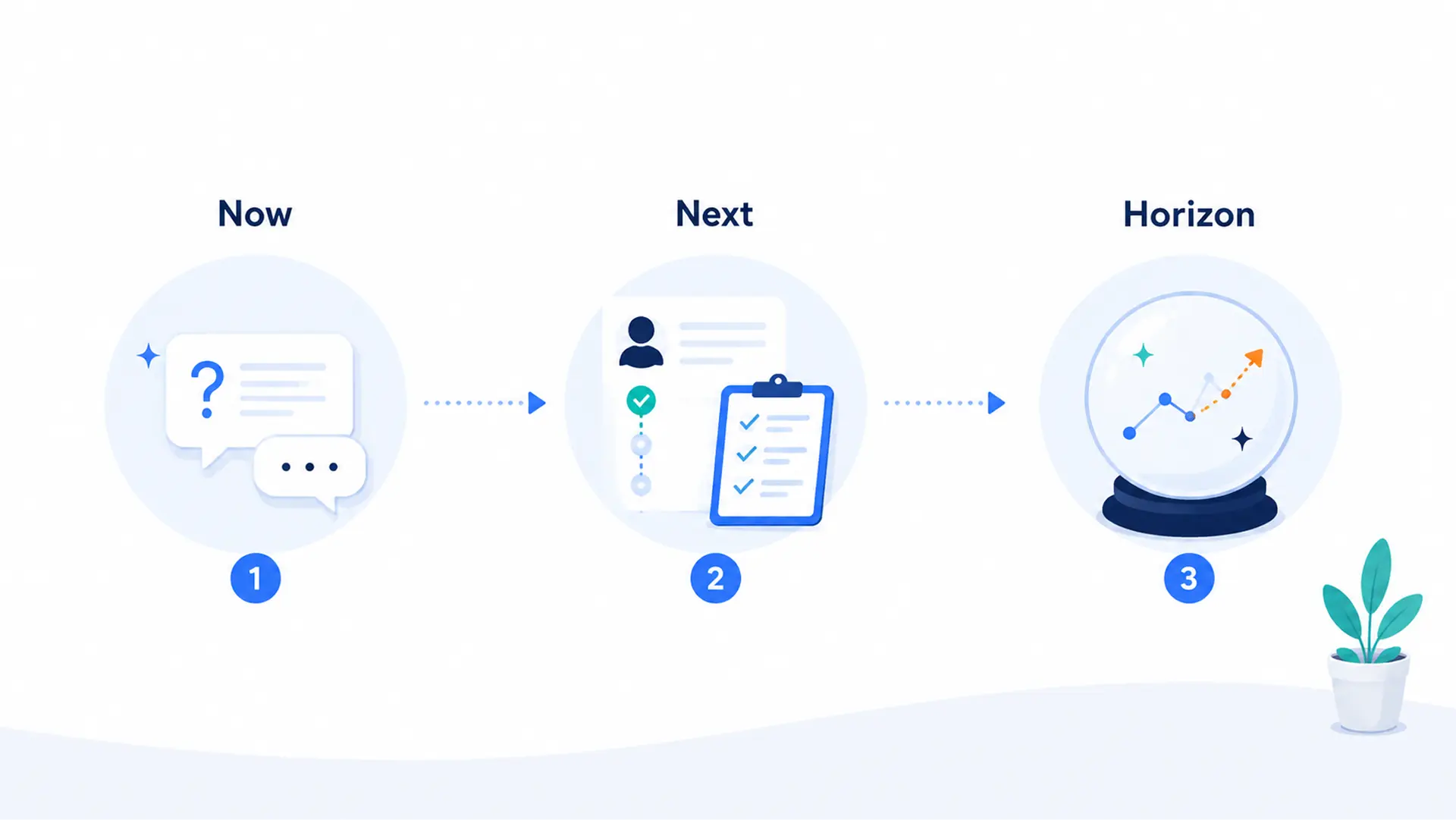
A simple three-horizon approach keeps ambition and delivery in the same conversation.
- Now (0–6 months). Deploy assisted drafting and grounded policy retrieval. Automate first-line queries with clear escalation. Publish an internal AI use policy before, not after, the tools land. Measure time saved and query deflection.
- Next (6–18 months). Redesign one end-to-end process rather than adding AI to five. Onboarding is usually the best candidate: high volume, document-heavy, low decision risk. Build the audit trail into the workflow from the start.
- Horizon (18 months+). Introduce agentic capability only where the process is already clean, instrumented and governed. Extend into predictive planning once you have two to three years of consistent data.
The sequence matters more than the speed. Organisations that redesign workflows before scaling AI consistently outperform those that scale first and rationalise later.
The human judgement question
It is tempting to frame this as a debate about how much of HR can be automated. That is the wrong frame. Almost everything in HR that carries consequence for a person — a promotion, a dismissal, a pay decision, a grievance outcome — requires someone who can be asked to explain it and held to the answer. Generative AI is exceptionally good at removing the work that surrounds those decisions. It is not a substitute for making them.
The organisations getting the most from generative AI in HR operations today are not the most technically ambitious. They are the ones that have been most precise about where the machine stops and the person starts — and have made that boundary visible to their employees.
Practical today. Possible tomorrow. Governed throughout.
Sources and references
- SHRM, “The State of AI in HR 2026” (survey of 1,908 HR professionals) — shrm.org/topics-tools/research/state-of-ai-hr-2026
- SHRM, “Navigating AI in the Workplace: 2026” (survey of 5,875 US-based workers, March–April 2026) — shrm.org/topics-tools/research/navigating-ai-in-the-workplace
- Gartner, “Top Trends Shaping HR Priorities in 2026” press release, 17 November 2025 — gartner.com/en/newsroom
- McKinsey & Company, “The state of AI in 2025: Agents, innovation, and transformation” (survey of 1,993 participants across 105 nations, June–July 2025) — mckinsey.com/capabilities/quantumblack/our-insights/the-state-of-ai
- Infocomm Media Development Authority (IMDA) Singapore, “Model AI Governance Framework for Agentic AI”, released 22 January 2026; Version 1.5 published 20 May 2026 — imda.gov.sg
- European Commission / European Parliament, Digital Omnibus on AI — provisional agreement reached 7 May 2026; European Parliament approval reported 16 June 2026. Annex III high-risk obligations deferred from 2 August 2026 to 2 December 2027.
Transparency and verification note
All statistics and regulatory references in this article are attributed to named institutional sources and were verified at the time of writing. Research findings from Gartner, McKinsey and SHRM reflect the survey periods stated by those organisations and should be cited with those periods intact. Regulatory positions — particularly under the EU AI Act — are subject to change and should be confirmed against the current legal position before any compliance decision is taken. This article is intended as general commentary and does not constitute legal advice.