
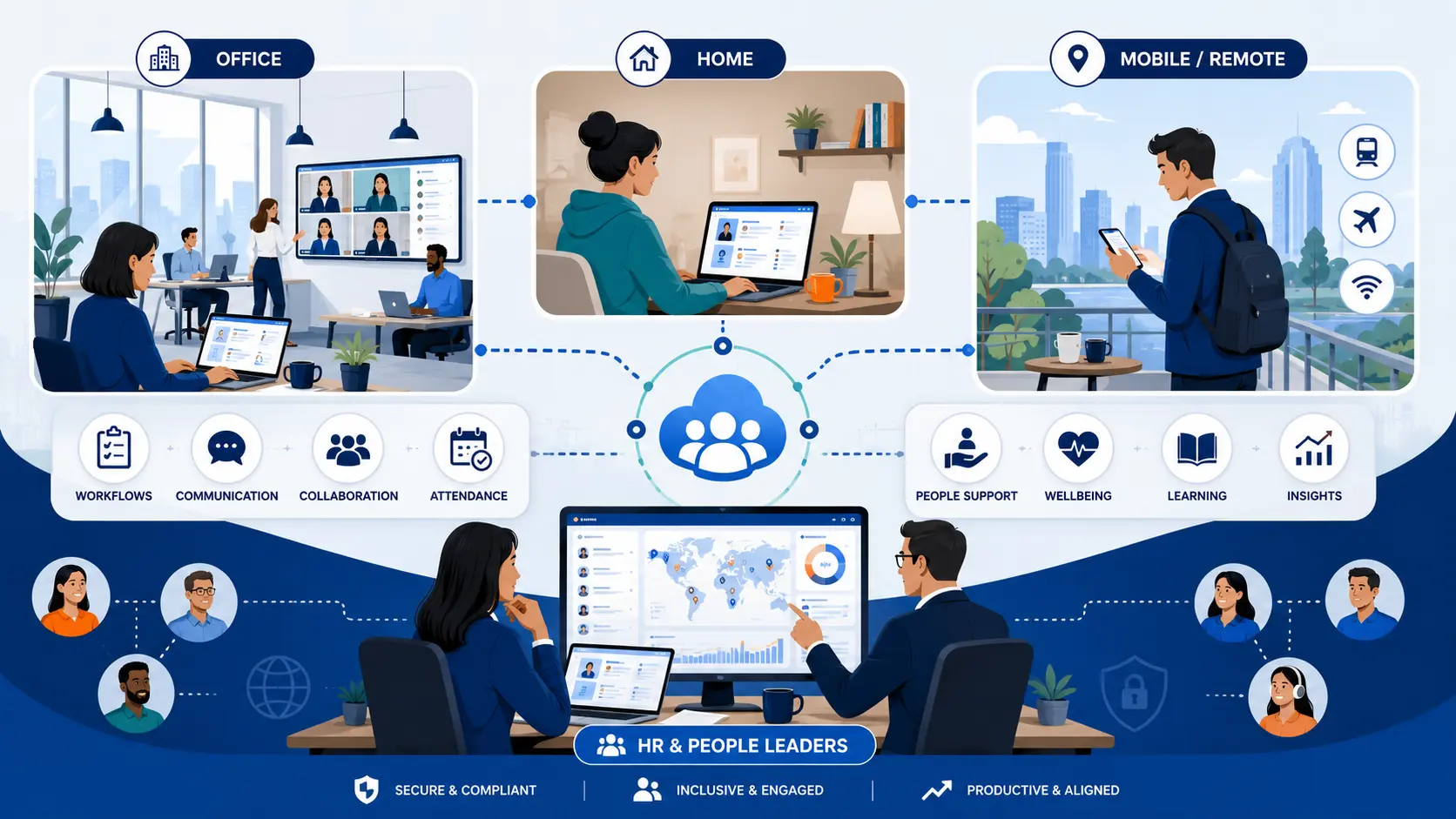
For several years, the conversation about hybrid work was framed as a temporary negotiation, a phase organisations would eventually exit in one direction or another. That framing no longer holds.
Gallup’s latest workplace research finds that 52% of remote-capable employees now work in a hybrid arrangement, with a further 27% working fully remotely1. Separate data from Robert Half’s Q1 2026 survey of over 500 HR managers found that 88% of employers now offer some form of hybrid work, even as fully remote job postings have narrowed to just 4% of the market2.
Hybrid, in short, has stopped being an experiment and become the operating model most HR leaders are now permanently responsible for. What has changed is not whether hybrid work continues, but what it now demands of the HR function that manages it.
From policy writer to experience architect
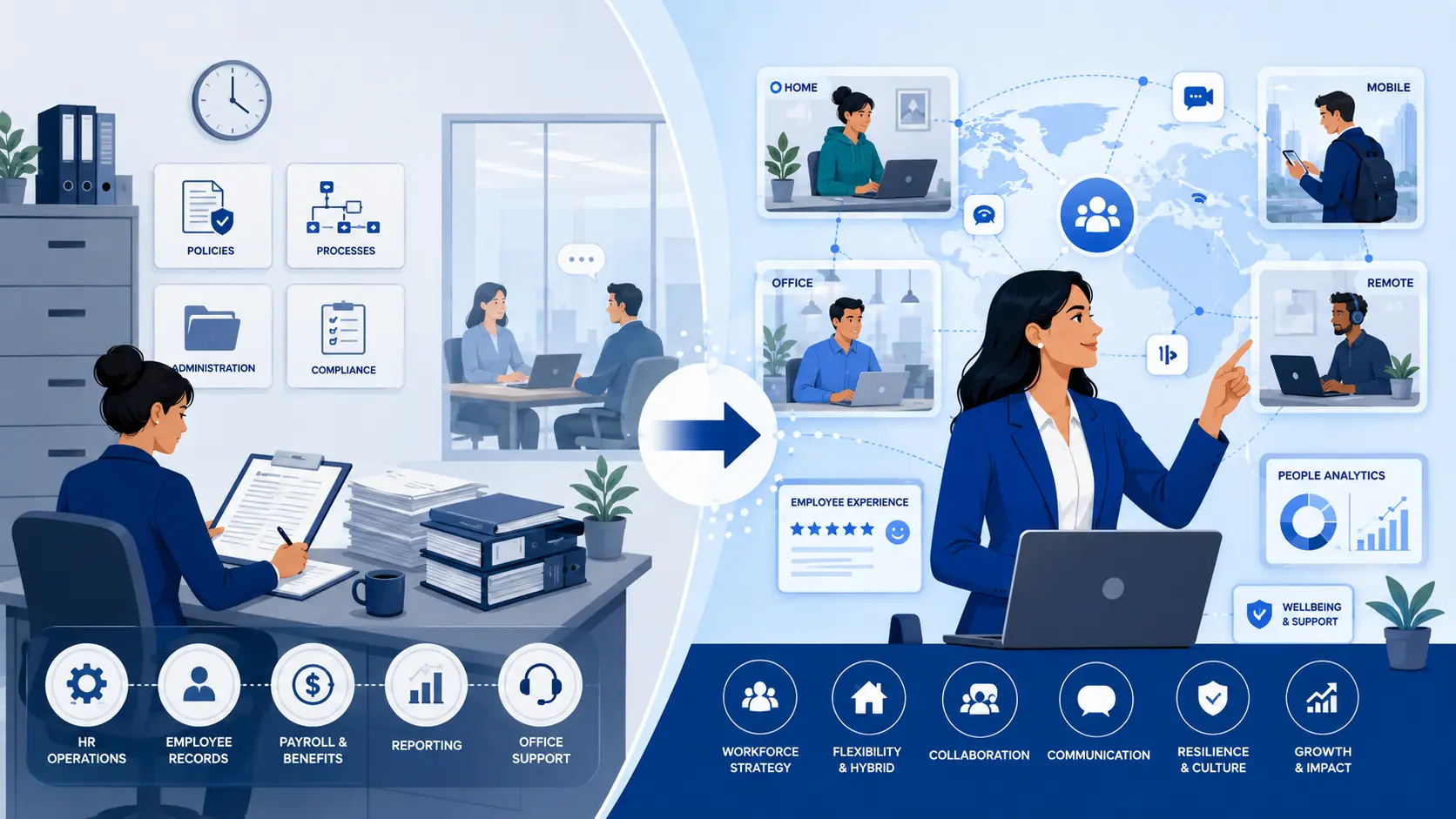
The first phase of hybrid work was largely a policy exercise: how many days in the office, which roles qualify, how attendance is tracked. That phase is largely settled for most organisations. The role HR now plays looks different, closer to designing the actual experience of work across locations than administering where people sit.
Signal | What the research found | Source |
Hybrid is the default | 52% of remote-capable employees now work hybrid; 27% work fully remote | Gallup |
Employers have largely settled | 88% of employers offer some hybrid work option, though only 25% offer it to all employees | Robert Half |
Team performance | 69% of managers say hybrid or remote work has improved their team’s performance | Owl Labs |
Turnover cost | The fully loaded replacement cost per departing remote or hybrid worker averages USD 42,000 | McKinsey |
Manager accountability | Accountability is the single weakest competency among leaders, and manager engagement is declining | Gallup |
Leadership alignment gap | Only 26% of AI users say their organisation’s leadership is clearly and consistently aligned | Microsoft Work Trend Index |
Table: selected 2026 research on hybrid and remote work, and the leadership challenges it creates. Figures are as reported by the cited sources.
Owl Labs research found that 69% of managers say hybrid or remote work has actually improved their team’s performance2, which cuts against the assumption that hybrid work is primarily a retention concession rather than a genuine performance lever. At the same time, McKinsey research puts the fully loaded replacement cost of a departing remote or hybrid worker at around USD 42,0002, which is a direct reminder of what’s at stake if the experience HR designs around hybrid work doesn’t hold up.
The manager problem HR now owns
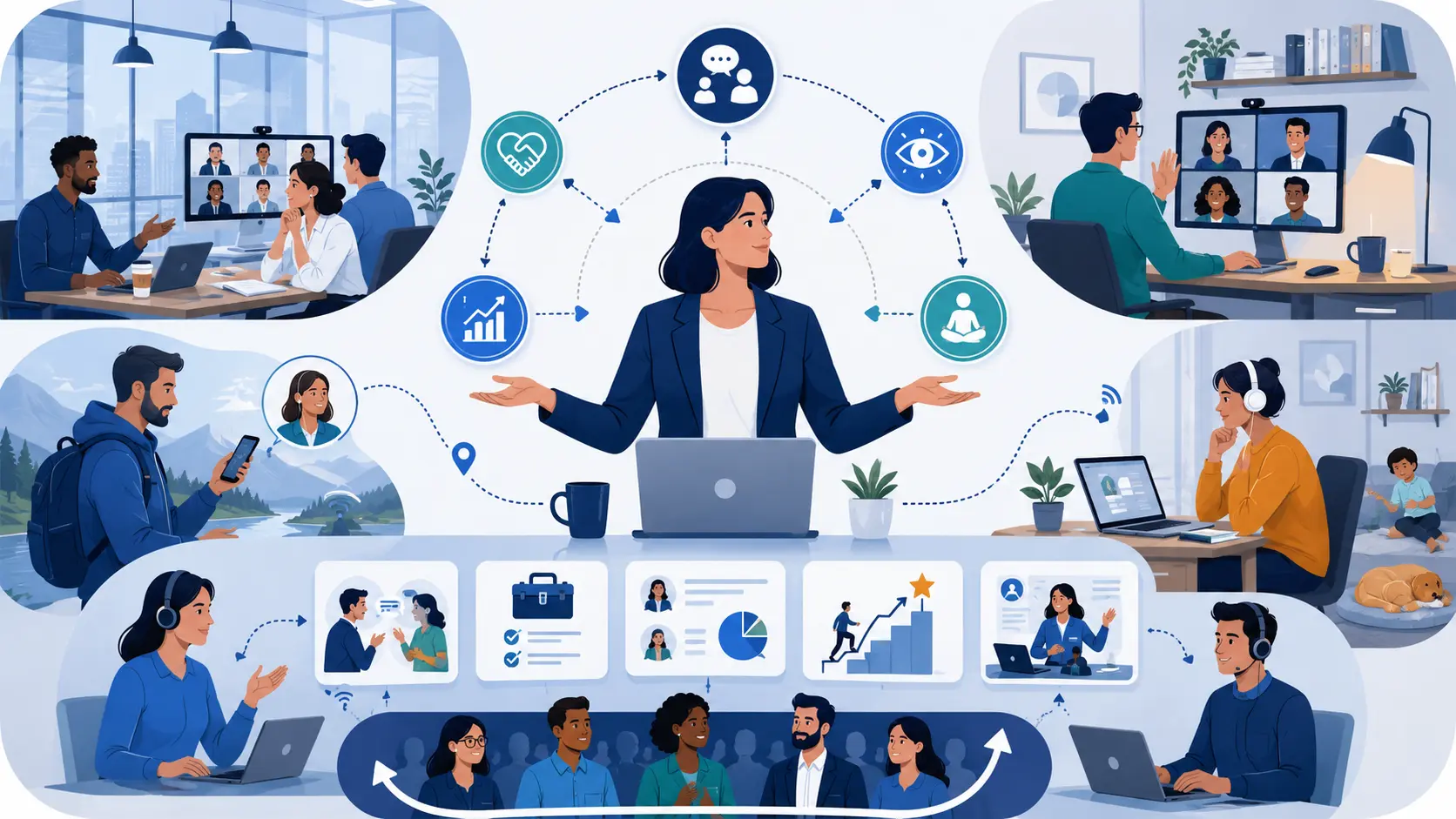
Perhaps the sharpest shift in HR’s role is around manager capability. Gallup’s recent research finds that accountability, the foundation of any meaningful change in team behaviour, is currently the single weakest competency among leaders, and that manager engagement itself is declining3. This is happening at the same time that many organisations are removing layers of management and leaving remaining managers responsible for larger, more distributed teams.
Microsoft’s 2026 Work Trend Index adds a related finding: only 26% of AI users say their organisation’s leadership is clearly and consistently aligned on how AI should be used4. For HR leaders, this means the hybrid-era job is no longer just supporting managers with policy and process. It increasingly means building the judgement, accountability and alignment that managers are shown, repeatedly, not to have by default.
Accountability is the single weakest competency among leaders, and manager engagement is declining.
— Gallup research, cited in Microsoft’s 2026 Work Trend Index coverage
Rebuilding culture and connection without proximity
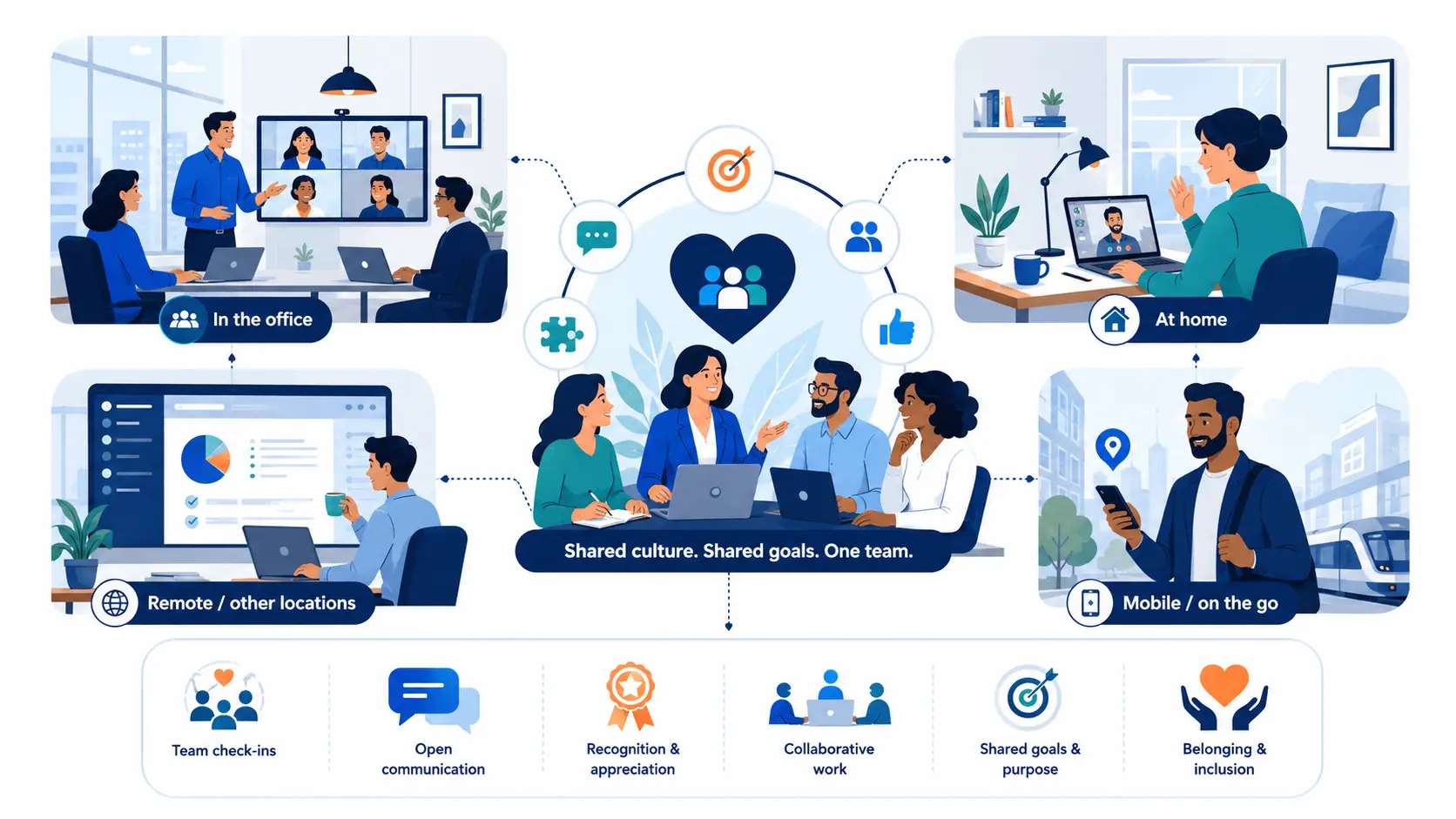
Microsoft’s earlier Work Trend Index research found that 68% of business decision-makers rated ensuring cohesion and social connection within teams as a moderate to major challenge stemming from the shift to hybrid work5, and highlighted a stark disconnect between how confident leaders felt in their team’s productivity and how productive employees actually reported feeling, a gap that policy alone does not close. HR’s role has shifted accordingly, from setting the rules of hybrid work to actively designing the rituals, feedback loops and in-person moments that rebuild the social capital proximity used to provide for free.
Deloitte’s 2026 Global Human Capital Trends research reinforces the same direction of travel at the organisational level: leaders report that the two most important drivers of success are accelerating how people and resources are orchestrated to perform work, and increasing the organisation’s ability to adapt to change6. Orchestration, not location, has become the operative word.
A new leadership pipeline for a new generation
The changing role of HR leaders in hybrid workplaces is not only about managing today’s workforce. It is also about designing a leadership pipeline for a generation that defines career success differently.
Deloitte’s Gen Z and Millennial research found that only 6% of Gen Z and Millennial respondents say reaching a leadership position is their primary career goal7, a marked shift from traditional assumptions about career progression.
For HR leaders, this means the hybrid-era talent strategy has to offer credible alternative paths to growth and recognition that do not all run through a traditional management track, alongside the more familiar work of preparing the managers who do want that path.
What a hybrid-fit HR leader does differently
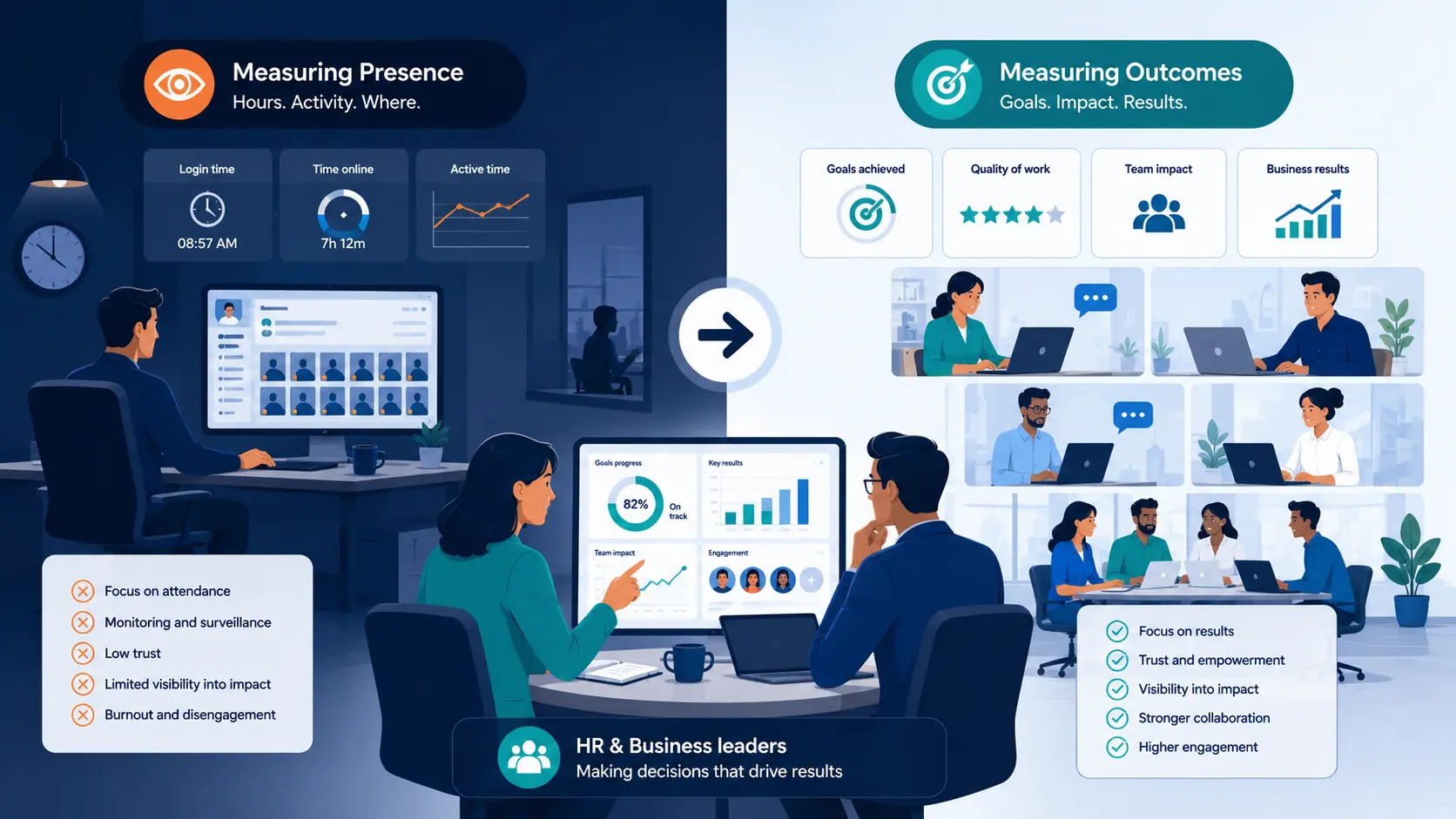
Bringing this research together, the practical shifts in the HR leader’s role look like this:
- Design work, not just policy. Decide which activities genuinely benefit from proximity and which don’t, rather than mandating uniform attendance.
- Treat orchestration as a core skill. Build the HR function’s own capability in coordinating people, technology and workflows across locations, not just administering them.
- Measure outcomes, not presence. Shift performance conversations away from where or when work happens and towards what it produces.
- Invest directly in manager capability. Given the evidence on weakening accountability and engagement among managers, treat manager development as a frontline HR priority rather than a standing training catalogue item.
- Engineer connection deliberately. Build in the specific rituals, in-person moments and feedback loops that hybrid work no longer creates by default.
- Offer more than one path to growth. Build recognition and progression routes that don’t assume every high performer wants to become a people manager.
Vị trí của MiHCM
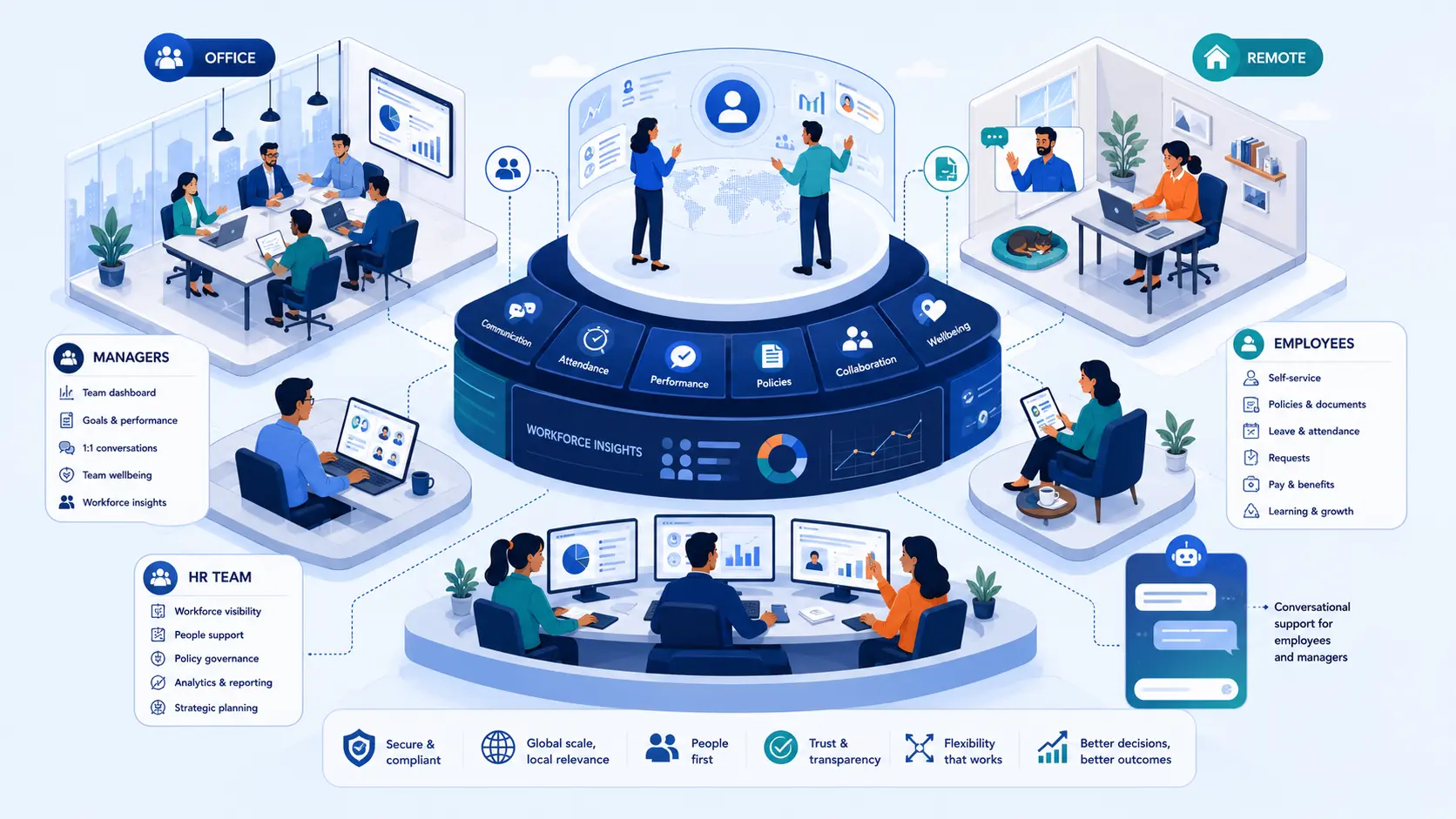
MiHCM Enterprise supports this shift with tools built for distributed teams by default, from flexible attendance and leave management to performance frameworks that track outcomes rather than office presence. For HR leaders managing hybrid teams across multiple countries, that consistency matters as much as any single feature.
SmartAssist, MiHCM’s AI HR co-pilot, is designed to give managers the real-time visibility and coaching support that Gallup’s research suggests many currently lack, without replacing the manager’s own judgement.
MiA ONE, MiHCM’s personal AI agent, is built to help individual employees navigate their own hybrid working experience, requests, entitlements, career information, on their own terms, wherever they happen to be working that day.
The statistics in this article are drawn from named research published by Gallup, Robert Half, Owl Labs, McKinsey, Microsoft and Deloitte, current as of mid-2026. Survey findings reflect each study’s own methodology, sample and geography, and figures can shift with each new release. Readers should consult the original reports before citing these figures externally.
References
- Gallup workplace research, cited in Neat, “Remote Work in 2026: Key Statistics Explained”.
- Robert Half, “Demand for Skilled Talent Report” and “Remote Work Statistics and Trends for 2026”; Owl Labs and McKinsey figures cited in SQ Magazine, “Remote Work Statistics 2026”.
- Gallup research, cited in Customer Experience Magazine, “Microsoft’s 2026 Work Trend Index: Manager Behaviour Is the Real Barrier to AI Adoption”.
- Microsoft, “2026 Work Trend Index report: Agents, human agency, and opportunity”, cited in Quantum PR summary.
- Microsoft Work Trend Index, “Hybrid Work Is Just Work. Are We Doing It Wrong?”.
- Deloitte Insights, “2026 Global Human Capital Trends”.
- Deloitte, “2025 Gen Z and Millennial Survey”, cited in Gable, “40+ Hybrid Work Statistics That Define 2026”.
Sources correct as of July 2026. Verify current figures against the original research reports before publication.