Tác giả: Anwar Parves
In the rapidly changing working world, the next frontier in HR is no longer just about automation. Automation has certainly transformed many HR functions, but it’s no longer enough.
In an increasingly fast-moving, data-rich world, HR teams need to shift their focus from automation to decision intelligence to offer real-time insights that inform decision-making. We believe this is the next evolution of digital HR – from automation to intelligence.
At MiHCM Bangladesh, we understand that this is not simply about embracing new technologies, but rethinking HR as a more strategic and data-driven function.
In this article, we’ll delve into why automation is not enough anymore, the need for real-time workforce information, the value of decision intelligence, and how HR data is veering towards leadership data.
Why automation is not enough
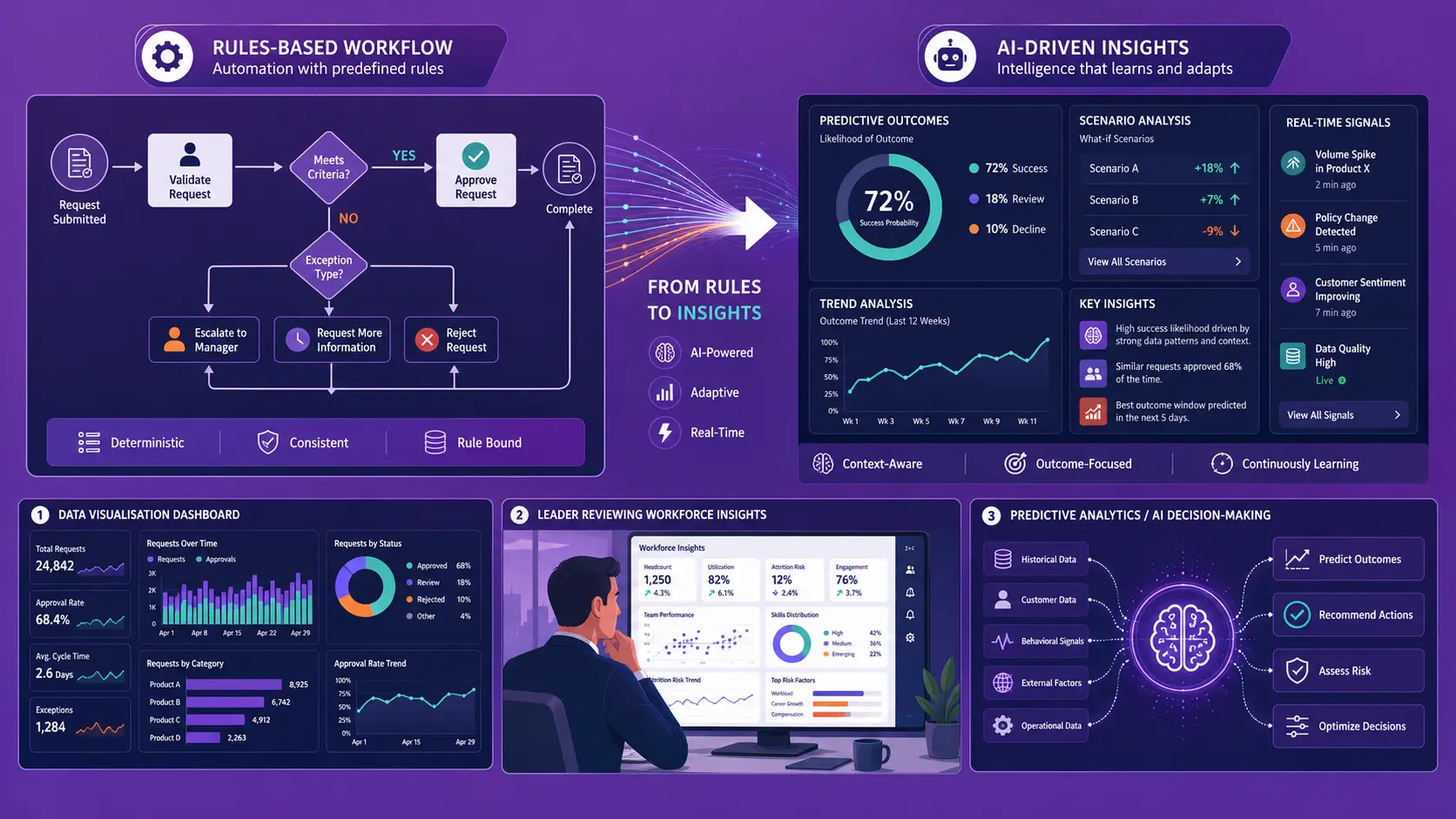
Automation has revolutionised HR departments around the globe. It has made tasks like payroll and employee benefits management and recruitment more efficient, freeing up HR time for more strategic activities.
But as we move into the next era of digitalisation, the question becomes: Is automation sufficient?
The short answer is no. Automation is great at automating routine and rules-based tasks, but not strategic decision-making. It’s just rule-based.
The future for HR is about using smart data, not just automation. As companies grow, there’s a greater demand for intelligent decision making, which automation cannot provide.
Why is automation not enough?
Lack of context: Automation uses fixed algorithms, which can’t account for complex, ever-changing business factors.
No strategic insight: HR automation is good for operational tasks, but not for strategic insights.
Lack of personalisation: HR’s ability to engage, develop and improve employee performance needs to understand the individual, which automation cannot achieve.
Real-time workforce insights: As companies expand and evolve, HR needs to have real-time data on workforce performance, employee engagement, and the health of the business. Static data and lagging reports simply don’t provide the insights needed to make decisions in today’s rapidly changing world.
Access to real-time insights enables HR to make informed decisions that are timely, relevant and actionable. For example, rather than relying on monthly reports on employee turnover, HR can use real-time data analytics to spot potential retention issues on the horizon and take prompt action.
Predictive analytics and AI
Using predictive analytics and AI, HR can get insights into:
- Employee engagement: Is there a decline in engagement and what are the reasons?
- Team performance: Who is performing well and who needs improvement?
- Predictive analytics: What are the chances of an employee leaving and what can HR do to stop it?
This information allows HR to be proactive, not reactive – issues are dealt with before they get out of hand.
Decision intelligence: The pulse of HR
Decision intelligence takes real-time data and turns it into insights that HR leaders can use to inform their decisions. Automation is about doing things, but decision intelligence is about making decisions.
For example, with AI, HR leaders can have a system that not only helps them monitor employee performance but also use data to forecast future performance and recommend actions for improvement. Such decision intelligence allows HR to:
- Optimise workforce planning: Ensure the right people are in the right roles at the right time.
- Improve talent development: Offer tailored training and development programmes.
- Enhance recruitment: AI can use historical hiring data to identify potential new hires who might fit well in the company.
Decision intelligence brings together data from various sources such as hiring, performance, pay and engagement to give a comprehensive picture of the workforce. This enables HR leaders to make informed decisions in the face of complexity and integrate HR strategies with business goals.
HR data as leadership data
In the age of digital transformation, HR data is moving from being viewed as operational to leadership data. HR is a source of data on employees, their performance, their aspirations and their engagement. This information is critical to strategic planning and must be considered as an asset for growth.
For example, management can use HR data to:
- Influence corporate strategy: Link employee goals with corporate goals.
- Evaluate leadership performance: Assess the effects of leadership on employee performance and engagement.
- Improve talent management: Leverage HR data to develop leadership potential in the company.
HR data is not only valuable for the ongoing management of the operations (payroll and attendance), but also crucial in understanding how human resources drive organisational success.
When HR data is seen as leadership data, HR professionals can be part of the strategic conversations and help drive the business.
From automation to intelligence
In the rapidly changing workforce of Bangladesh, HR needs to embrace decision intelligence and real-time information. Automation is no longer enough in the rapidly changing, data-rich environment.
The evolution of digital HR is all about building an HR that is not just efficient, but also intelligent – an HR that can collect, understand, and predict data to inform business strategy.
At MiHCM Bangladesh, we are committed to helping companies make the shift from automation to intelligence by offering HR solutions driven by Artificial Intelligence (AI) that enable real-time insights, better decision-making, and more strategic HR contributions to the business.
So, in this next phase of HR, automation is no longer enough; it’s time to embrace intelligence to unlock the power of your people.

Anwar Parves
Trưởng đại diện quốc gia của MiHCM tại Bangladesh
(Anwar Parves là Trưởng đại diện tại MiHCM Bangladesh, phụ trách điều hành hoạt động và quản lý quan hệ khách hàng. Với trọng tâm là định hướng chiến lược và triển khai dự án, ông thúc đẩy sự phát triển và đảm bảo việc cung cấp thành công các giải pháp nhân sự. Được biết đến với khả năng lãnh đạo và chuyên môn sâu rộng trong ngành, Anwar đặc biệt giỏi trong việc tối ưu hóa quy trình và xây dựng mối quan hệ đối tác bền vững với khách hàng.)