Most HR teams today are not short of data. Engagement scores, attrition rates, time-to-hire, learning completions, performance ratings — the dashboards are full. And yet, in many organisations, the gap between having data and acting on it remains stubbornly wide. Reports get produced, circulated and filed, while the decisions they were meant to inform are still made on instinct, precedent or whoever speaks loudest in the room.
The missing ingredient is rarely more data, or even better tools. It is culture — the shared habits, skills and expectations that turn a workforce metric into a confident decision. Building an HR analytics culture is what closes the distance between data and decisions.
Data tells you what is happening. Analytics tells you why and what to do about it. Culture is what determines whether anyone acts on the answer.
What predictive analytics actually means in HR
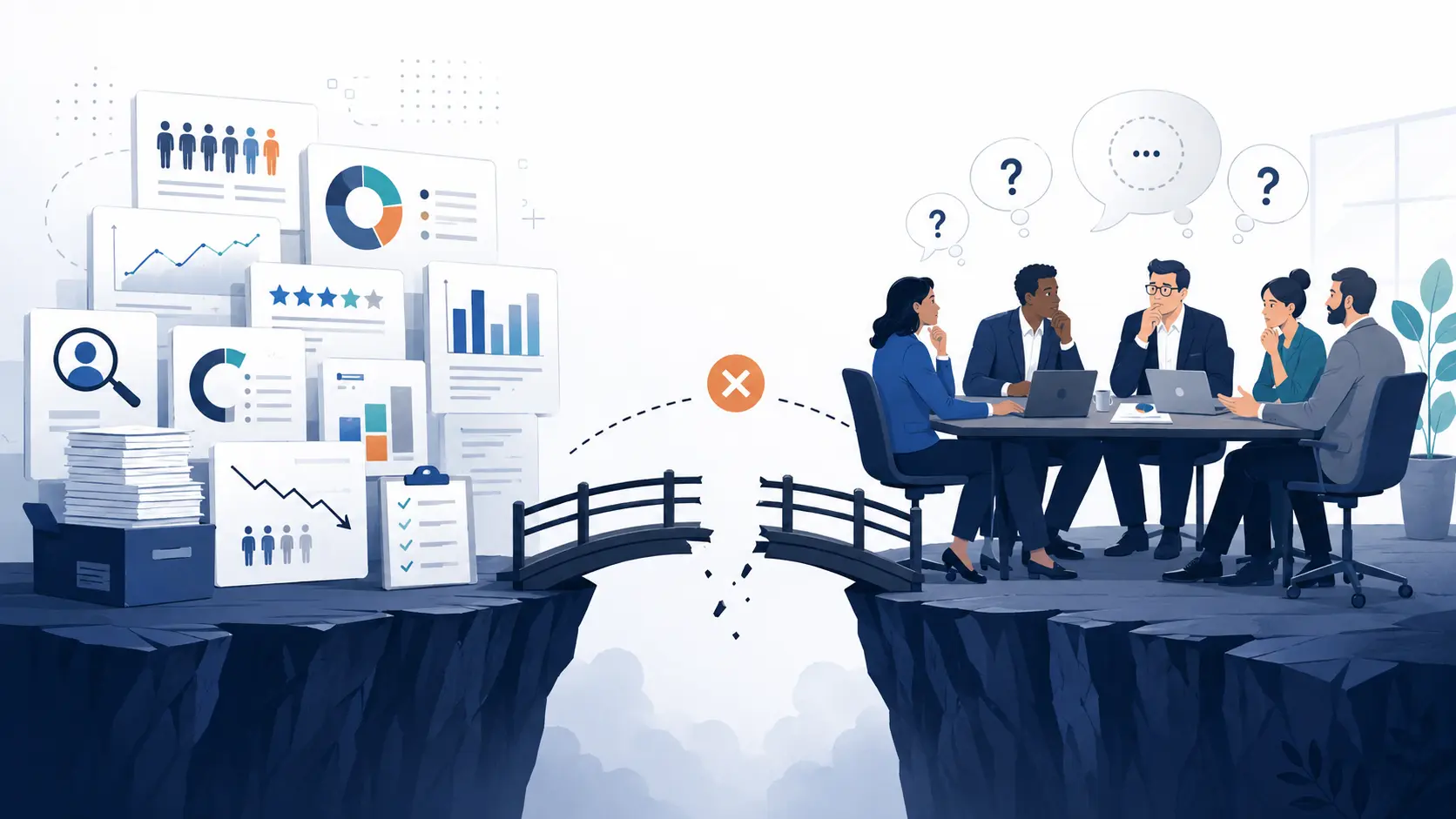
The evidence that data alone is not enough is sobering. Deloitte has reported that only around 3% of organisations consider themselves highly effective at capturing value from their workforce data.¹ The capability gap is real: many HR functions still lack people with the analytical skills to interpret what they collect, and a significant share of HR professionals feel their teams do not gather the right data to measure performance in the first place.²
When data sits unused, the cause is usually structural rather than technical. Insights arrive too late to influence a decision. Reports answer questions nobody asked. Findings are presented as numbers rather than narratives, leaving managers unsure what action they imply. The dashboard exists, but the bridge to the decision does not.
The maturity gap: from reporting to evidence-based decisions
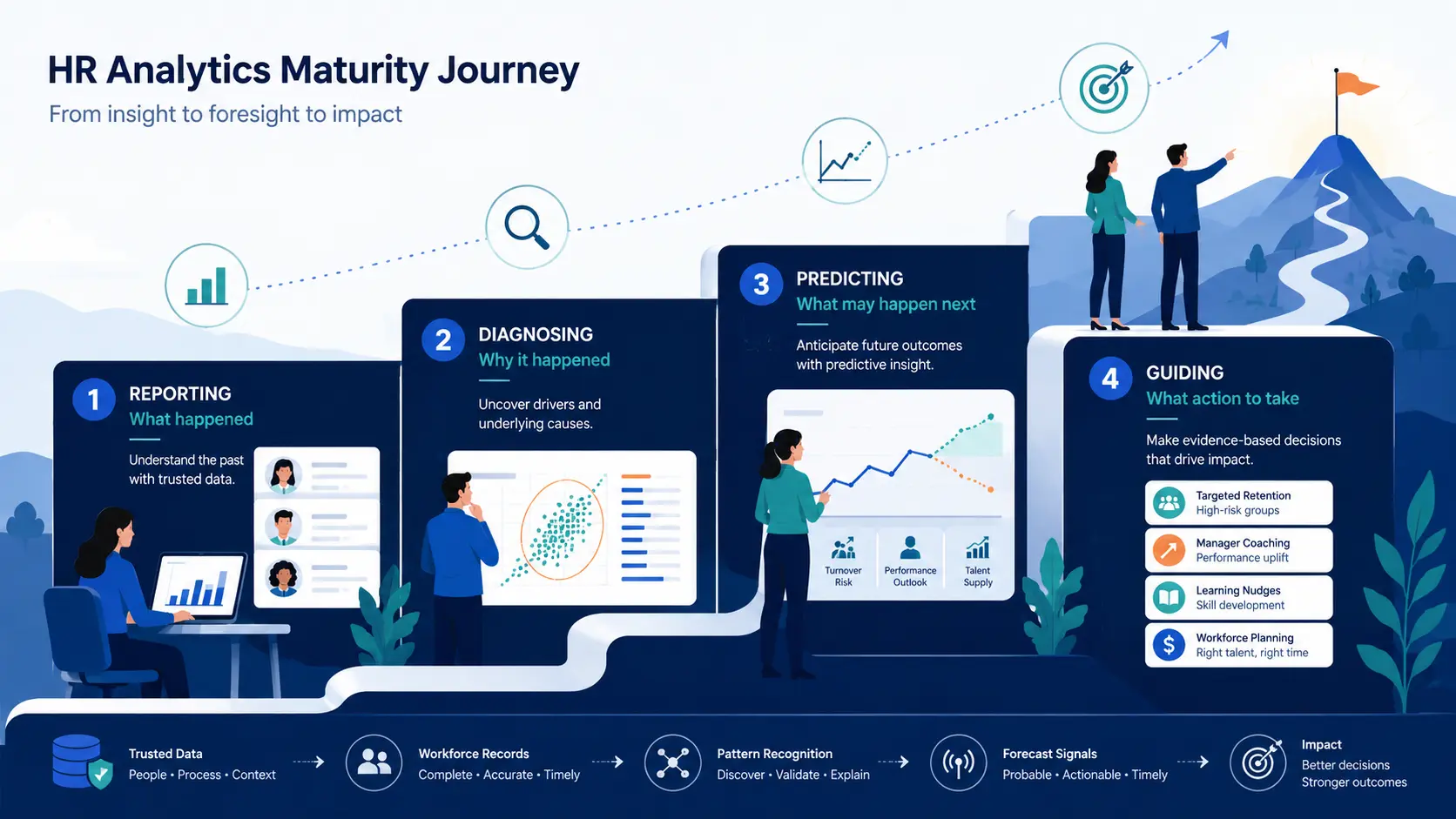
It helps to think of HR analytics as a maturity journey. At the first stage, teams report on the past — descriptive dashboards that count what happened. At the next, they diagnose why it happened. Beyond that lies prediction — estimating what is likely to happen — and finally, prescription, where analytics actively shapes the decisions HR and the business make together.
Most organisations are stuck earlier on this curve than they would like to admit, producing competent reports while struggling to make analytics genuinely change behaviour. Moving up the curve is less about buying more sophisticated software and more about building the cultural muscle to ask better questions, trust the answers and act on them consistently.
The four pillars of an HR analytics culture
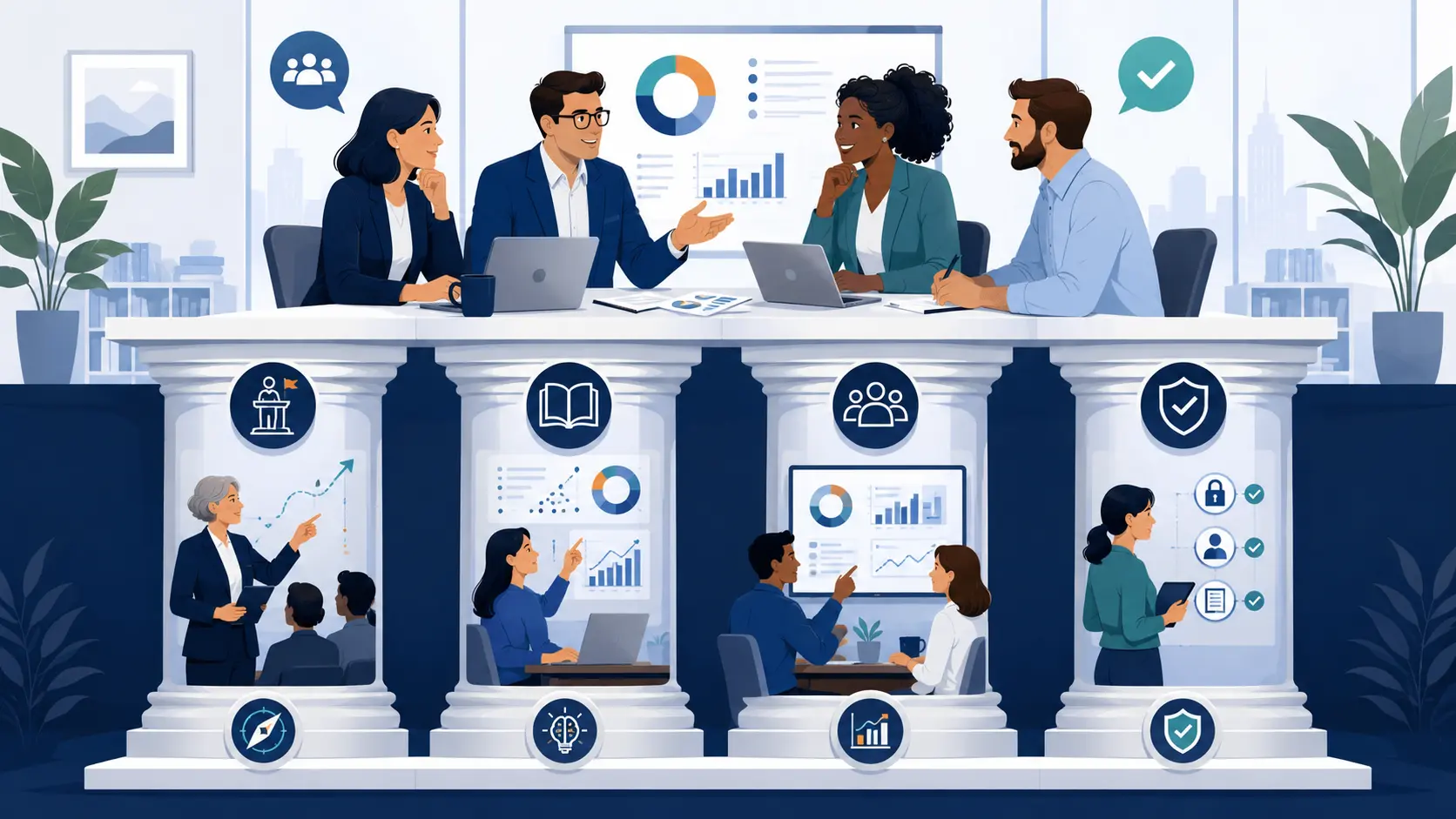
An analytics culture does not appear because a platform is installed. In practice, four pillars hold it up.
- Leadership role-modelling. Culture follows behaviour. Insight222 research into building data literacy in HR found that role-modelling from the HR leadership team is essential to cultivate a data-driven culture; where leaders resist data, teams are far less likely to use it.
- Data literacy. People across HR need enough fluency to interpret metrics, spot real trends versus noise, and translate findings into decisions — not just specialists in a central analytics team.
- Accessible insight. If analytics live behind technical tools that only a few can use, adoption stalls. Democratising access — through self-serve tools and clear visualisation — lets the people closest to a decision use the data.
- Trust and governance. People act on data they trust. That requires confidence in data quality, transparency about how insights are produced, and responsible use of employee information.
These pillars compound. Gartner notes that integrating talent analytics into decisions can improve talent outcomes meaningfully — but only when the culture supports it.³
Data literacy: the skill HR can no longer skip
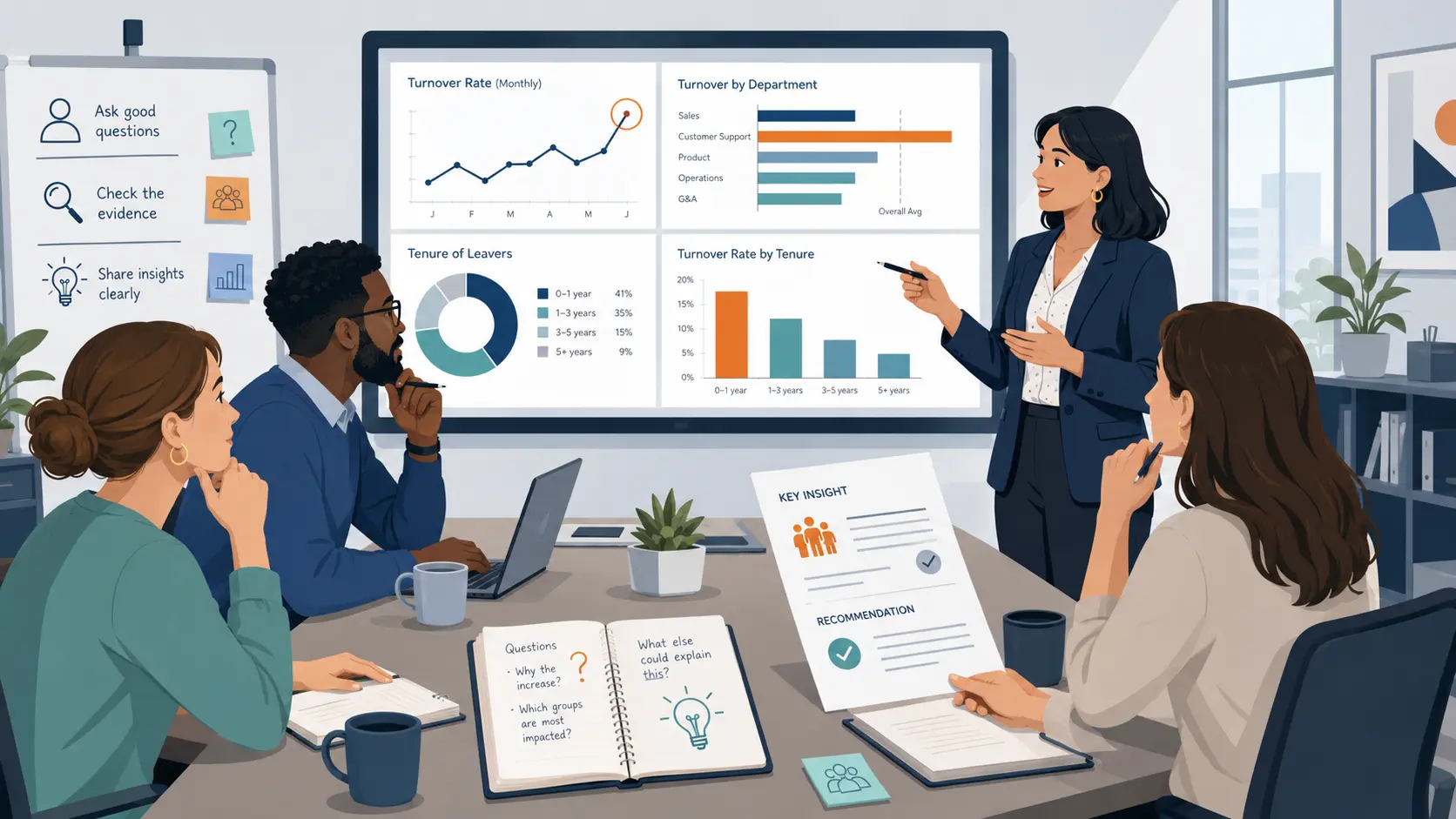
Of the four pillars, data literacy is the one most often underestimated. It does not mean turning HR professionals into data scientists. It means building enough shared fluency that a manager can read an attrition trend without misreading it, an HR business partner can challenge a surprising figure rather than accepting it, and a team can tell a clear story with the numbers it has.
Storytelling is part of this skill. A finding that is communicated as a persuasive, decision-ready narrative will travel further than a more accurate one buried in a spreadsheet. Investing in literacy — through structured development such as recognised people-analytics qualifications, and through everyday practice — is what allows an analytics culture to scale beyond a single team.
Responsible AI and trust as cultural foundations
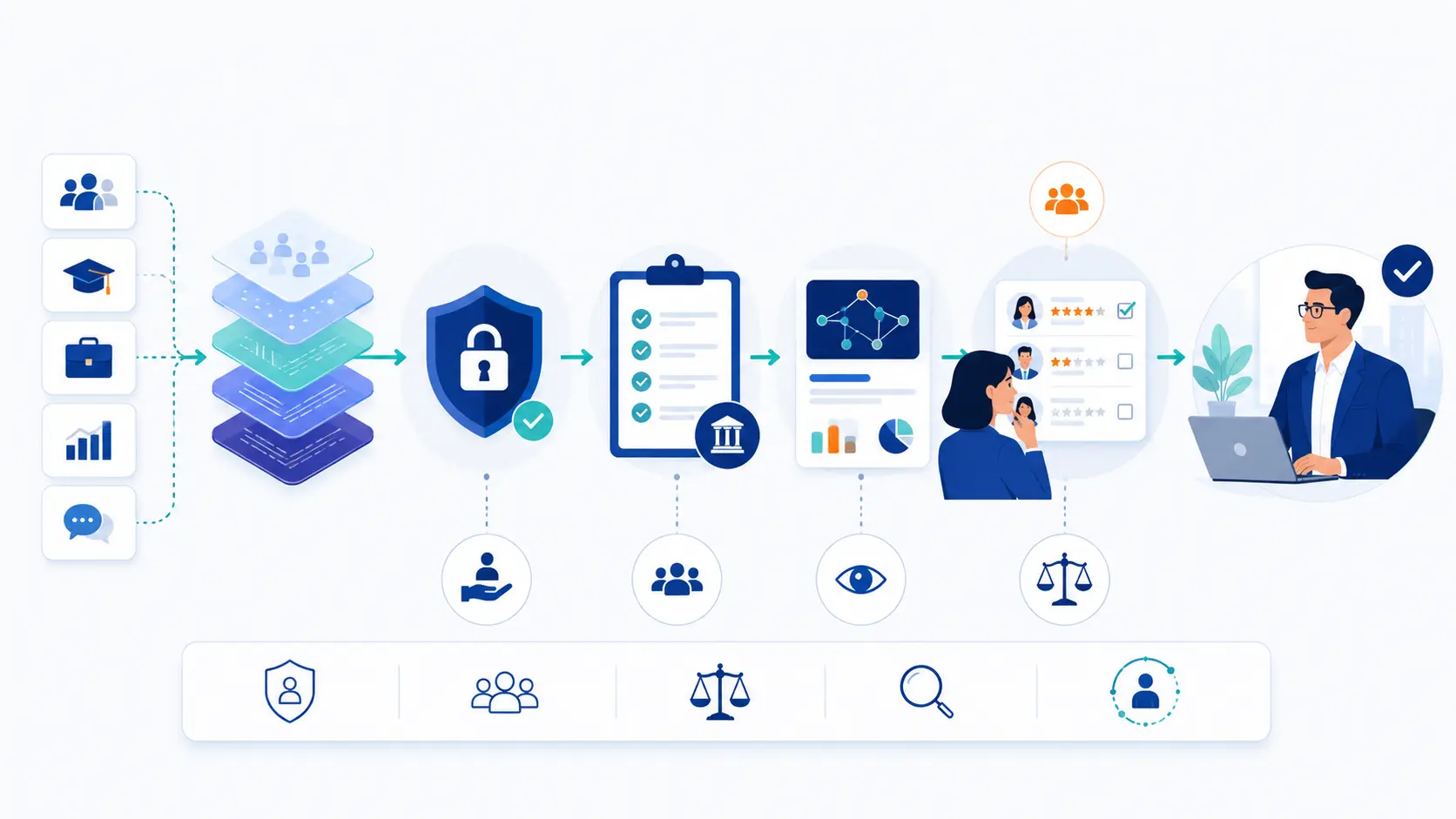
As AI becomes embedded in HR analytics, trust moves from being helpful to being decisive. Gartner research has found that a clear majority of employees are open to using AI at work, yet adoption still falters — often because deployment decisions are made without HR involvement, leading to poor uptake and misaligned expectations.⁴
The lesson for analytics culture is direct: tools imposed without explanation breed suspicion, while tools introduced with transparency and clear human accountability build confidence. Responsible AI — keeping human judgement central, being open about how insights are generated, and protecting employee privacy — is not a compliance afterthought. It is the foundation on which an analytics culture either earns or loses the trust it depends on.
An analytics culture is built on trust as much as on technology. People act on insight they believe in — and believe is being used fairly.
Starting small: making analytics a habit, not a project
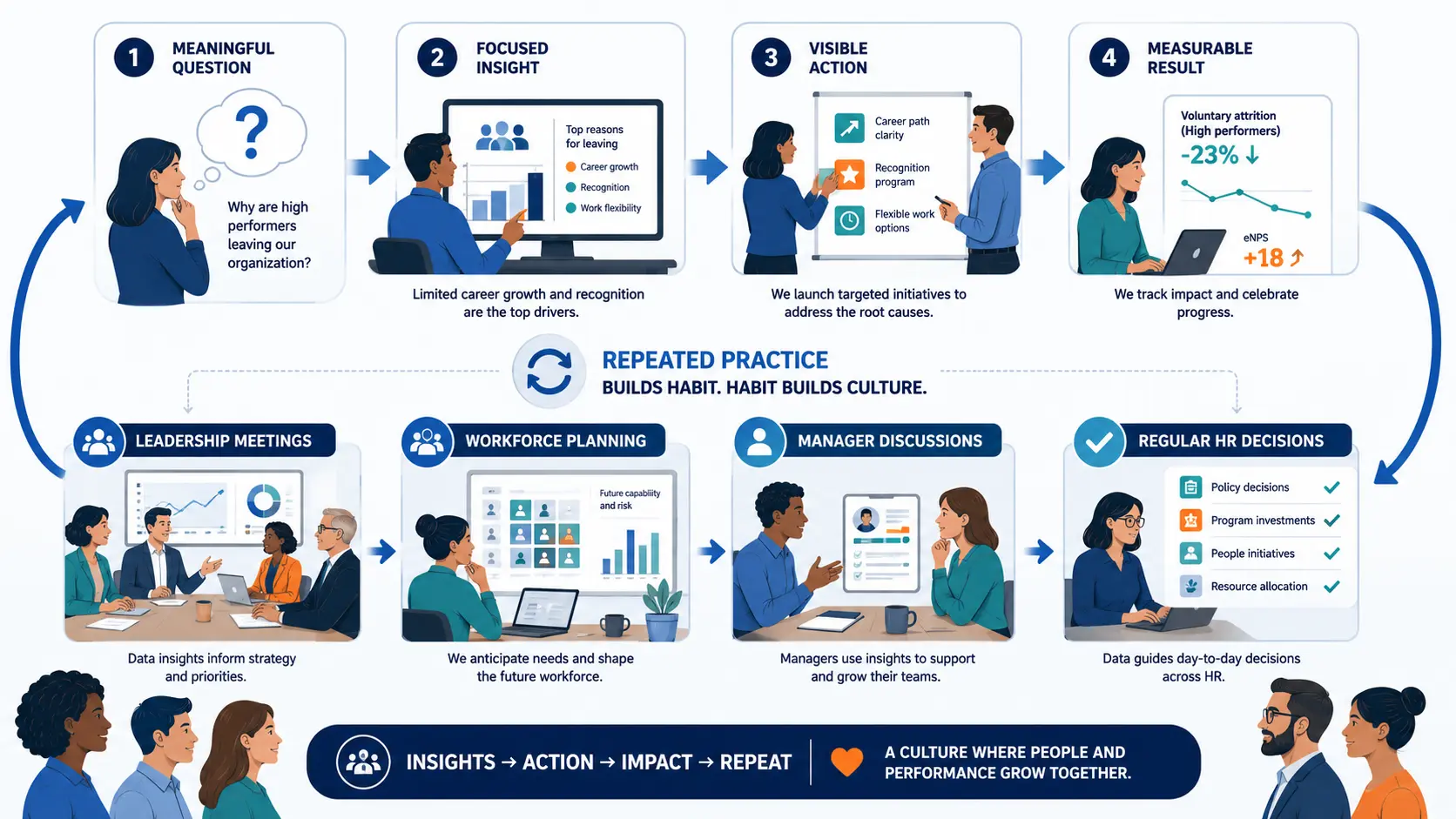
Cultures shift through repeated practice, not grand launches. The organisations that build durable analytics cultures tend to start narrow and deliberate: pick one meaningful question the business actually cares about, answer it well with the data available, act visibly on the answer, and show the result. A single decision improved by evidence does more to build belief than a hundred dashboards nobody opens.
From there, the habit spreads. Embed a relevant metric into a regular leadership conversation. Bring an insight to every workforce-planning discussion. Make ‘what does the data suggest?’ a normal question rather than an exceptional one. Over time, analytics stops being a project with a start and end date and becomes simply how decisions are made.
Where MiHCM fits
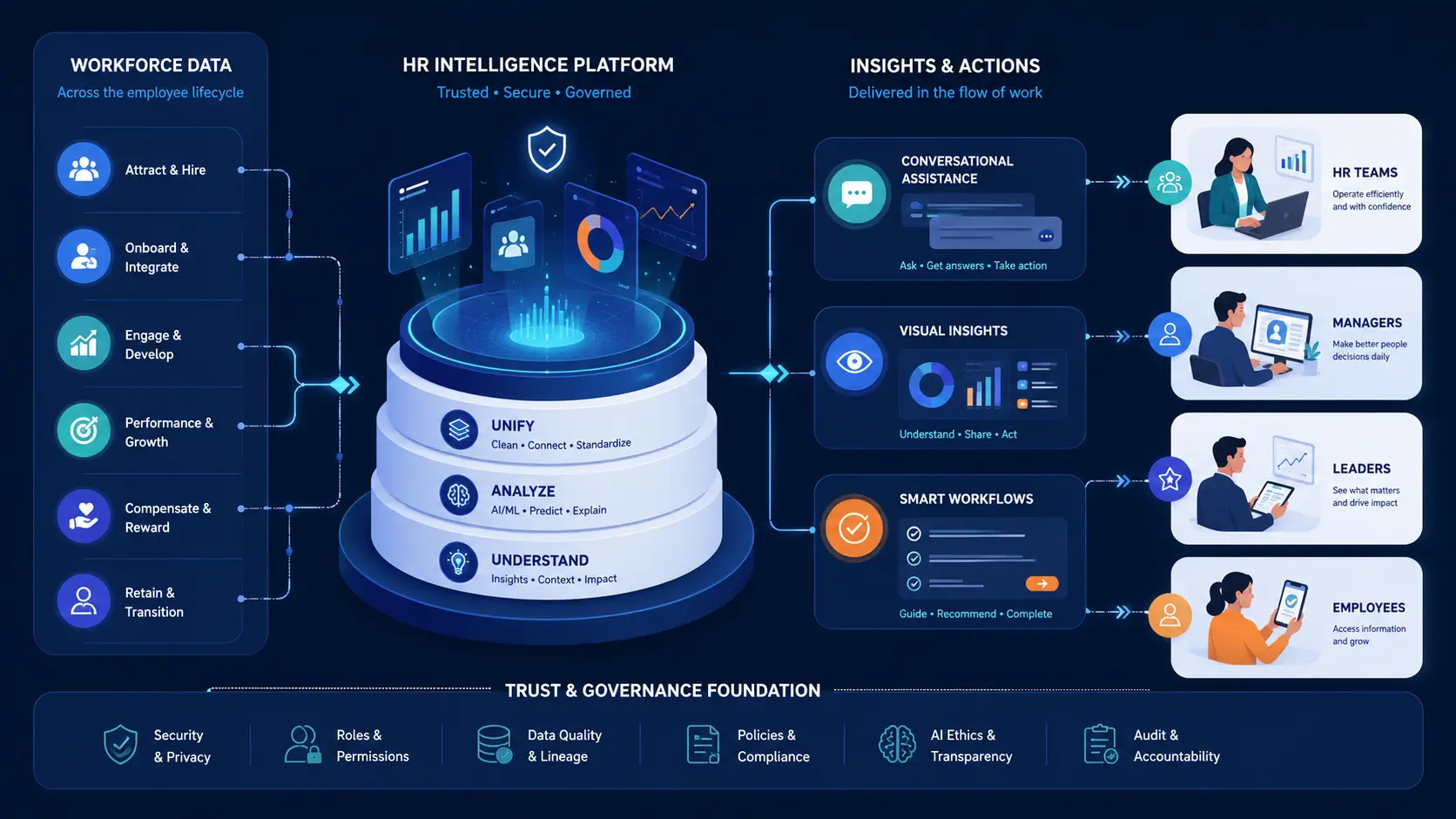
MiHCM is designed to support exactly this shift from data to decisions. Syntra, MiHCM’s AI intelligence and analytics platform, turns workforce data into clear, accessible insight — making evidence available to the people who make decisions, not only to specialists. By presenting findings in an understandable form, it helps lower the data-literacy barrier that holds many teams back.
MiHCM Data and AI brings workforce information together across the employee lifecycle, giving organisations the connected, trustworthy data foundation that an analytics culture depends on. MiA ONE, MiHCM’s personal AI agent, and SmartAssist, its AI HR co-pilot, put relevant insight directly into everyday workflows for employees, managers and HR teams — turning analytics from a destination people visit into a habit woven into how they work.
As a Microsoft Data and AI Solutions Partner, MiHCM builds these capabilities with responsible AI and data governance at the core — supporting the trust that, ultimately, decides whether an analytics culture takes root.
สรุป
The organisations that win with HR data are not those with the most dashboards. They are the ones that have built the culture to use them — where leaders model evidence-based decisions, teams have the literacy to interpret data, insight is accessible, and trust is protected through responsible practice. Technology is the enabler, but culture is the multiplier. Start small, make analytics a habit, keep people at the centre, and the journey from data to decisions becomes not a one-off transformation but the ordinary way the organisation thinks.
References
- Deloitte — Human Capital research on organisations’ effectiveness at capturing workforce value. https://www.deloitte.com/us/en/insights/topics/talent/human-capital-trends.html
- XpertHR / industry survey data on HR data-gathering and analytical skills within HR functions (as reported by myHRfuture). https://www.myhrfuture.com/blog/what-are-the-challenges-to-building-data-literacy-within-hr-and-people-analytics
- Gartner — research on the impact of integrating talent analytics on talent outcomes. https://www.gartner.com/en/human-resources
- Gartner — newsroom research on employee openness to AI and the effect of HR involvement on adoption (December 2025). https://www.gartner.com/en/newsroom/press-releases/2025-12-16-gartner-hr-survey-finds-65-percent-of-employees-are-excited-to-use-ai-at-work
- Insight222 — ‘Upskilling the HR Profession: Building Data Literacy at Scale’, on leadership role-modelling and data culture. https://www.insight222.com/
- Gartner — HR Analytics definition, Gartner Human Resources Glossary. https://www.gartner.com/en/human-resources/glossary/hr-analytics
- MiHCM — product information (Syntra, MiHCM Data and AI, MiA ONE, SmartAssist, Microsoft Data and AI Solutions Partner). https://www.mihcm.com