The superstar in the digital HR deck, HR analytics has been steadily transforming business operations ever since it entered the HR arena.
However, its application has grown rapidly over the last few years, making it one of the leading business gamechangers of today.
Let’s look at exactly what HR analytics does and how it empowers employers – and employees.
What exactly is HR analytics?
The easiest way to understand HR analytics is to think of it as people analytics.
Discarding all the noise and the clutter, HR analytics goes straight to the heart of the matter, systematically collecting and analysing human resources data.
This data can then be used to exponentially improve an organisation’s workforce performance.
But that’s not all: it also predicts the future.
Types of HR analytics
- Descriptive: What happened?
- Diagnostic: Why did it happen?
- Predictive: What will happen?
- Prescriptive: What should we do about it?
The importance of analytics
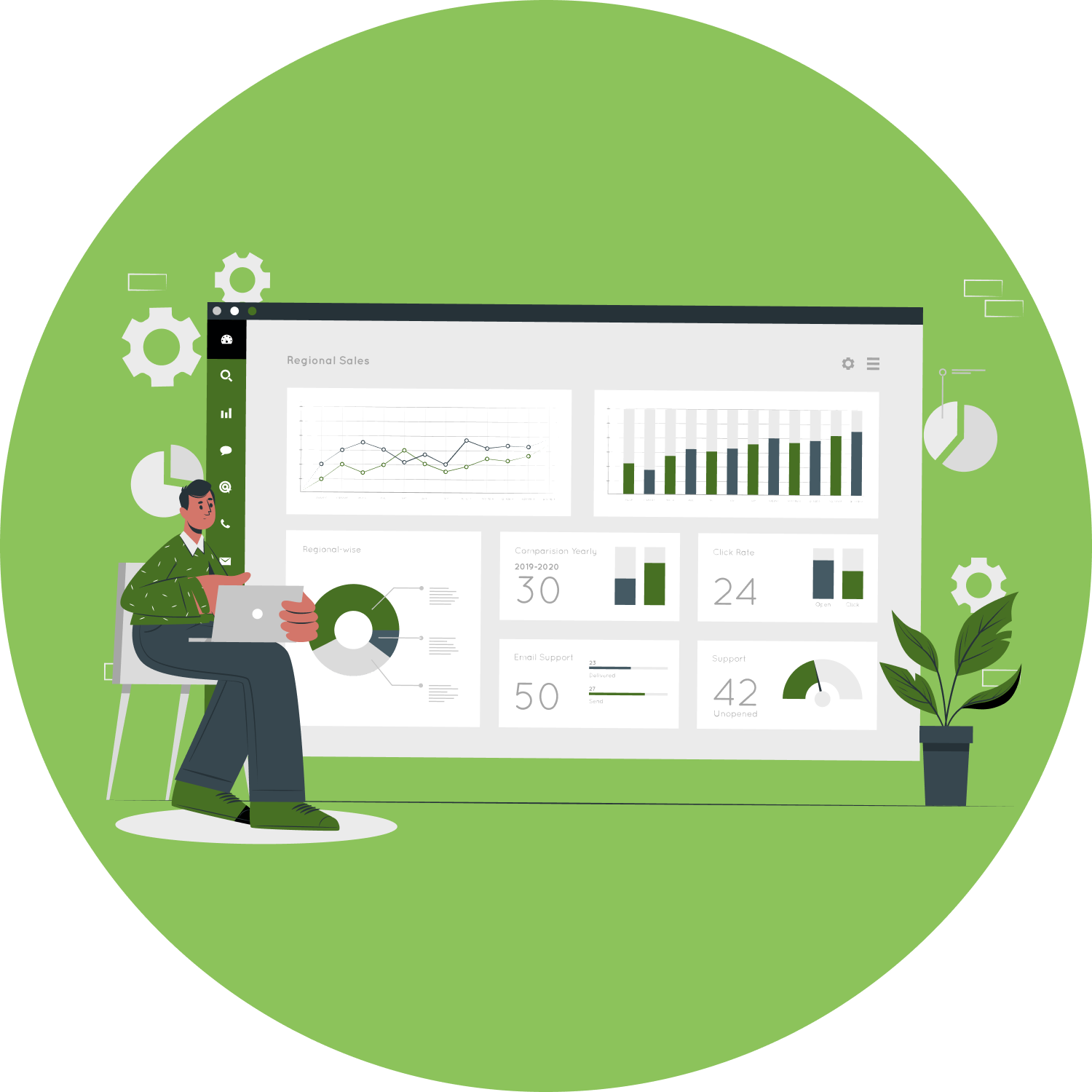
Instead of going with gut feelings when making strategic decisions that impact your business and your people, analytics, integrated within comprehensive HR and payroll management software, provides deep insights into workforce dynamics.
Delving into the past and projecting into the future, it empowers you to make decisions about people based on facts.
Not hearsay, not hope, but data-backed facts.
Some of the most crucial HR analytics metrics that reflect the health and performance of the workforce include:
- Employee turnover rates, reflecting retention effectiveness
- Absenteeism, helping identify patterns and potential areas for intervention
- Revenue per employee, providing insight into workforce productivity
- Scores that measure employee satisfaction and loyalty
- Cost per hire, calculating the total cost involved in hiring a new employee
- Diversity and inclusion: helps companies identify diversity gaps and recommends actions to foster inclusivity
Enter predictive analytics
And then there’s predictive analysis. What does this mean and what does it do?
Simply put, it looks at the past and tells you your future, like this:
- Employee turnover: analysing historical data, a predictive model can tell you which employees are most likely to leave, enabling proactive retention strategies
- Performance: identify who’s likely to shine – or fall short – by looking at performance benchmarks, forecast future performance, and even intervene with upskilling
- Retention: analytics can recommend specific actions to improve retention rates based on predictive insights
Accurate data collection and analysis tools
For HR analytics to be effective, you need the right tools and accurate and relevant data.
Utilising advanced data analysis tools which automate the process make it more efficient and reduce the likelihood of human error and bias.
Such tools – like MiHCM ข้อมูลและปัญญาประดิษฐ์ – provide businesses with critical insights into key HR metrics. This leads to informed decision-making and the development of targeted strategies, bringing about significant improvements in workforce management and overall performance.
Looking to the future
With technology constantly advancing, it’s a given that HR analytics will play an increasingly integral role in businesses.
Building on this, advanced AI integration – such as AI-driven smart assistants, like MiHCM’s MiA – will further enhance data analysis capabilities. AI-powered co-pilots – like MiHCM’s สมาร์ทแอสซิสต์ – can provide custom analytics and real-time insights drawn directly from HR data in a matter of minutes.
And what does all this really mean for businesses? An essential and significant transformation of operations via deeper insights that truly empower.