
Tác giả: Anwar Parves
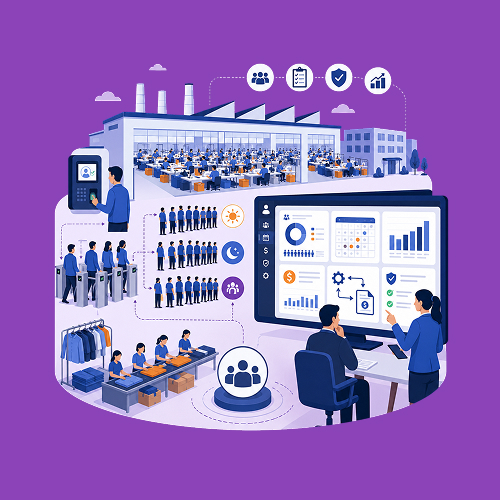
For industries like Ready-Made Garments (RMG) factories, industrial parks, and zones, large workforce management is no small challenge.
As businesses expand and employee numbers swell into the thousands, the inefficiencies of manual HR processes are evident. Whether it’s tracking employee hours, scheduling shifts, maintaining payroll accuracy, or managing regulatory compliance, industrial HR professionals encounter numerous problems that manual processes are simply not well-equipped to manage at scale.
At MiHCM Bangladesh, we’ve been working with industrial companies in RMG and manufacturing who face the challenges of managing a large workforce. Here, we look at the pitfalls of manual HR systems for managing 5,000+ employees and how digital HR systems can help overcome these, delivering more efficient processes and strategic insights for large companies.
The challenges of manual HR systems
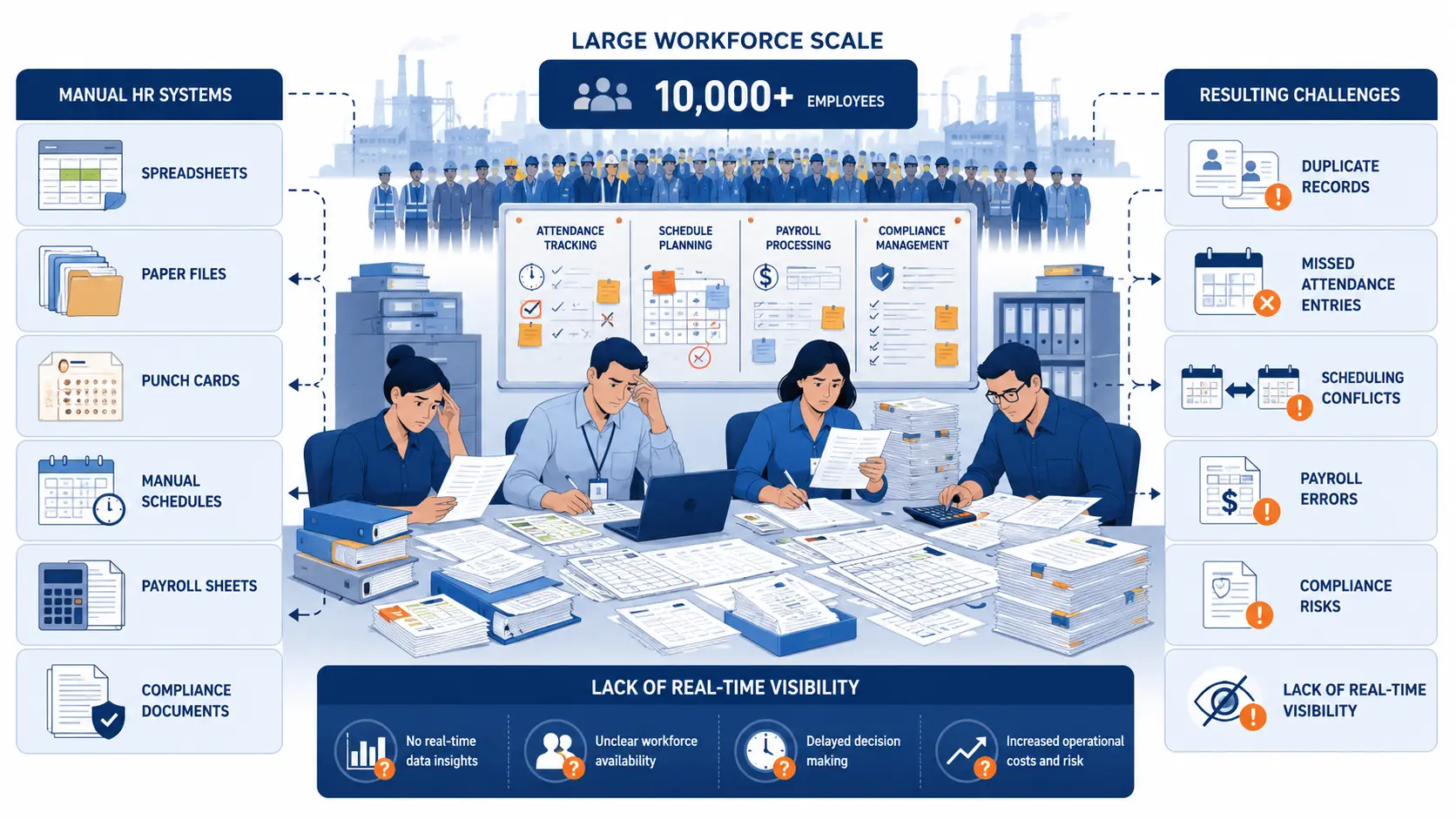
- Attendance Complexity: Attendance management is one of the most tedious HR tasks, particularly in sectors employing large numbers of people. In organisations with large headcounts, manual attendance management using spreadsheets or punch cards can be time-consuming and error prone.
Staff can be working in different shifts, have different hours, and sometimes be moved between different departments or sites. Attempting to keep track of all these details manually can lead to errors, including duplicate entries, omissions, or inconsistencies in recording overtime or leave.
Additionally, manual attendance tracking solutions make it challenging to have a real-time view of employee attendance, causing HR to reactively rather than proactively manage attendance problems.
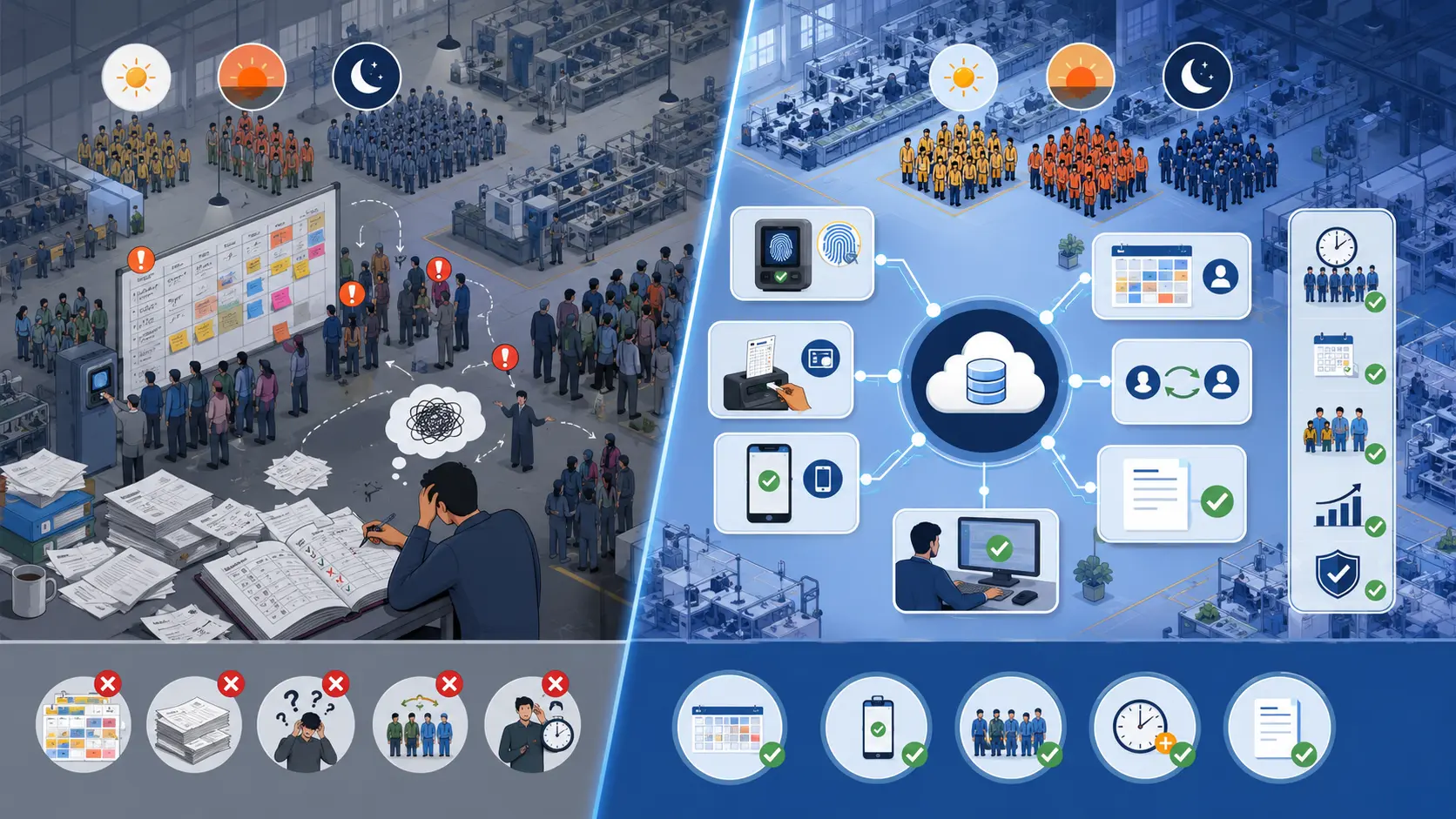
- Shift Planning: Shift planning is essential for the smooth functioning of large manufacturing plants and factories. But when this is done using manual methods, it can be an arduous task to schedule shifts for thousands of workers, especially when there are multiple shift patterns, overtime and labour regulations involved.
With manual systems, scheduling can be prone to errors, such as over-scheduling or under-scheduling, resulting in operational inefficiency, costs and low staff morale. Furthermore, without an automated system, it’s difficult to ensure that employees are scheduled according to their skill level, hours worked and availability.
In manufacturing industries such as RMG where production lines need to be staffed and coordinated, the lack of automation in scheduling can lead to decreased productivity.
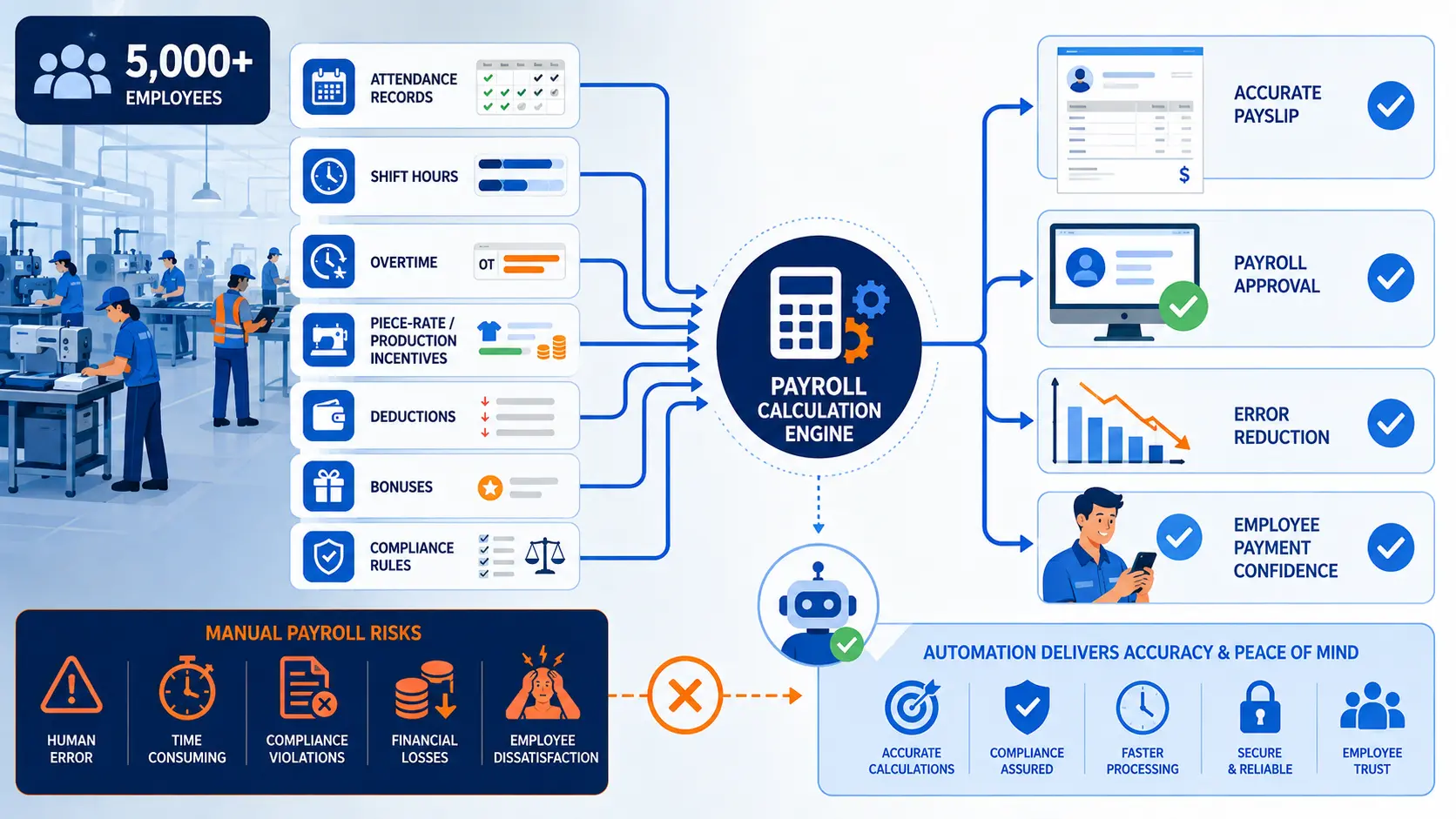
- Payroll Accuracy: Manual HR systems are also inefficient for payroll processing. Given the workforce, pay rates, overtime, deductions and bonuses, payroll processing is a complex, laborious and error-prone manual task. Inaccurate payroll calculations not only lead to employee discontent but can also land the company in legal trouble if it does not comply with the law.
In manufacturing, it is even more complex as there are different pay rates for shift workers, piece-rate workers and full-time employees. Moreover, tax law and other labour regulations are continually evolving, making maintaining compliance in the payroll process a complex and risky process.
- Compliance Risks: There are an overwhelming number of labour laws and regulations that apply to manufacturing and industrial zones, across different regions, countries, and even industries. These regulate aspects such as working hours, minimum wage, overtime, safety, and benefits.
For Human Resource (HR) departments to keep up with these laws, managing compliance for large teams can be a nightmare. It’s hard to keep up with the latest legislation and ensure compliance across all employees. Noncompliance with labour regulations can lead to penalties, lawsuits, or reputational harm.
In addition, some sectors such as RMG may have other compliance requirements, such as health and safety regulations, which must be managed correctly to comply with regulations.
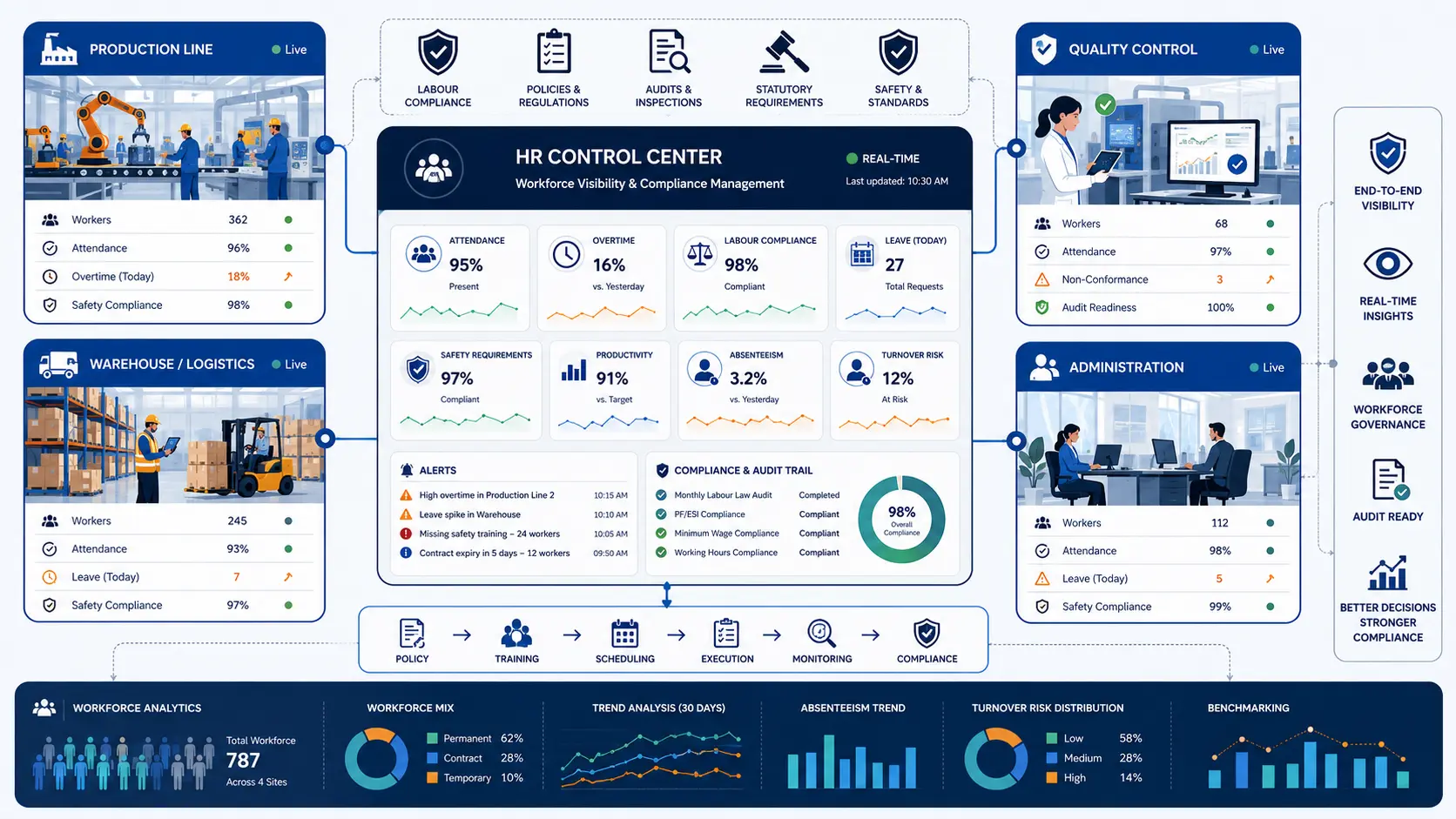
- Workforce Visibility: Perhaps the biggest problem with manual HR processes is the lack of insight into employee performance. Without up-to-date information, HR personnel cannot effectively determine staffing needs, employee satisfaction, or potential risks such as absenteeism and turnover.
In manufacturing areas where there are thousands of employees, it is impossible to monitor performance across departments, shifts and multiple locations without automation. Manual processes make it difficult for HR managers to spot trends, provide insights or to predict problems before they arise.
Limitations of manual HR processes
A workforce of 5,000+ employees need a system that is complex, provides real-time information, and is easily compliant. Manual HR practices are not scalable. Manual processes are inefficient, inaccurate and slow as the company grows.
Here are a few reasons manual HR processes don’t scale:
- Prone to Errors: As the volume of manual processes increases, the risk of errors and inaccuracies increases, be it wrong attendance records, payroll issues, scheduling overlaps etc.
- No Real-Time Information: Manual systems do not offer real-time information, which prevents HR managers from making good decisions in a timely manner or taking proactive measures.
- Time-Consuming: Manual processes take up a lot of time and resources, leaving HR less time to focus on strategic projects or more meaningful employee engagement.
- Inaccurate: Manual HR processes are not always standardised, which can result in inconsistencies in employee data, compliance management, and reporting.
How digital HR solutions can help
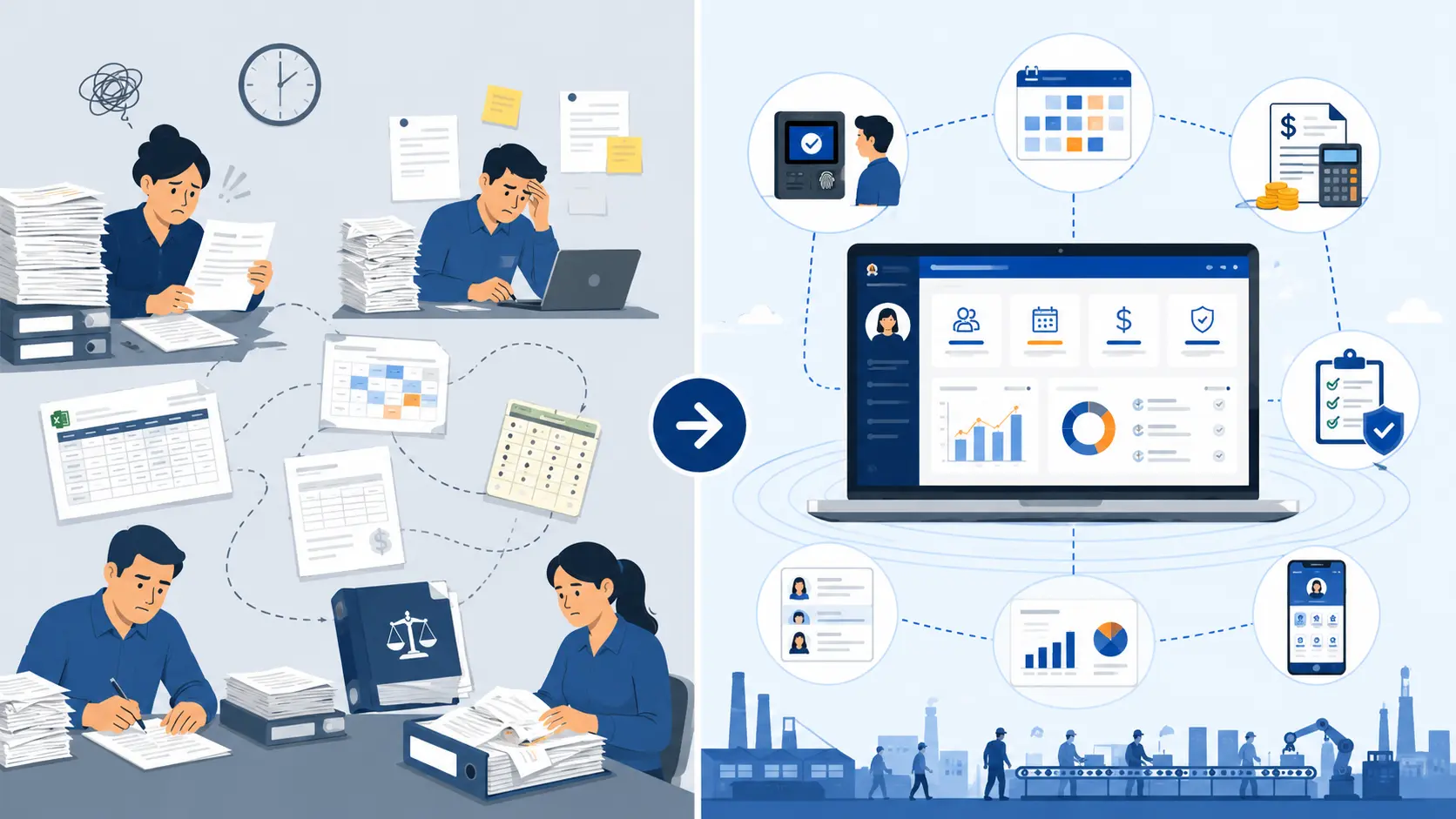
Digital HR solutions are the answer to these problems for manufacturing firms, RMG industries and industrial areas in Bangladesh. Technology-enabled automation of HR processes can enhance:
- Real-Time Attendance Tracking: Electronic time and attendance systems allow employees to punch in and out using biometric devices, mobile apps, or ID cards, eliminating data-entry errors and showing real-time attendance reports. Managers can easily monitor leave, absences and overtime, ensuring timely and accurate record-keeping and reducing administrative tasks.
- Smart Scheduling: Automated scheduling systems can create schedules based on factors such as employee availability, skills, and legal requirements. It can automatically accommodate shift changes, manage overtime, and keep managers informed about staff availability.
- Precise Payroll Management: Payroll systems integrated with human resource software can automatically calculate employee salaries, deductions and bonuses, minimising errors and ensuring on-time payments. Tax and labour law compliance is embedded, minimising risks.
- Compliance Management: Electronic HR systems enable companies to keep track of regulatory changes and be compliant with national and international regulations. Automated reporting and notifications assist HR managers in monitoring compliance across the organisation and keep detailed records for audit purposes.
- Analytics and Reporting: Digital HR systems offer insights into workforce productivity, attendance, and other performance indicators. These insights allow HR to make informed decisions, address issues, and proactively manage potential problems within the workforce.
Beyond manual HR
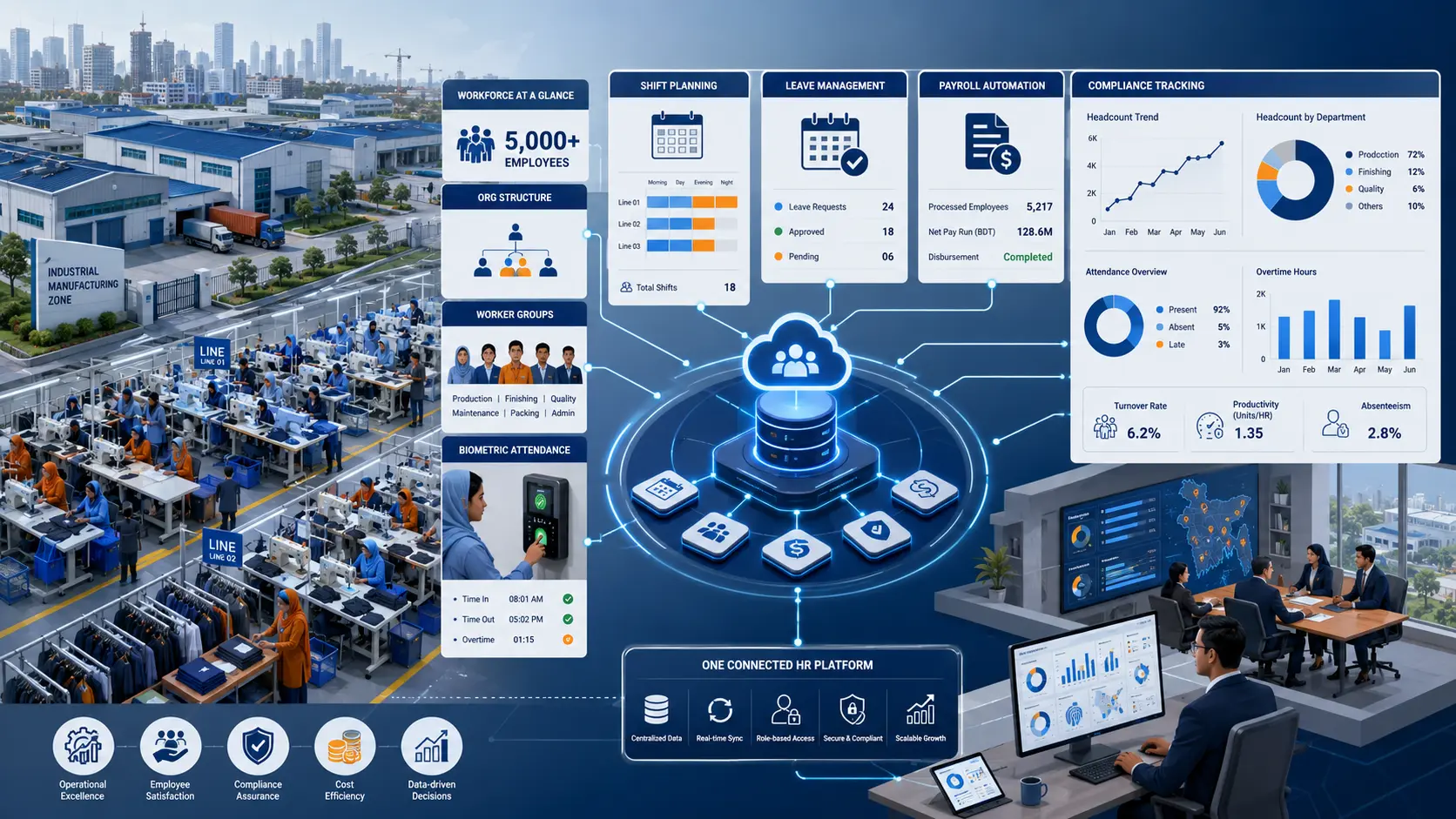
When it comes to managing a workforce of 5,000+ in RMG, manufacturing and industrial areas in Bangladesh, manual HR is not enough. As companies expand, manual systems become inadequate, and the potential for automation and digital HR solutions becomes more evident.
At MiHCM Bangladesh, our HR solutions tackle the challenges of managing large workforces. Our solutions automate processes such as attendance, leave, shift, payroll and compliance, allowing HR professionals to concentrate on more value-added activities, leading to increased workforce productivity and compliance.
The move to digital HR allows companies to better manage large workforces, reduce risks, and prepare for the future.

Anwar Parves
Trưởng đại diện quốc gia của MiHCM tại Bangladesh
(Anwar Parves là Trưởng đại diện tại MiHCM Bangladesh, phụ trách điều hành hoạt động và quản lý quan hệ khách hàng. Với trọng tâm là định hướng chiến lược và triển khai dự án, ông thúc đẩy sự phát triển và đảm bảo việc cung cấp thành công các giải pháp nhân sự. Được biết đến với khả năng lãnh đạo và chuyên môn sâu rộng trong ngành, Anwar đặc biệt giỏi trong việc tối ưu hóa quy trình và xây dựng mối quan hệ đối tác bền vững với khách hàng.)